




Top 20 Most Common Insects in Cheyenne
Insects, nature's smallest inhabitants with uniquely fascinating features, are omnipresent in Cheyenne, thriving across its diverse landscapes. Here, they fulfill crucial ecosystem roles, from pestering nuisance to beneficial predator. Our 'Top 20 most common insects in Cheyenne' enlightens you on the evident insect diversity, their interaction with Cheyenne's natural terrain, and the critical balance maintained between detriment and benefit. Let's embark on a microscopic journey!

Most Common Insects
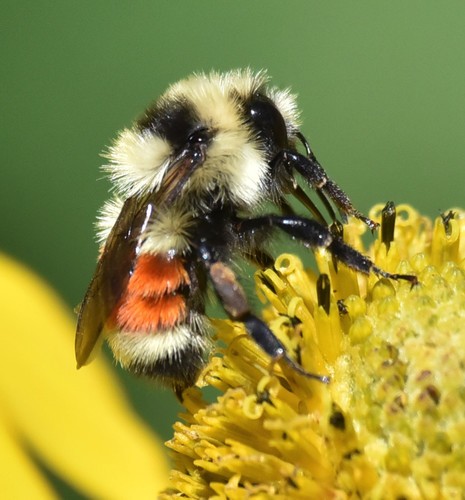
1. Hunt's bumble bee
Bombus huntii is a non-woven insect from the family of bees and bumblebees (Apidae). The scientific name of the species was first validly published in 1860 by Greene.
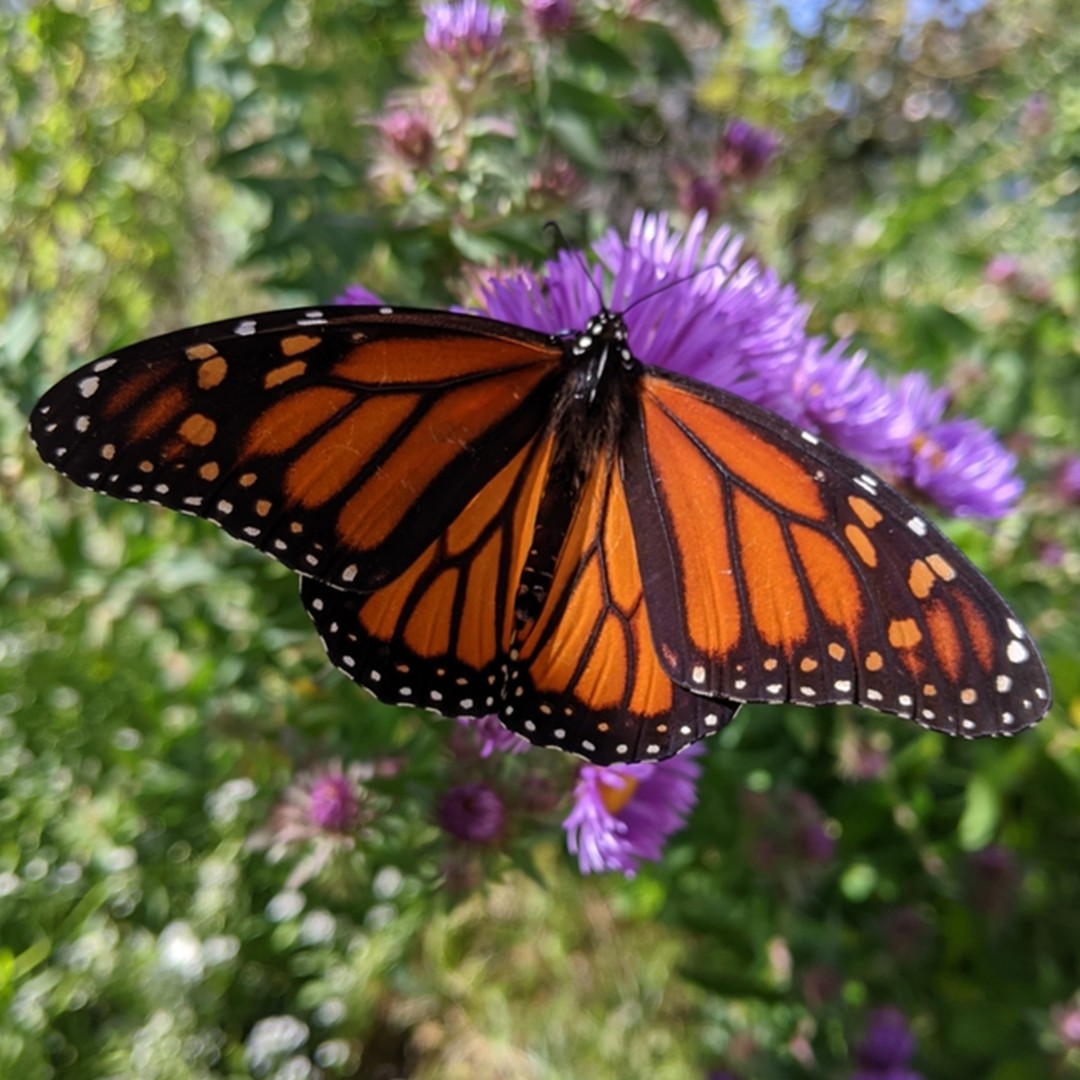
2. Monarch butterfly
The monarch butterfly (Danaus plexippus) is the most recognizable butterfly in North America. It is best known for its appearance, but should be better known for the fact that it has a 3000-mile migration that takes the butterfly 4 generations to complete. Their diet is also a natural deterrent for predators, as they eat milkweed, a poison that induces vomiting.

3. Rocky mountain parnassian
The butterfly ranges in color from white to pale yellow-brown, with red and black markings that indicate to predators it is unpalatable. 
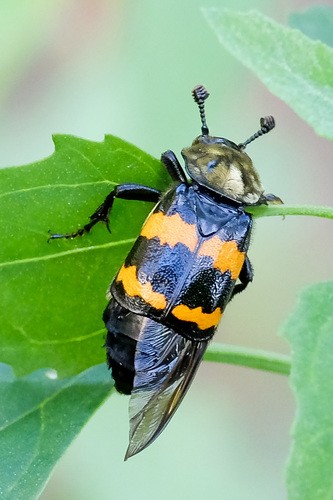
4. Tomentose burying beetle
The tomentose burying beetle (Nicrophorus tomentosus) is also called the gold necked carrion beetle due to the two bright bands on its back. They are also one of the few insects that engage in cooperative parental care. Males and females will place their eggs underneath a carcass, where they may need to remove the soil. Both males and females cooperate in the defense of this carcass as their young grow.
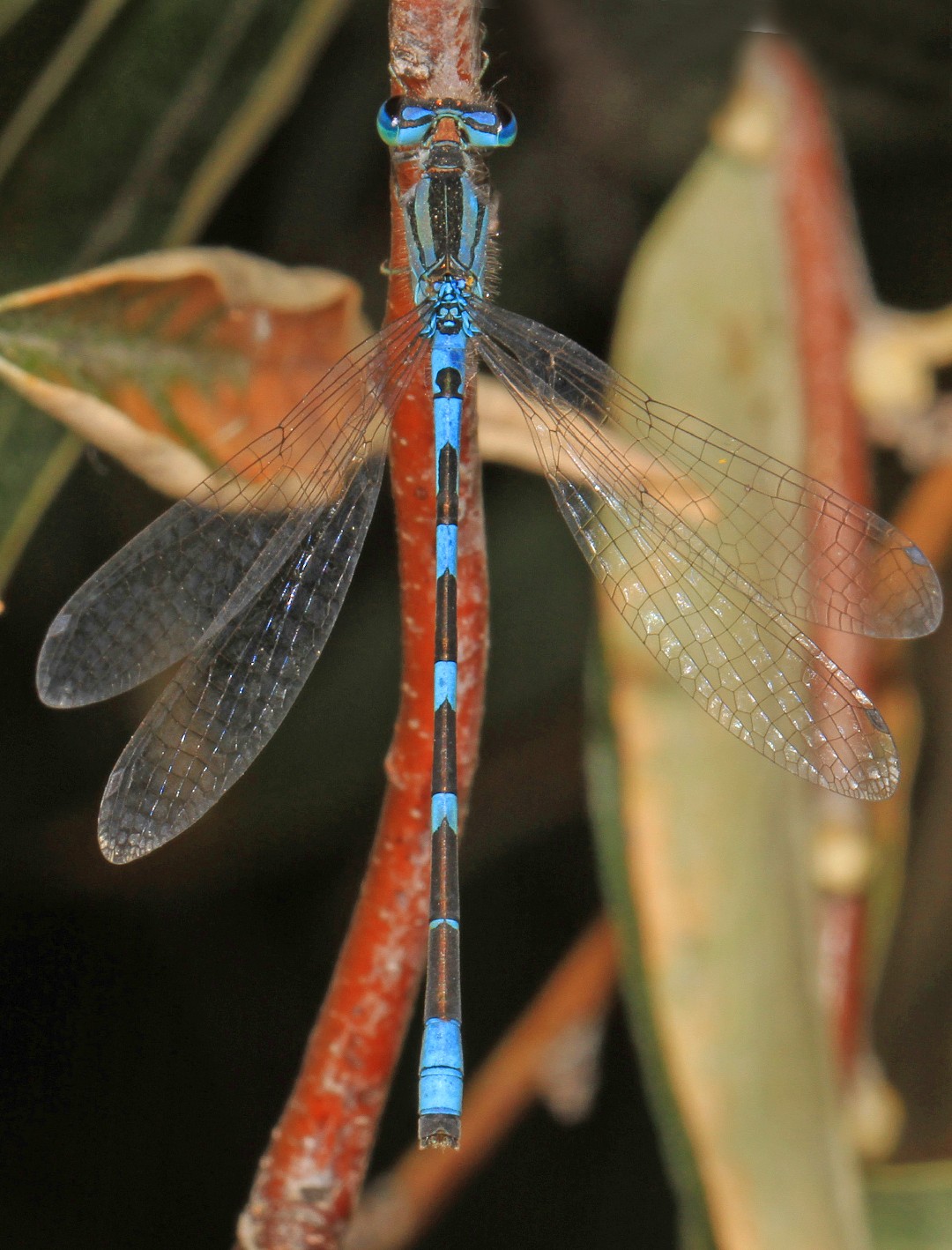
5. Tule bluet
Enallagma carunculatum is a dragonfly in the family of the brown dragonflies (Coenagrionidae). It is native to North America.
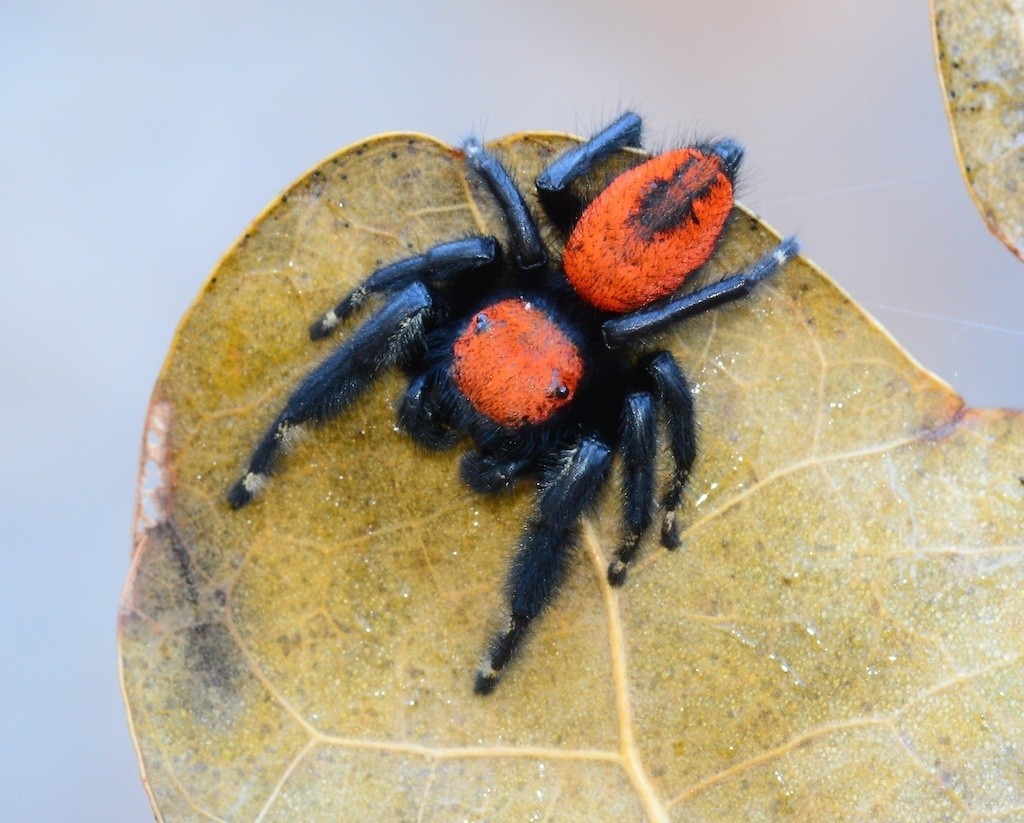
6. Red velvet jumping spider
Phidippus apacheanus is a species of jumping spider in the family Salticidae. It is found in the United States, Mexico, and Cuba.
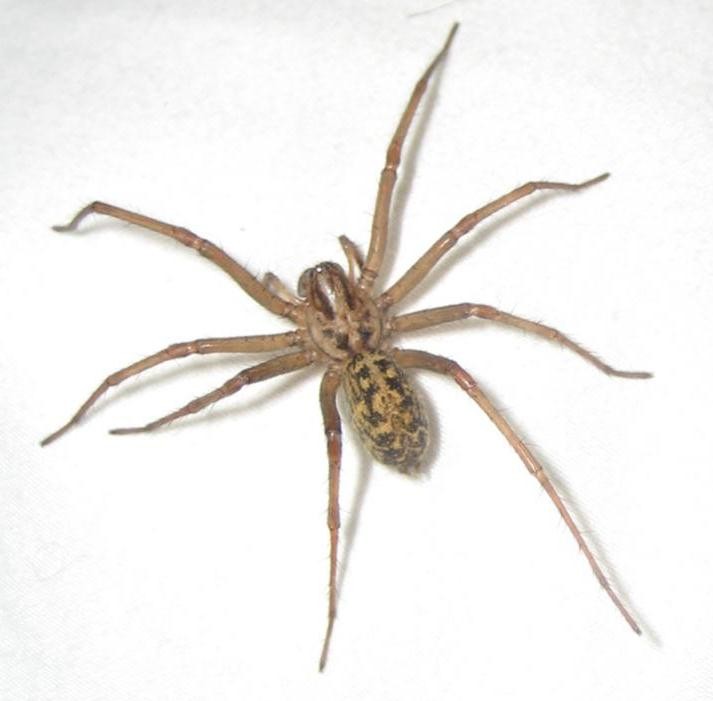
7. Hobo spider
Contrary to what you might believe, the hobo spider (Eratigena agrestis) did not reach its current hails while hoisting a bindle staff. However, they did reach us by being shipped from Europe to the Pacific Northwest. Hobo spiders are known for being incredibly difficult to identify, you will likely need to contact an expert to do so. It is easier to identify these as not being hobo spiders.
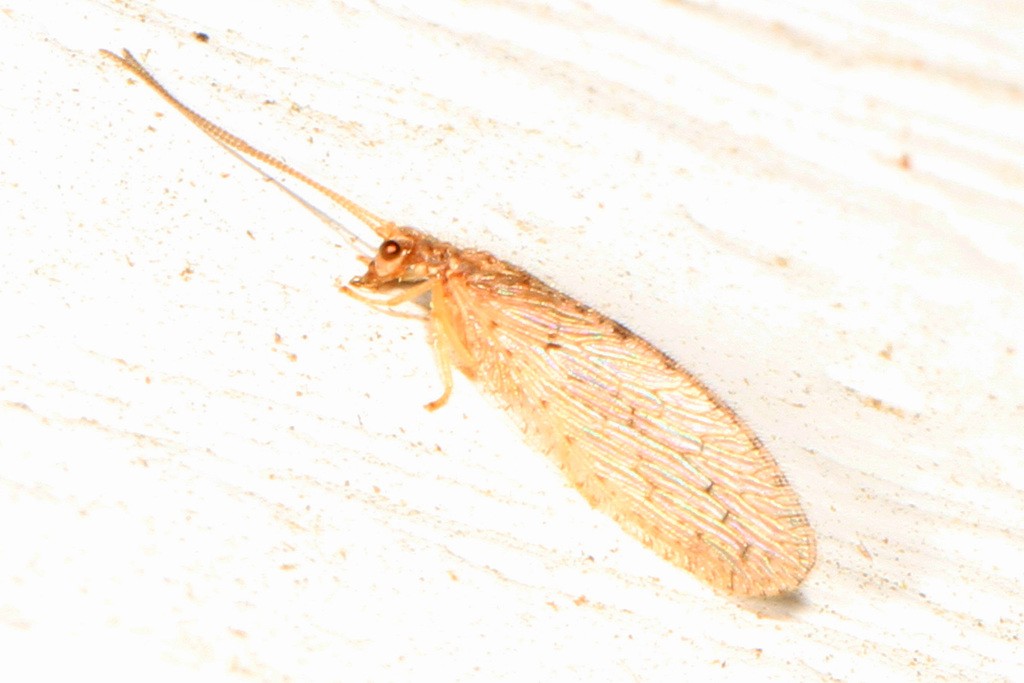
8. Micromus subanticus
Micromus subanticus is a species of brown lacewing in the family Hemerobiidae. It is found in the Caribbean, Europe and Northern Asia (excluding China), Central America, and North America.
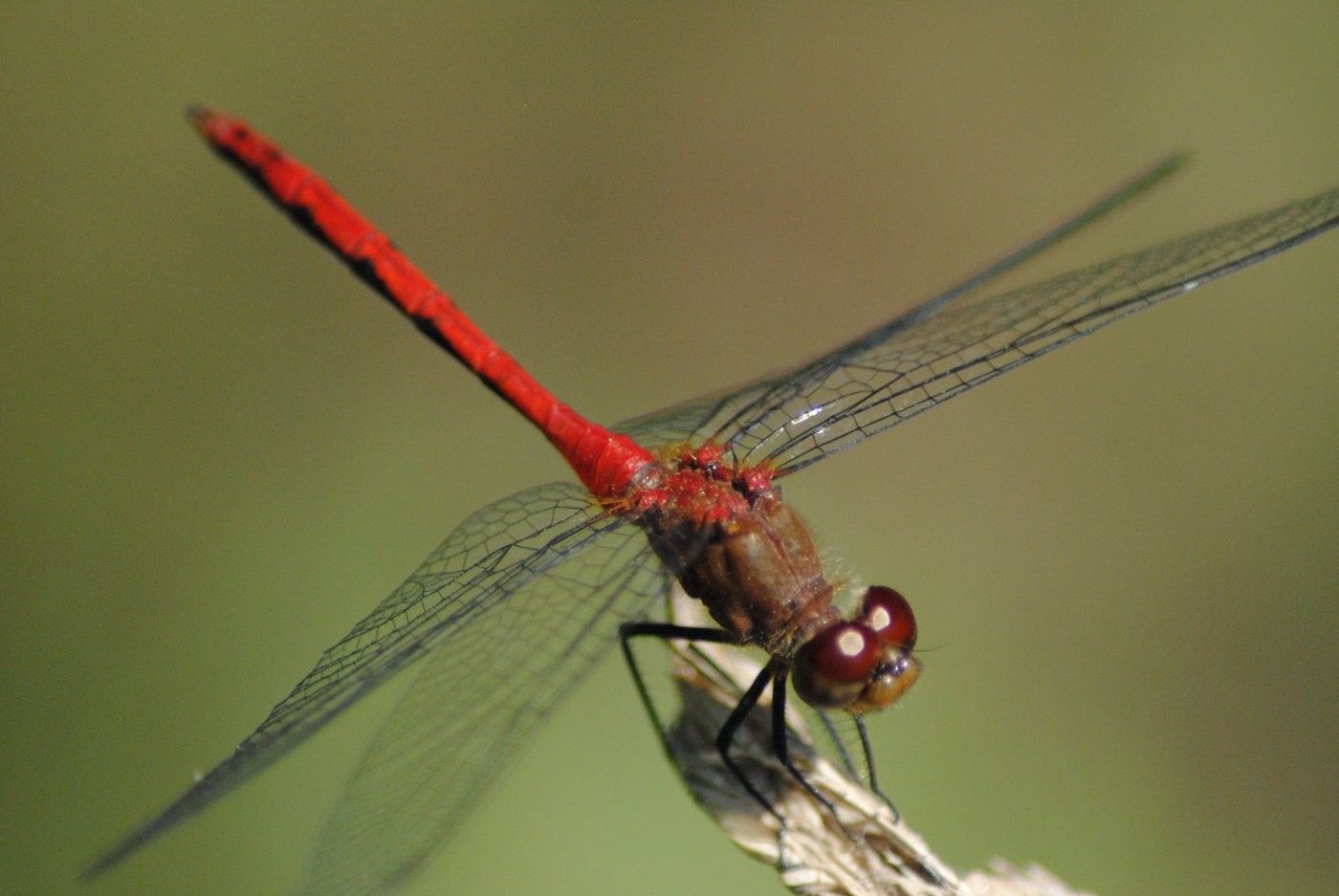
9. Ruby meadowhawk
Adult males are identifiable by a distinctive orange to brown face and red bodies. Females faces have same colours as males; bodies are brown to dark-red.
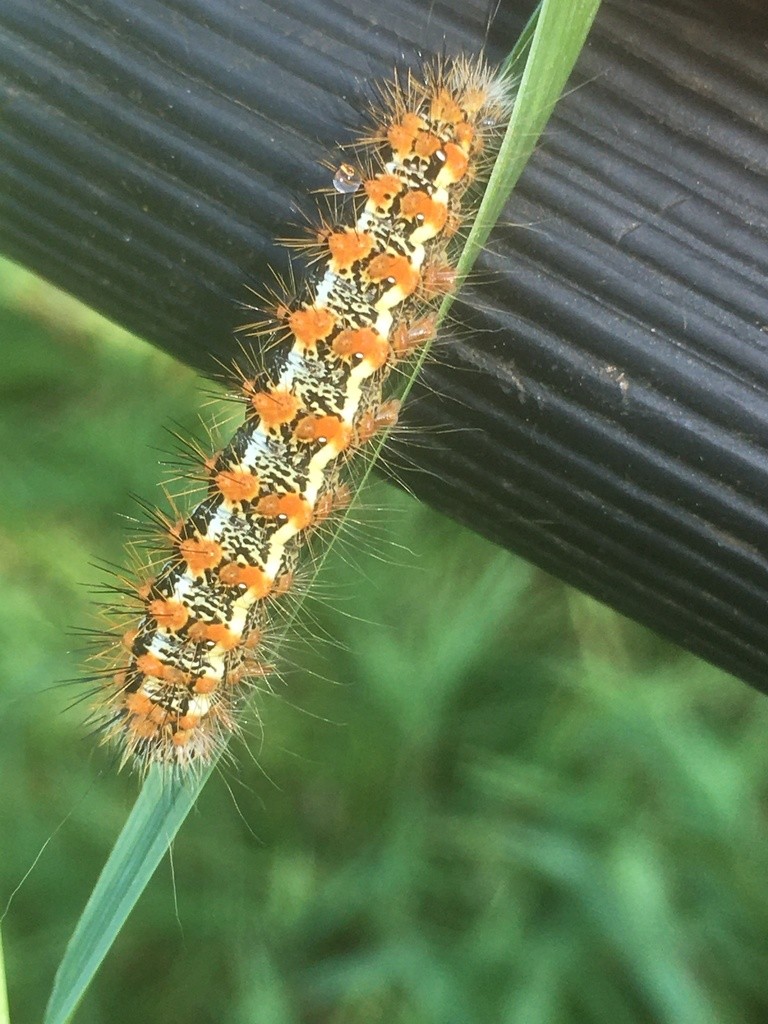
10. Cattail Caterpillar
Acronicta insularis, the cattail caterpillar (when referring to the larva) or Henry's marsh moth (when referring to the adult), is a moth of the family Noctuidae. The species was first described by Gottlieb August Wilhelm Herrich-Schäffer in 1868. It is found from coast to coast throughout the United States and southern Canada (Ontario, Quebec, New Brunswick, Nova Scotia, British Columbia, Alberta, Saskatchewan and Manitoba). The wingspan is 35–40 mm. Adults are on wing from April to September. The larvae feed on Typha and Polygonum species, as well as various grasses and sedges, poplar and willow. Acronicta insularis was formerly called Simyra insularis. In 2015, the genus Simyra, along with Oxicesta and Eogena, were moved to Acronicta based on phylogenetic analysis. The MONA or Hodges number for Acronicta insularis is 9280.
More







