




Top 14 Most Common Insects in Caracas
Insects, those unique creatures defined by their six legs and segmented bodies, are a vast and diverse group that find homes in every corner of Caracas. Cast your gaze from the mountainous regions to the bustling cityscape, and you'll discover that each locale supports its own unique insect community. Crucial to our ecosystem, they pollinate plants, break down waste, and form the base of various food chains. However, not all are friends to humans, with some falling under the pest category. Our list will introduce you to the 14 most common insects in Caracas which span from the beneficial to the troublesome. Stay tuned!

Most Common Insects
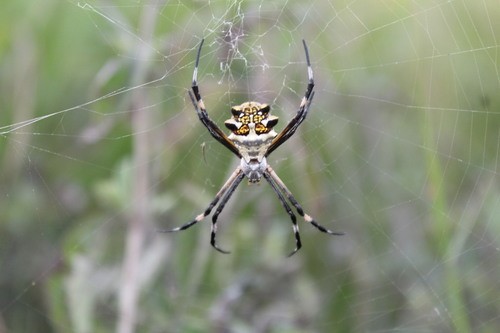
1. Silver argiope
The silver argiope (Argiope argentata) often creates unique zigzag patterns on its webs. It's usually found in warm, dry areas, especially on cacti and aloe vera plants. The females are much larger than males. They can bite and cause irritation to the skin, but the damage won't be life-threatening.
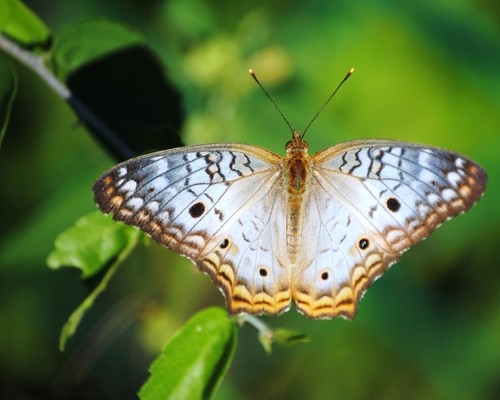
2. White peacock
The wingspan of the moths is 51 to 70 millimeters. The basic color is whitish. On the forewings there is a black, circular spot near the inner angle. At the front edge, two to three oblong, yellow-brown spots stand out. The Submarginalregion is also yellow-brown colored and crossed by dark lines. On the hind wings are two more small, black, circular spots near the tawny and dark-colored submarginal region. A short tail is more or less strong. The wing underside shows similar drawing elements as the top, but these are paler and weaker pronounced.
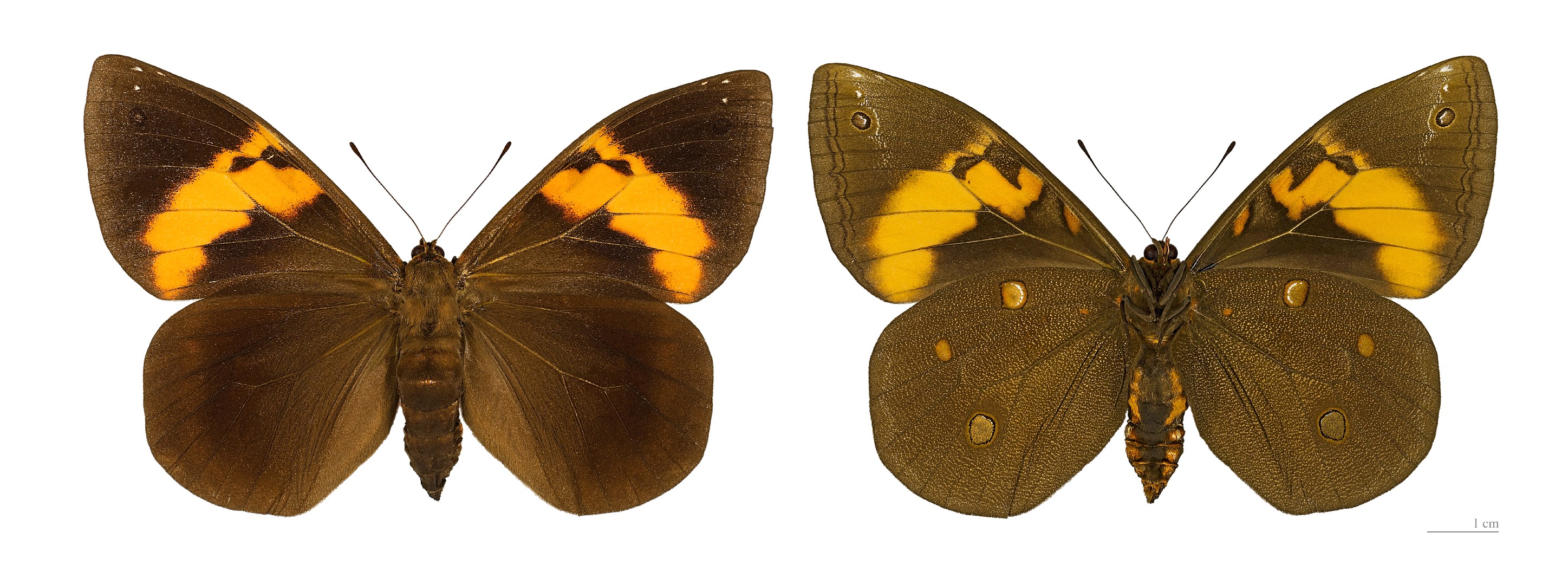
3. Brassolis sophorae
The larvae feed on a wide range of plants, including Acrocomia aculeata, Archontophoenix alexandrae, Arecastrum romazoffianum, Astrocaryum, Attalea, Bactris (including Bactris major), Butia eriospatha, Caryota mitis, Caryota urens, Chrysalidocarpus lutescens, Cocos nucifera, Copernicia cerifera, Desmoncus, Euterpe, Hyophorbe lagenicaulis, Livinstona chinensis, Mauritia flexuosa, Neodypsis decaryi, Orbignya, Phoenix canariensis, Phoenix dactylifera, Phoenix reclinata, Pritchardia pacifica, Ptychosperma macarthurii, Roystonea oleracea, Roystonea regia, Roystonea venezuelana, Sabal mauritiiformis, Sabal umbraculiferus, Scheelea macrocarpa, Washingtonia filifera, Saccharum officinarum, Musa sapientum, Ravenala madagascariensis and Strelitzia nicolai. 
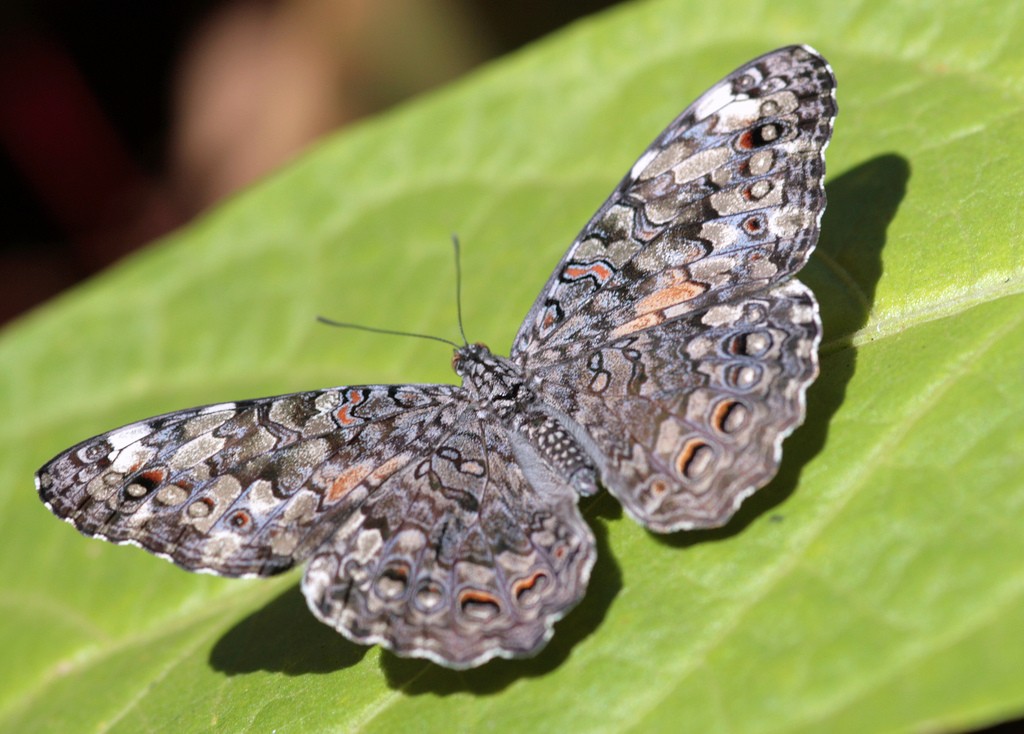
4. Gray cracker
The wingspan is 7 - 9 cm. The upperside is mottled brown and white although there is some red in the forewing cell bar. The hindwing eyespots have orange scales preceding black crescents. The underside of the hindwings is white and the submarginal eyespots are composed of a brown ring around a black crescent in a white center.
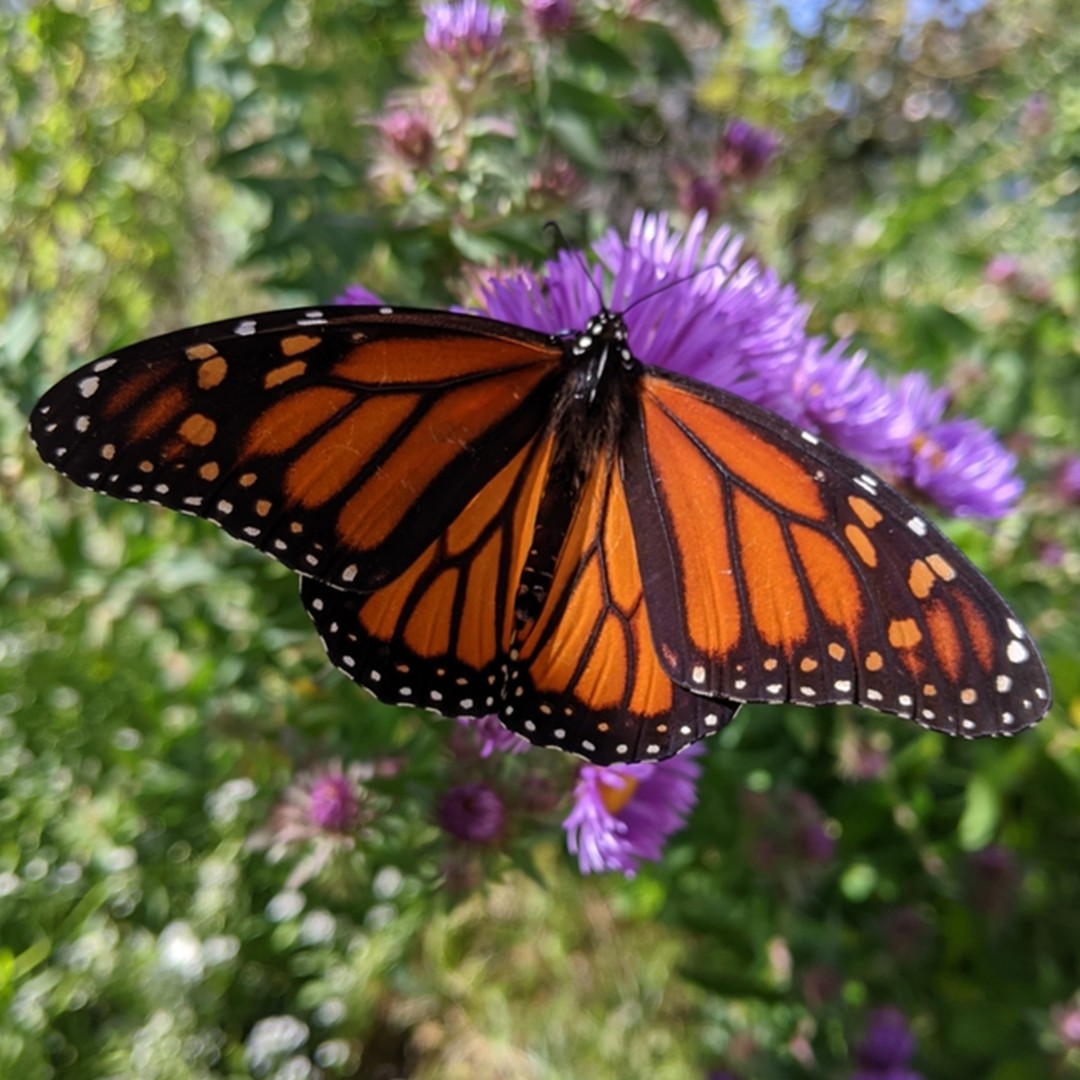
5. Monarch butterfly
The monarch butterfly (Danaus plexippus) is the most recognizable butterfly in North America. It is best known for its appearance, but should be better known for the fact that it has a 3000-mile migration that takes the butterfly 4 generations to complete. Their diet is also a natural deterrent for predators, as they eat milkweed, a poison that induces vomiting.
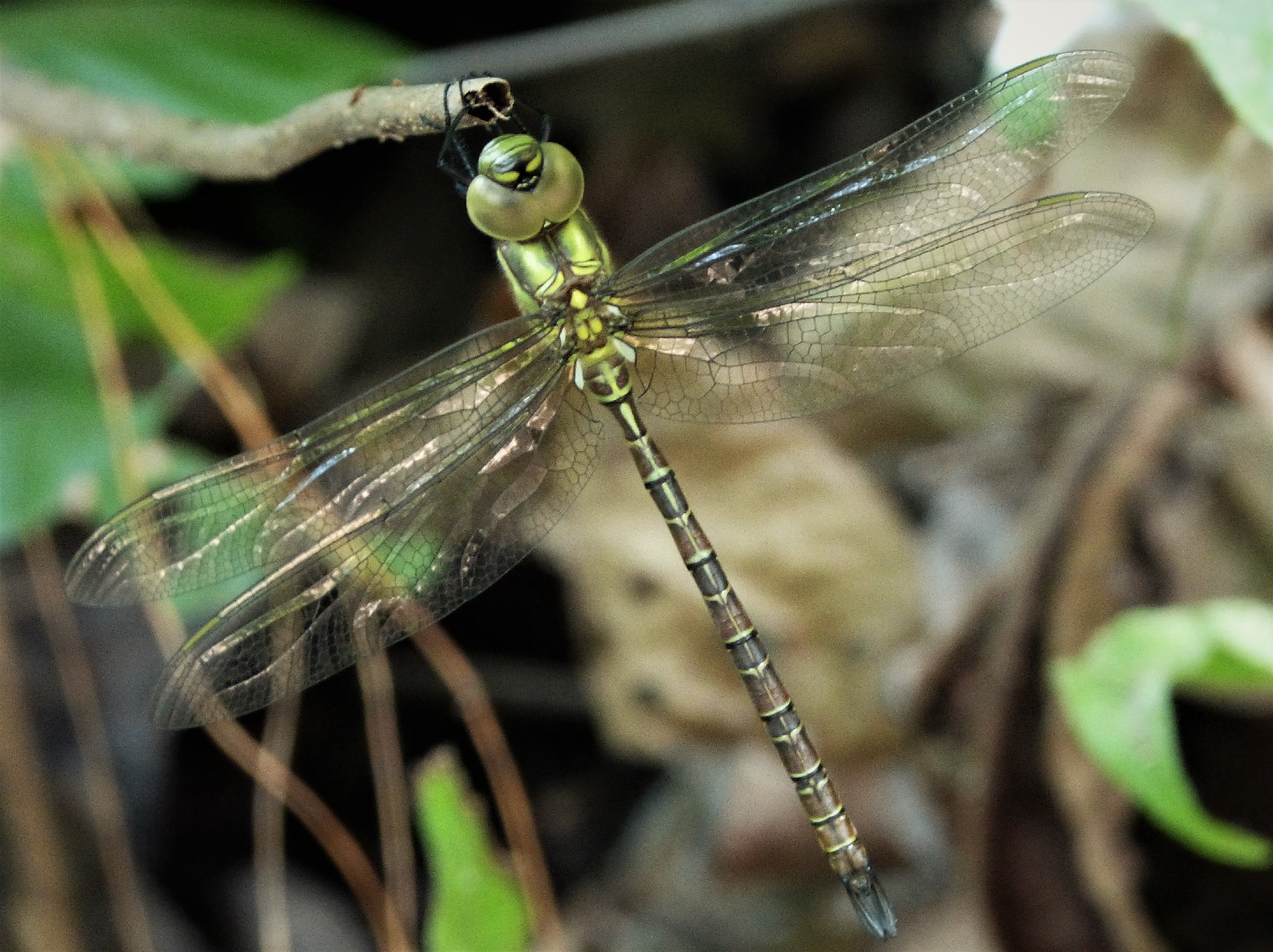
6. Blue-faced darner
The species is on the Red List of the IUCN as not endangered, year of assessment 2007, the trend of the population is stable according to the IUCN.
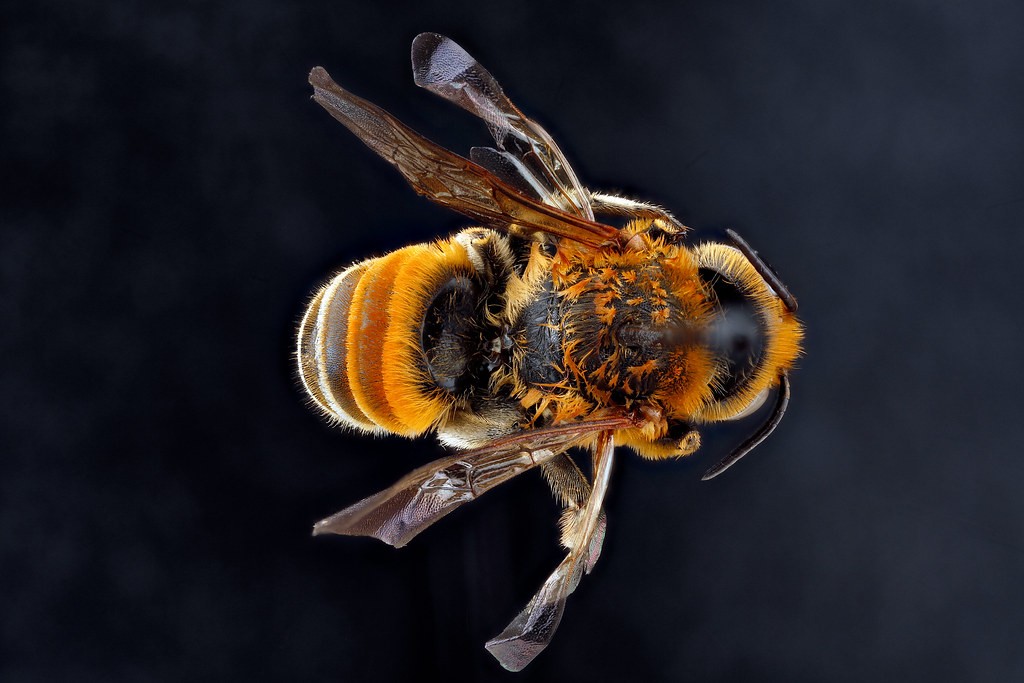
7. Woolly Wall Bee
Megachile lanata is a species of bee in the family Megachilidae. It was described by Johan Christian Fabricius in 1775.
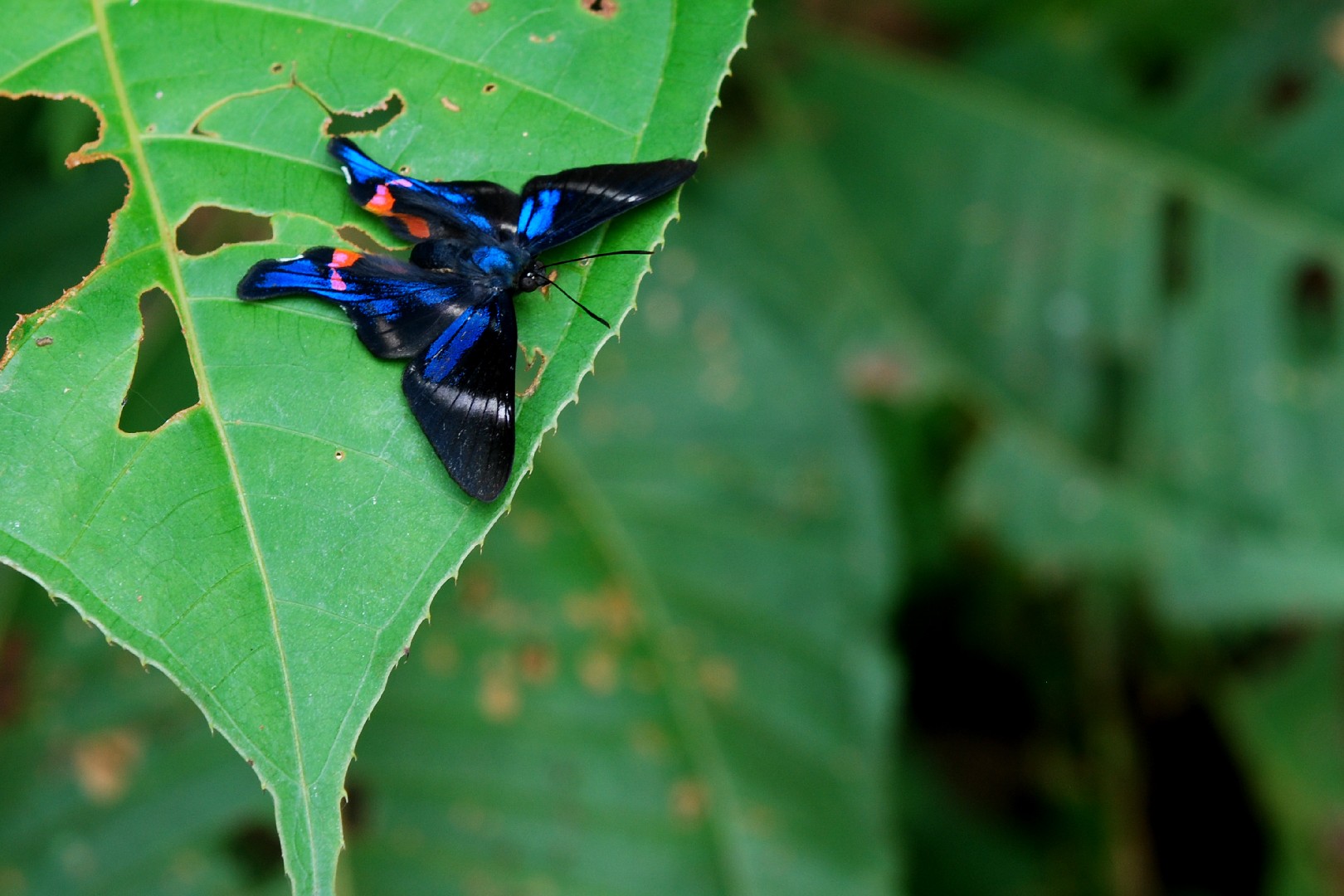
8. Periander metalmark
Rhetus periander, the Periander metalmark or variable beautymark, is a butterfly of the family Riodinidae. It is found in most of Central America and South America, ranging from Mexico to Brazil and Argentina.
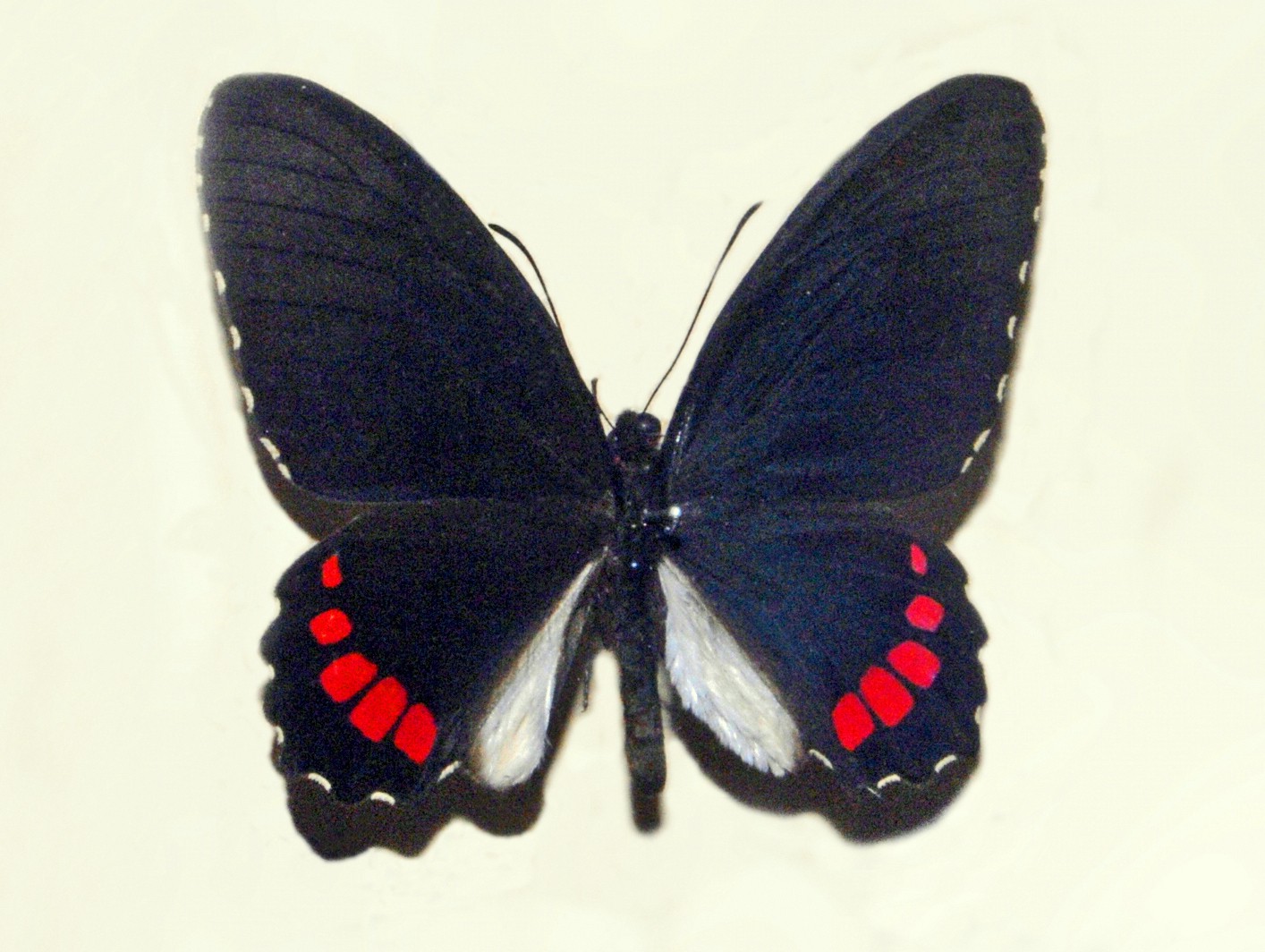
9. Variable cattleheart
The upper side of the wings is black with a row of red postmedian spots. The underside of the wings is also black with a row of pink and whitish spots.
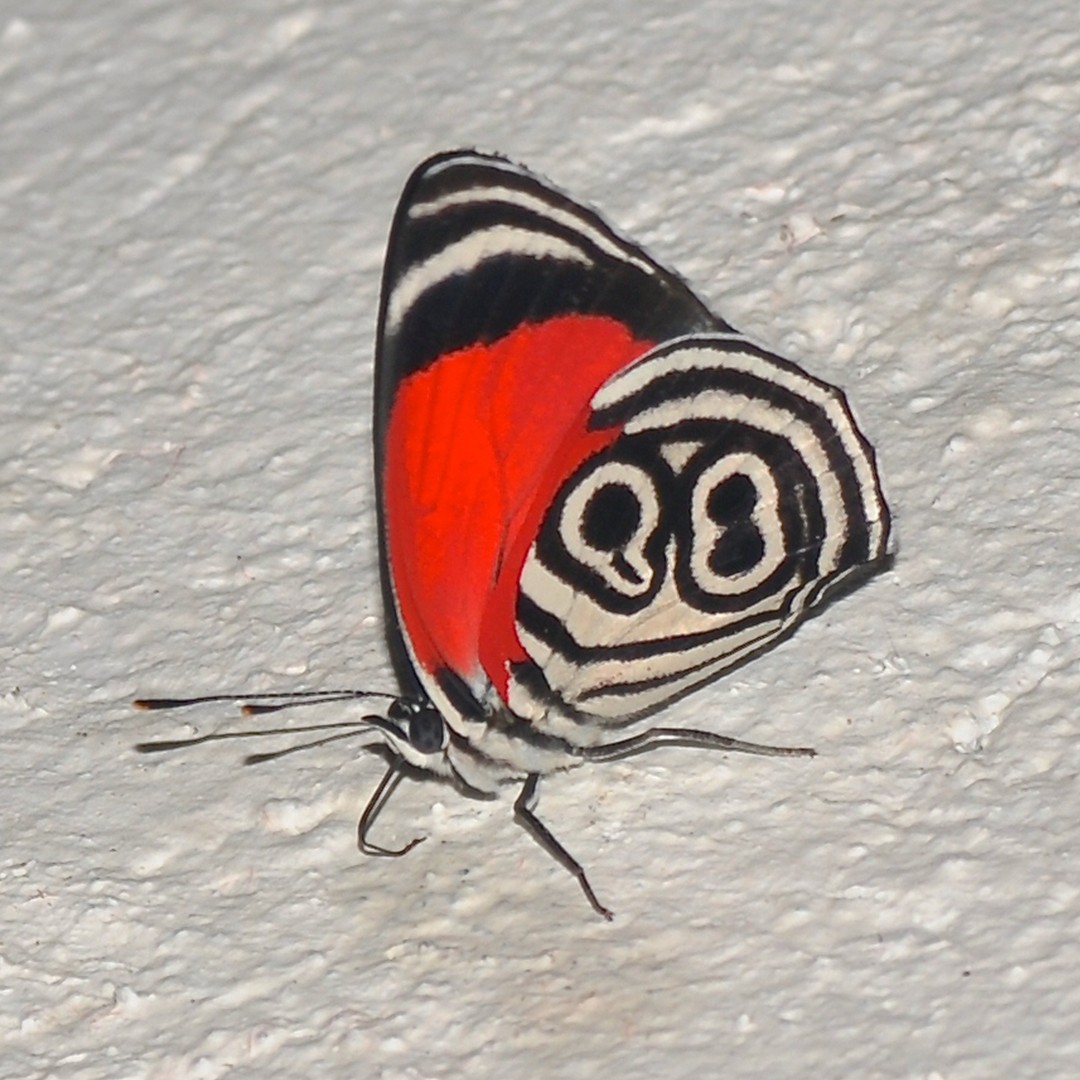
10. Cramer's eighty-eight
The wingspan is about 3 - 4 cm. Adults are black with a blue band on each wing. The underside is red and white with black stripes that look like an outlined number "89" or "98".
More







