




Top 15 Most Common Insects in Ha Giang
In the distinct landscapes of Ha Giang, a cornucopia of insect life thrives, showcasing the biodiversity inherent in this region. Insects play crucial roles in our ecosystem, from serving as natural pest controllers to vital pollinators. Touching each corner of Ha Giang, Our list of '15 most common insects' dovetails these creatures' significance with their unique habitats. Uncover the intriguing interplay between environment and the array of insects in Ha Giang. Moving from the verdant lowlands to the towering peaks, insect diversity in Ha Giang is an ecologist's delight.

Most Common Insects
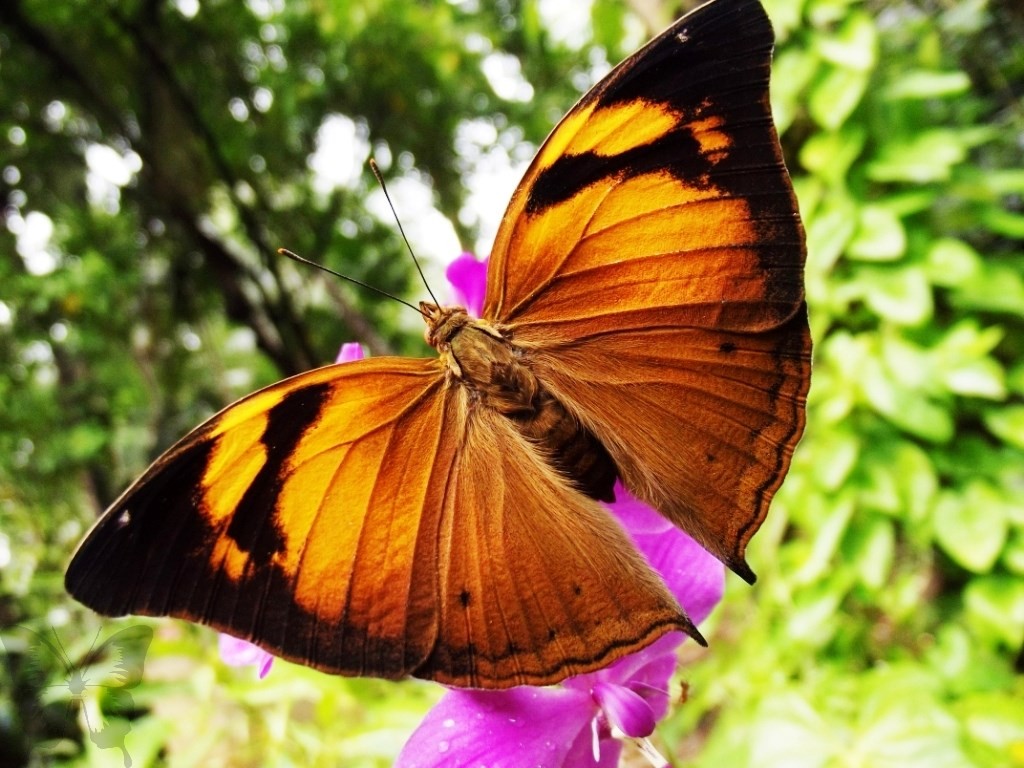
1. Autumn leaf
The larvae are black, with two rows of dorsal white spots. Head with a pair of branched spines; rest of the segments with a dorsal and a lateral row of blue branched spines on each side. The pupae are yellowish with numerous black spots; constricted in the middle; head produced into two points. Male's and female's underside yellowish brown, paling anteriorly to rich golden yellow on the forewing, shading anteriorly into dusky brown on the hindwing. Forewing: the apical half black, following a line from vein 12 opposite the discocellulars, passing through apex of cell, obliquely across middle of interspace 3 and curving down to tornus; a black spot near apex of cell coalescing with the inner margin of 1he black colour; a short, very oblique, broad golden-yellow band, broader in the female than in the male, from middle of costal margin to interspace 5; a spot beyond in line with it in interspace 4; two, sometimes three, minute, preapical white specks; the cilia fulvous (tawny), touched with white, anteriorly. Hindwing uniform; the costal margin broadly as noted above, a subterminal narrow band and narrower terminal line posteriorly, dusky black; a postdiscal black spot in interspaces 2 and 5 respectively; the cilia fulvous. The ground colour varies from reddish to dark greenish brown with irrorations (speckles) of greyish and black scales; apex of the forewing and the terminal margin posteriorly of the hindwing more or less lilacine; forewings and hindwings crossed by a dark narrow discal fascia, generally bordered on the inner side by a greyish line; this fascia bent inwards at right angles above vein 6 of the forewing and in most specimens, bordered internally by a diffuse pale patch and externally by an oblique whitish mark, beyond which is a subcostal white spot, followed by a transverse sinuous postdiscal series of obscure ocelli crossing both wings, each ocellus centred by a minute dot, white on the fore, black on the hindwing. In the male there are generally, but not invariably, a number of whitish spots on the basal areas of both wings. Antennae blackish brown, ochraceous at apex; head, thorax and abdomen dark fulvous brown; beneath, the palpi white, the thorax and abdomen pale brown. Wingspan is about 8 - 9 cm. 
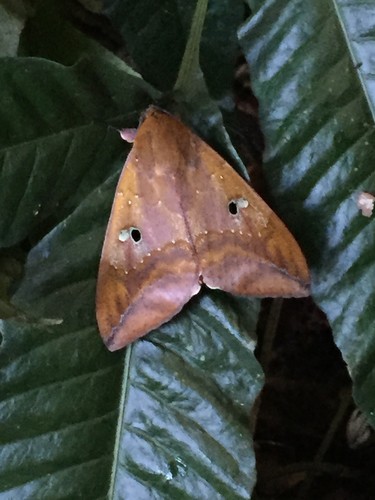
2. Thyas honesta
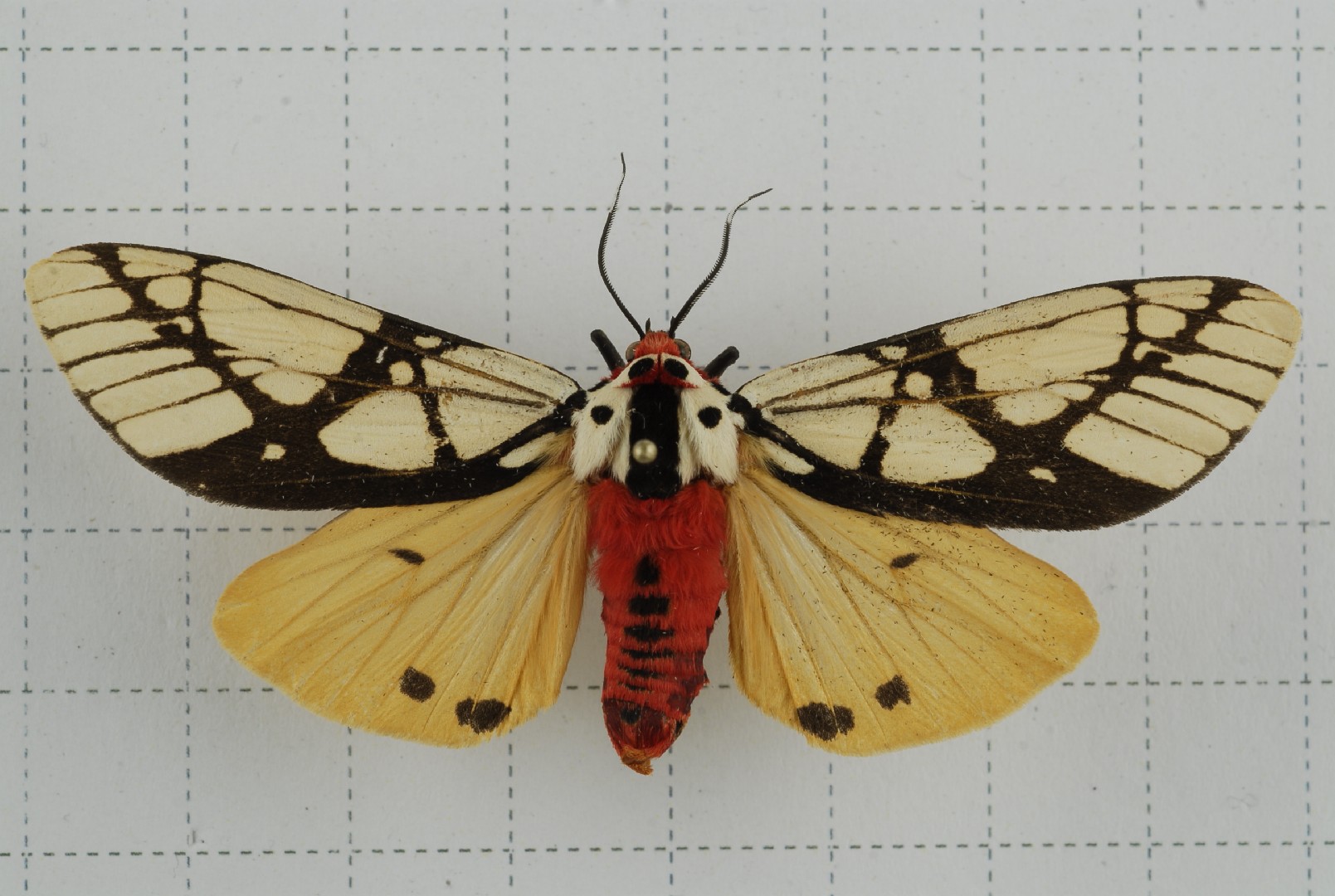
Its wingspan is about 84–104 mm. Head and thorax reddish chestnut in colour, where the third joint of palpi black. Abdomen crimson. Forewings reddish chestnut, slightly irrorated with dark scales. There are traces of a sinuous antemedial line with three specks on it. Reniform greyish, where the lower part more or less completely filled in with black. A curved postmedial series of white specks with an indistinct band beyond it angled at vein 6 and met by a dark streak from the apex. A marginal series of specks present. Hindwings crimson with black sub-marginal medial patch. Larva ophiusine-shaped with an apple-greenish body and finely lined longitudinally with purple-centered double white lines. The dorsolateral pair of conical tubercles are yellowish patched with red. The larvae feed on Careya, Barringtonia and Planchonia species.
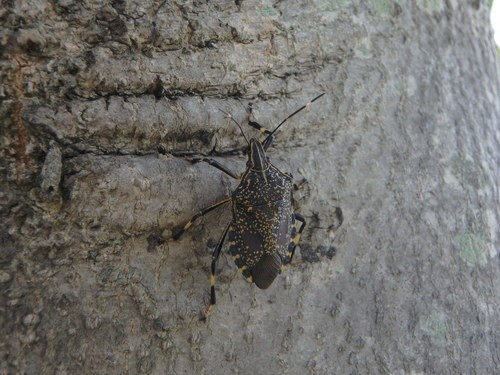
3. Yellow-spotted stink bug
The yellow-spotted stink bug has a wide distribution across Asia. In China, the insect is a pest to more than 57 plants, including fruit trees. It can damage plants and reduce crop yields. Adults overwinter in natural and manmade shelters like building crevices and underneath tree bark, emerging in the spring to feed on the tree’s new growth.
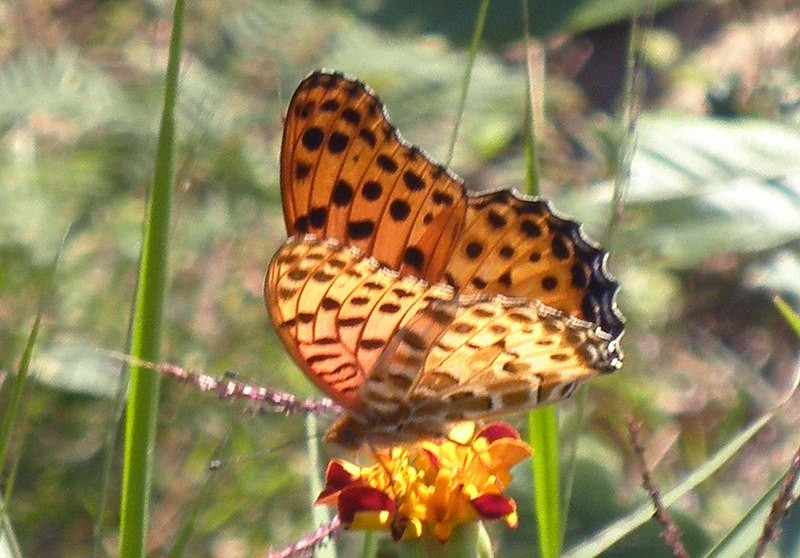
4. Indian fritillary
Male: Upperside: forewing rich orange yellow, hindwing paler yellow, with the following black markings: Forewing: cell with a basal short transverse streak, a medial broad oval loop, its outer margin sinuous; a broad transverse streak beyond cell not reaching the median nervure; a broad streak along the discocellulars; a zigzag discal series of large spots, angulated outwardly in interspace 4, inwardly in interspace 2, a minute spot at base of interspace 1; a somewhat diffuse large postdiscal spot below the costa in interspace 6; a postdiscal sinuous series of round spots, those in interspaces 1 and 4 very small; an inner complete subterminal sinuous series of round spots; an outer subterminal line, widening on the veins, and a terminal slender line. Hindwing: a basal, transverse, obscure narrow mark in cell, another above it in interspace 7, a transverse lunule across the middle of the cell; a small spot outwardly bordering the lower discocellular; a discal series of transverse spots from interspaces 1 to 7, sinuous posteriorly; a postdiscal series of five spots in interspaces 2 to 6; a subterminal series of somewhat lunular spots; finally, a narrow band on term en traversed posteriorly by a series of blue, anteriorly by a series of ochraceous lunules. Underside forewing pale terracotta red, shading into ochraceous towards the apex, the apex broadly suffused with that colour; markings as on the upperside, with the following exceptions: subcostal spot in interspace 6, upper two spots of postdiscal series, upper four spots of the inner subterminal series, and the anterior portions of the outer subterminal and of the terminal line olivaceous brown; the upper two postdiscal spots centred with white, with a white spot on each side; the upper four spots of the sub terminal series connate (united), forming a short curved band. Hindwing variegated with ochraceous, olivaceous-brown and silvery-white markings, the last for the most part narrowly margined on the outer side by short black lines; the veins prominently pale ochraceous; the medial silvery markings form a well-marked sinuous discal series, followed by a curved postdiscal series of five olivaceous round spots; each spot and the olivaceous-brown quadrate patch near base of cell with a minute white central spot; a slender black subterminal line widening at the veins, as on the forewing, followed by an ochraceous narrow lunular band and an outer slender black anteciliary line; the subterminal black line margined on the inner side by a series of: slender white lunules, bordered inwardly by a series of broad olivaceous-brown markings in the interspaces. Antennae brown above, ochraceous red beneath; head, thorax and abdomen olivascent tawny; beneath, palpi, thorax and abdomen pale ochraceous. Female similar. Differs from the male as follows: Upperside: apical half of forewing from about the middle of the costa obliquely to just above the tornus black, inwardly suffused with purple, crossed by a broad white band from costa to the subterminal series of black spots; four preapical white spots, the upper three bordering on each side and above a very obscure ocellus scarcely visible on the black background, an inner and an outer subterminal transverse series of slender white lunules. Underside: forewing markings similar to those on the upperside, but the apex of the wing beyond the white oblique band ochraceous green. Hindwing as in the male, but the markings slightly broader. Antennae, head, thorax and abdomen as in the male, the abdomen paler beneath. Wingspan: 80–98 mm (3.1–3.9 in). Var. taprobana, Moore, is a slightly darker race from Ceylon, with markings similar in both sexes to those of hyperbius. Moore, however, states that taprobana is an intermediate between the south Indian form (castetsi) and typical hyperbius specimens from Ceylon that do not differ from upper India, Assam, and Burmese specimens, except in the very slightly darker ground colour on the upperside. Race castetsi, Oberthur: The females of this remarkable form seem to be locally dimorphic. Male closely resembles the male of hyperbius but differs as follows: Upperside: ground colour a richer brighter shade of orange yellow; black markings similar but distinctly smaller, of a deeper black: subterminal transverse series of slender lunules traversing the terminal black margin on the hindwing of the same shade of orange yellow as the ground colour, not blue on the posterior half of the wing. Underside: the olivaceous brown at apex of forewing and variegating the hindwing more of a greenish golden tint. A sex-mark of specialized raised scales along middle of vein 1 on the upperside of the forewing very prominent. Female Nilgiri form: resembles the female of typical hyperbius differs as follows: Upperside: ground colour pale golden yellow; basal half of both forewings and hindwings shaded with metallic green in the forewing; in some specimens this tint is slightly olivaceous; black markings and the white oblique band on the apical area of the forewing as in hyperbius, but proportionately smaller, the purplish-blue shading along inner margin of the white band much less conspicuous, as is also the bluish tint; on the white preapical spots and subterminal markings on the forewing and on the posterior half of the subterminal line of limules on the hindwing. Underside as in hyperbius but the ground colour on the forewing a paler shade of terracotta red; the olivaceous brown variegating the hindwing of a distinctly greener tint. Female typical form as described from Trichinopoly. Similar to the male differs as follows: Upperside: ground colour pale golden yellow; basal half of the wings suffused with dark olivaceous green; black markings as in the male but larger; on the forewing the spots of the subterminal series very large, coalescent or nearly coalescent with one another and with the dentate spots on the veins in the inner terminal line; the upper two spots also of the postdiscal series very large and coalescent, the upper of the two joining on above and below to the inner postdiscal lunate spot in interspace 6, thus enclosing a prominent lunule of the ground colour. Underside as in the male but paler.
5. Common nawab
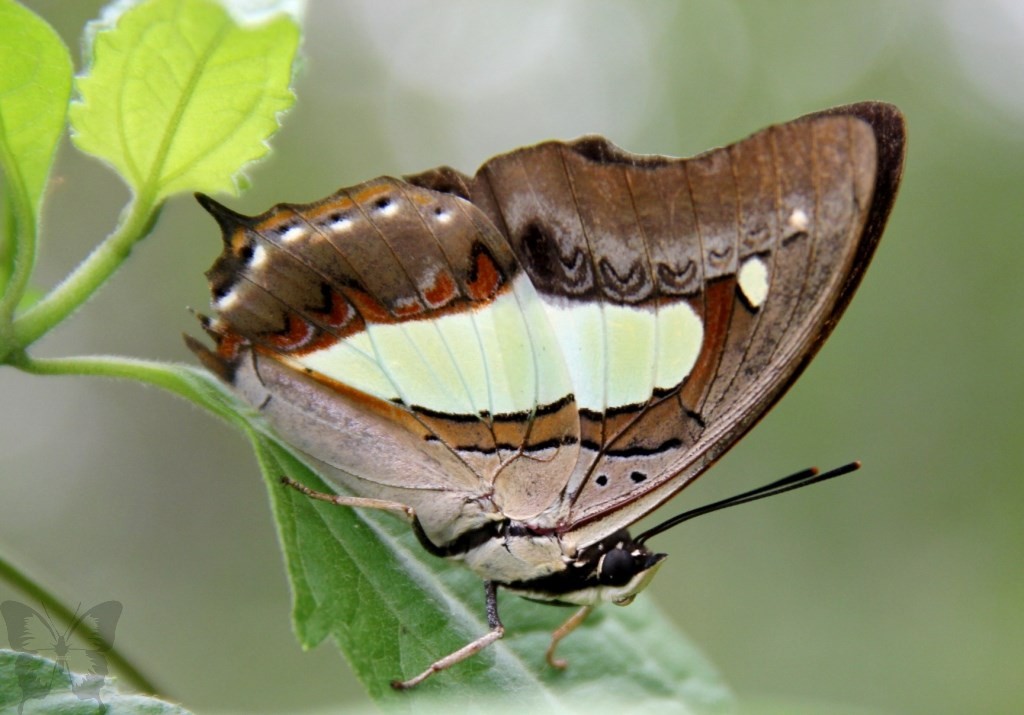
Upperside of male and female is black. Forewings and hindwings with a discal broad transverse area from below vein 4 in forewing to vein 2 on hindwing, a moderately large spot in interspace 5, a minute preapical dot beyond in interspace 6 on forewing, and a subterminal row of spots with two or three spots beyond them on the tornal angle of the hindwing, pale yellow, sometimes with an ochraceous, sometimes with a greenish tinge. The discal area on the forewing nearly as broad in interspace 3 as on the dorsum, on the hindwing narrowing to an acute point on vein 2 at two-thirds of its length from base of wing. Tails touched with bluish grey. Underside with the discal transverse area and spot in interspace 5 as on the upperside; base and costal margin of the forewing to apex, and base and dorsal margin of the hindwing broadly lilacine brown, on forewing with two small black spots near base. Bordering the transverse discal area on the inner side, where it is margined with black lines, and above, is a broad chocolate carved band, continued more narrowly along the outer side of the discal area; beyond this on the forewing is a concave series of dusky black lunules, on the hindwing the band itself is traversed by a line of obscure pale lunules; finally on the hindwing there is a subterminal series of internally white-bordered black spots followed by an obscure ochraceous terminal line, and above the tornal angle a slender transverse black line from vein 1 to the dorsal margin. Wingspan 6 - 9 cm. Caterpillar is elongated, slug-shaped, dark green; head large, wide and surmounted by four divergent curved fleshy spinous processes; anal segment with two short naked terminal points; the segments with an oblique yellowish-white lateral stripe, most prominent on the 7th, 9th and 11th segments, and beneath these a lower series of small white spots. Pupa is thick, cylindrically oval; green streaked with white; dorsum and thorax convex; head broad, truncated, obtusely pointed in front.
6. Percnia giraffata
7. Giant Crab Spider
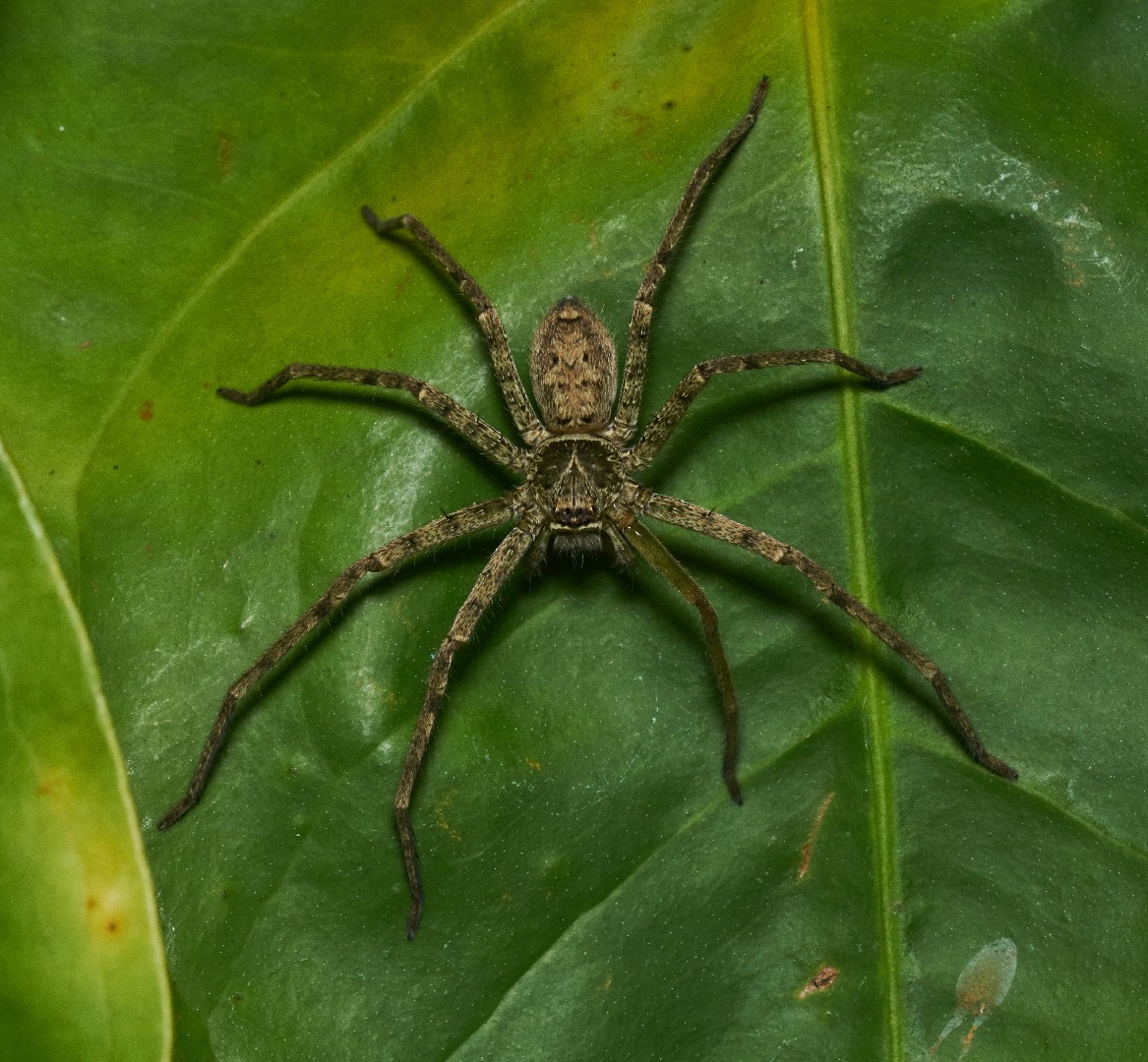
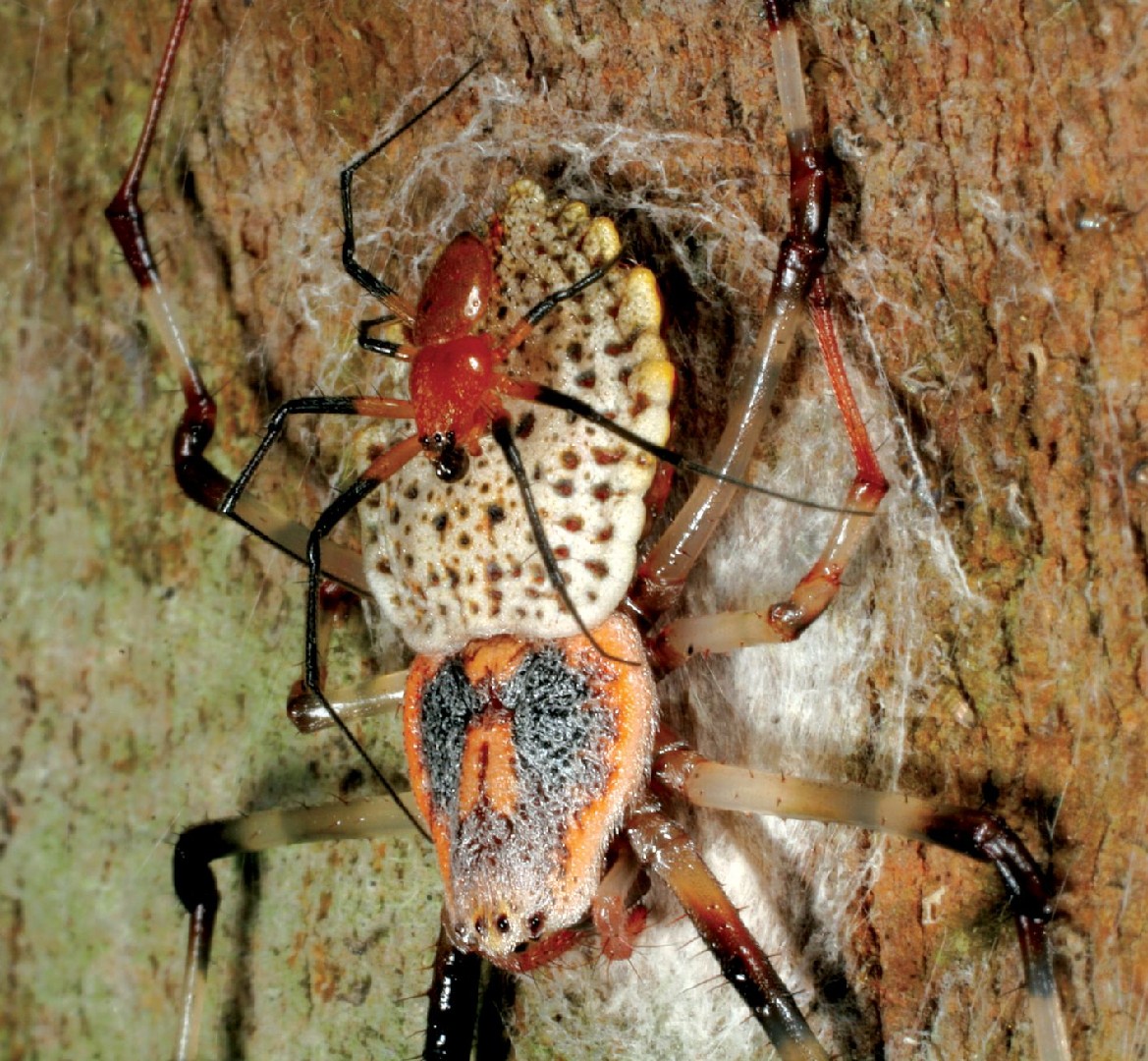
The giant Crab Spider is a large spider native to the tropics; the largest reported individual had a leg span of 30 cm. This cosmopolitan spider is highly valued in some areas, as it's able to catch cockroaches and other indoor pests. Reportedly, it hunts even scorpions and bats. This spider is venomous and sometimes bites humans, but it's considered harmless.

8. Great jay
Graphium eurypylus has a wingspan reaching about 7–8 centimetres (2.8–3.1 in). The basic colour of the uppersides of the wings is black, with a chain of yellowish or greenish spots at the edges. In the middle of the forewings there is a large yellowish or greenish area. The undersides of the wings are similar to the uppersides, but the basic colour is brownish and the spots are paler or whitish. The hindwings have a few red spots. Subspecies G. e. jason (South India and Sri Lanka) — Males and females. Upperside black. Forewing: three slender, oblique, short pale green streaks in basal half of cell and two irregular small similarly-coloured spots near its apex; a discal band composed of pale green spots that gradually diminish in size anteriorly, the spot in interspace 5 the smallest, the two in the interspaces above it slightly larger; a spot at base of interspace 7 and a sinuous complete subterminal series of spots similarly coloured. Hindwing: a transverse band that extends as far as interspace 2 posteriorly and is a continuation of the discal band on the forewing; the upper portion of this band white, the lower pale green; this is followed by a sinuous subterminal series of small pale green spots as on the forewing. Underside: brownish-fulvous black; markings similar, larger, their edges diffuse and all of a silvery white, slightly tinted with pale green. Hindwing in addition has a white basal streak that extends halfway down the dorsal margin; another shorter white subbasal streak from costa to the subcostal vein coalescent with the white of the discal band in the cell, the streak of ground colour that lies between this subbasal and the discal band jet black, interrupted where it crosses vein 8 by a crimson spot; finally, quadrate black spots near apex of cell and at bases of interspaces 1, 2 and 3, all outwardly margined with crimson. Antenna, head, thorax and abdomen black; beneath: the palpi, thorax and abdomen touched with white, the abdomen with dingy white lateral lines. Male has an abdominal fold within grey, with a fringe of white hairs. Subspecies G. e. axion, Felder (Malayan region and Himalayas) can be distinguished from subspecies G. e. jason as follows: The markings that compose the discal band very much broader; all the spots and markings of pale green and white conspicuously larger, especially in the spring broods. Underside of hindwing: crimson spots more conspicuous, a line of crimson along the posterior portion of the dorsal margin; in most specimens the short subbasal narrow band of white that runs from the costa to the subcostal vein does not coalesce with the white of the discal band where it crosses the cell.
9. Notonagemia analis
10. Straight line mapwing
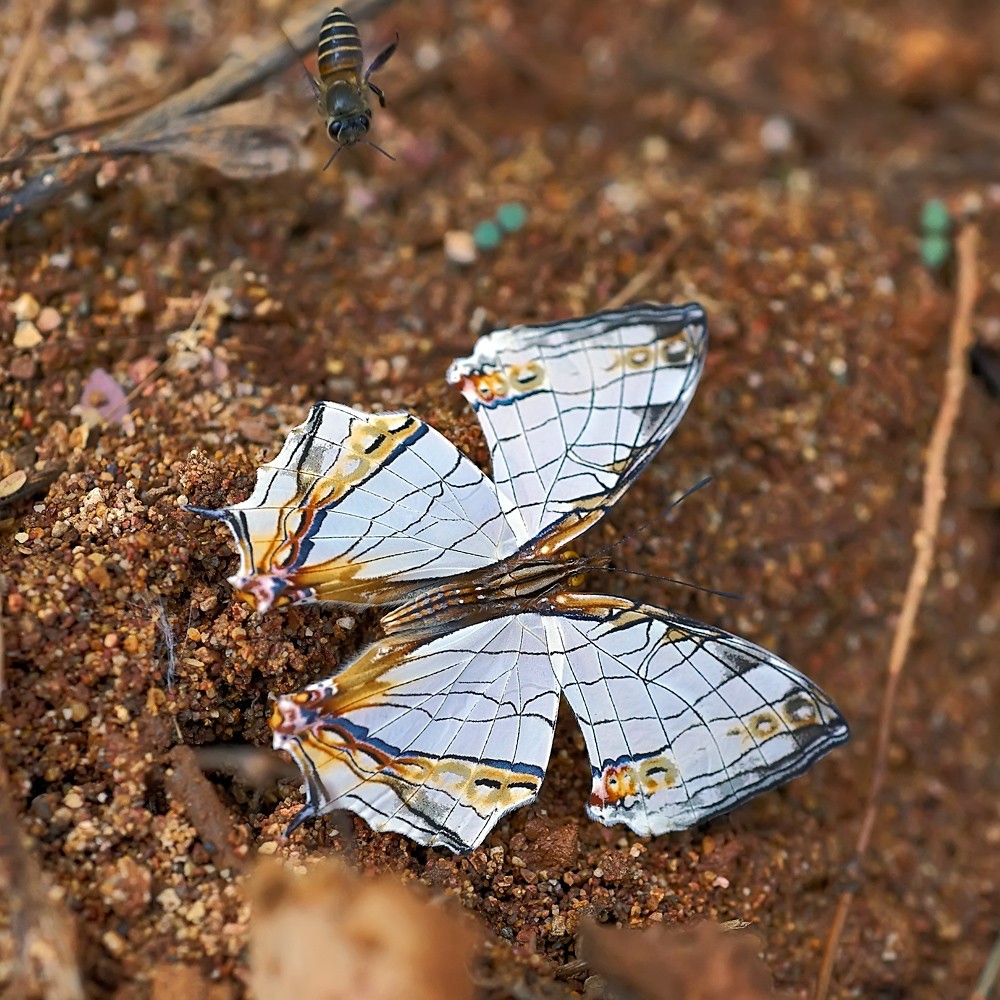
Cyrestis nivea, the straight-line map-wing, is a butterfly of the family Nymphalidae. It is found in South-East Asia. The habitat consists of primary and secondary forest at elevations between sea level and about 500 metres. Males and females are similar, but females are somewhat paler and have slightly more rounded wings. The larvae are green and covered with tiny pale tubercules. There is a long curved dark purplish spiky horn on the fifth and eleventh segments.


More







