




Top 20 Most Common Insects in Baki
Insects, diverse creatures defined by their unique anatomy and propensity for various habitats, are an integral part of Baki's ecosystem. Geography influences this diversity, as distinct environments within Baki cater to a broad spectrum of insect species. From pests impairing plant health to beneficial insects aiding pollination, each insect has a role and shapes the place it inhabits. Stay tuned as we explore 20 of the most common insects in Baki, offering a fascinating insight into our small-scale cohabitants.

Most Common Insects
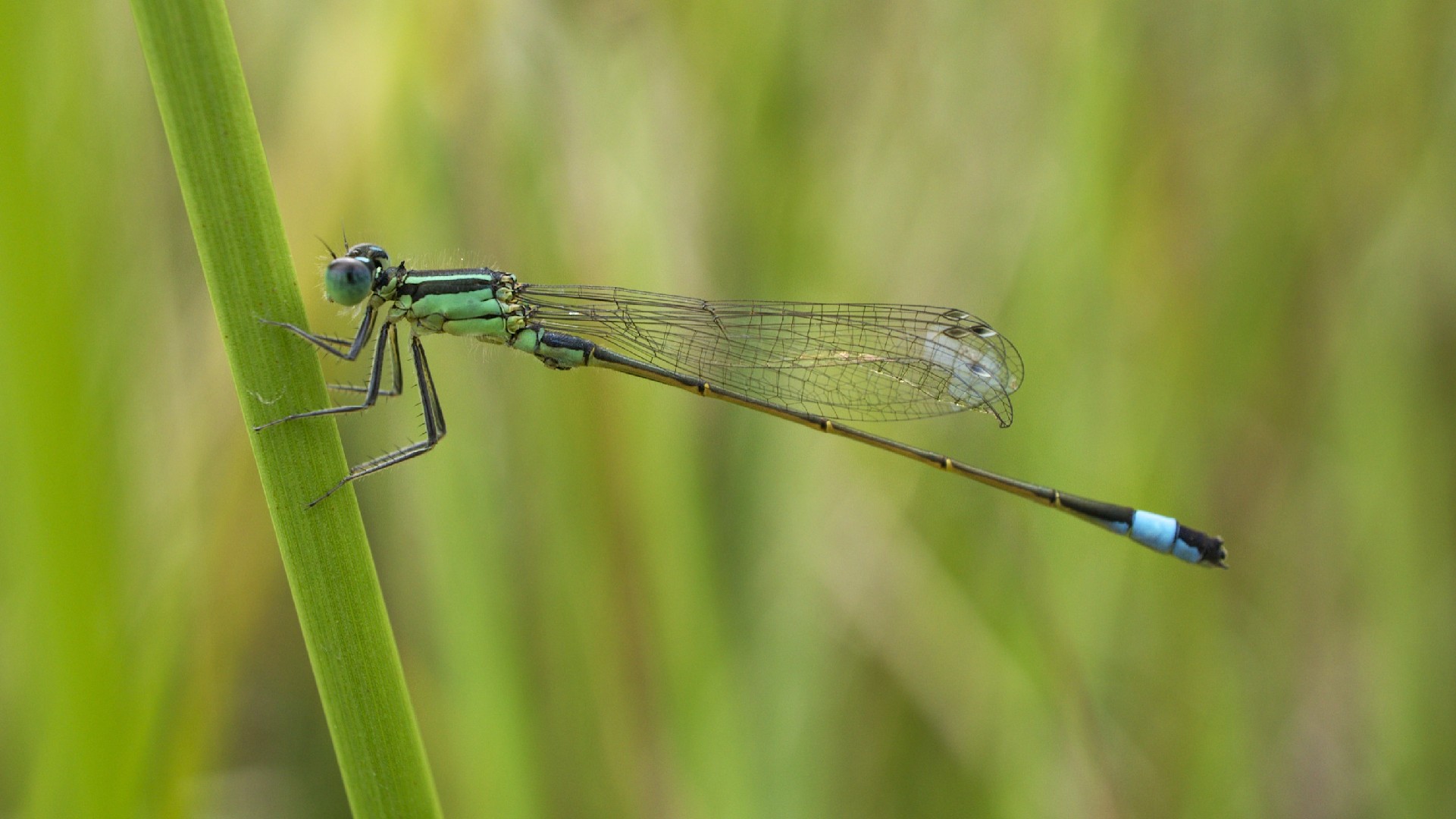
1. Blue-tailed damselfly
Ischnura elegans can reach a body length of 2.5 - 3.5 cm and a wingspan of about 3.5 cm. Hindwings reach alength of 1.4 - 2 cm. Adult male blue-tailed damselflies have a head and thorax patterned with blue and black. There is a bi-coloured pterostigma on the front wings. Eyes are blue. They have a largely black abdomen with very narrow pale markings where each segment joins the next. Segment eight, however, is entirely pale blue. At rest, the wings of most damselfly species are held back together, unlike dragonflies, which rest with their wings out flat. The thorax of juvenile males has a green tinge. Female blue-tailed Damselflies come in a variety of colour forms.Juveniles may be salmon pink, form rufescens; violet, form violacea and a pale green form. The colour darkens as the damselfly ages. Mature females may be blue like the male, form typica; olive green thorax and brown spot, form infuscans or pale brown thorax and brown spot, form infusca-obseleta. 
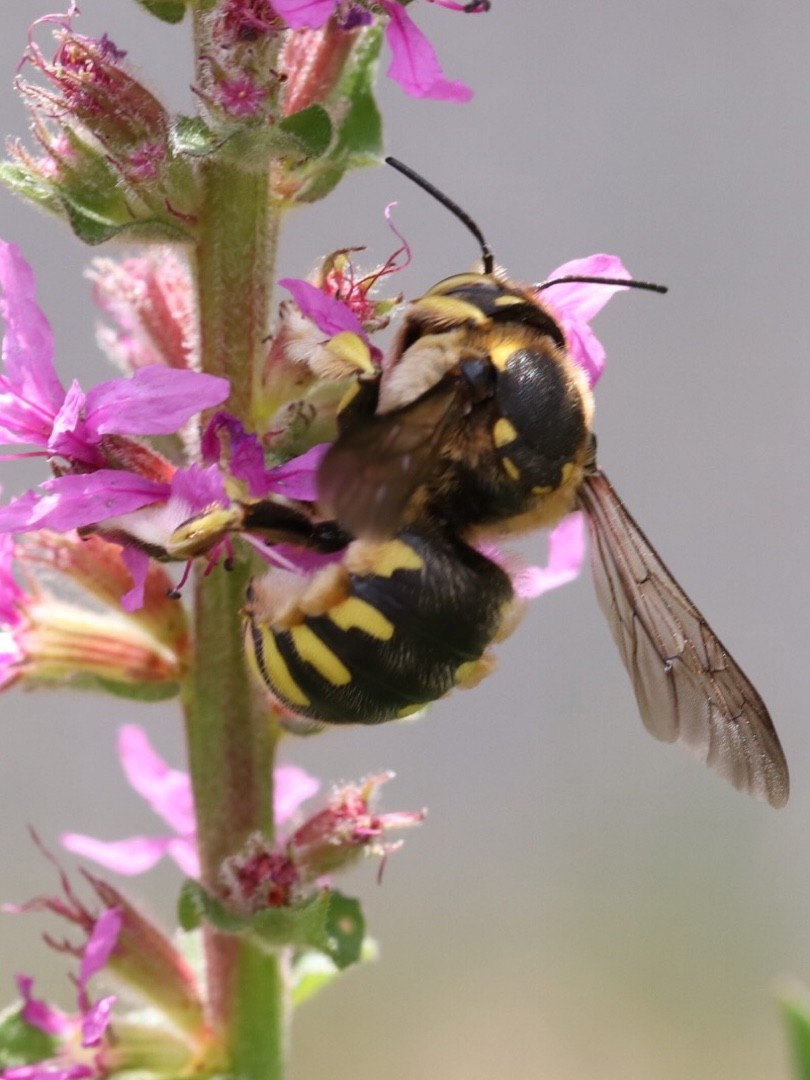
2. Anthidium florentinum
Anthidium florentinum is a very territorial bee that vigorously defends its host plants. The best way for amateur entomologists to identify this bee is by looking for the whitish-gray hairs on the sides of its abdomen. These insects play an important role as pollinators, especially for alfalfa. But their aggressiveness reduces their usefulness as an introduced pollinator.
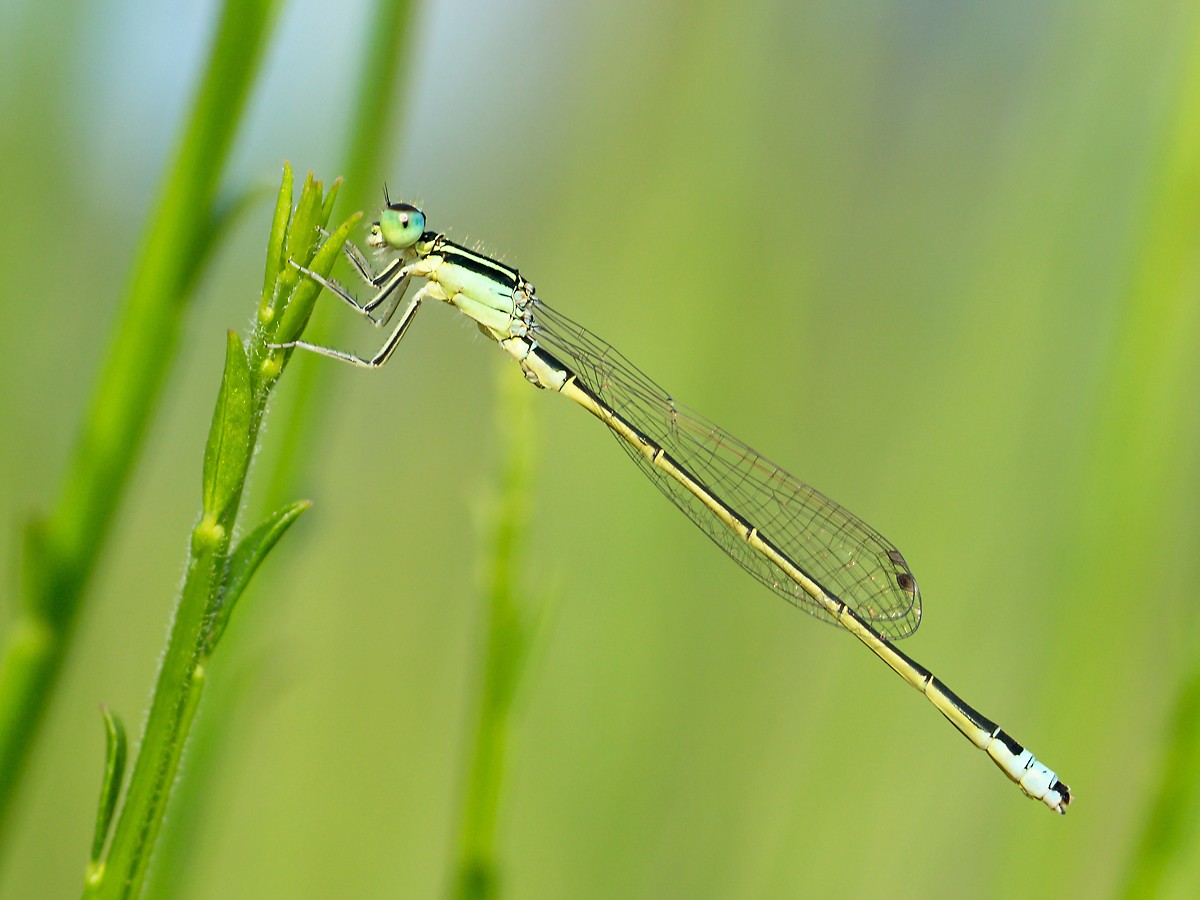
3. Scarce blue-tailed damselfly
It is very similar to the blue-tailed damselfly, Ischnura elegans but on that species the blue spot is mostly on segment 8.Females undergo a change of colour as they mature. The immature female is bright orange, the aurantiaca phase, but matures to a greenish-brown.
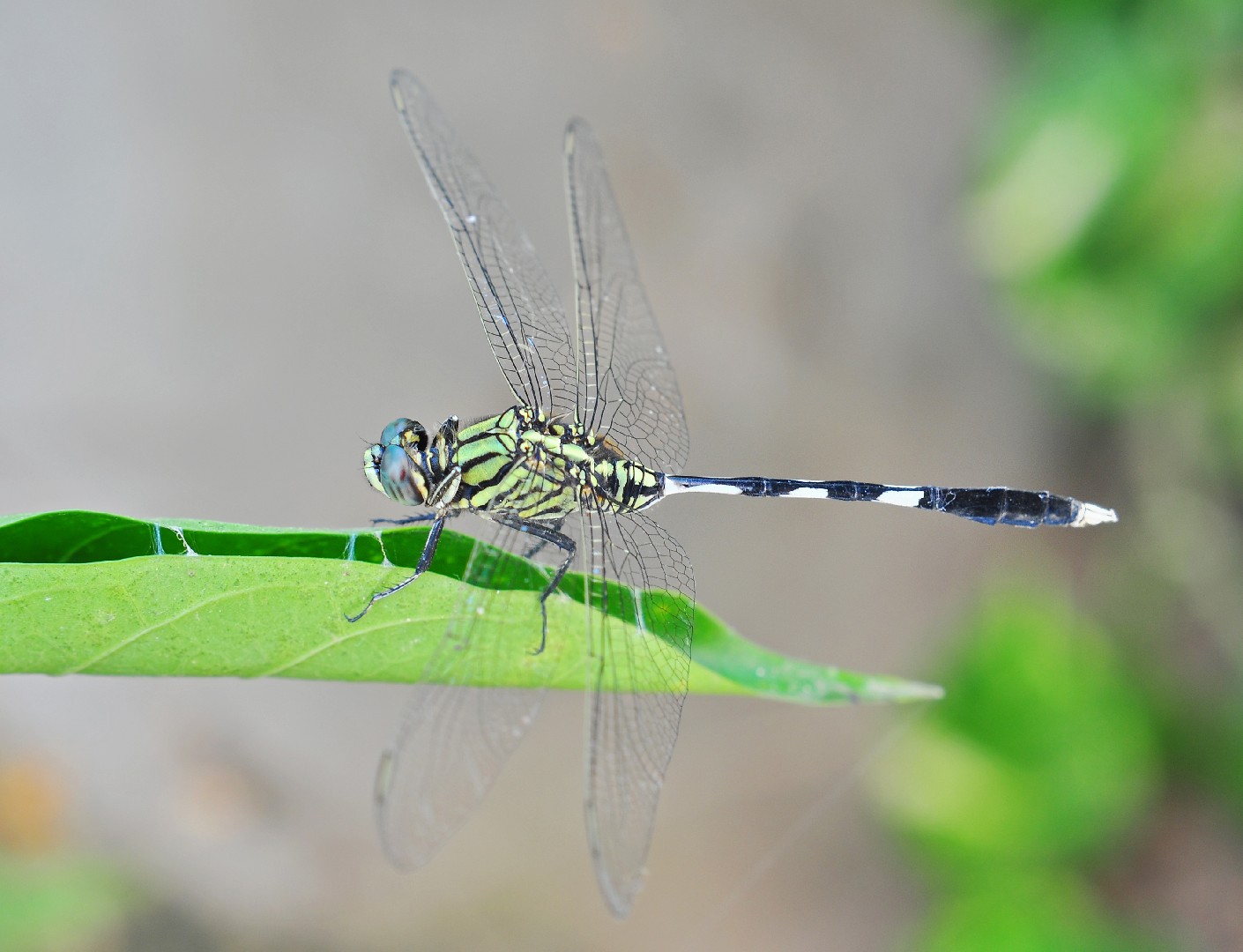
4. Slender skimmer
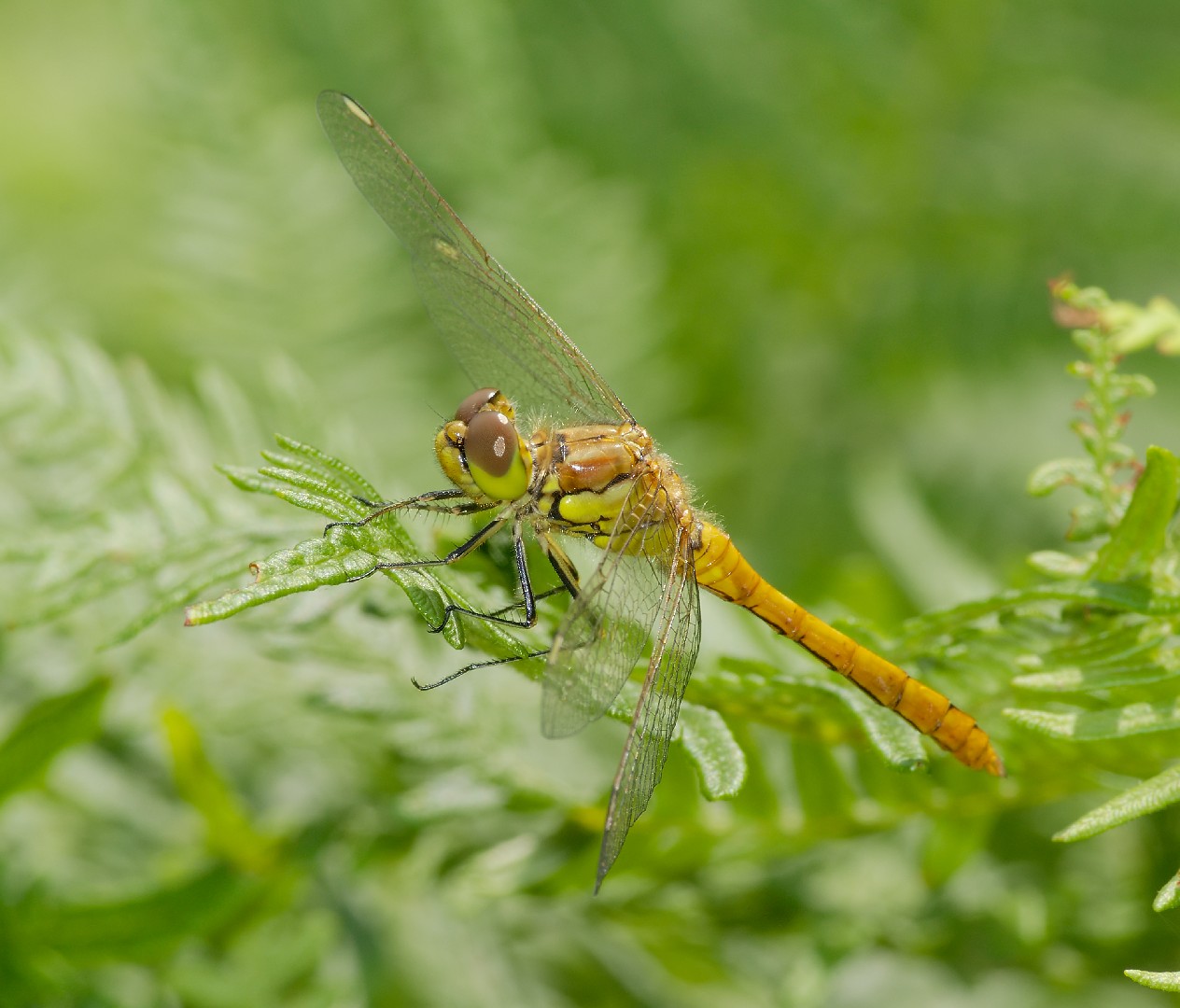
The species is on the IUCN Red List as not endangered, year of assessment 2009. The slender bank dragonfly occurs from Southeastern Europe and North Africa to Japan and Australia

5. Banded demoiselle
This is a large damselfly with a total length of up to 1.9 in and a hindwing length of up to 1.4 in. Male and female are variable in color and pattern. The male has translucent wings which each have a broad, dark iridescent blue-black spot (or band) across the outer part. On immature dragonflies the spot is dark brown. The body can be a metallic blue or bluish green or a combination of both colours, depending on the time of year and location. The dark wing patch of the male starts at the nodus (the slight dip midway down the upper edge of the wing) but can reach up to the wing-tip in southern races.
6. Old World swallowtail
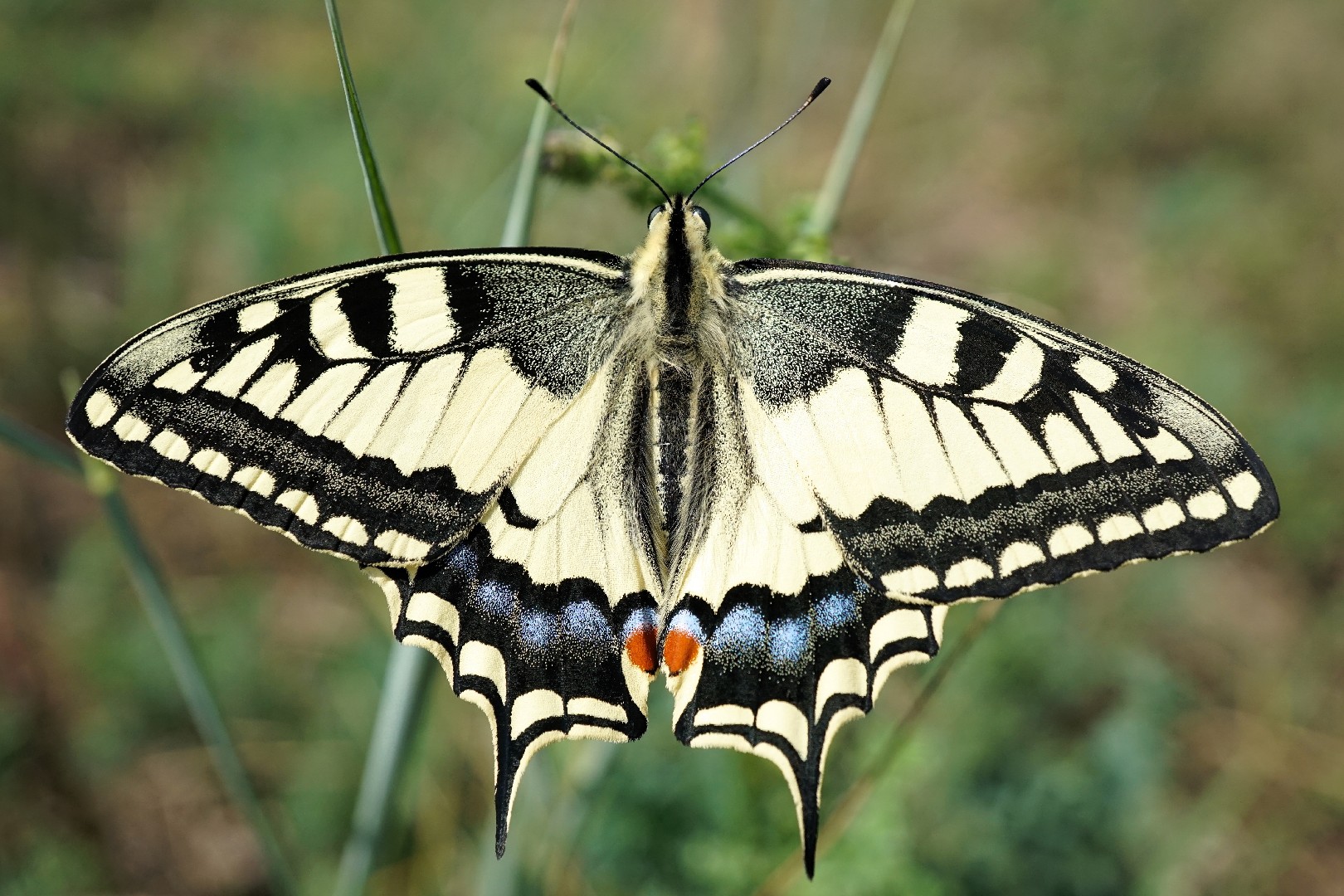
The old World swallowtail (Papilio machaon) is commonly just called the "swallowtail," giving it the added title of "old world" to distinguish it and remind us that it comes from the "old world" (Asia, Africa, Europe). The upper side of them is a beautiful combination of pure white with black striping, the underside being a brownish version of the same thing. There is blue and two red dots on its back side.
7. Pied hoverfly
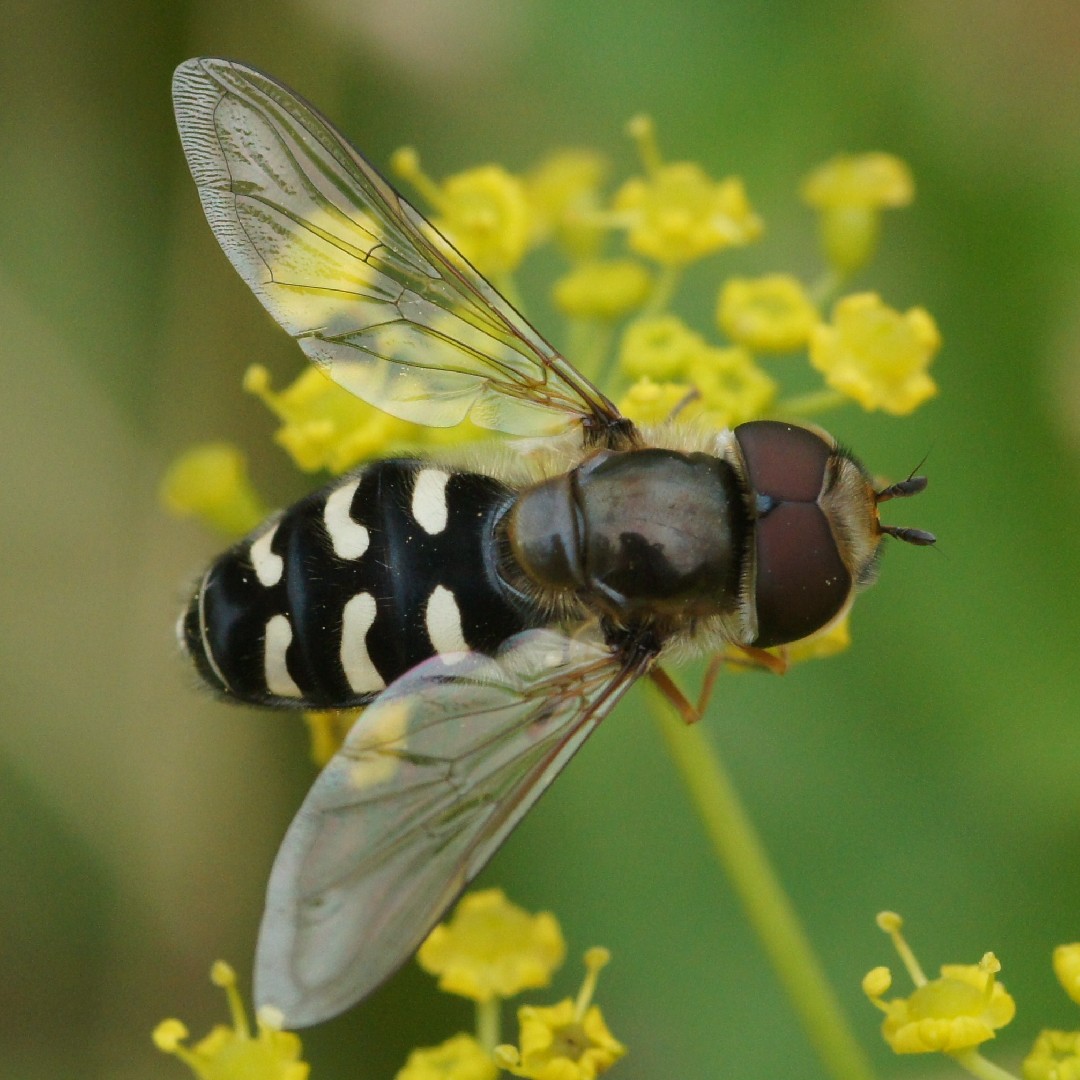
Scaeva pyrastri can reach a length of 1.09 - 1.5 cm. This large distinctive fly has three pairs of white comma markings (lunules) on the abdomen, these are yellow on Scaeva selenitica.The face is yellow, with reddish brown antennae. The eyes are covered with hair. Scutellum is brown yellow. The legs are red with a black base of the femur. The male's eyes do touch in the centre of the frons, while in the females they are separated. The larvae are light green or sometimes pink, with a white dorsal longitudinal stripe.
8. Bladetail
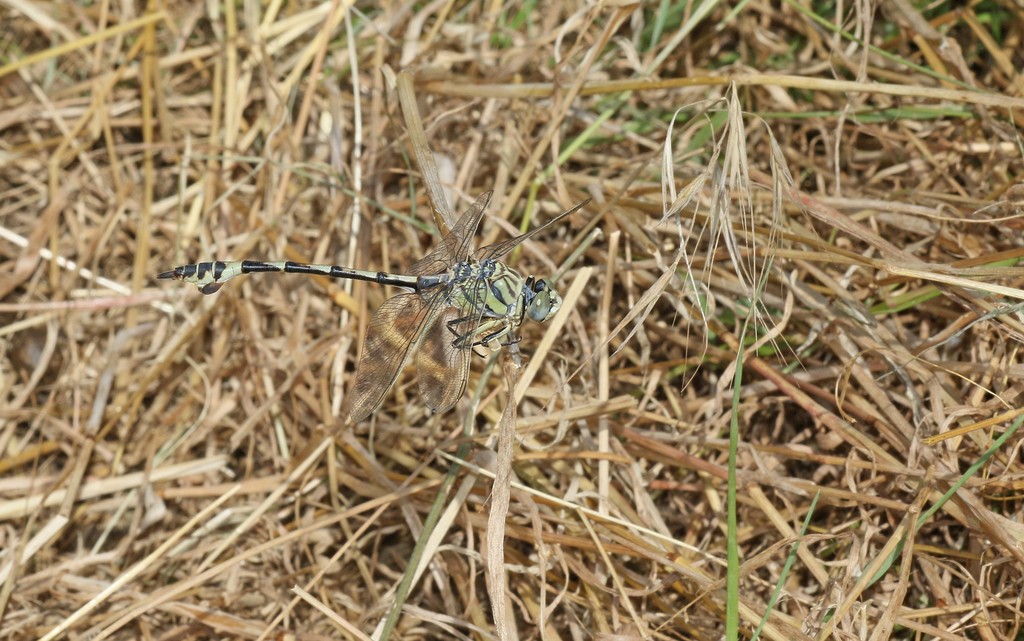
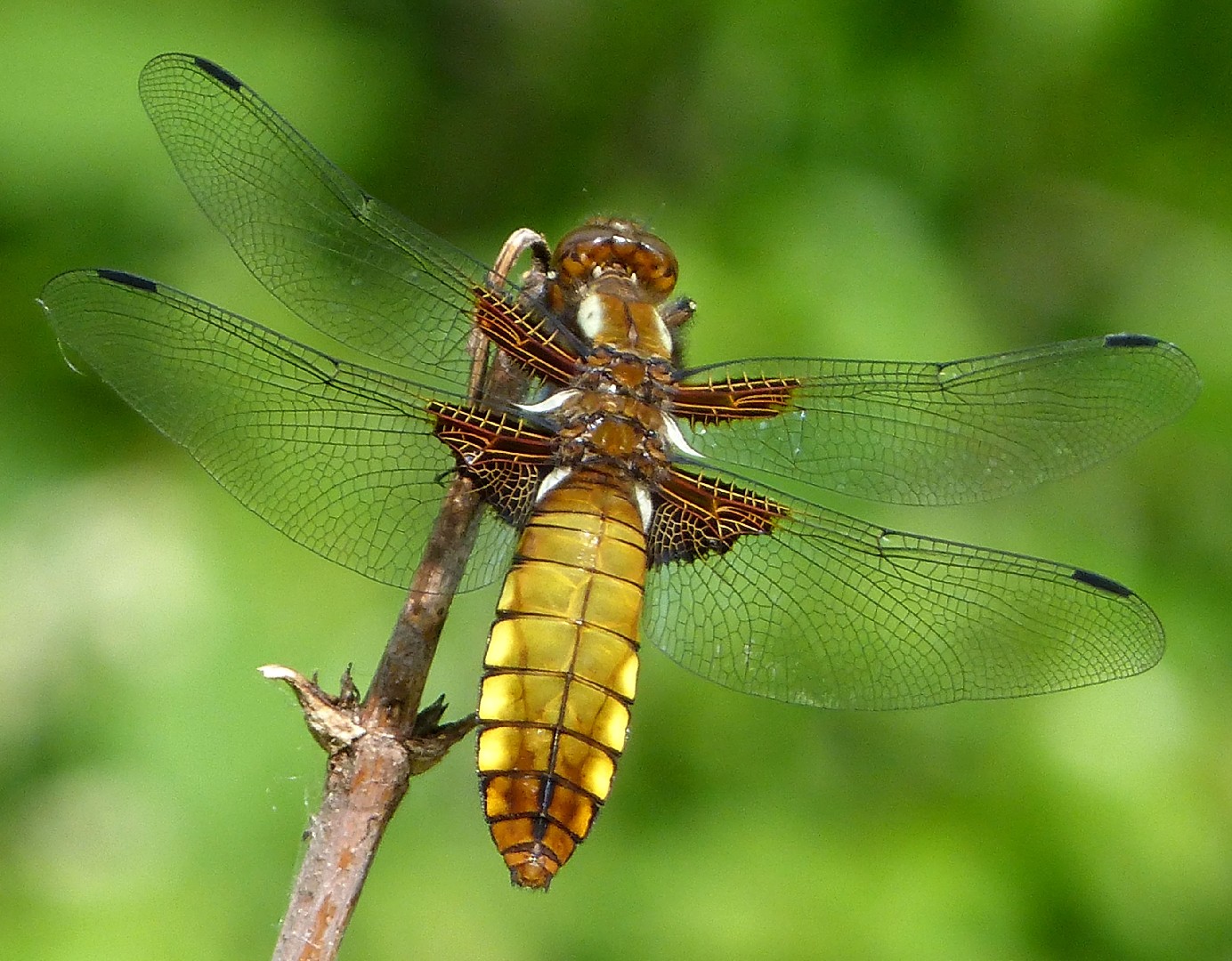
Adults are easily recognizable due to their impressive body size with 69–80 mm length, the leaf-shaped flaps on the bottom side of the abdomen tip which are unique in European species, and wing venation. The flaps give the narrow and long abdomen club-shaped appearance. Basic color is pale yellow with dark brown or black markings of variable size. The pterostigma is also similarly colored. In south Croatia and Montenegro, it is possible to observe completely black individuals, which is probably a consequence of them developing in cold springs. The adults fly in the summer, from the end of May until August.
9. Four-spotted chaser
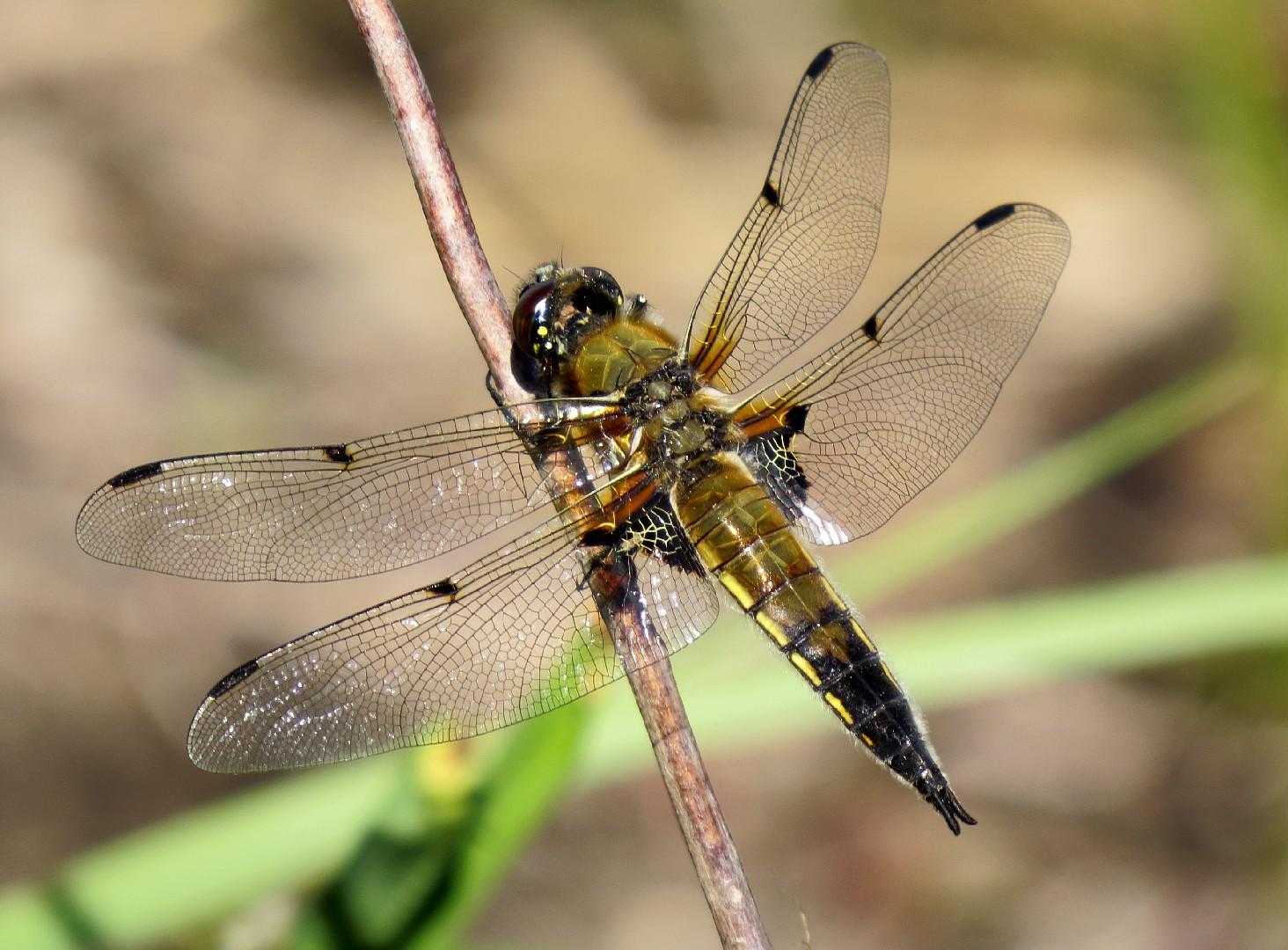
The four-spot (Libellula quadrimaculata) is one of the large dragonflies and reaches a body length of 4 to 4.5 centimeters with wingspan between 7 and 8.5 centimeters. Each of the four wings has a striking dark spot in the area of the distinctive transverse vein (nodus), after which the species received both its scientific and its trivial name. This dragonfly is also known for its mass migrations in swarms of impressive dimensions. The entire stock is not considered to be threatened.
10. Black-tailed skimmer
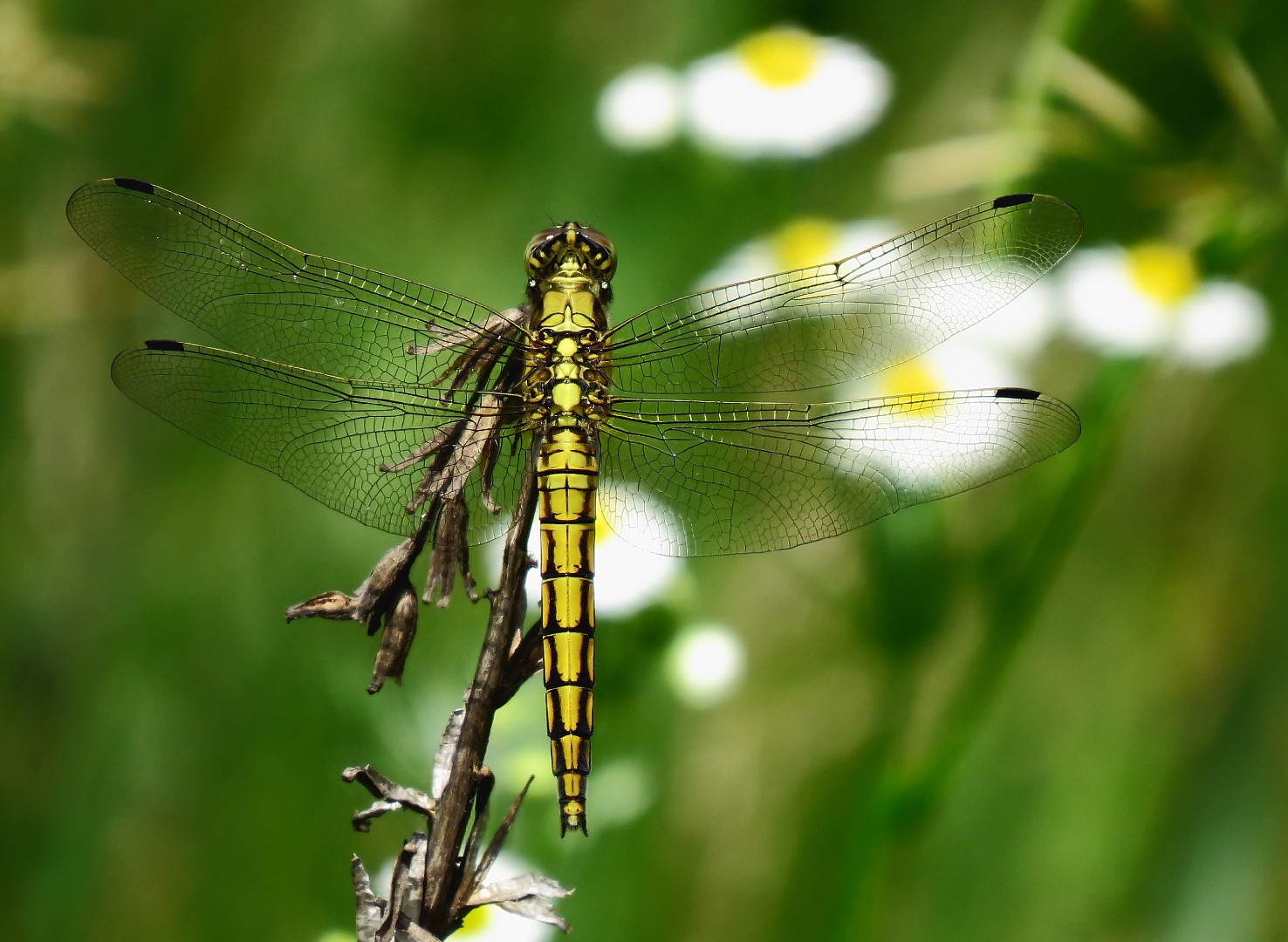
It is a fairly large dragonfly (the length of 4.5 - 5 cm, 3 - 3.5 cm abdomen, rear wing 3.5 - 4 cm.) with relatively broad, flattened abdomen, but not as broad as to chaser species. With age, adult males develop extensive blue pruinescence on their abdomen, offset by yellow lateral patches. The middle lobe of the pronotum is large and notched in the middle. The chest is yellow or yellowish-brown. The base of the hind wings do not show a dark opaque spots. The pterostigma is dark brown or black. On the front wings pterostigma 2 - 3 mm long. Anal appendages are black. The females and immature males are a deep yellow color, with wavy black lines dorsally on their abdomen. Males and females have the costal vein (the leading edge of the wing) yellow or black.

More







