




Top 20 Most Common Insects in Medicine Hat
Insects, distinguished by their six-legged body structure, are an integral part of Medicine Hat's ecosystem. The region's diverse geography - from mountain ranges to prairies, remarkably influences the insect variety. Yet, regardless of location, all types of insects - pest and beneficial alike, play crucial roles in ecological balance. Unveiling Medicine Hat's '20 most common insects' will shed light on their respective roles, fostering a deeper understanding of our local environment.

Most Common Insects
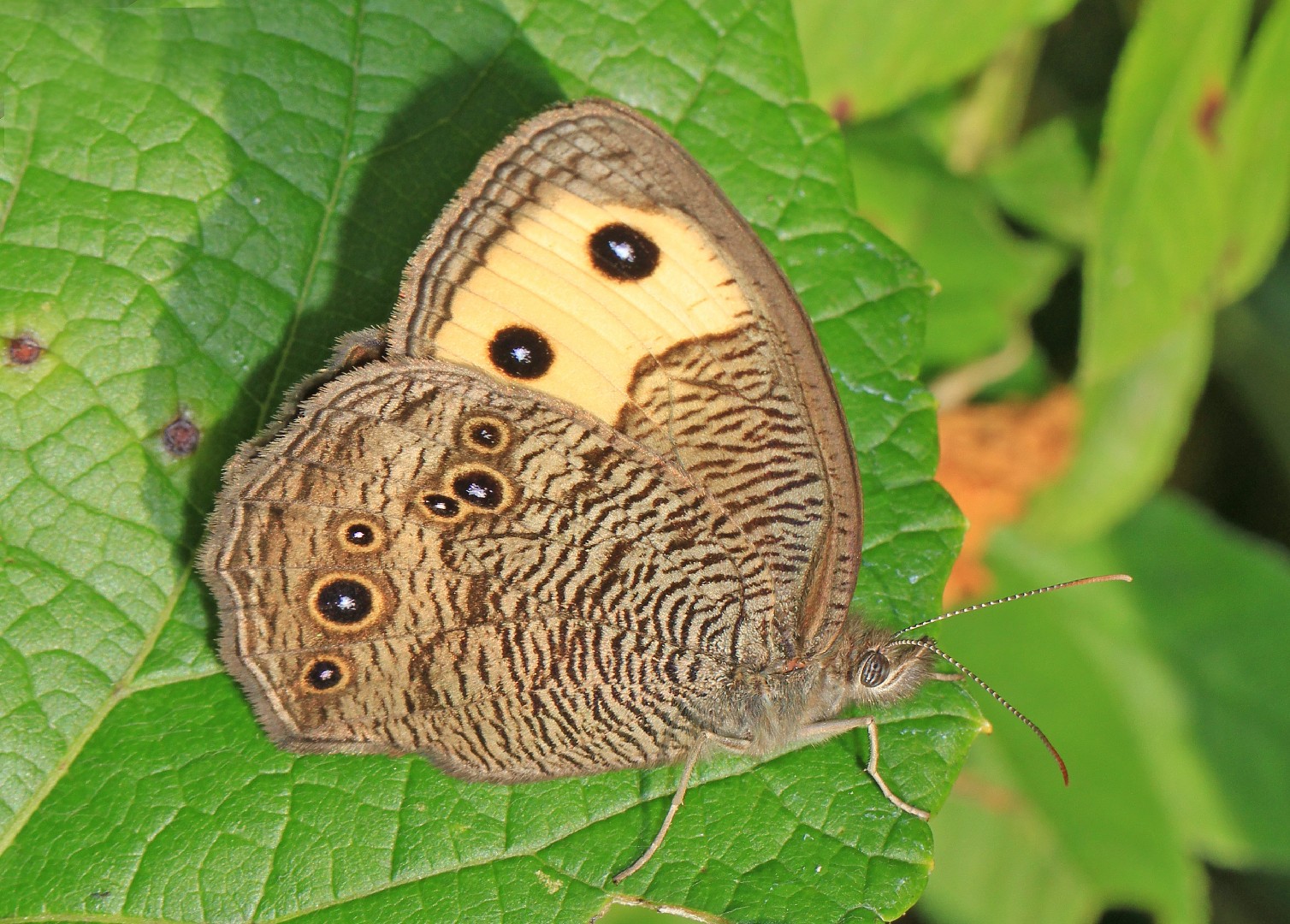
1. Common wood nymph
The common wood nymph (Cercyonis pegala) is a brown butterfly that has eyespots located on it to assist in warding off predators, as they are pretty easily spooked by anything that looks like a giant face. Depending on the location, they may or may not come with the eyespots or additional yellow spots, giving them a good chunk of variance depending on growing environment.
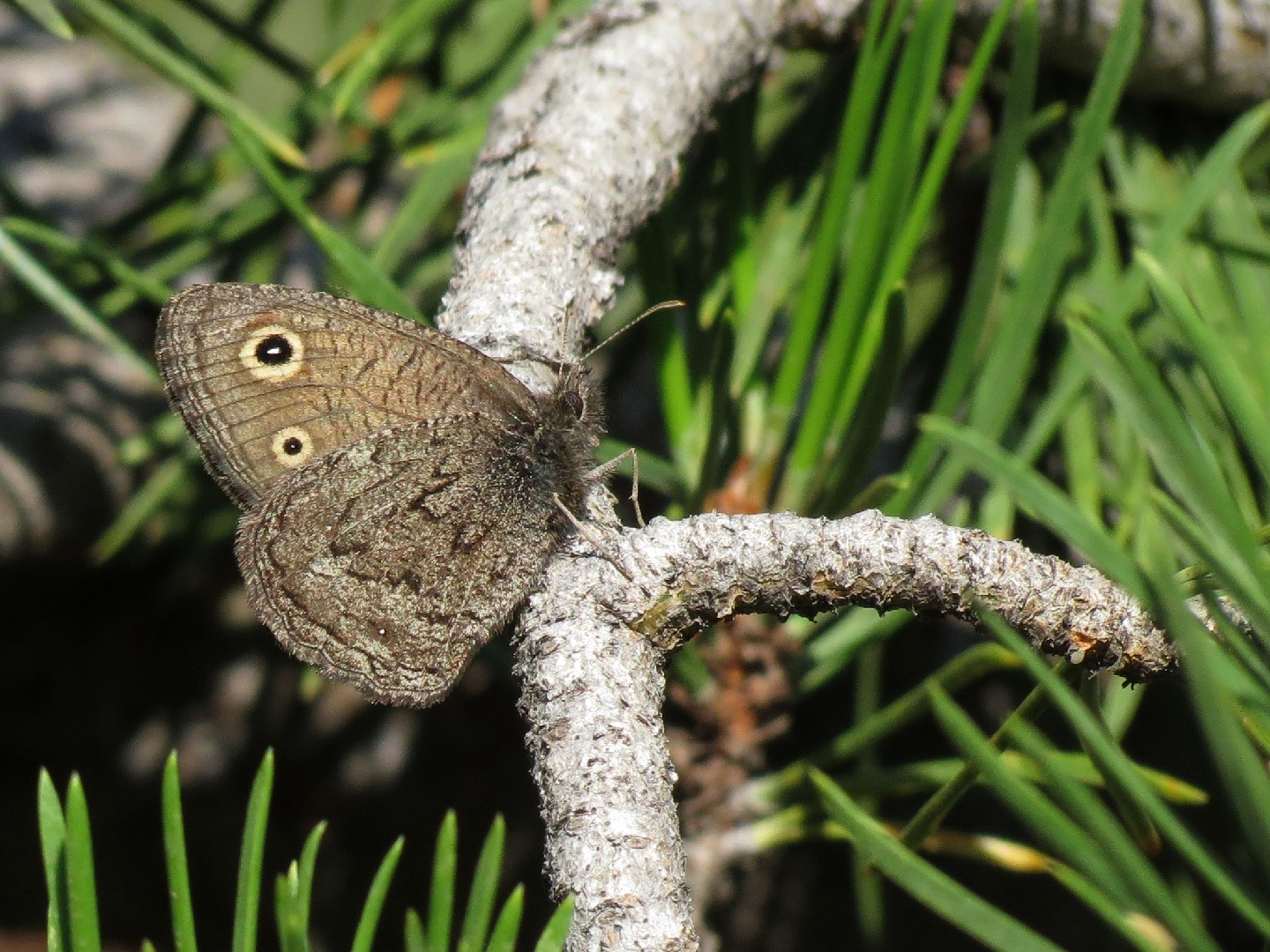
2. Small wood-nymph
The wingspan is 32–45 mm. Adults are on wing from June to August in one generation. 
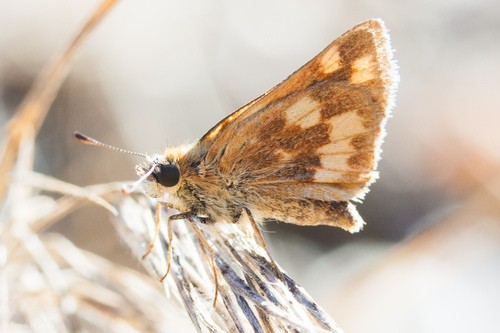
3. Woodland skipper
The wingspan is 2.5 - 3 cm. The upperside is orange with toothed brown borders. The forewing of the males has a black stigma, while females have or a black diagonal band. There is a large reddish patch on the hindwings. The underside is variable in colour, ranging from yellow to reddish to brown. The hindwing varies from unmarked to having a distinct band of cream to yellow spots.
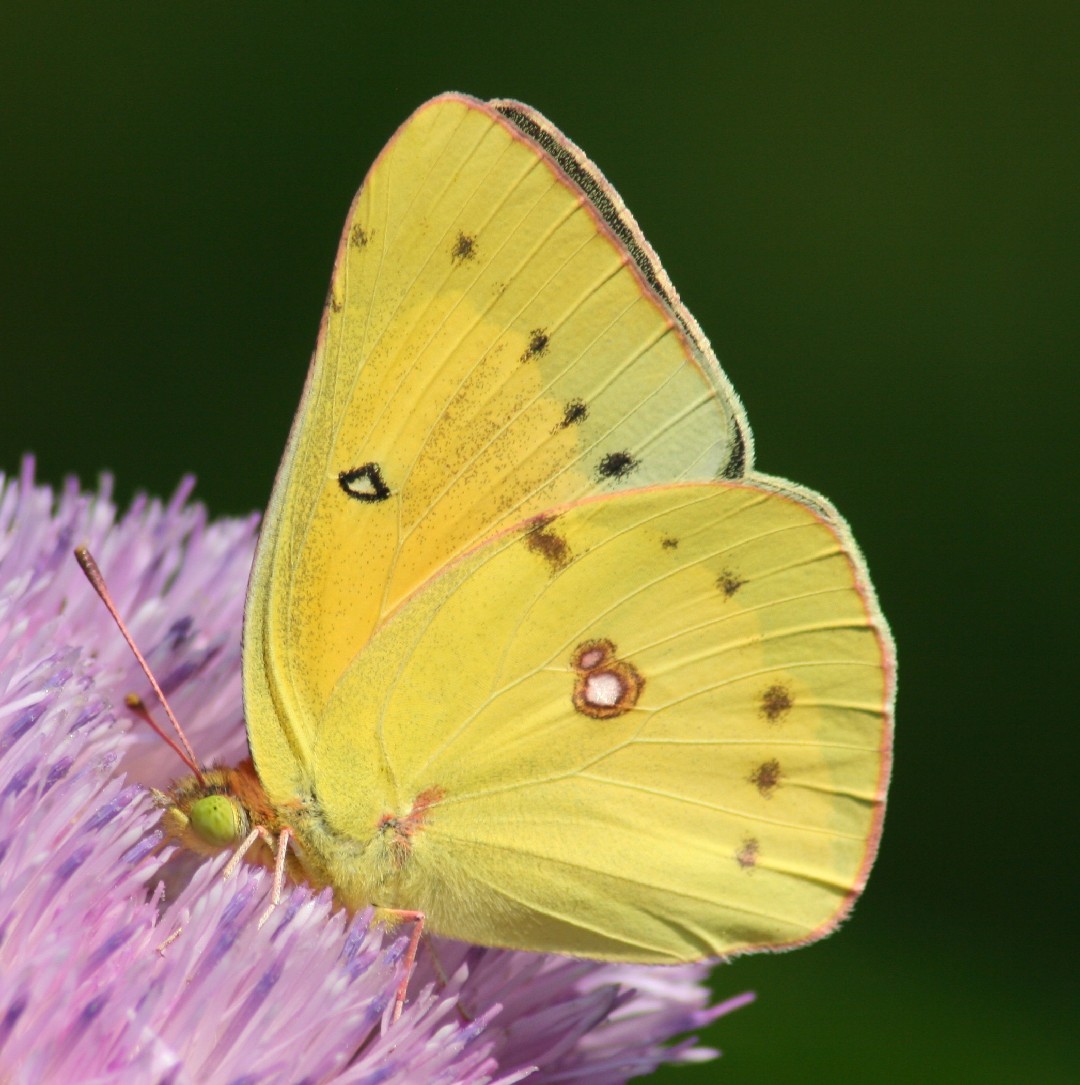
4. Clouded Sulphur
The scientific name is Colias philodice, also known as the clouded Sulphur. It is very commonly seen in North America with pale yellow wings, which have solid black borders on the upper surface and a doubled hindwing spot trimmed in brownish red. Interestingly, the wing color of the clouded Sulphur varies in a seasonal manner from white to yellow and the spots on the wings also change as well, being more pronounced during the cool months in spring and fall.
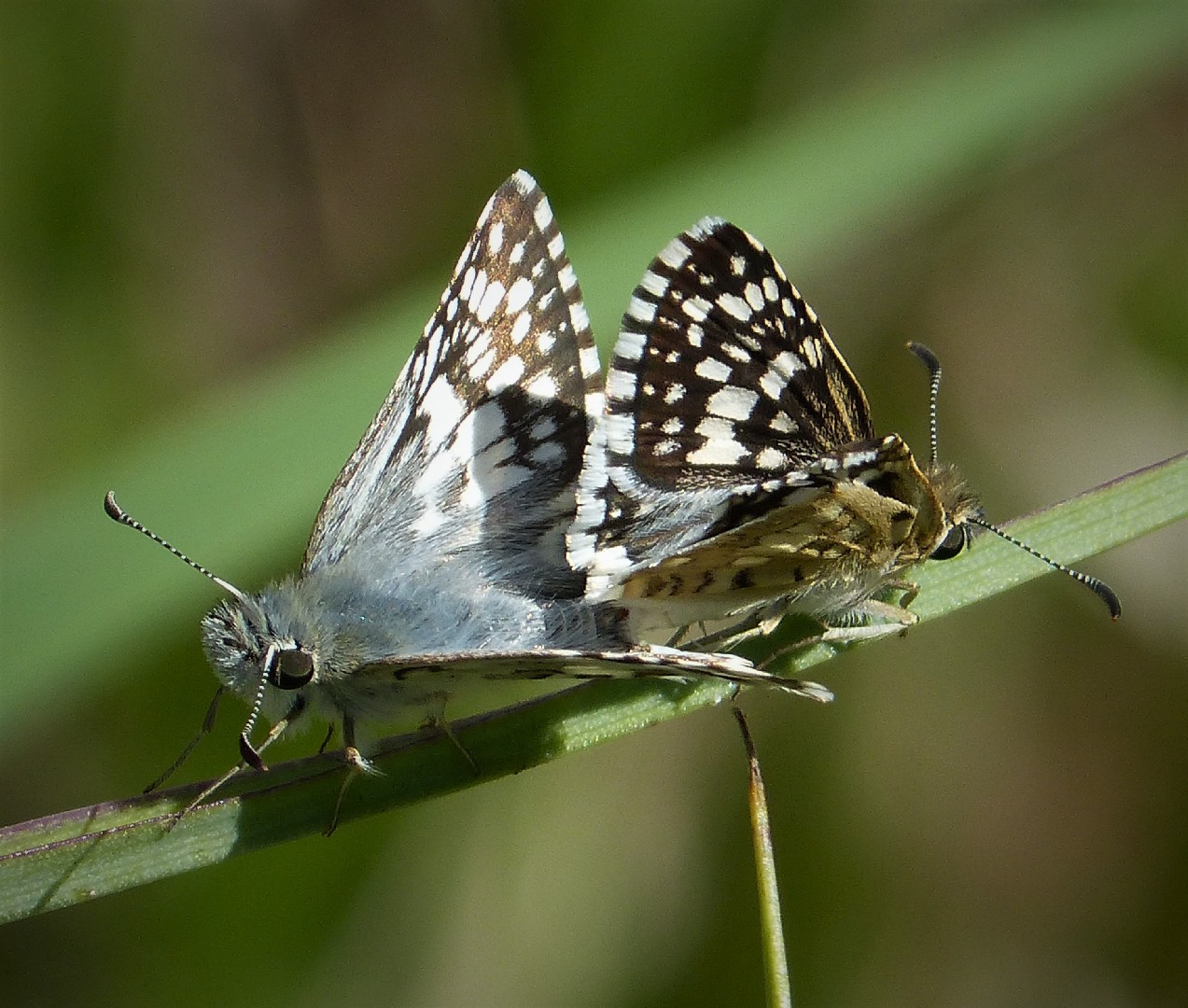
5. Common checkered skipper
The common checkered-skipper has a wingspan of 19 to 32 mm. It gets its name from the checkerboard pattern on its wings; the male tends to have broader bands than the female. The body tends to be blue-gray with the small amount of "fuzz" which is seen in all skippers.
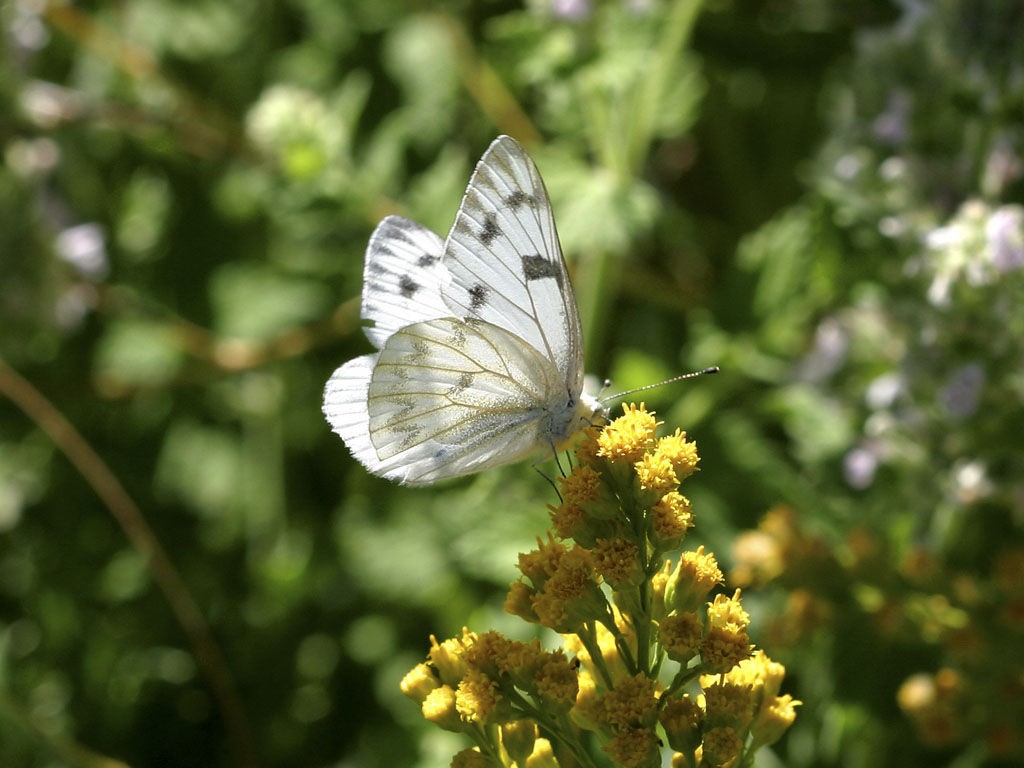
6. Western white
The wingspan is 4 - 5 cm.
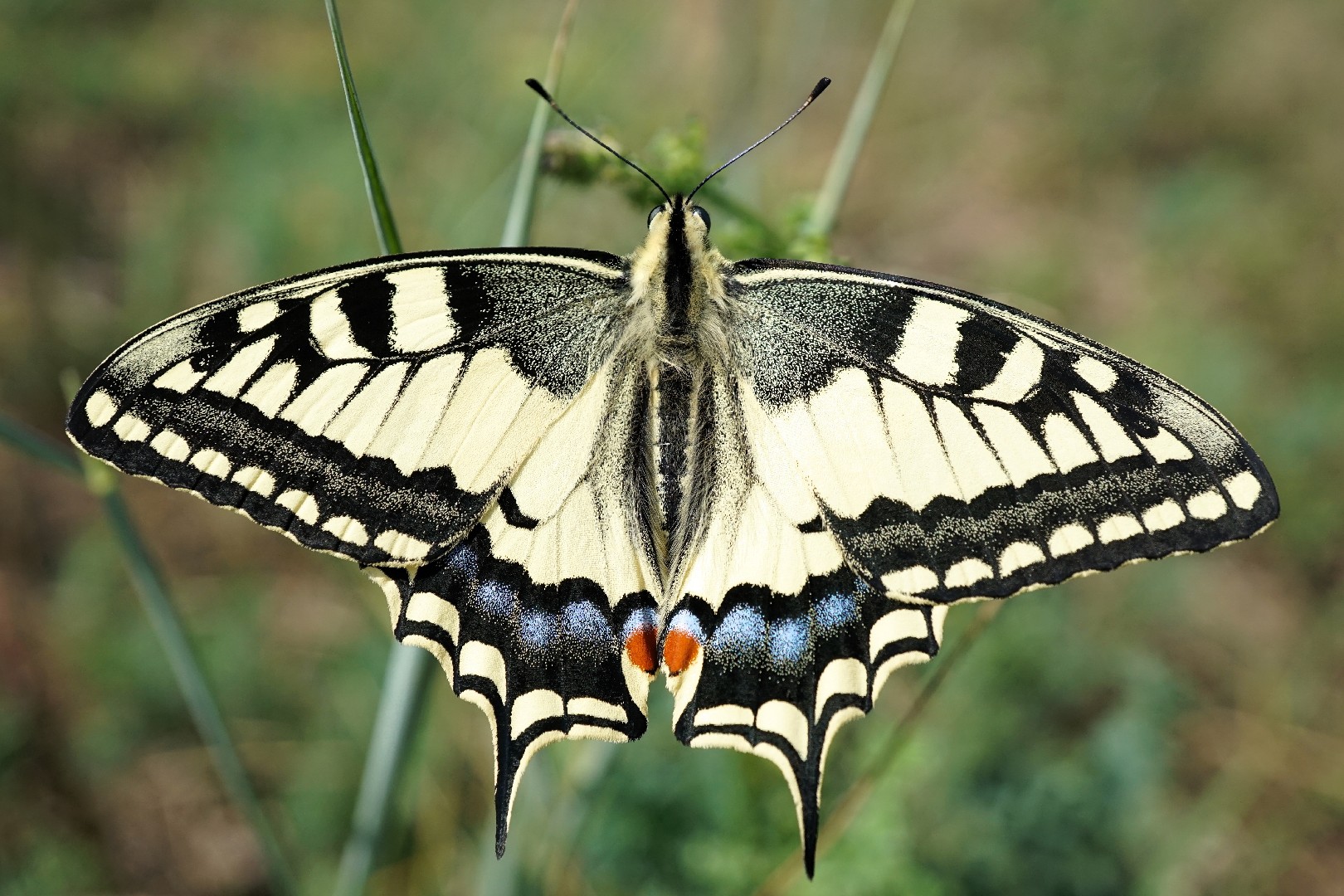
7. Old World swallowtail
The old World swallowtail (Papilio machaon) is commonly just called the "swallowtail," giving it the added title of "old world" to distinguish it and remind us that it comes from the "old world" (Asia, Africa, Europe). The upper side of them is a beautiful combination of pure white with black striping, the underside being a brownish version of the same thing. There is blue and two red dots on its back side.
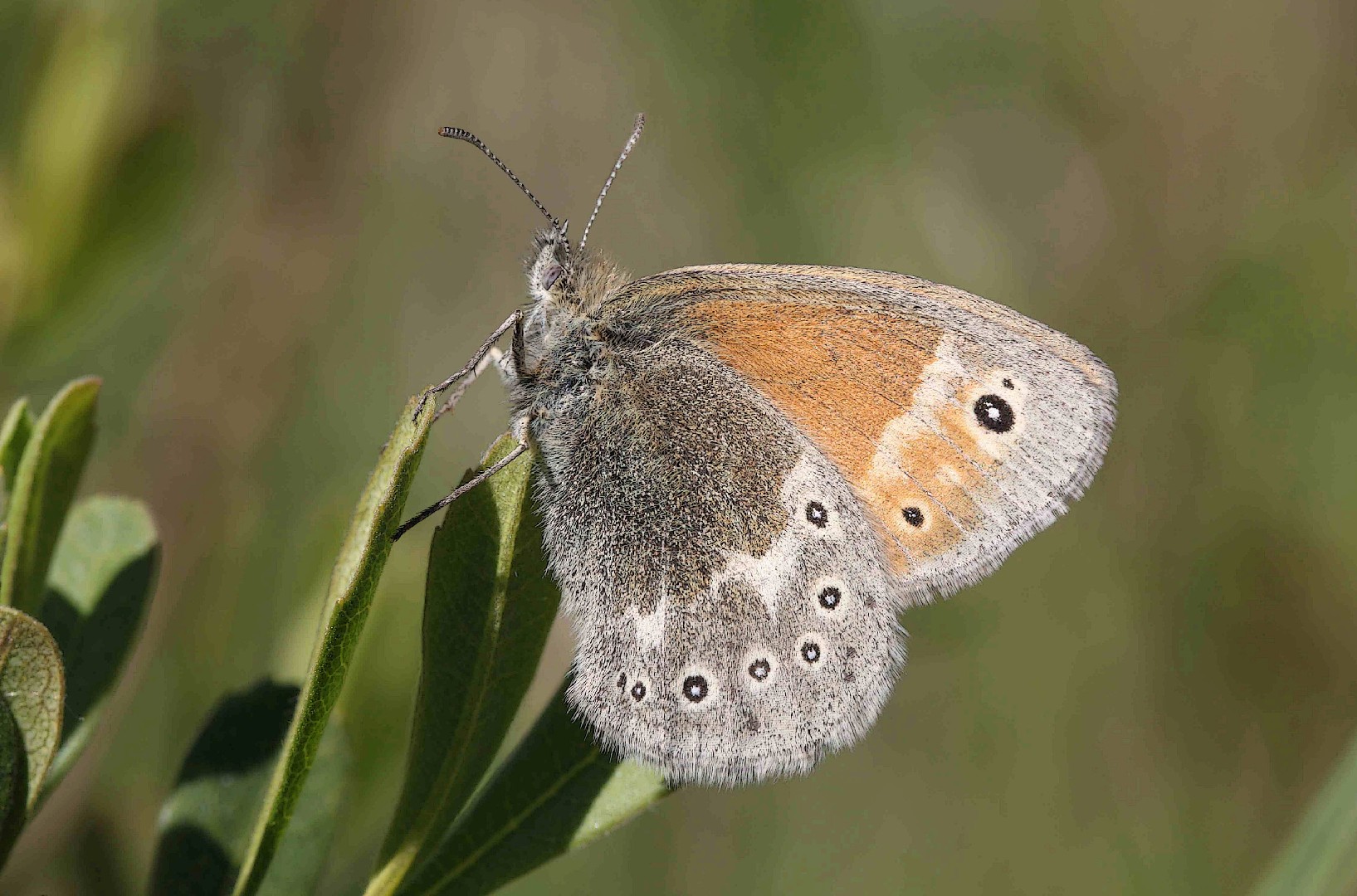
8. Large heath
The moths are very different in size and reach a wing span of 27 to 40 mm. They have very variable wing tops, from pale yellowish and ocher yellow to brownish. Mostly on the forewing underside near the tip of a small, brightly knurled eye spot is formed, which often shines on the top. At the leading edge there are sometimes further smaller eye spots. On the darker colored light, dark brown or gray rear wing underside as well usually several white or brightly gerandete black Augenflecken are to be seen with silver point, which can also be missing. Unmistakable feature of the species is there a white irregular and interrupted bandage, which already begins at the front edge of the hind wings. The egg is large, ovate and very finely meshed. It is initially pale yellowish green and later marbled reddish brown. The hairless caterpillar is about 25 millimeters long and has small, yellowish point warts and is tapered backwards. It is light green in Europe with a narrow, dark midline and a narrow upper white-yellow and dark upper bound and a lower broader, pale yellow and sharply delineated line. In North America, it varies from green to olive green to brown and has alternately bright and dark vertical stripes. At the end of the abdomen they carry two small pink lobes, which mark the caterpillars of the eye-butterflies (Satyrinae). The head is green or tan. The pupa is green in Europe and North America with light longitudinal lines and in California green to brown.
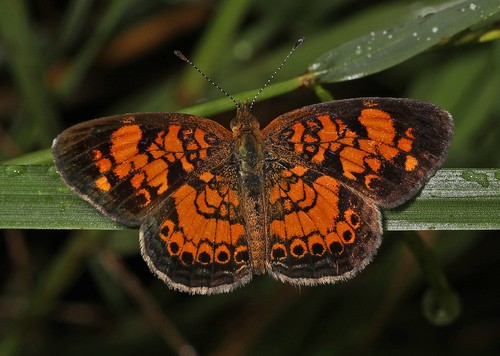
9. Pearl crescent
The pearl crescent (Phyciodes tharos) is an orange butterfly that lives in open areas that are generally moist and sunny. These butterflies are attracted to puddles, and the males will often fight with other male butterflies that land near the same puddle. However, females are not as aggressive and prefer to stay in groups.
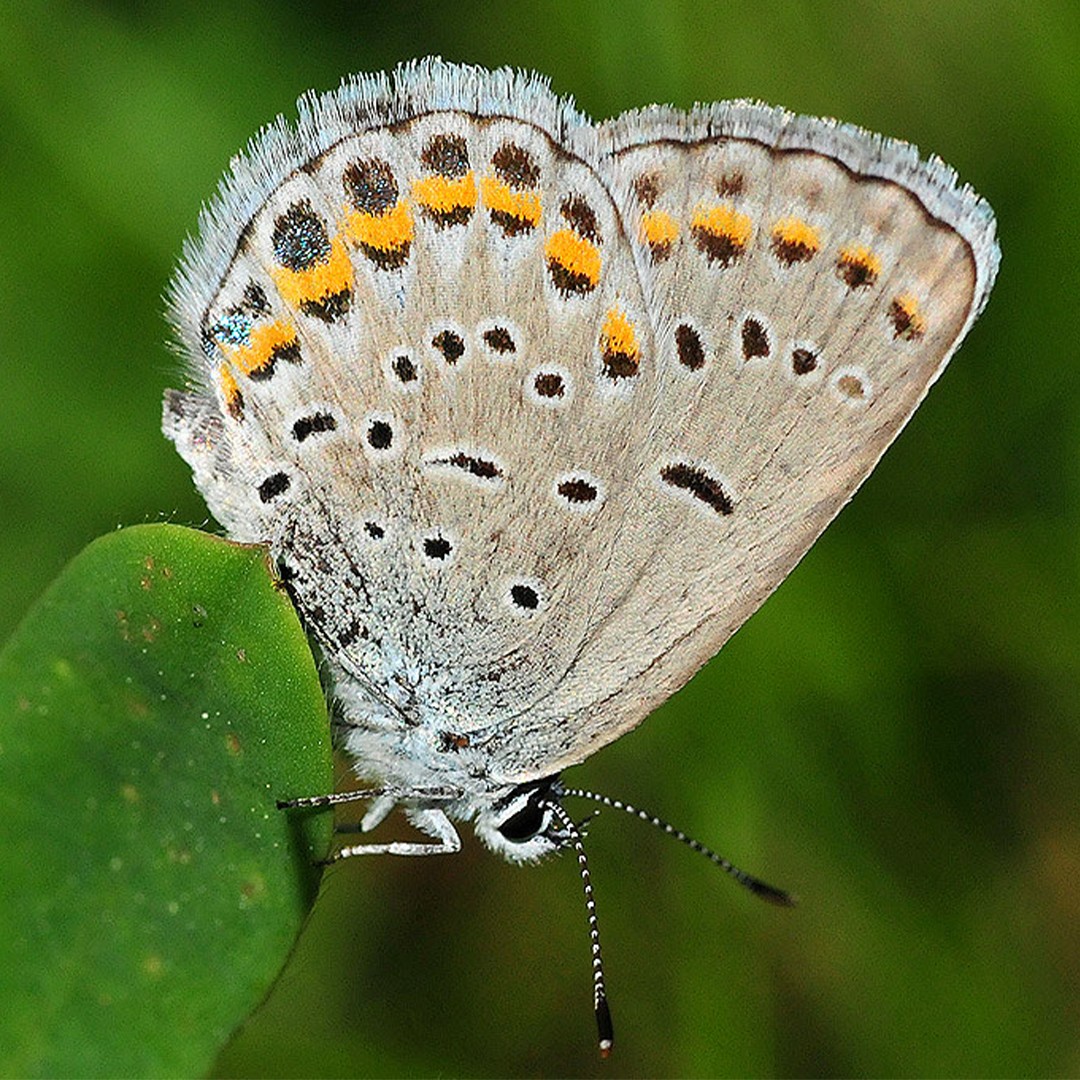
10. Inyo blue
The Melissa blue (Plebejus melissa) is a butterfly of the family Lycaenidae. It is found in western North America, from Canada to Mexico. The Karner blue (Plebejus melissa samuelis) is a subspecies of the Melissa blue, and was described by the novelist/lepidopterist Vladimir Nabokov. The wingspan is 22–35 mm. Below, the hindwing orange submarginal band, often with distal iridescent blue points, help to distinguish this species from the more muted colors and markings of the similar Plebejus idas. The marginal line is wider where the veins intersect. The fringes are not checked. The butterfly flies from April to August depending on the location. The larvae feed on Lupinus, Medicago and Lotus species.
More







