




Top 20 Most Common Insects in Prince Edward Island
Insects, with their diverse species and distinctive characteristics, thrive in myriad habitats within Prince Edward Island, influenced by its unique climatic conditions and geographical variety. These tiny powerhouses serve essential ecosystem roles, from decomposition to pollination. This fascinating interplay between Prince Edward Island's environments and the insects populating it, be it friend or foe, shapes the insect landscape of the state. Dive in as we unveil the top 20 most common insects found in Prince Edward Island.

Most Common Insects
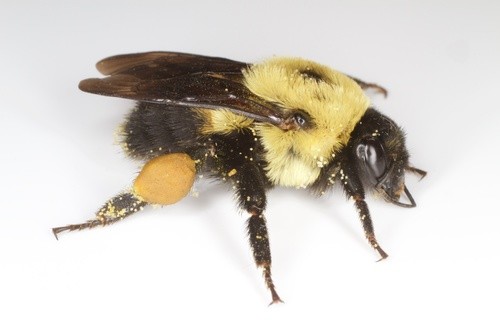
1. Common Eastern Bumble Bee
The common Eastern Bumble Bee (Bombus impatiens) is one of the most important pollinator bees in North America. A decline in the bee population will lead to financial hardships for farmers and reduced food yield. Their efficiency in pollination and foraging comes from their ability to drop "traplines." These lines guide other bees to the correct path for food while informing them of depleted locations.
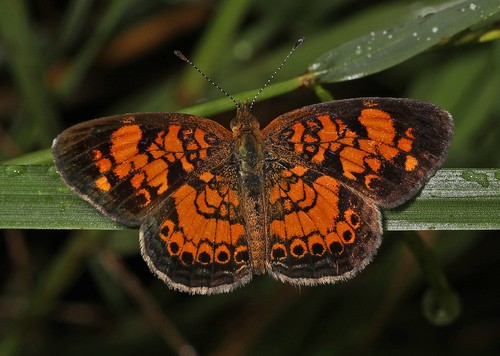
2. Pearl crescent
The pearl crescent (Phyciodes tharos) is an orange butterfly that lives in open areas that are generally moist and sunny. These butterflies are attracted to puddles, and the males will often fight with other male butterflies that land near the same puddle. However, females are not as aggressive and prefer to stay in groups.
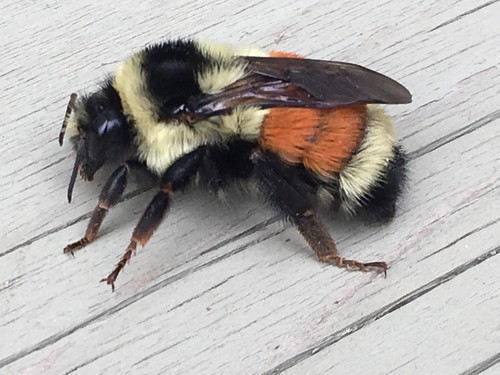
3. Orange-belted bumble bee
Bombus ternarius is a small, fairly slender bumblebee. The queen is 0.67–0.75 in long and the breadth of the abdomen is 0.33–0.35 in. The workers are 0.31–0.51 in, and the drones are 0.37–0.51 in in length. Both the worker and the drone have abdomens about 0.18–0.22 in in breadth. The queen and workers have black heads, with a few pale yellow hairs. The anterior and posterior thorax and the first and fourth abdominal segments are yellow, abdominal segments 2 to 3 are orange, and the terminal segments are black. The queen and the workers are close in resemblance, and the most striking difference between them is in the size of their fat deposits. Workers have very little fat, particularly in their abdomen, leaving plenty of room for the honey stomach, an enlargement of the oesophagus in which nectar can be stored on foraging trips. In contrast, in young queens, the abdomen is largely full of fat.The drone has a yellow head with a few black hairs. The coloration of the thorax and abdomen is similar to that of the females, with the exception that the last abdominal segments are yellow on the sides. The fur of the drone is longer than that of the females. 

4. Multicolored asian ladybeetle
Often confused for the ladybug, multicolored asian ladybeetle (Harmonia axyridis) is a separate species that, unlike the ladybug, is a household pest. It is considered particularly annoying for its habit of returning to places from which it is removed. One of the most variable species in the world, there are many different colors and patterns multicolored asian ladybeetle may display, making identification potentially difficult.
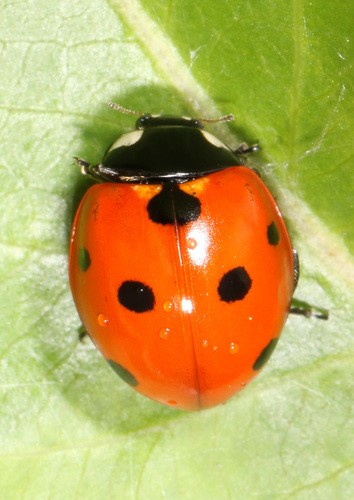
5. Seven-spotted ladybug
Seven-spotted ladybug (Coccinella septempunctata), known in North America as the "seven-spotted ladybug," is the most common species of ladybird in Europe and the official state insect of five U.S. states. While not native to North America, it has established itself there after being introduced to control aphid populations. Its bright coloring deters predators, and it may also play dead or secrete foul-smelling liquids to discourage consumption.
6. Virginia ctenucha
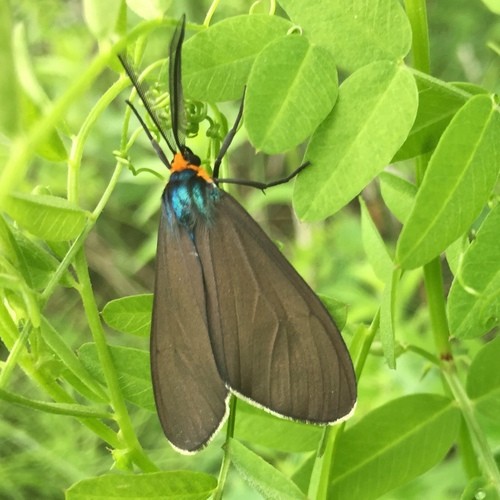
The virginia ctenucha (Ctenucha virginica) is a beautiful moth that is known for its black-blue metallic wings and the orange head, making it stick out when compared to other moths. Their caterpillar forms are fuzzy yellow and black. Despite their name, they are not exclusive to Virginia. They are known to travel as far north as the middle of Canada.
7. Essex skipper
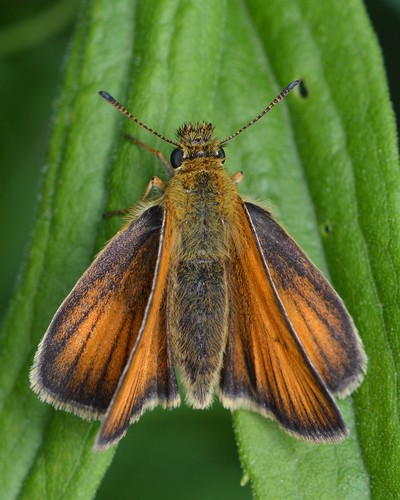
With a wingspan of 2.5 - 3 cm, it is very similar in appearance to the small skipper Thymelicus sylvestris. They can be told apart by the undersides of the tips of their antennae: the essex skipper's antennae are black, whereas those of the small skipper are orange.
8. Canadian tiger swallowtail
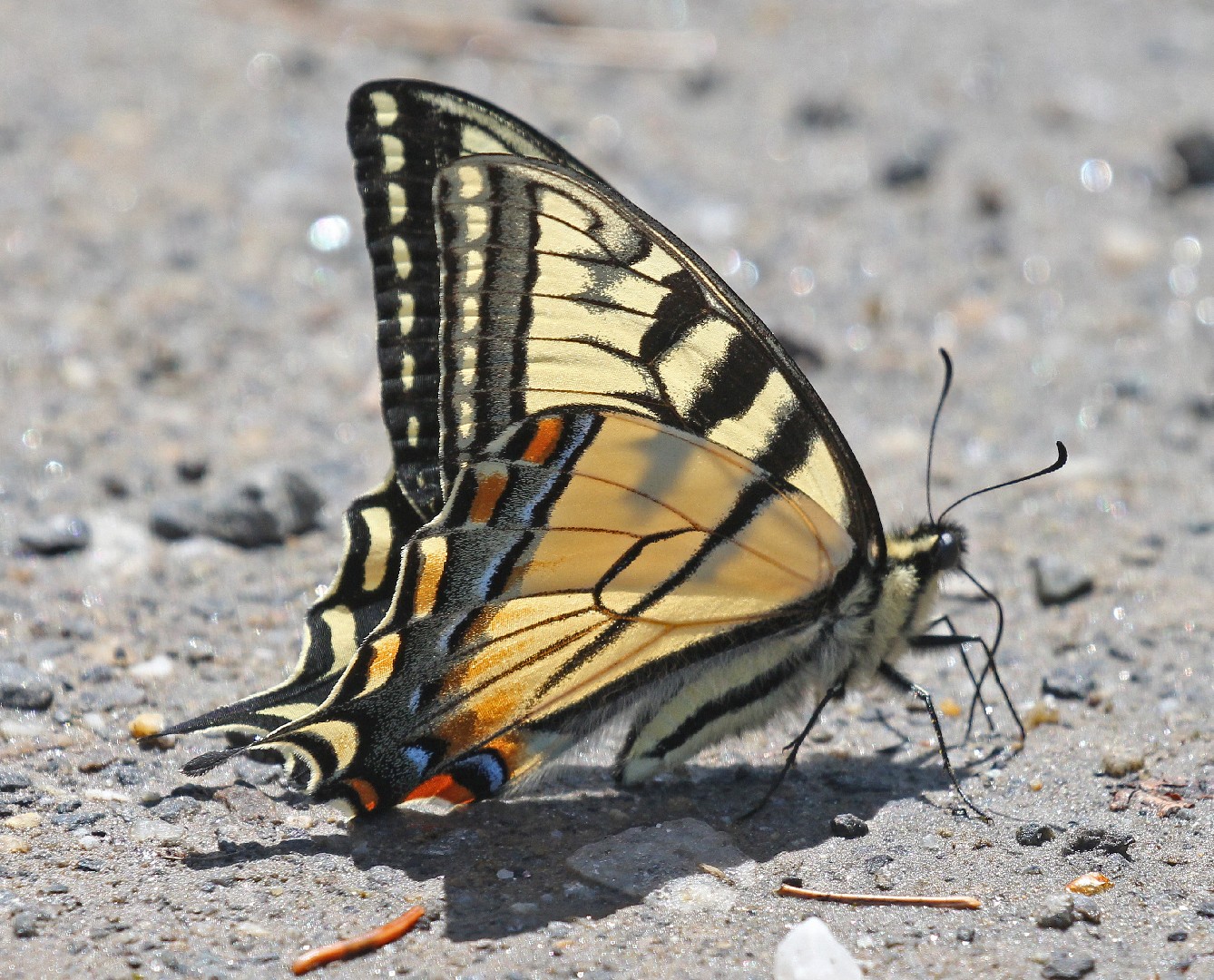
The canadian tiger swallowtail (Papilio canadensis) is a beautiful insect that has earned its name by resembling tiger stripes. They are one of the most popular species when it comes to puddling, which involves butterflies splashing around in mud puddles in an attempt to get nutrients. When mothers lay their eggs, they will fold leave around them as a protective and edible shell, making them great parents.
9. The brother
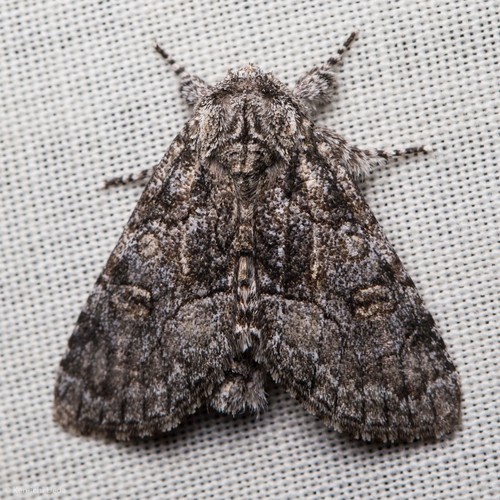
The wingspan is 3.5 - 4 cm.
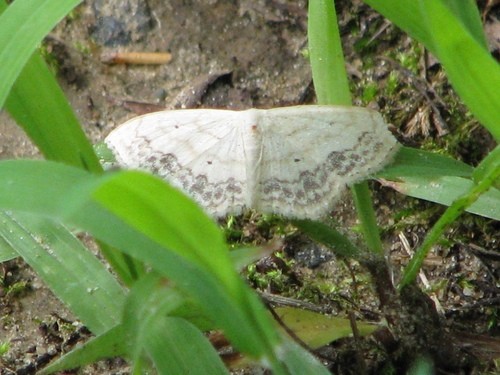
10. Large lace border
Scopula limboundata, the large lace-border, is a moth of the family Geometridae. It was described by Adrian Hardy Haworth in 1809. It is found in North America east of the Rocky Mountains. There is a single and unconfirmed record from Great Britain. The wingspan is 25–30 millimetres (0.98–1.18 in). Adults are on wing from late May to late August or early September. The larvae feed on apple, blueberry, clover, dandelion, meadow-beauty, and black cherry.
More