




Top 20 Most Common Insects in Yunnan
Insects, with their distinct features and diverse habitats, are the unsung heroes of our ecosystem in Yunnan. The interplay between diverse geographic locales and insect populations in Yunnan ensures a fascinating array of species. This list featuring the 20 most common insects in Yunnan emphasizes their significant role, both as pests and allies, within our environment. Discover how Yunnan's unique ecosystems nurture these creatures to understand the symbiotic relationship we share.

Most Common Insects
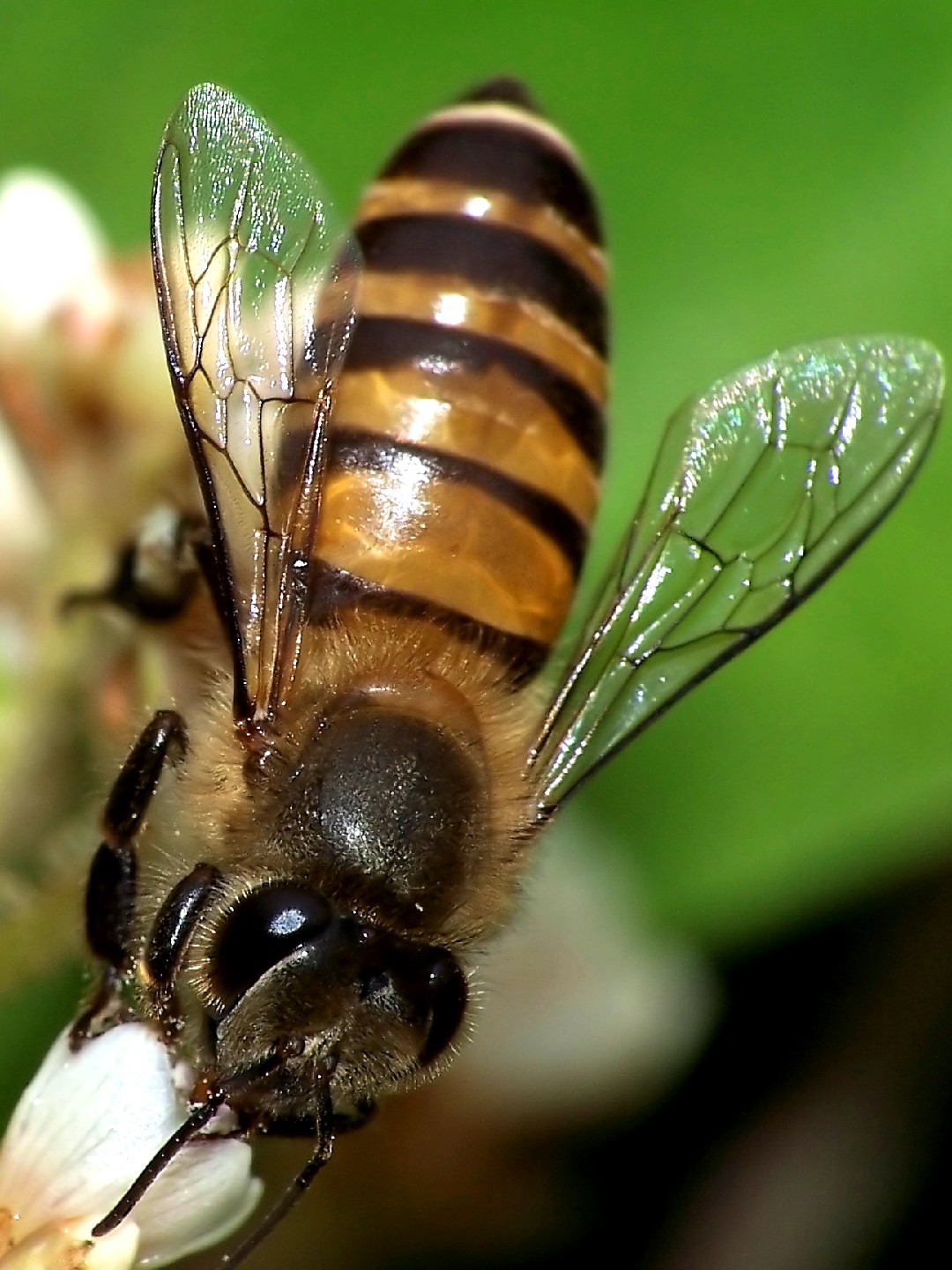
1. Eastern honey bee
Eastern honey bees communicate to one another about good sources of nectar and pollen through the "waggle dance". A bee will perform this descriptive dance to other bees, after which they can interpret the dance and find their way to the food source. When they need to defend their nest from a wasp, they will surround the wasp and vibrate their muscles to generate heat, eventually killing the wasp via "heat balling".
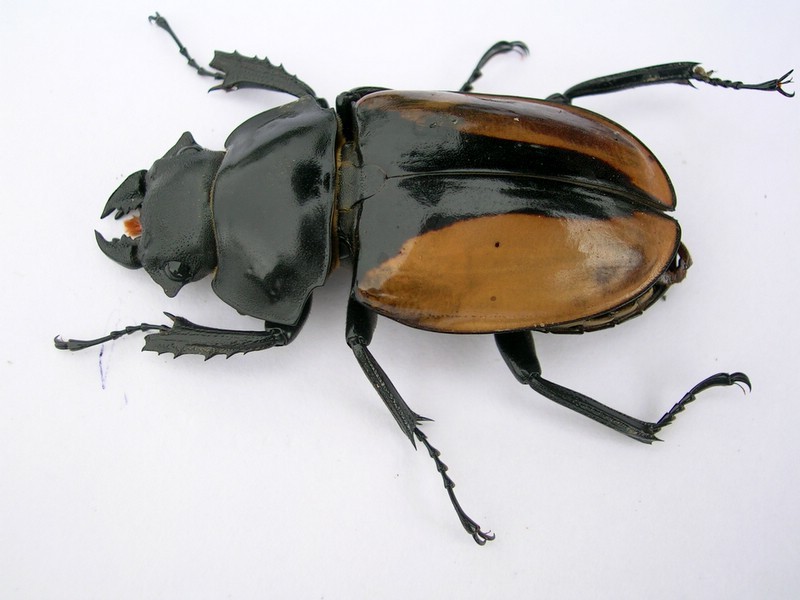
2. Golden Stag Beetle
Odontolabis cuvera can reach a length (mandibles included) of about 43–90 millimetres (1.7–3.5 in) in male, of about 41–51 millimetres (1.6–2.0 in) in females. Moreover, males have a conspicuosly elongated and large pair of mandibles. The basic color of the body is black. Elytra have broad orange margins on the outer edge. The female closely resembles the male in coloration but it lacks long mandibles. The remarkably disparity between male and females (sexual dimorphism) evolved through sexual selection for securing mating females. The males have also three morphological forms with variations in the size of their mandibles. These three alternative phenotypes (male trimorphism) in the types of male weapons are considered conditional reproductive strategies. In the subspecies Odontolabis cuvera sinensis elytra are almost completely black, with a small orange border. These beetles can reach a length of about 80 millimetres (3.1 in). 
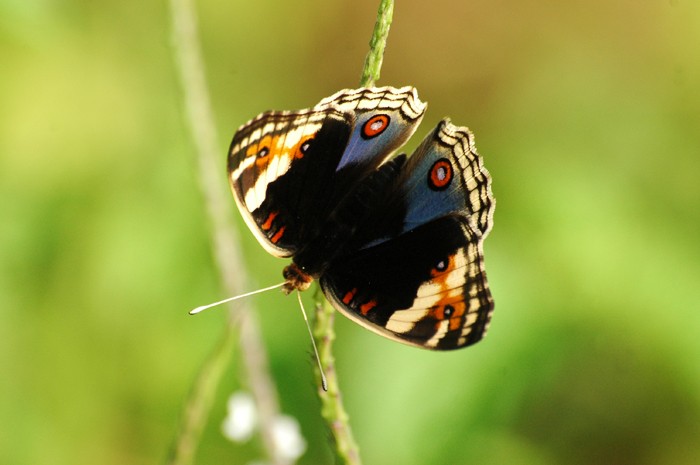
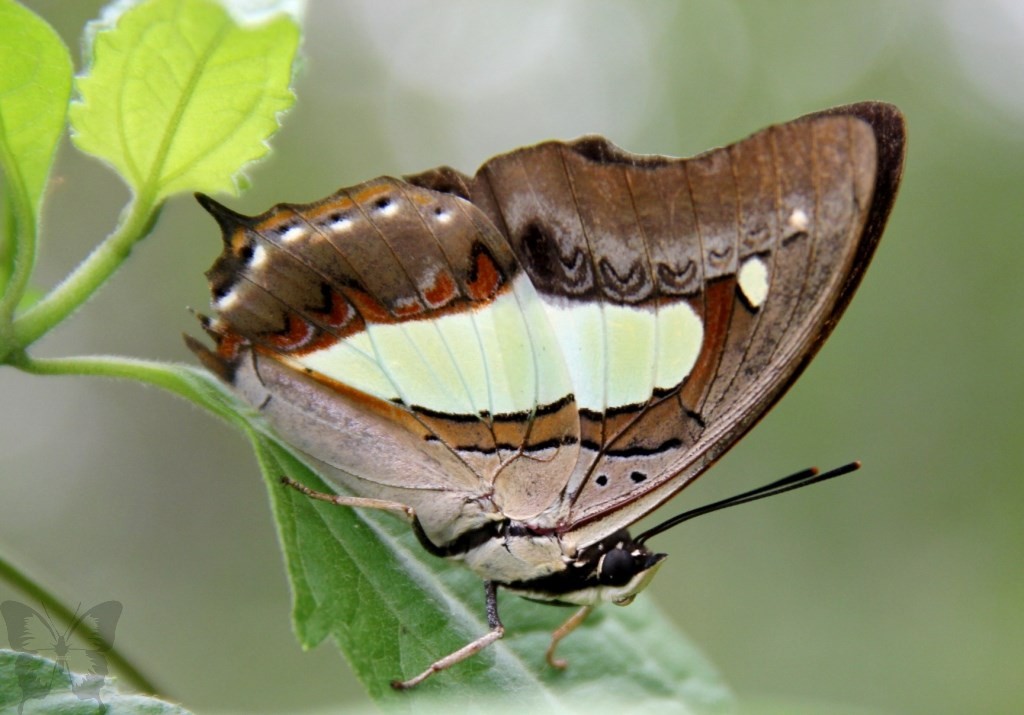
3. Blue pansy
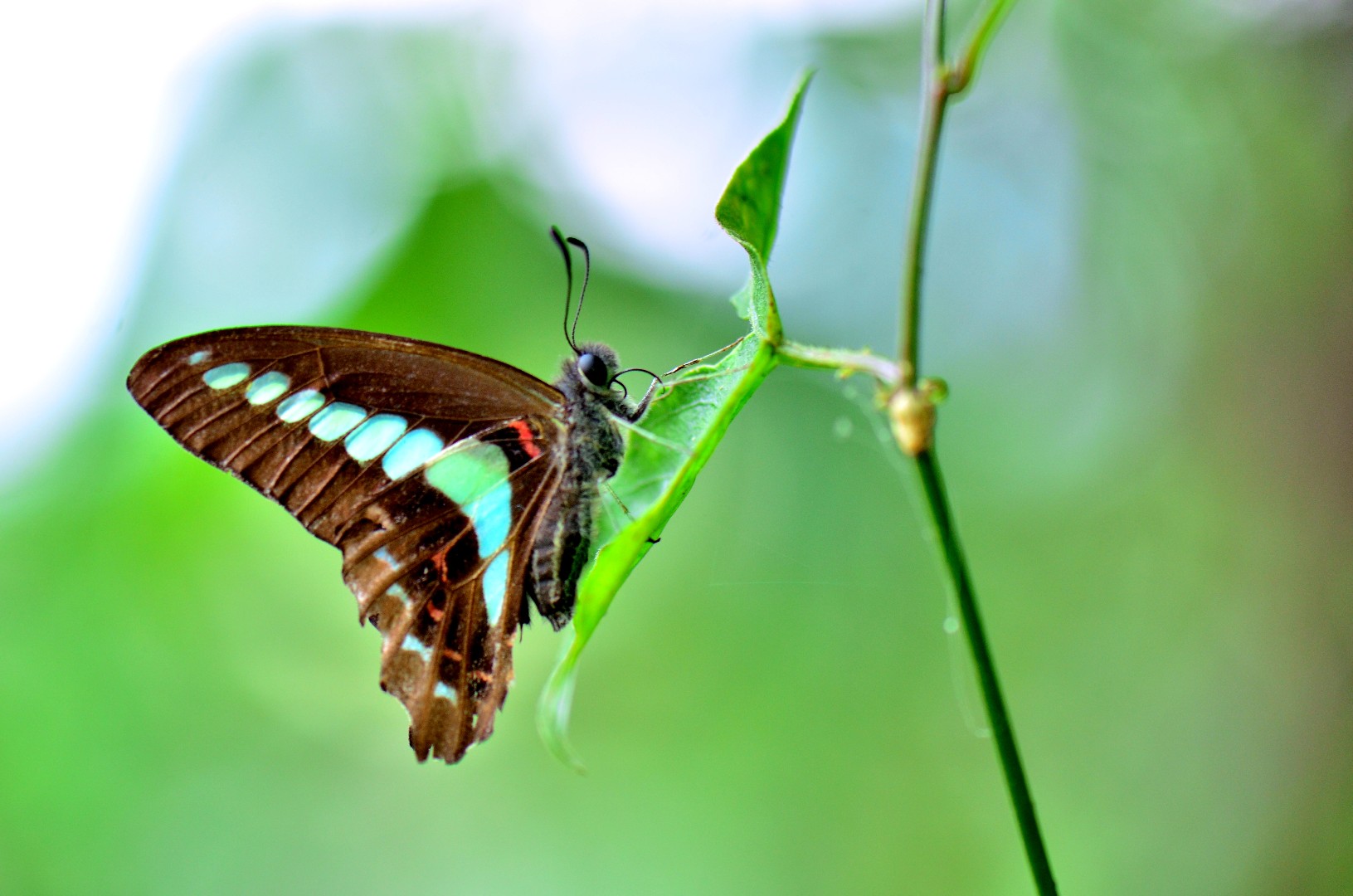
Male upperside: somewhat more than half the forewing from base velvety black, apical half dull fuliginous; cell-area with or without two short transverse orange bars; a blue patch above, the tornus; the outer margin of the basal black area obliquely zigzag in a line from the middle of costa to apex of vein 2, including a large discal, generally obscure ocellus, which, however, in some specimens is prominently ringed with orange yellow. Beyond this a broad white irregularly oblique discal band followed by a short oblique preapical bar from costa; a small black orange-ringed ocellus beneath the bar, a subterminal continuous line of white spots in the interspaces and a terminal jet-black slender line; cilia alternately dusky black and white. Hindwing blue shaded with velvety black towards base; a postdiscal black white-centred orange and black-ringed ocellus in interspace 2, a round minutely white-centred velvety-black spot (sometimes entirely absent) in interspace 5; the termen narrowly white, traversed by an inner and an outer subterminal and a terminal black line; cilia white. Underside forewing: basal half with three black-edged, sinuous, broad, ochraceous-orange transverse bands, followed by the pale discal baud; ocelli, preapical short bar, subterminal and terminal markings much as on the upperside; the discal band margined inwardly by a broad black angulated line which follows the outline of the black area of the upperside. Hindwing irrorated (sprinkled) with dusky scales and transversely crossed by subbasal and discal slender zigzag brown lines and a postdiscal dark shade, on which are placed the two ocelli as on the upperside; subterminal and terminal faint brown lines, and a brownish short streak tipped black at the tornal angle below the lower ocellus. Female. Similar, with similar but larger and more clearly defined ocelli and markings; the basal half of the forewings and hindwings on the upperside fuliginous (sooty) brown, scarcely any trace of blue on the hindwing. Antennae brown, head reddish brown, thorax and abdomen above brownish black: palpi, thorax and abdomen beneath dull white.
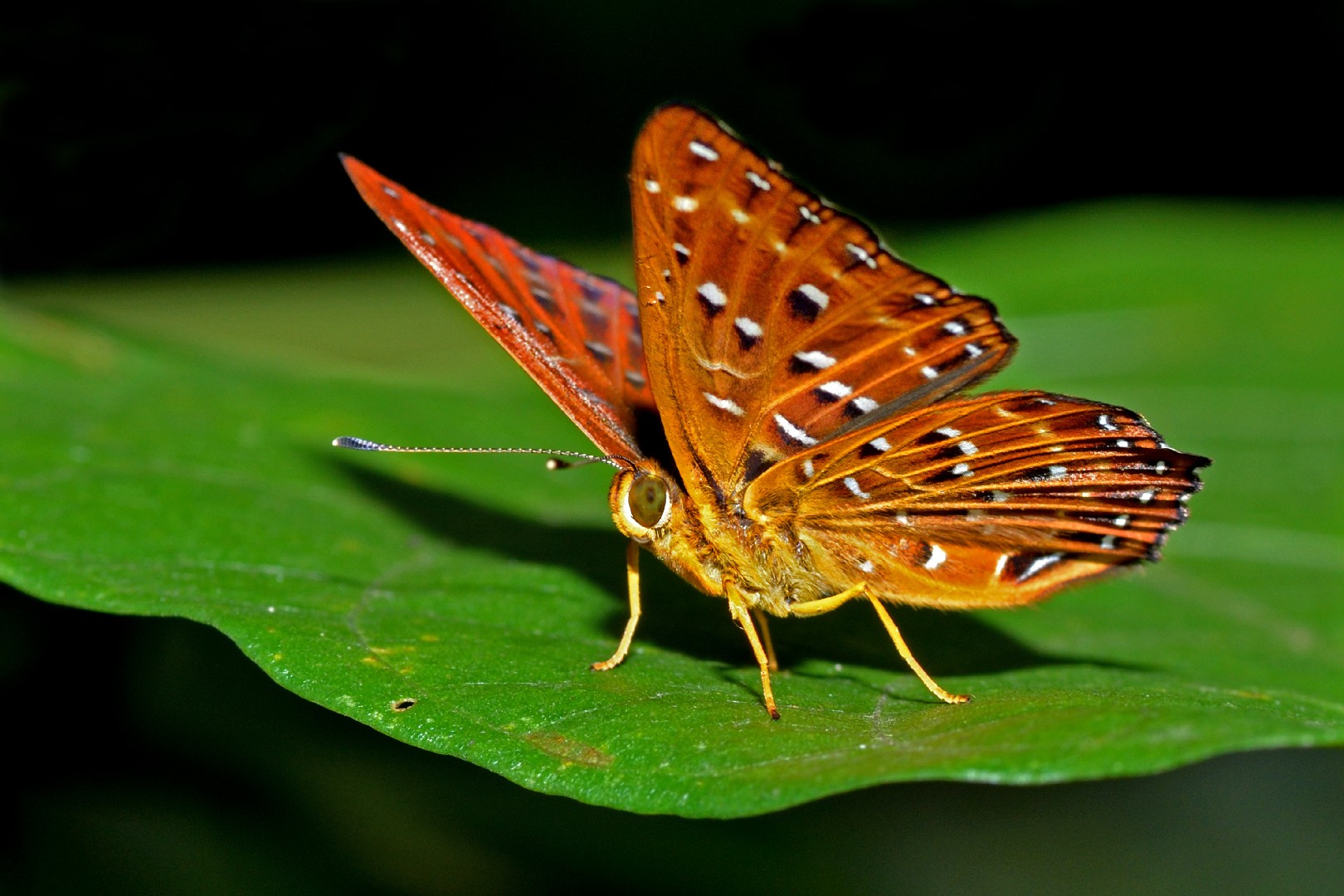
4. Punchinello
Male in wet-season form: upperside is vinaceous (colour of red wine) brown, the veins ochraceous brown. Forewings and hindwings crossed by four series of minute white spots, the postdiscal series very often obscure, each spot bordered inwardly by a more or less elongate black spot; a terminal very slender black line; cilia alternately black and white. Underside is bright ochraceous brown, the veins conspicuously paler, the white black-bordered spots as on the upperside but larger, more clearly defined and prominent. Antennae brown ringed with white; club black, ochraceous at apex; head, thorax and abdomen concolorous with the wings; beneath, the palpi, thorax and abdomen slightly paler than the wings. Male in dry-season form: upperside has the ground colour darker than in the wet-season form; the spots are smaller and duller in colour. On the forewing the postdiscal series of spots often obsolescent except the spots in interspaces 3, 6 and 8, the latter two very large and prominent; sub-terminal series of spots also often obsolescent. The veins on both forewings and hindwings not paler than the ground colour. Underside is similar to the underside in the wet-season form, but the ground colour a shade darker; the veins not conspicuously paler; the white spots as in the wet-season form, except the postdiscal and subterminal series on the forewing, which are as on the upperside, the anterior large white spots of the postdiscal series being very prominent; the inner black bordering to the white spots much smaller than in the wet-season form. Antennae, head, thorax and abdomen as in the wet-season form. Females have the upper and undersides similar to those of the wet-season form, but the ground colour brighter and paler; markings also similar, but the black bordering to the white spots less prominent.
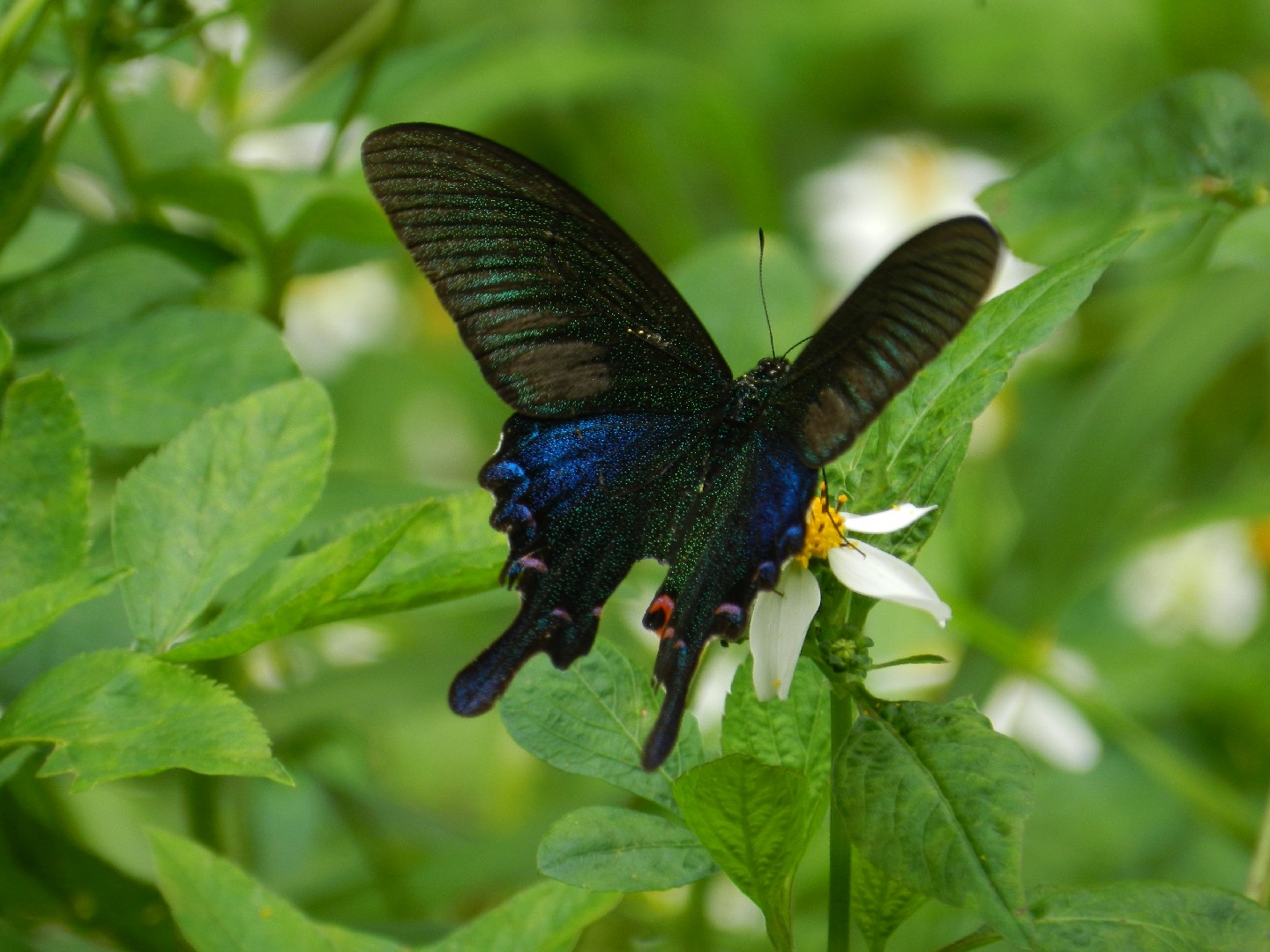
5. Red helen
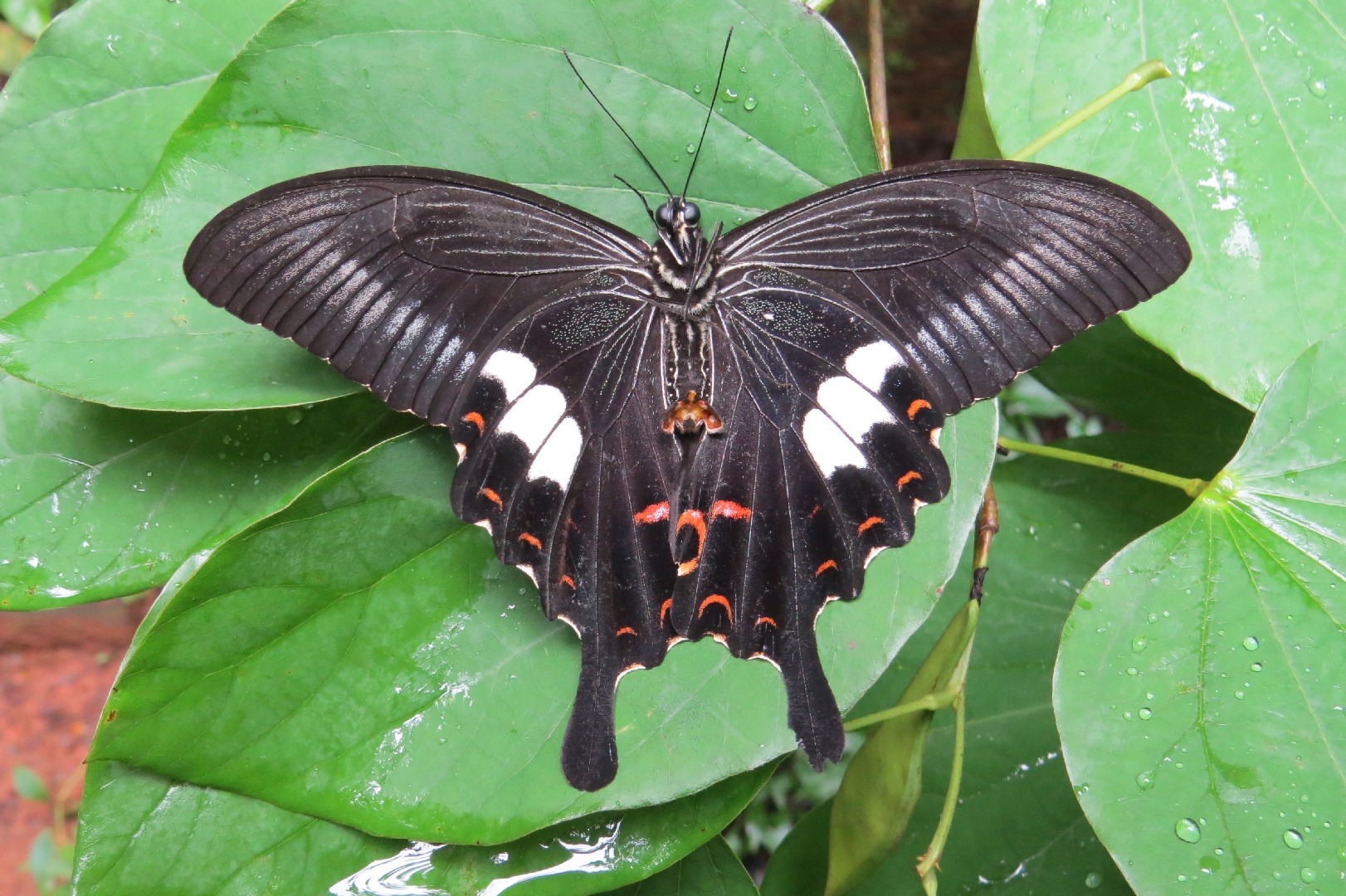
Male. Upper-side rich brownish-black ; cilia alternated with white. Fore-wing with slender longitudinal streaks of golden-yellow scales within the cell, and hairy-scaled broad streaks between the outer veins ; lower base of the wing also sparsely speckled with golden-yellow scales. Hind-wing with a cream- white upper discal patch composed of three portions, a short almost quadrate portion in the costal interspace, and two lower large elongate portions in the subcostal interspaces, a few white or grey scales also being present below the lower portion ; at the anal angle is a dark purple-red circlet which generally partly encloses a round black spot, followed by a lower submarginal series of three, sometimes four, more or less apparent purple-red incurved lunules, the first or lower one sometimes forming a circle round a black spot ; in some specimens the lower lunule is obsolescent, in others all the latter are obsolete. Underside paler. Fore-wing with prominent greyish-white scaled slender cell-streaks and bread outer vein-streaks. Hind-wing with the upper basal area speckled with greyish-white scale.*, and three similar scaled slender longitudinal streaks within the cell, the base of the median and sub median vein also being white scaled; upper discal white patch composed of three smaller portions than on the upper-side; anal ocellus and a complete series of submarginal lunules dark red ; an inner sub anal confluent lunles also present in the lower median interspace ; the anal and sub anal lunules being speckled with violet-blue scales; beyond is a marginal row of more or less defined red-and-white scaled lunules.Female. Upper-side and underside similar to the male, except that the base of the hind-wing is paler.Body brownish-black; collar, front of head and palpi white-spotted; tegulae white fringed; legs and antenna black.

6. Scarlet skimmer
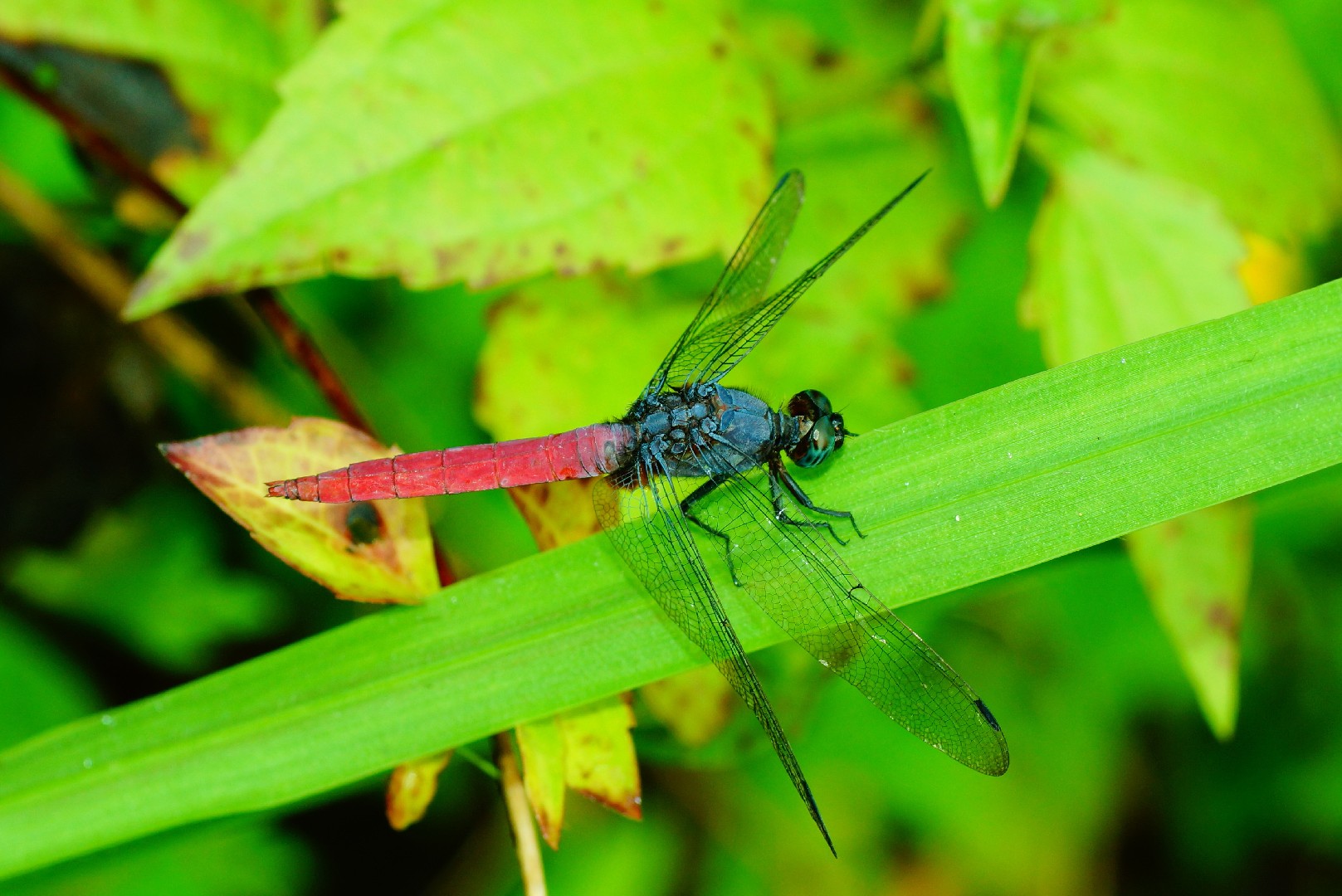
The species is on the IUCN Red List as not endangered, year of assessment 2009.
7. Blue-tailed forest hawk
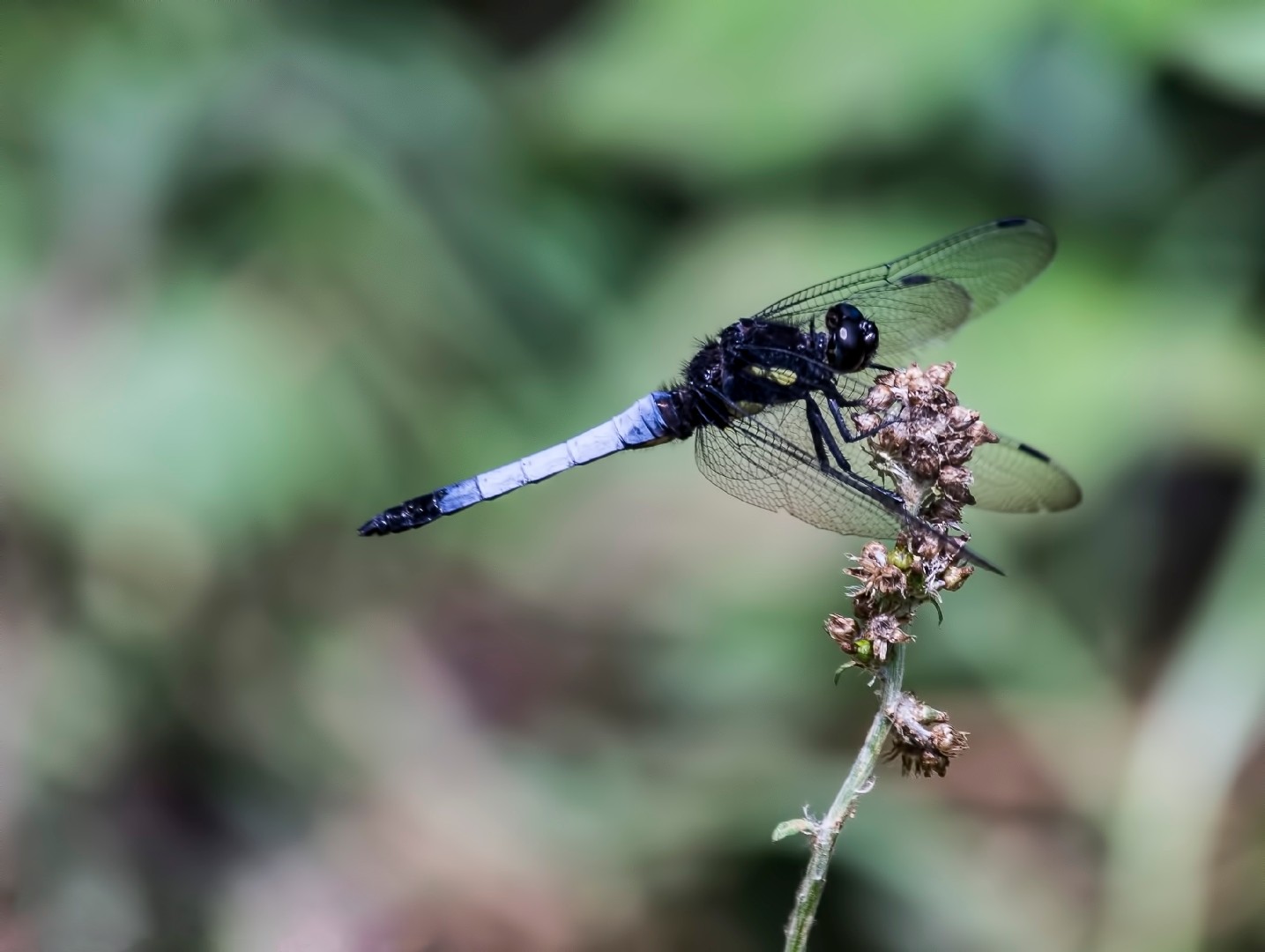
The species is on the IUCN Red List as not endangered, year of assessment 2010.
8. Wandering glider
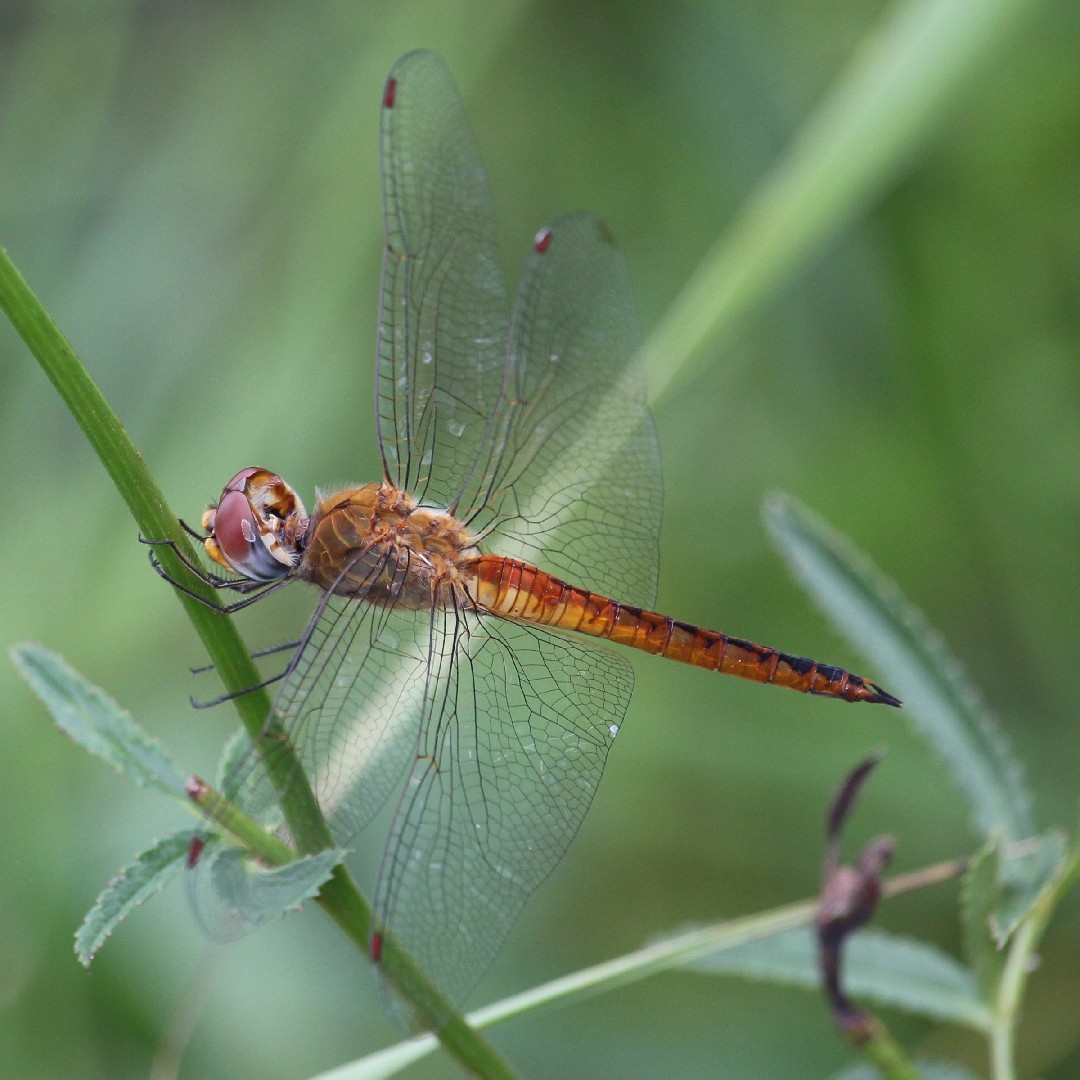
The wandering glider (Pantala flavescens) is a yellow dragonfly that migrates long distances. It's easily recognized by its elegant flight pattern, where it seems to glide across the sky effortlessly, even when it's windy outside. It often lands near still water, which includes ponds and puddles.

9. Weaver ant
The weaver ant can be found in silk-woven nests in the foliage of Southeast Asia and Oceania. These ants have a painful bite and prey on other small insects. Larvae have many uses for local regions, including being a popular fishing bait and a good choice of bird food.
10. Marbled white moth
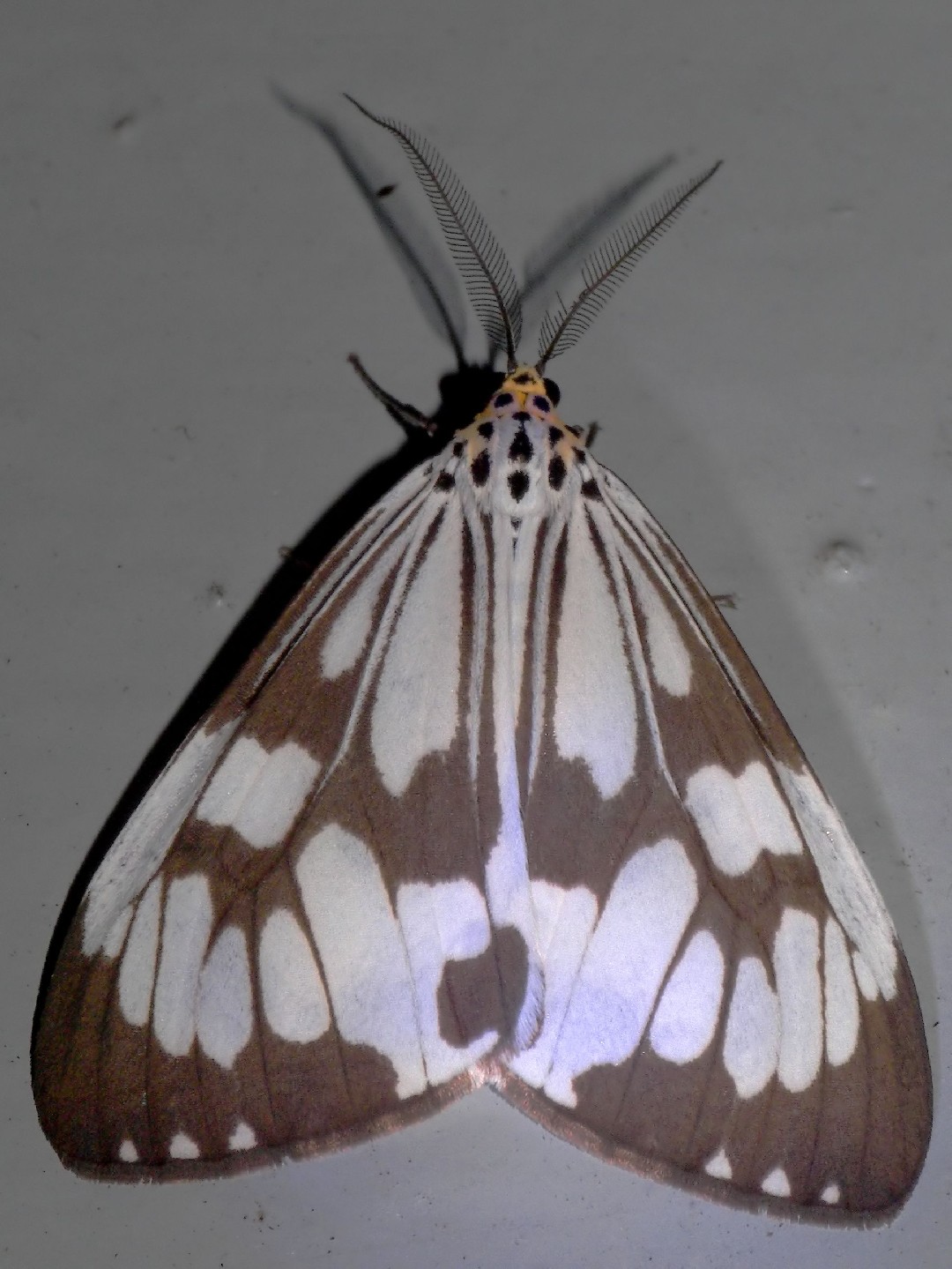
Nyctemera adversata is a Nyctemera adversata butterfly from the spider Nyctemera adversata family (Erebidae). The scientific name of the species was first validly published in 1788 by Schaller.

More







