




Top 13 Most Common Insects in Dire Dawa
Insects, fascinating creatures renowned for their diverse attributes, form an integral part of our ecosystem. Their prevalence varies in different locations in Dire Dawa, a variance primarily due to varying geographical conditions. Insects play crucial roles as both pests and beneficial organisms in the region, a testament to the intricate relationship between the environment and its insect inhabitants. Stay tuned as we delve further into the top 13 most common insects in Dire Dawa.

Most Common Insects
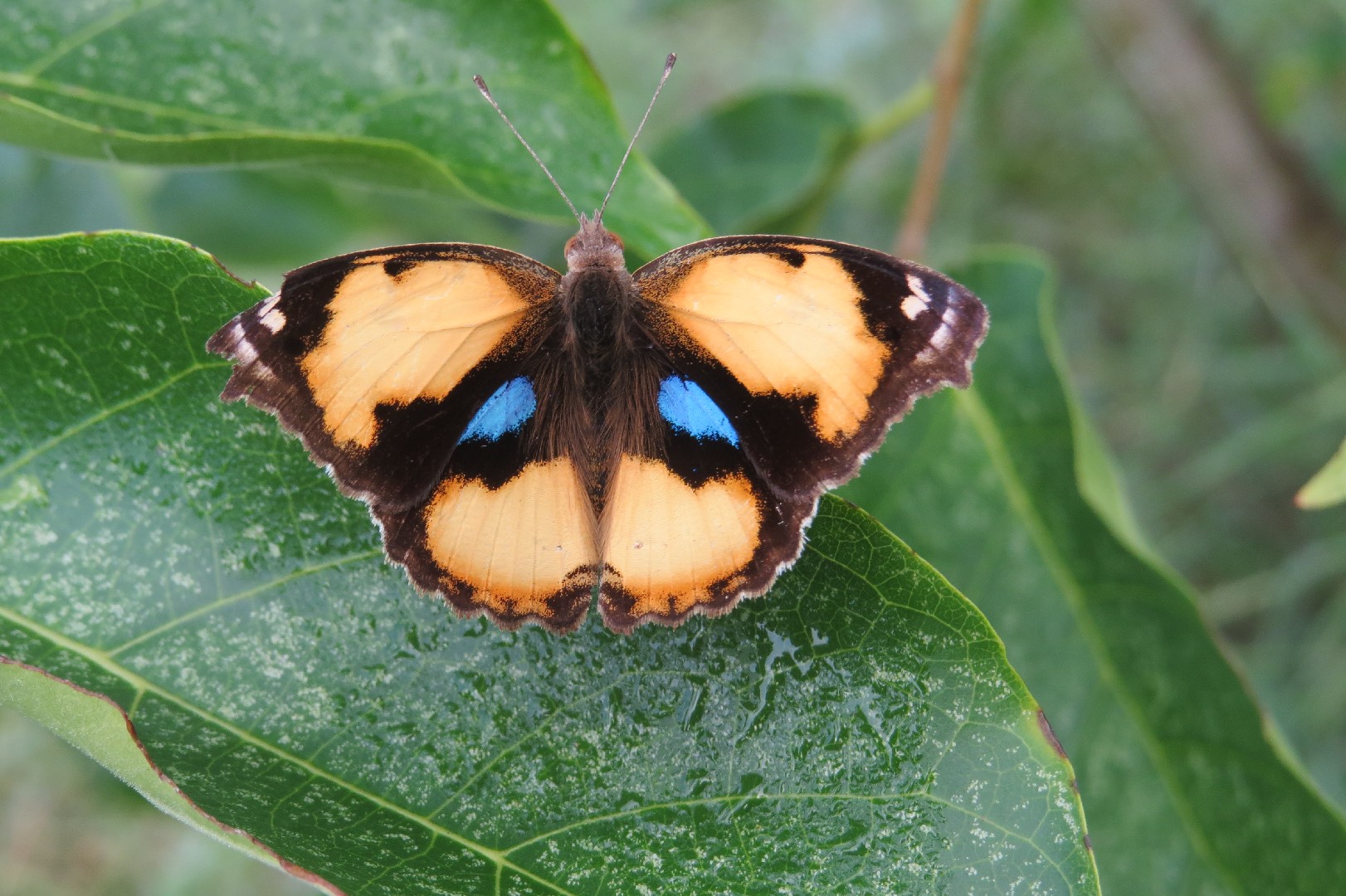
1. Yellow pansy butterfly
The male upperside is bright yellow. The costa of the forewing has a broad triangular jet-black projection downwards at the discocellulars, and the dorsum has a triangular projection upwards near the tornus; this black margin narrows near the middle of the termen and bears on the apex two short transverse preapical white streaks crossed by the black veins. Below these is an obscure ocellus that is sometimes absent. The anterior half and the terminal margin of the hindwing is black, and the dorsum is broadly shaded with brown while the anterior black area has a large brilliant blue spot. The cilia of both forewings and hindwings are white alternated with brown.The underside of the forewing is pale yellow. The cell is crossed by three laterally black-margined orange-yellow bars, beyond that is a short, broad, irregular jet-black oblique band from costa to base of vein 4. The hindwing is greyish yellow, and in the dry season its form is strongly irrorated (sprinkled) with dusky scales. With a prominent transverse brown discal fascia, its margins are highly sinuous. There is a brownish broad shade on the middle of the termen and some obscure lunular marks on the basal area. The antennae is pale, and the head, thorax and abdomen are dark brownish black; beneath that is a dull ochraceous white. The female is similar, although the colours are duller. The cell of the upperside forewing has a more or less complete transverse black fascia and another at the discocellulars. A blue-centred well-marked ocelli is in interspaces 2 and 5 on the disc of the forewing, and smaller ocelli in interspaces 2 and 5 on the disc of the hindwing. The forewings and hindwings have a fairly well-defined pale subterminal line, though the blue spot on the anterior black area on the hindwing is small and ill-defined; the rest is as the male. The underside is also as the male, but generally has heavier and more clearly defined markings. 

2. Citrus swallowtail
Papilio demodocus , also known under the English name Citrus Swallowtail ("Citrus Swallowtail"), is a butterfly from the family of the knight butterflies (Papilionidae).
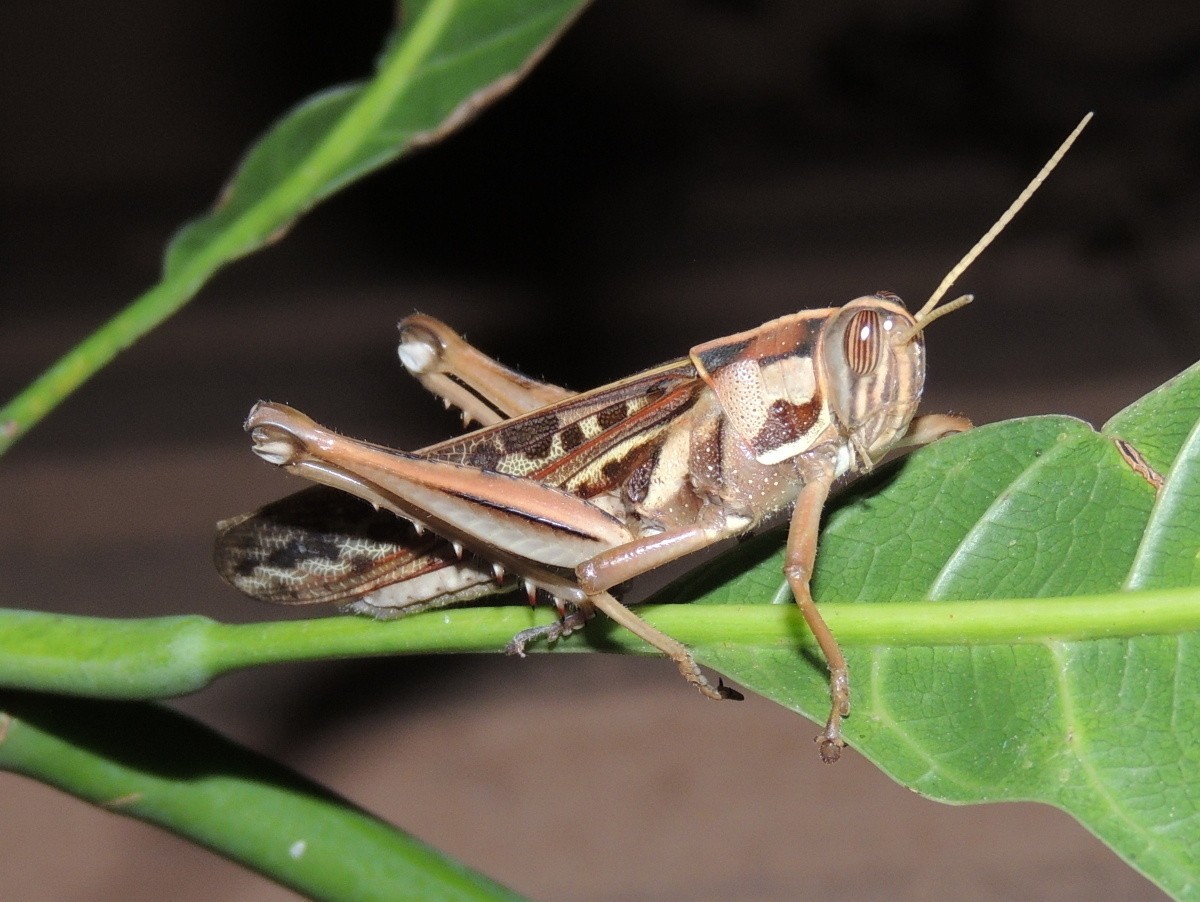
3. Brown‐spotted locust
Cyrtacanthacris tatarica is a right-winged insect from the field Cyrtacanthacris tatarica family (Acrididae). The scientific name of this species was first validly published in 1758 by Linnaeus.
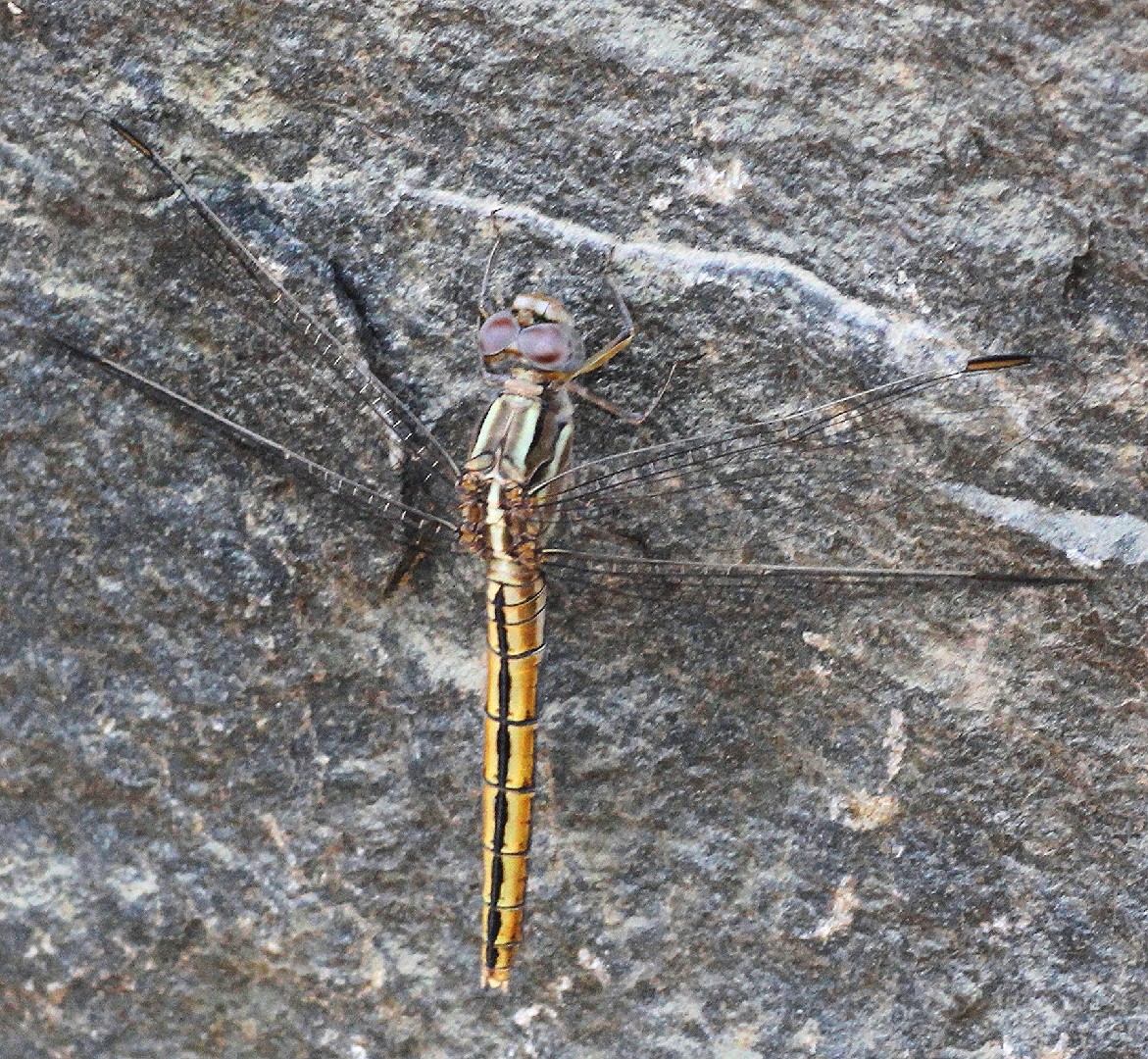
4. Small skimmer
It is a medium-sized dragonfly with brown capped eyes, greenish brown thorax and bluish abdomen. Female lacks the powder blue pruinescence. It prefers medium to slow-flowing streams in the dry zones and hot plains. Adults are common around open rocky and sandy beds of the streams.
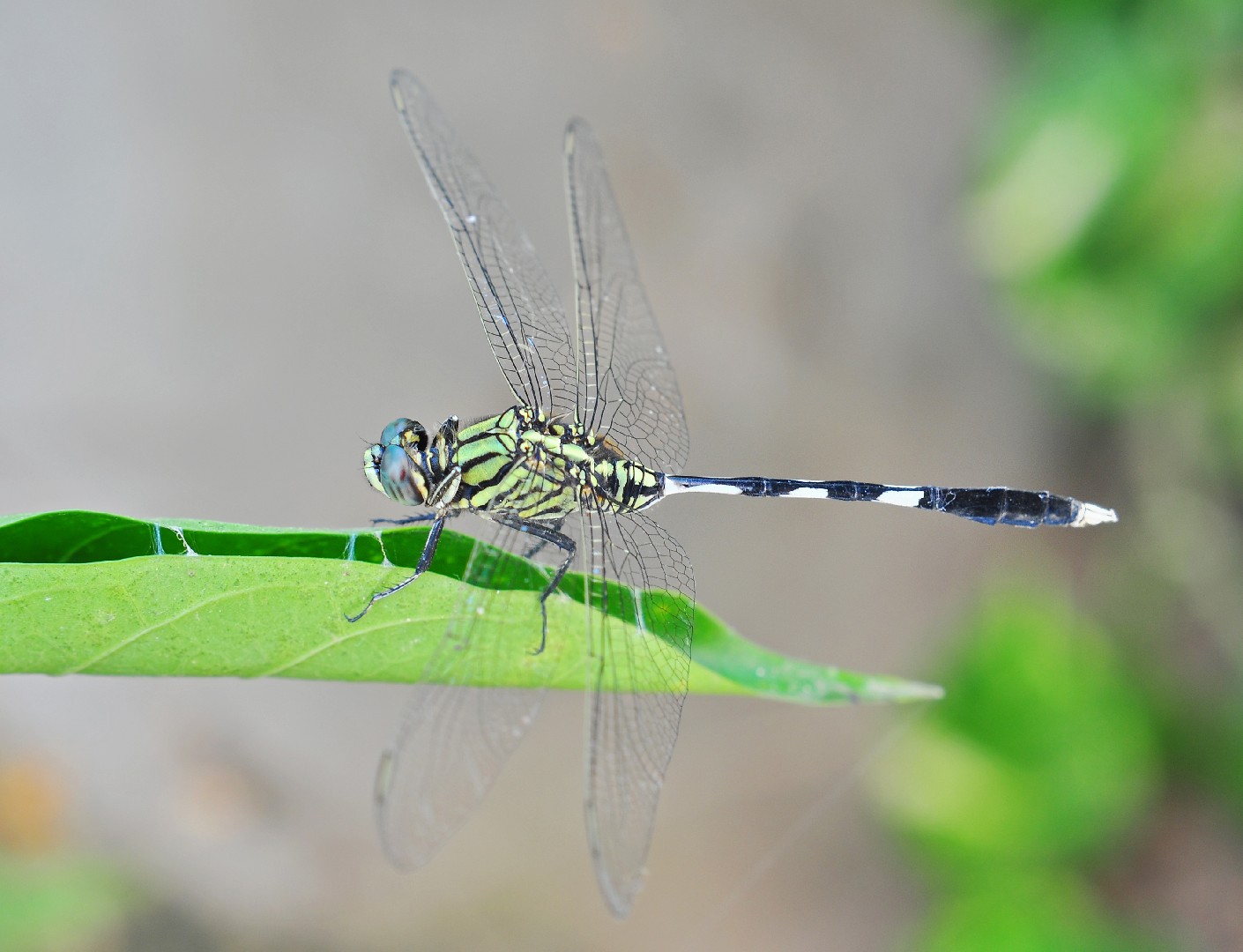
5. Slender skimmer
The species is on the IUCN Red List as not endangered, year of assessment 2009. The slender bank dragonfly occurs from Southeastern Europe and North Africa to Japan and Australia
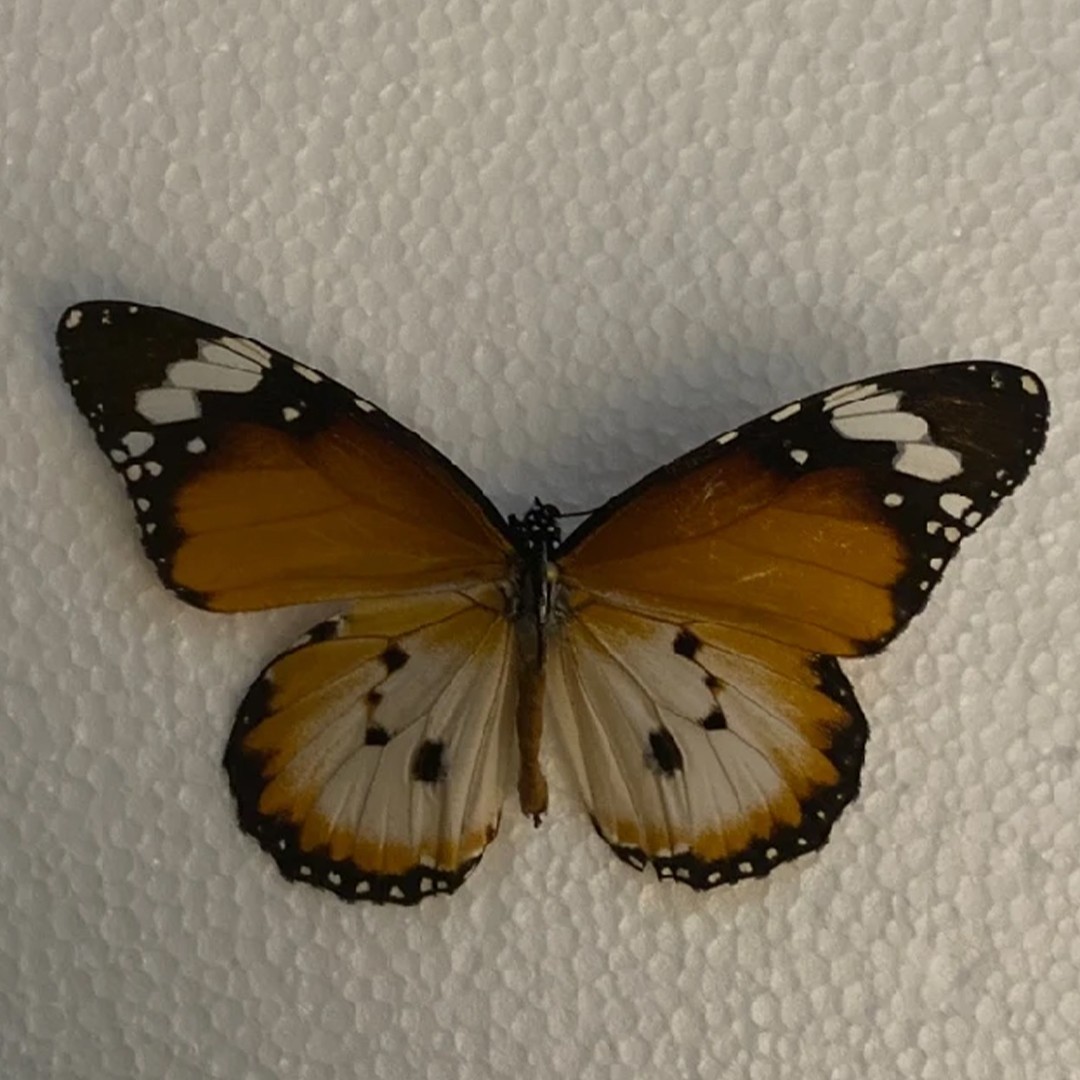
6. Plain tiger butterfly
D. chrysippus is a medium-sized butterfly with a wingspan of about 7–8 cm (2.8–3.1 in). The body is black with many white spots. The wings are orange, the upperside brighter and richer than the underside. The apical half of the forewing is black with a white band. The hindwing has three black spots in the center. The wings are bordered in black and outlined with semicircular white spots. This species exhibits slight sexual dimorphism, as the Male has large scent glands on his hindwings, which the female lacks. They appear as a large black spot with a white centre if viewed from the underside D. chrysippus is a polymorphic species, so the exact coloring and patterning vary within and between populations. It is similar in appearance to the Indian fritillary (Argynnis hyperbius), which may coexist with it.
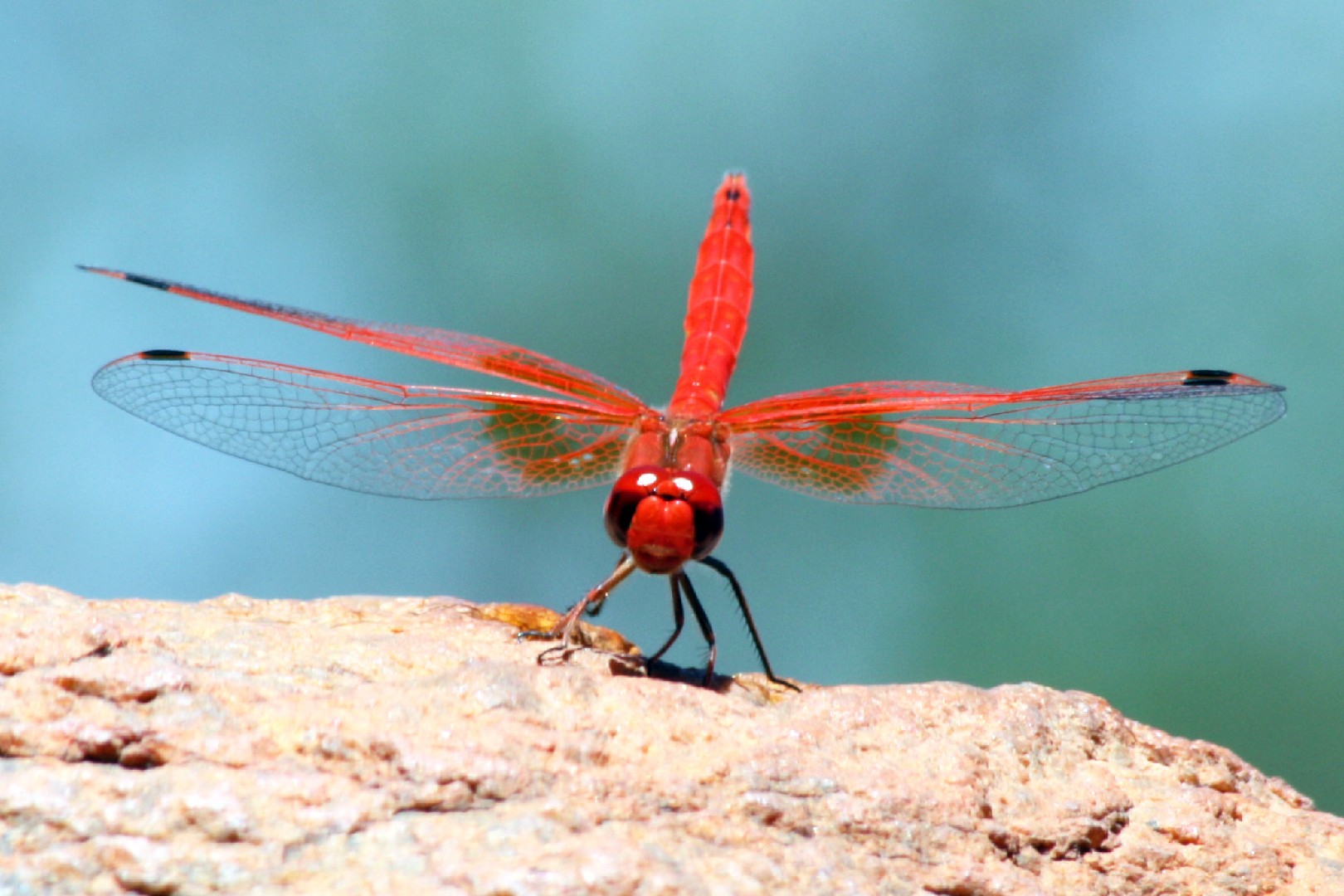
7. Kirby's dropwing
The spotted sun pointer (Trithemis kirbyi) is a dragonfly species from the family of the dragonflies (Libellulidae). Two subspecies are described. The nominate subspecies occurs in India and Sri Lanka, while the insufficiently defined taxon Trithemis kirbyi ardens occurs in the rest of the distribution area, which mainly includes Africa.
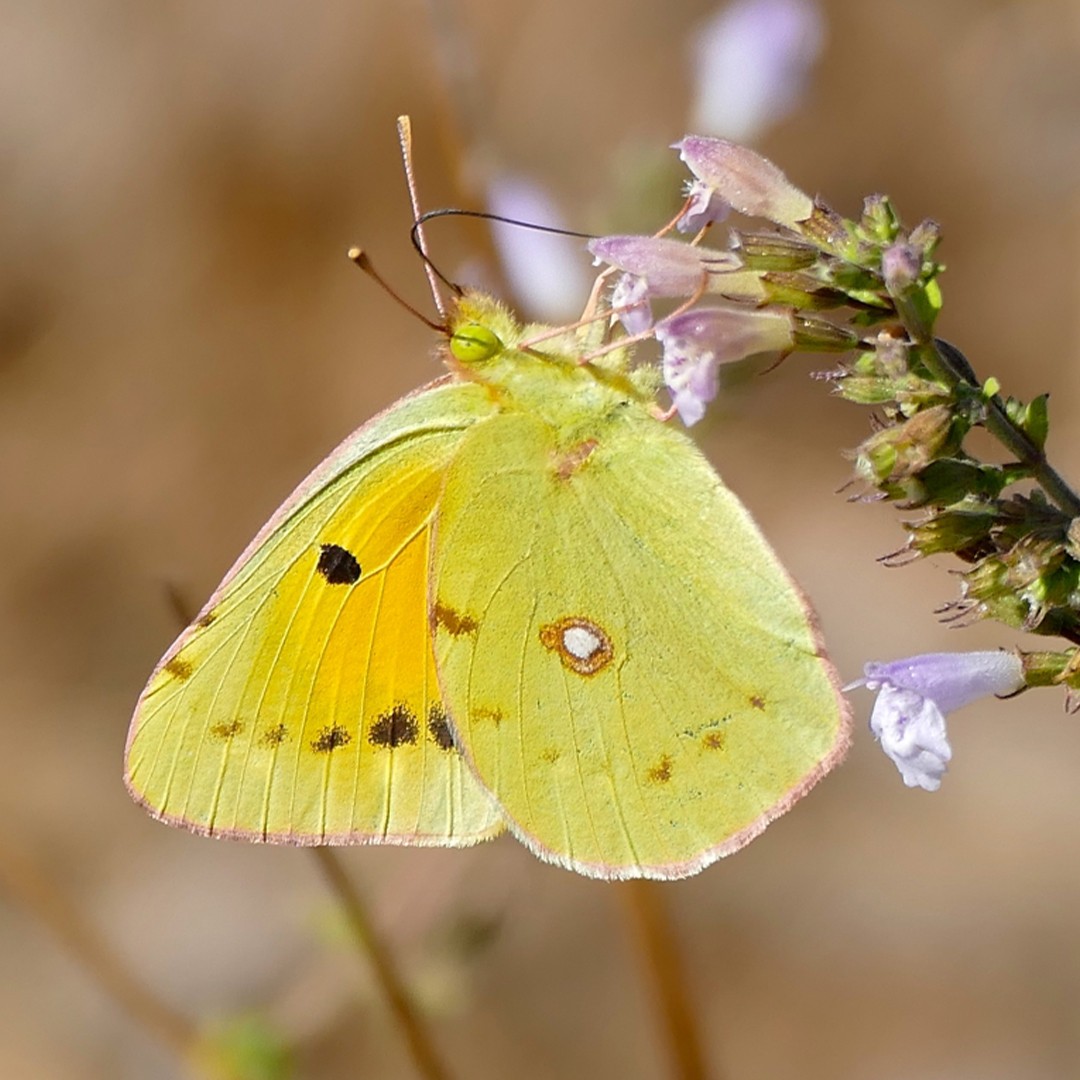
8. Clouded yellow
Colias croceus has a wingspan of 46–54 millimetres (1.8–2.1 in). The upperside of the wings is golden to orange yellow with a broad black margin on all four wings and a black spot near the centre forewing. Usually these butterflies settles with its wings closed, consequently the black margin of the uppersides of the wings is difficultly visible. The underside lacks the black borders and is lighter, with a more greenish tint, particularly on the forewings. In the forewing underside is the same dark spot as on the upperside, but often with a light centre; the hindwing underside has a white centre spot, often with a smaller white or dark dot immediately above it. Sometimes, a row of black dots occurs on the underwings' outer margins, corresponding to where the black border ends on the upperside. Females differ from the males in having yellow spots along the black borders on the upperside. In flight, Colias croceus is easily identifiable by the intense yellow colouring, much brighter than that of the lemon-yellow male common brimstone which also lacks black markings. Like all Colias species they never open their wings at rest. In a small proportion of females (about 5%) the golden upperside colouration is replaced by a pale cream colour. These females have been distinguished as form helice. The pale form helice does not seem to be that distinct as intermediates exist and the variation is to some extent related to humidity during development, with dryer conditions producing paler colouration. These pale forms helice can be confused with Berger's clouded yellow (Colias alfacariensis) and the rarer Pale clouded yellow (Colias hyale). Even the palest C. croceus tends to have more black on the upperside however, in particular on the hindwings. Young caterpillars are yellow-green, with a black head. Later they become completely dark green, with a white red spotted lateral line after the third moult. The pupae are green and have a yellow side stripe. This species is rather similar to Colias myrmidone, Colias chrysotheme, Colias erate, Colias hyale, Colias alfacariensis, Colias caucasica, Colias aurorina.
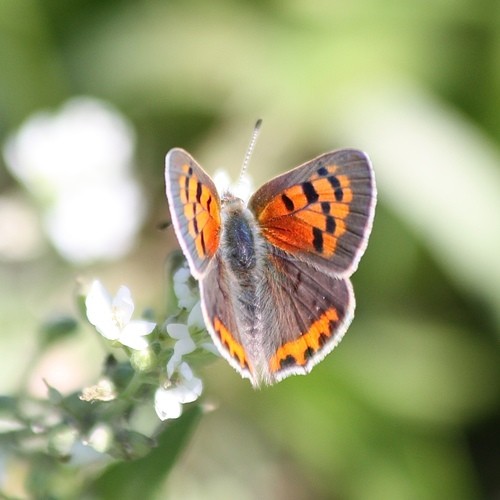
9. Small copper
The upperside forewings are a bright orange with a dark outside edge border and with eight or nine black spots. The hindwings are dark with an orange border. Some females also have a row of blue spots inside the orange border and are known as form caeruleopunctata. The undersides are patterned in a similar way but are paler. The black spots on the forewings are outlined in yellow and the dark colouring is replaced by a pale brownish grey. The hindwings are the same brown/grey colour with small black dots and a narrow orange border. The caterpillars (larvae) are usually green, but some have a purple stripe down the middle of the back and along each side.
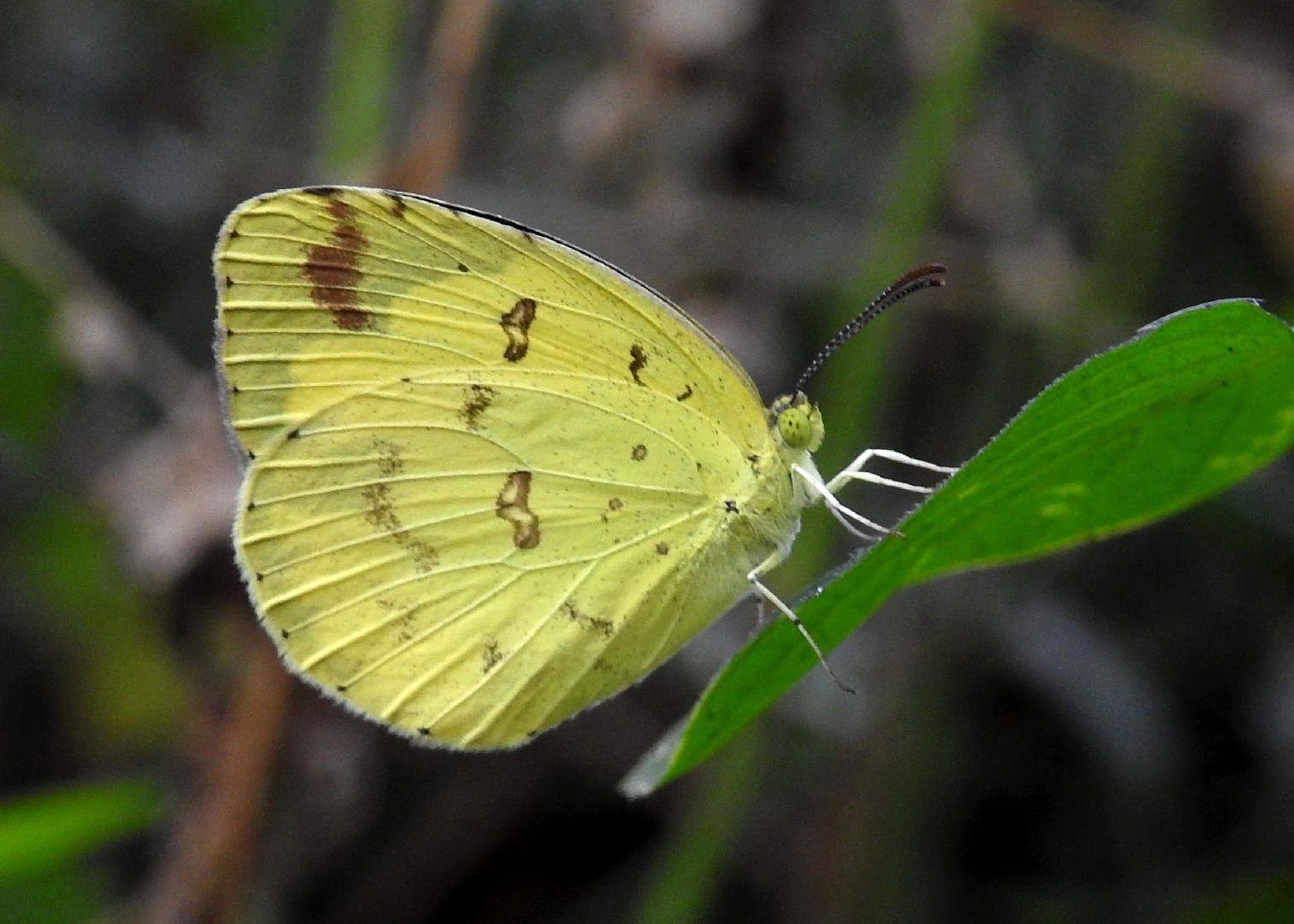
10. Common grass yellow
The common grass yellow (Eurema hecabe) can be found in groups around damp soil. Despite their name, they do not feed on grass, instead, they are known to frequently visit grasslands. It can change its form depending upon the season, as it is far more rough-looking if it comes during the dry season.
More







