




Top 20 Most Common Insects in Corsica
Insects, remarkable in their diversity and adaptability, are often seen within the multifaceted landscapes of Corsica. Varying terrains, from mountains to coastal areas, mould an impressive array of insect variety. These creatures are pivotal in our ecosystem, playing roles both as ecological allies and pests. Understanding the interplay between Corsica's environments and its insects provides unique insight into our complex biosphere. Stay tuned for our ‘Top 20 most common insects in Corsica’.

Most Common Insects
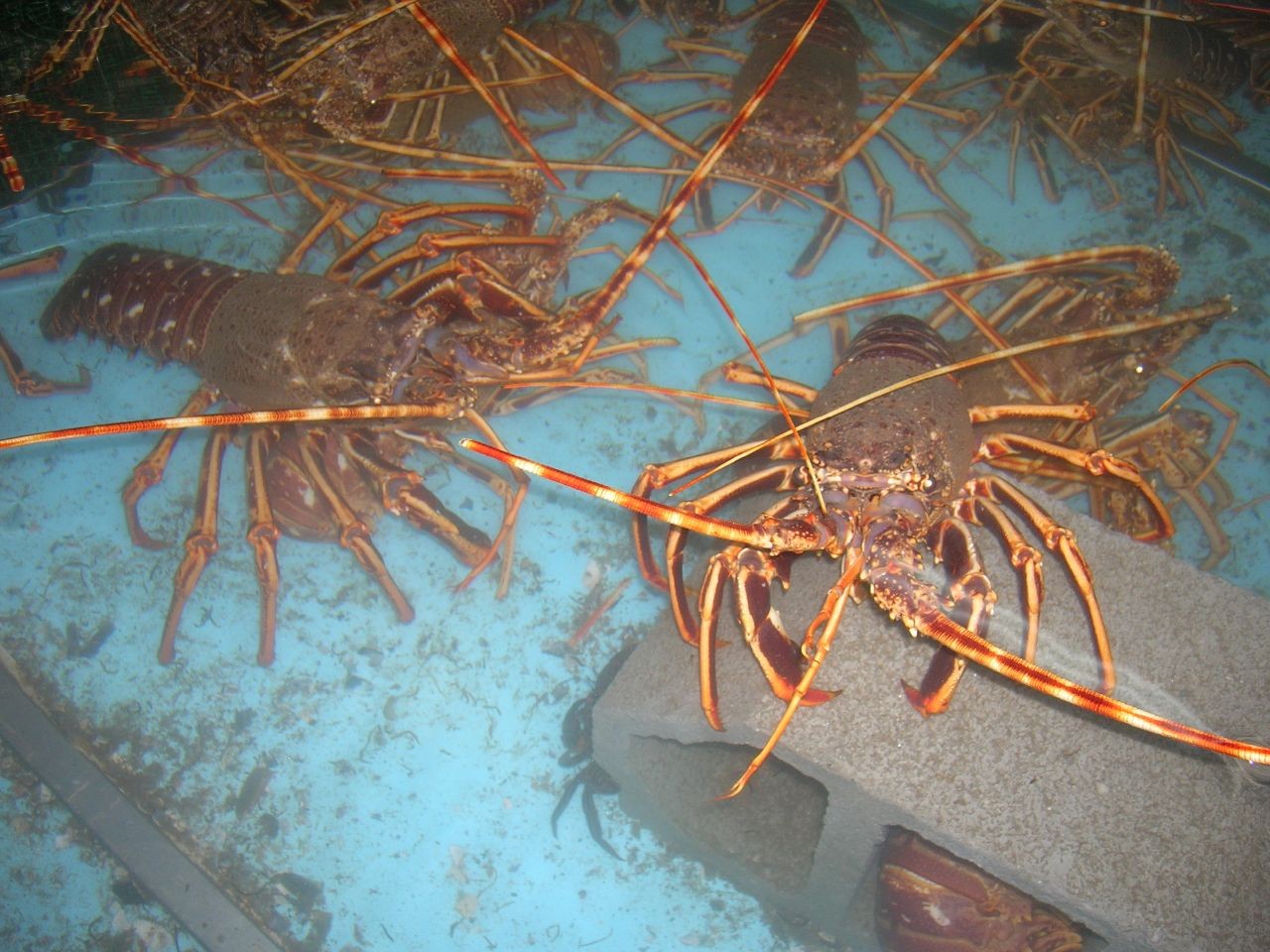
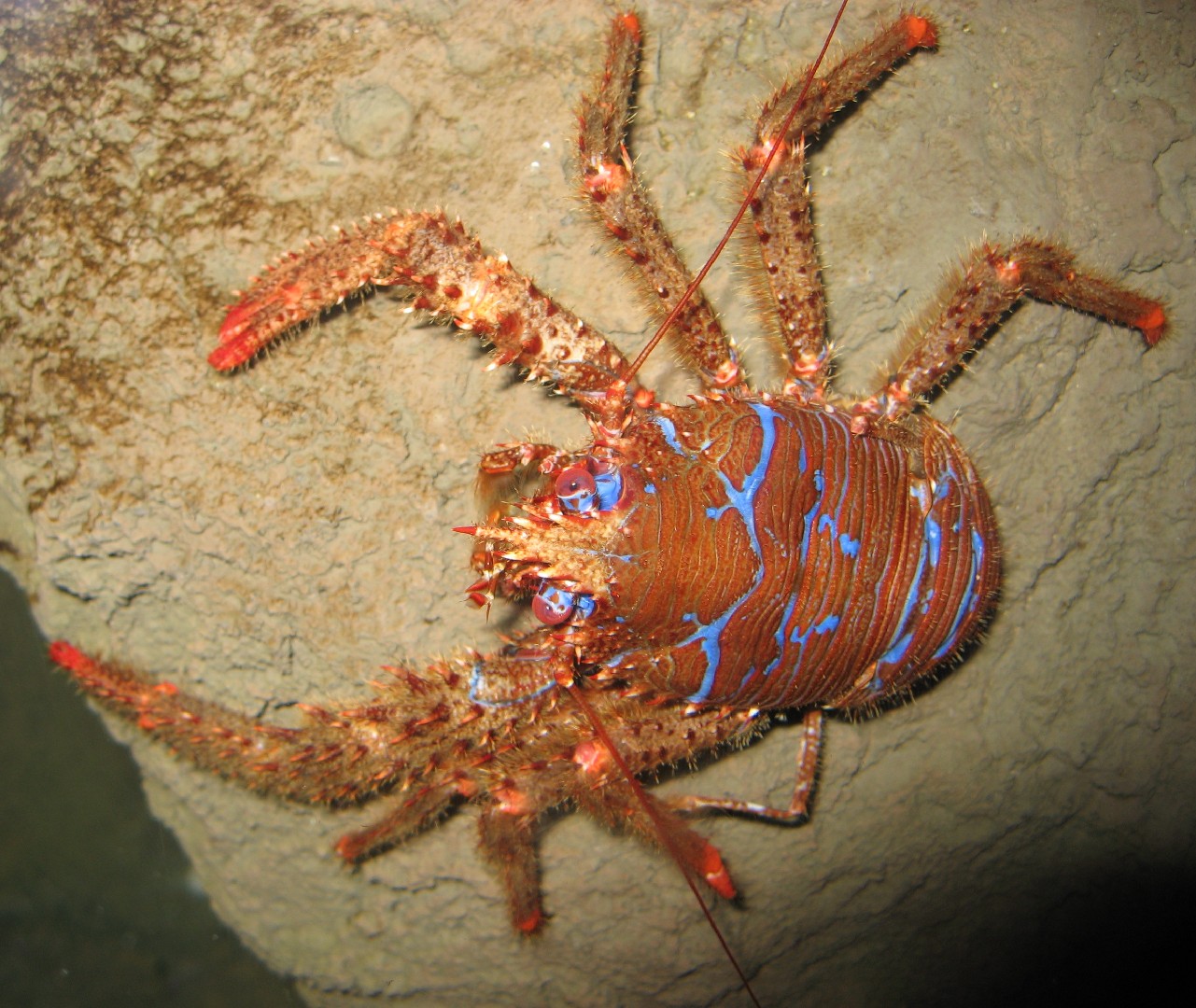
1. European spiny lobster
P. elephas may reach up to 60 cm (24 in) long, although rarely longer than 40 cm (16 in), and usually 25–30 centimetres or 10–12 inches. Few achieve their maximum weight of several kilograms. The adults are reddish-brown with yellow spots. The carapace is slightly compressed and lacks lateral ridges. It is covered with forward pointing spines, with the supraorbital spines prominent. The antennae are very heavy and spiny. Their flagellum is tapering and is even longer than the body. The first walking leg (pereopod) is provided with subchela (the distal end of a limb developed as a prehensile structure). The fourth segment (merus) of this leg has a characteristic row of spines. 

2. Copper demoiselle
Calopteryx haemorrhoidalis can reach a body length of about 1.8–1.9 in. The abdomen length is of about 1.3–1.7 in in males, of 1.2–1.7 in in females. The length of the wings is of 0.91–1.26 in in males, of 0.98–1.46 in in the females. The males have a dark, metallic shining body, the color of which can be red-violet, golden or copper-colored. On the underside of the last three abdominal segments there red area, the so-called "red lantern" (hence the Latin species name haemorrhoidalis, meaning "blood flow"). The wings of males show a large dark area, while the females have a brown band to the wing tip and a metallic-green to bronze-colored body, with a brown belt on the back.
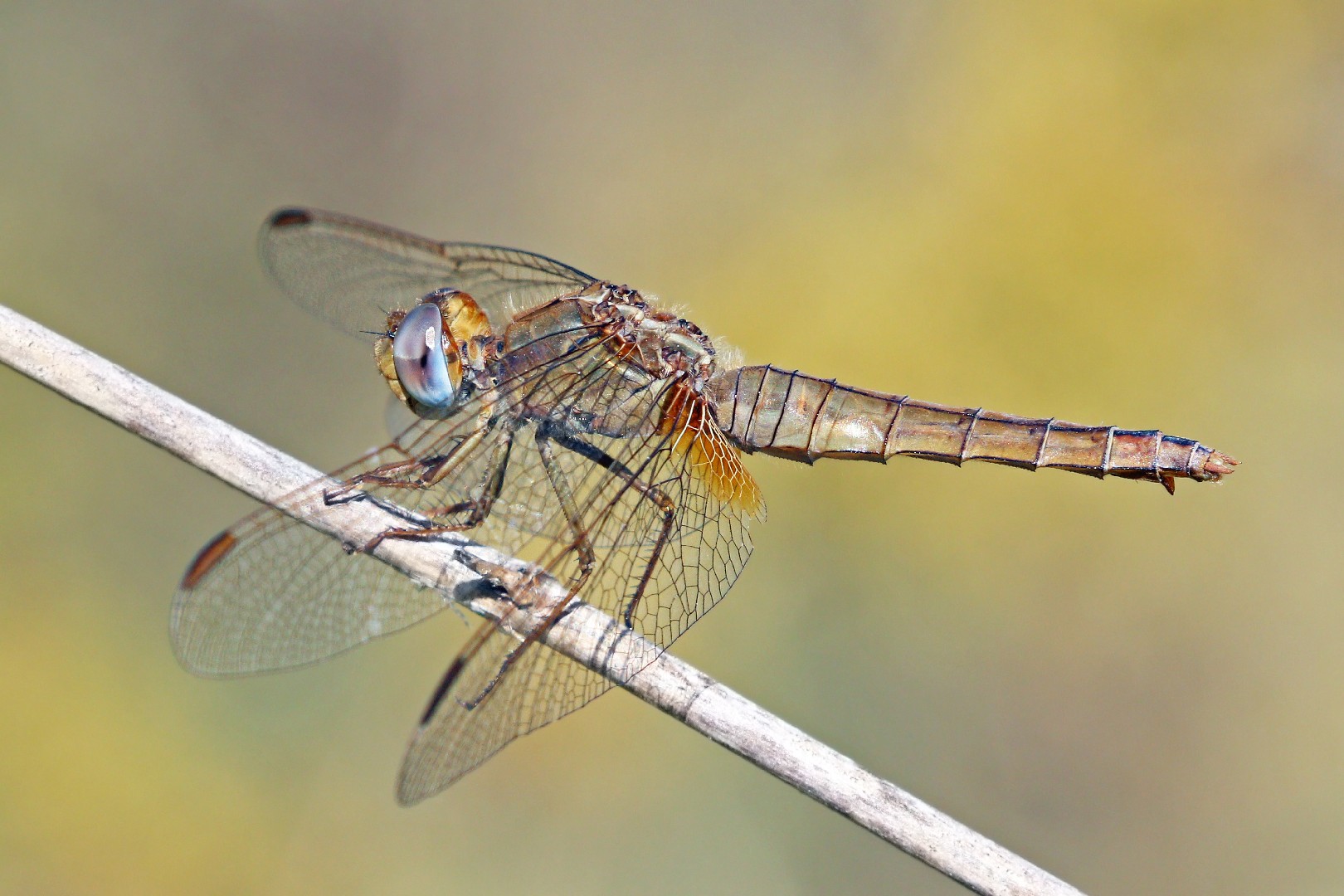
3. Scarlet dragonfly
Crocothemis erythraea can reach a length of 3.5 - 4.5 cm. These dragonflies haves a flattened and rather broad abdomen. The adult male scarlet dragonfly has a bright scarlet red, widened abdomen, with small amber patches at the bases of the hindwings. Also the veins on the leading edges of the wings are red. Females and immatures are yellow-brown and have a conspicuous pale stripe along the top of the thorax.
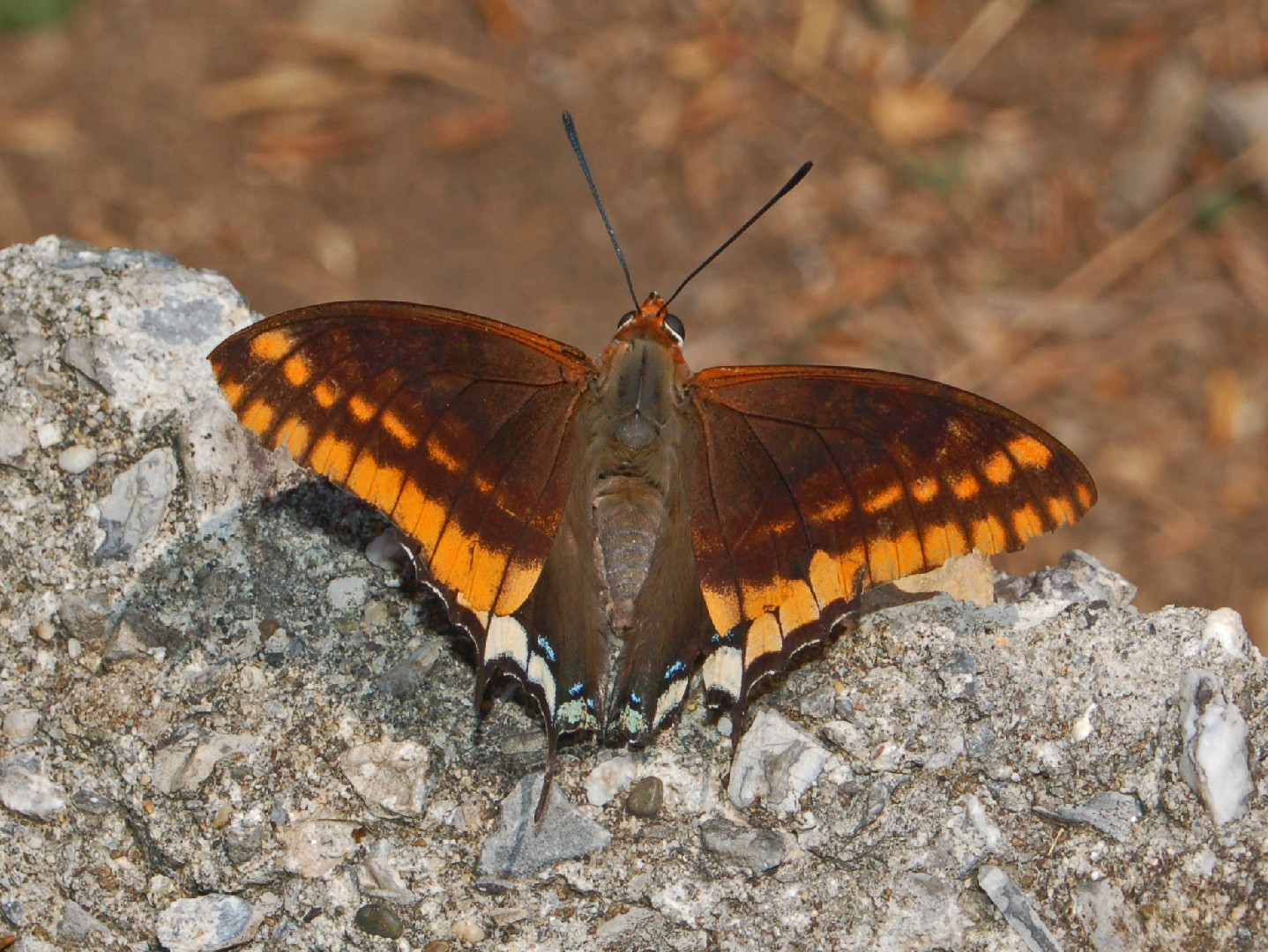
4. Two-tailed pasha
Charaxes jasius is a medium to large butterfly with a wingspan reaching 7 - 8 cm in males and 8 - 9 cm in females. The uppersides of the wings are dark brown with orange margins. The hindwings bring two short tails, characteristic of most species of the genus. Close to these tails there are a few blue markings. The underside of the wings is reddish brown with numerous darker bands edged with white or gray. The orange marginal band is also present on the undersides of the wings and it is preceded by a white transversal band. The caterpillar is green, cylindrical and has two yellow ocelli on the back. The head bears four horns facing backwards.
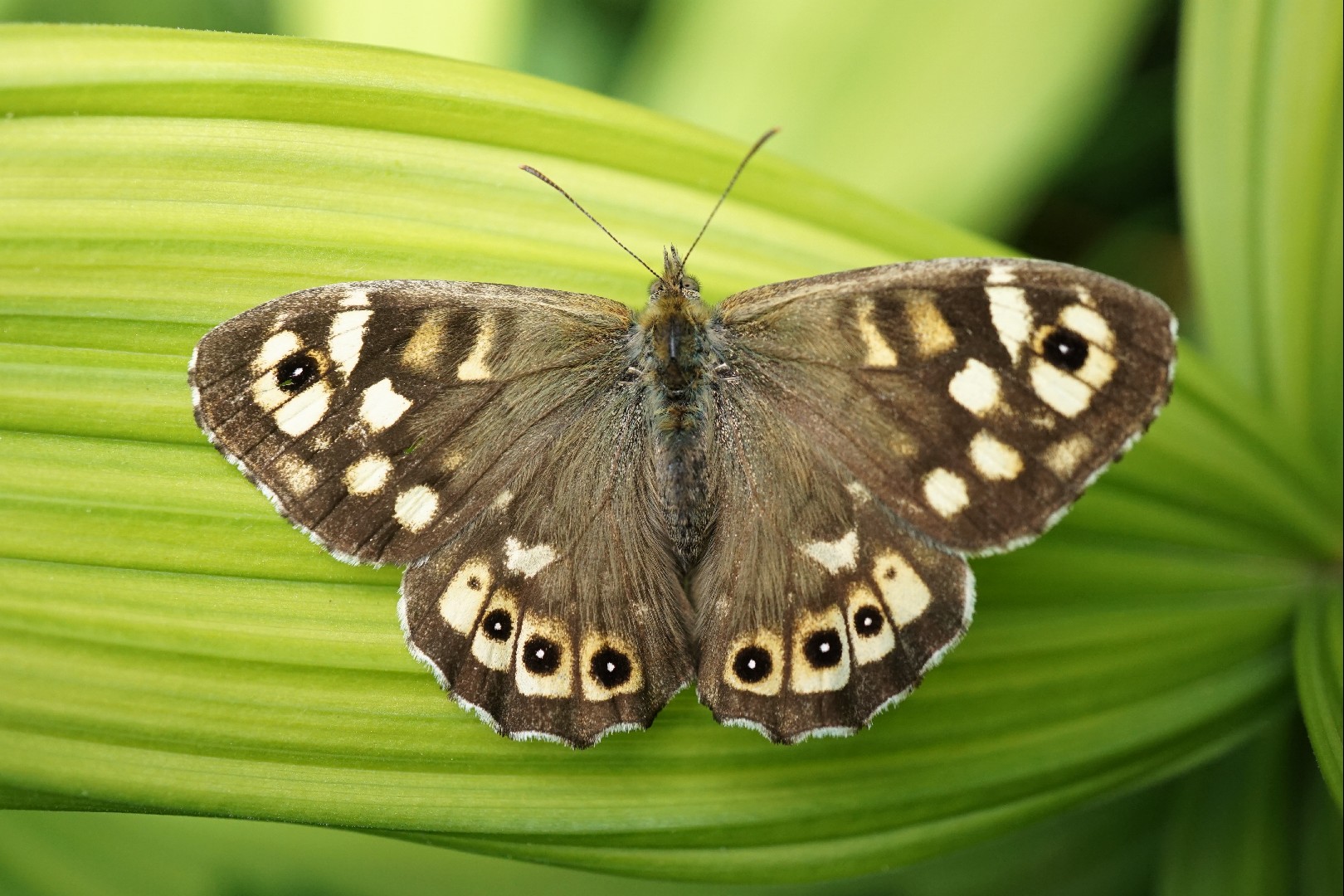
5. Speckled wood
The speckled wood (Pararge aegeria) prefers to live in damp, dark woodlands. Unlike other butterflies, it's more active in shadier habitats rather than sunny ones. Males often fight over a perch, spiraling up to the treetops until they determine a winner. These perches are where the males find passing females.
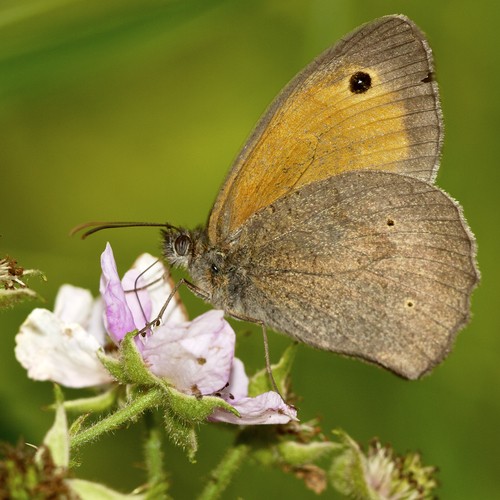
6. Meadow brown
The meadow brown (Maniola jurtina) is similar to the Gatekeeper in the way that it rests with its wings open due to the "eye spots" on either end of its wings that ward off predators. While the color is a deep brown, the caterpillar form is a beautiful bright green with little, white hairs and a dark line leading down its back.
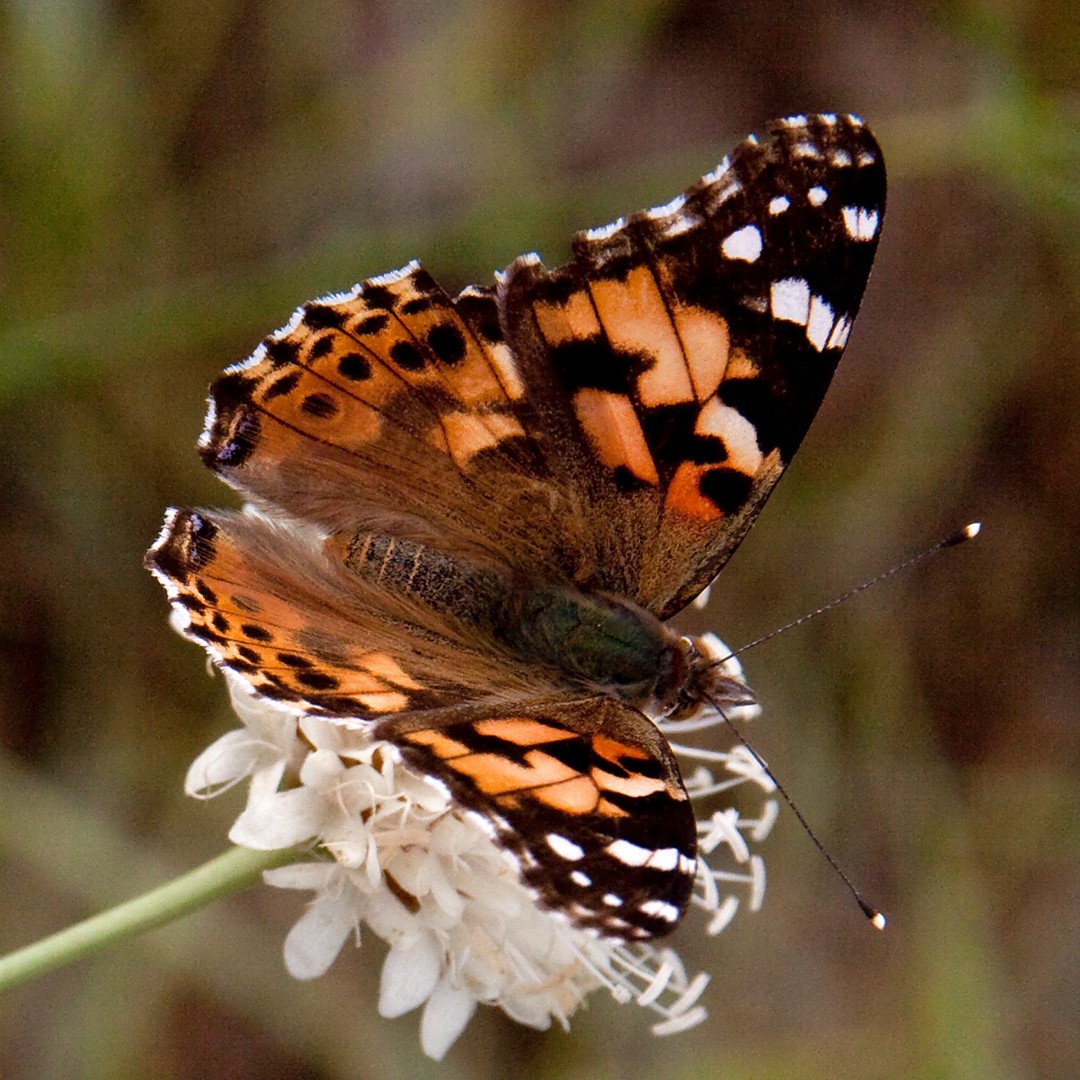
7. Painted lady
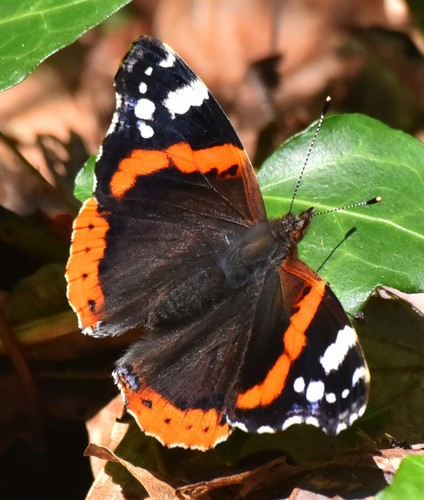
The painted lady is a migratory butterfly that spends part of the year in Northern Africa and then migrates to Europe during the warmer months. Although the adults feed on nectar from flowers, the larvae feed on the leaves of nettles and thistles.
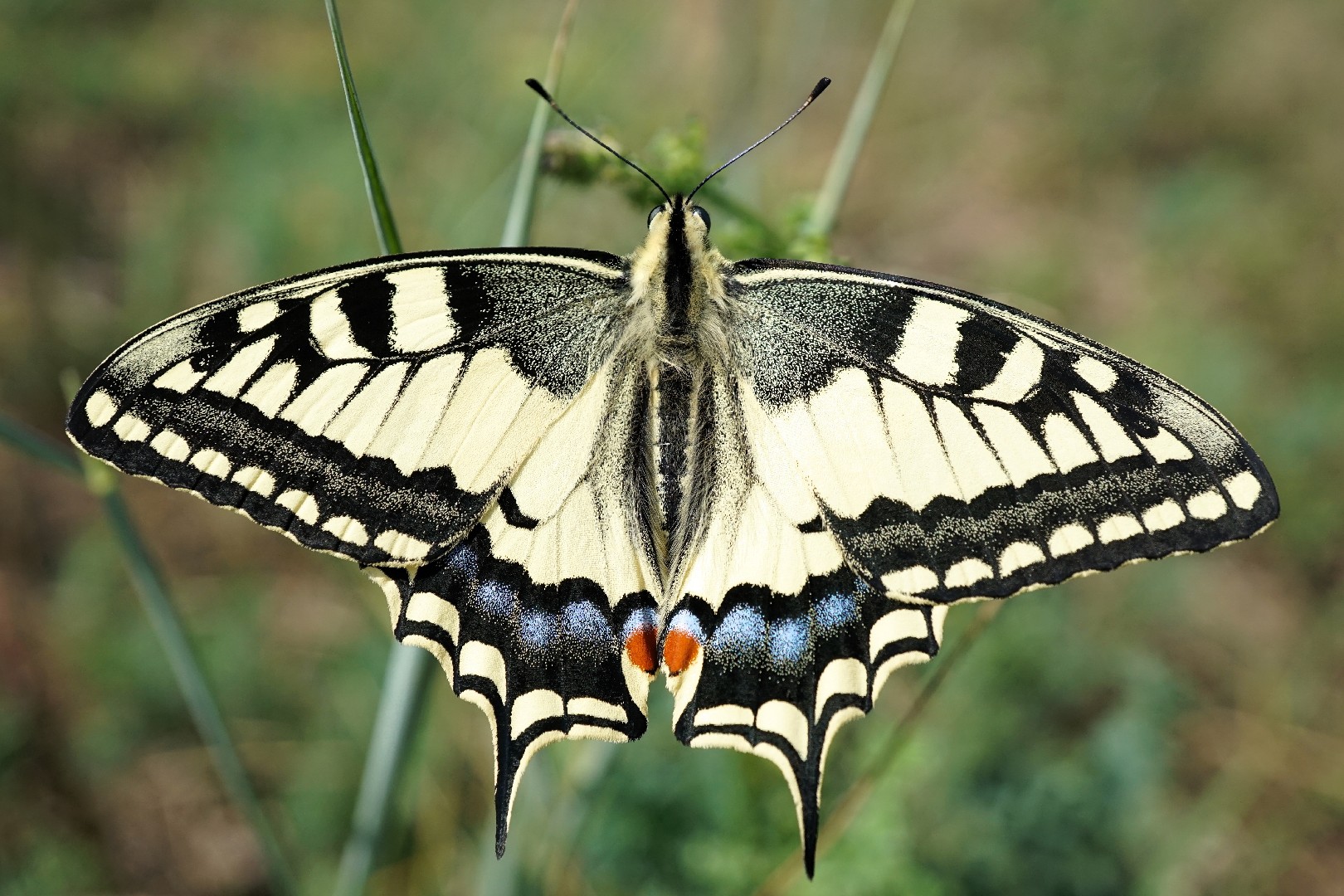
8. Old World swallowtail
The old World swallowtail (Papilio machaon) is commonly just called the "swallowtail," giving it the added title of "old world" to distinguish it and remind us that it comes from the "old world" (Asia, Africa, Europe). The upper side of them is a beautiful combination of pure white with black striping, the underside being a brownish version of the same thing. There is blue and two red dots on its back side.
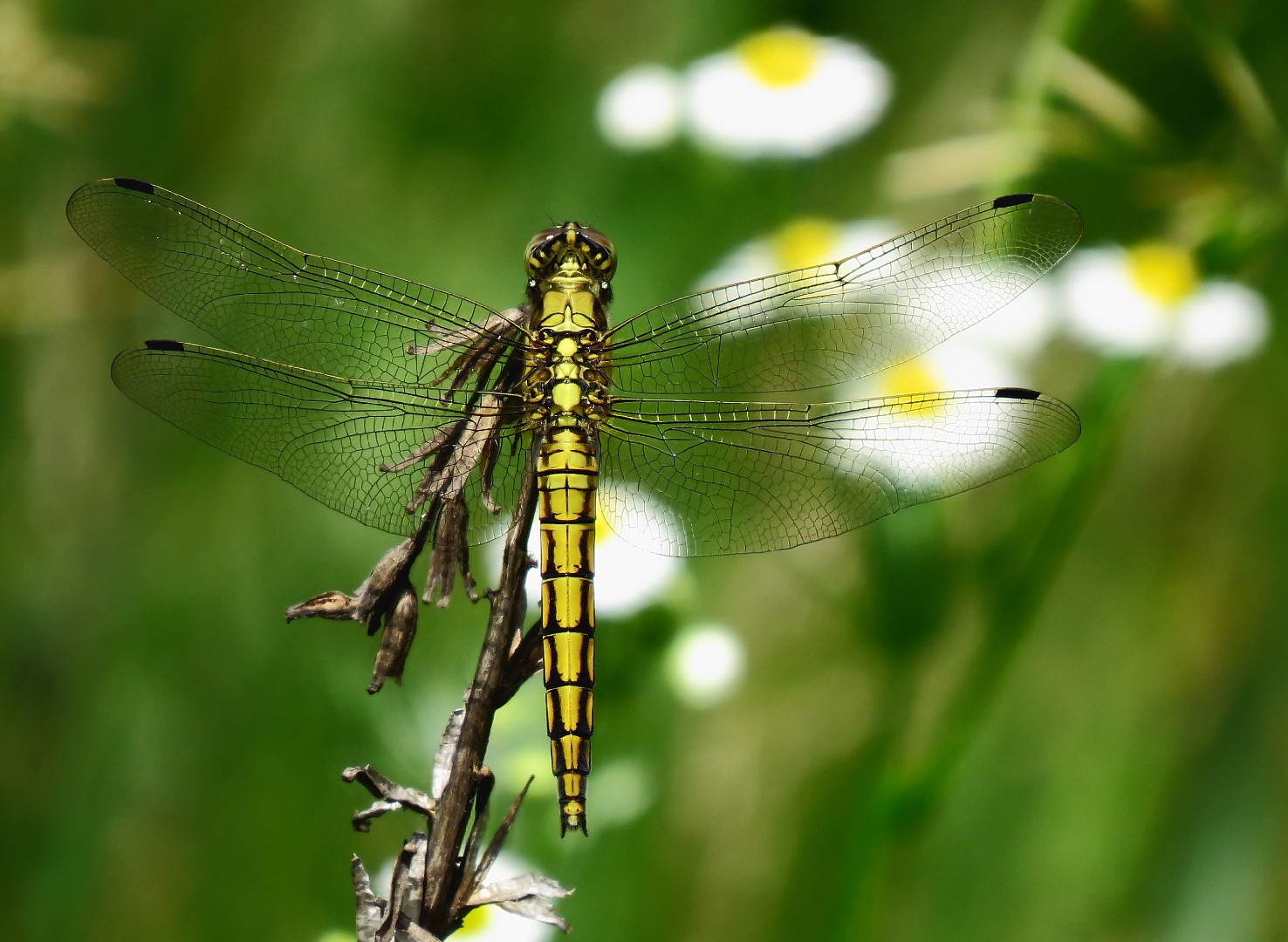
9. Black-tailed skimmer
It is a fairly large dragonfly (the length of 4.5 - 5 cm, 3 - 3.5 cm abdomen, rear wing 3.5 - 4 cm.) with relatively broad, flattened abdomen, but not as broad as to chaser species. With age, adult males develop extensive blue pruinescence on their abdomen, offset by yellow lateral patches. The middle lobe of the pronotum is large and notched in the middle. The chest is yellow or yellowish-brown. The base of the hind wings do not show a dark opaque spots. The pterostigma is dark brown or black. On the front wings pterostigma 2 - 3 mm long. Anal appendages are black. The females and immature males are a deep yellow color, with wavy black lines dorsally on their abdomen. Males and females have the costal vein (the leading edge of the wing) yellow or black.
10. Clouded yellow
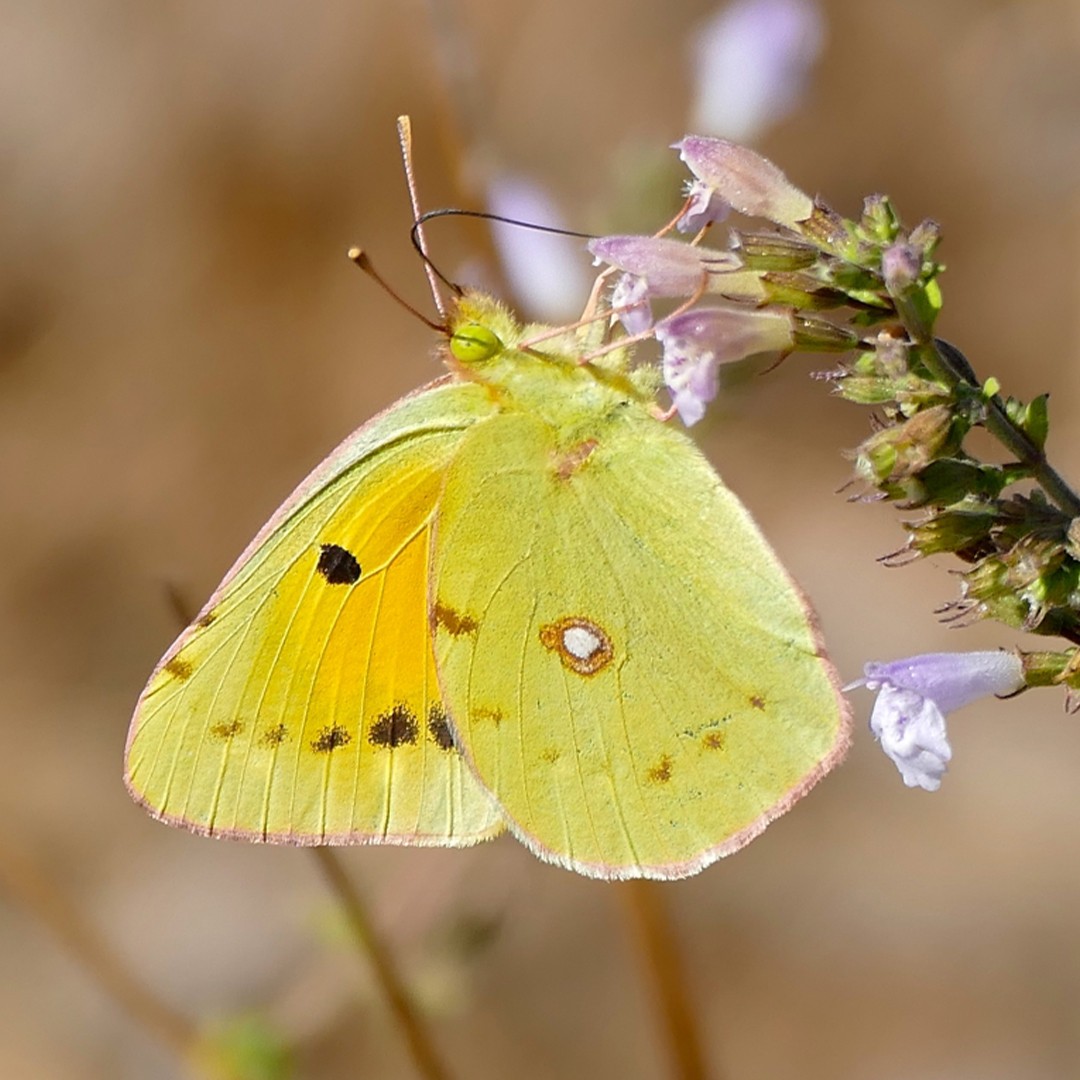
Colias croceus has a wingspan of 46–54 millimetres (1.8–2.1 in). The upperside of the wings is golden to orange yellow with a broad black margin on all four wings and a black spot near the centre forewing. Usually these butterflies settles with its wings closed, consequently the black margin of the uppersides of the wings is difficultly visible. The underside lacks the black borders and is lighter, with a more greenish tint, particularly on the forewings. In the forewing underside is the same dark spot as on the upperside, but often with a light centre; the hindwing underside has a white centre spot, often with a smaller white or dark dot immediately above it. Sometimes, a row of black dots occurs on the underwings' outer margins, corresponding to where the black border ends on the upperside. Females differ from the males in having yellow spots along the black borders on the upperside. In flight, Colias croceus is easily identifiable by the intense yellow colouring, much brighter than that of the lemon-yellow male common brimstone which also lacks black markings. Like all Colias species they never open their wings at rest. In a small proportion of females (about 5%) the golden upperside colouration is replaced by a pale cream colour. These females have been distinguished as form helice. The pale form helice does not seem to be that distinct as intermediates exist and the variation is to some extent related to humidity during development, with dryer conditions producing paler colouration. These pale forms helice can be confused with Berger's clouded yellow (Colias alfacariensis) and the rarer Pale clouded yellow (Colias hyale). Even the palest C. croceus tends to have more black on the upperside however, in particular on the hindwings. Young caterpillars are yellow-green, with a black head. Later they become completely dark green, with a white red spotted lateral line after the third moult. The pupae are green and have a yellow side stripe. This species is rather similar to Colias myrmidone, Colias chrysotheme, Colias erate, Colias hyale, Colias alfacariensis, Colias caucasica, Colias aurorina.

More







