




Top 20 Most Common Insects in Lakshadweep
Insects, the most diverse group of organisms in Lakshadweep, exhibit a myriad of colors, shapes, and functions. In Lakshadweep, the topography's varying altitudes and climates contribute to this incredible insect diversity. These tiny creatures perform extensive roles; from pests disturbing our daily lives to beneficial pollinators crucial to natural regeneration. Acknowledging the intricate relationships among insects and their environments in Lakshadweep is central to understanding the balance of life. Explore our list of the 20 most common insects in Lakshadweep to unlock these fascinating stories of nature.

Most Common Insects
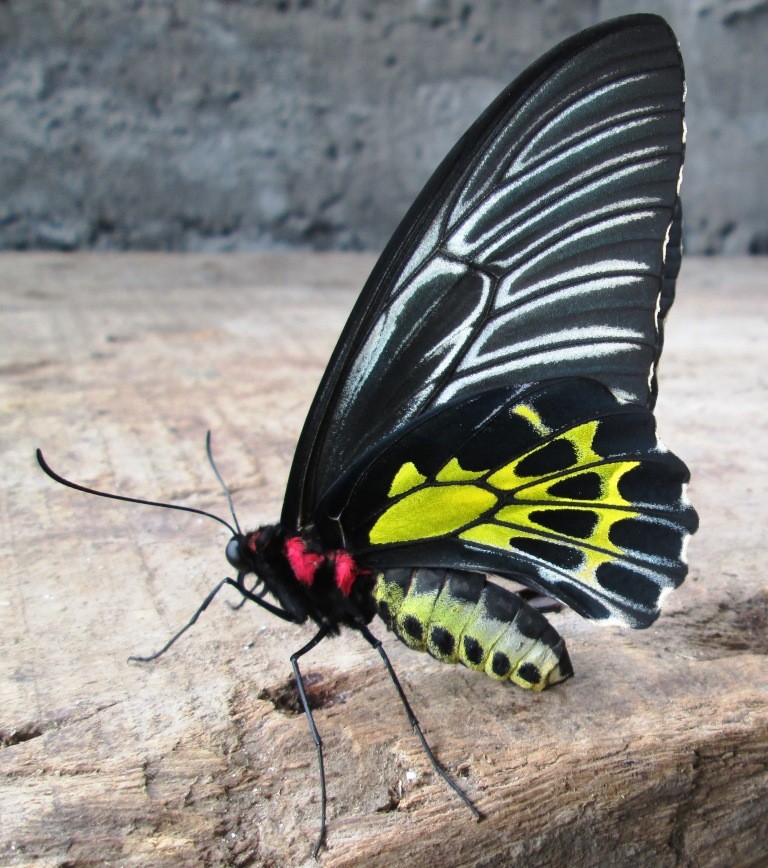
1. Southern birdwing
Differs from Troides helena cerberus as follows: Hindwing of male: the black along the dorsal and terminal margins both on upper and undersides much broader; on the upperside entirely filling interspace 1, on the underside with only a narrow streak of yellow at the angle between the median vein and vein 2; the cone-shaped black markings on the terminal margin shorter and broader; on the costal margin the black is narrower than in cerberus, barely extended below vein 8 except at the base and apex of the wing where it broadens; the abdomen is dull yellow above and below not shaded with black. Hindwing of female: the black on the costal margin as in cerberus, but there is always a large yellow spot at base of interspace 7; interspace 1 black, with a pale patch in the middle; the black terminal border broader, the inwardly extended cone-shaped markings prominent, those in interspaces 2 and 3 with pale buff lateral edgings, extended inwards to the postdiscal spots. In both male and female the hindwing on the upperside is clothed with soft, silky, long brownish-black hairs from base along the dorsal area. Expanse: 14 - 19 cm. Larva. Roughly cylindrical, tapers a little to each end, with two rows of fleshy processes somewhat curved forwards and a double row on each side that are much shorter. On the 2nd, 3rd and 4th segments an additional long pair between the dorsal and lateral rows. Head smooth and black; body of a uniform dark madder brown, prettily lighted with a tinge of pink at the points of some of the fleshy processes; dorsal process on the 8th segment and a lateral pair on the 7th pinkish-white, with a band of the same colour uniting them. 
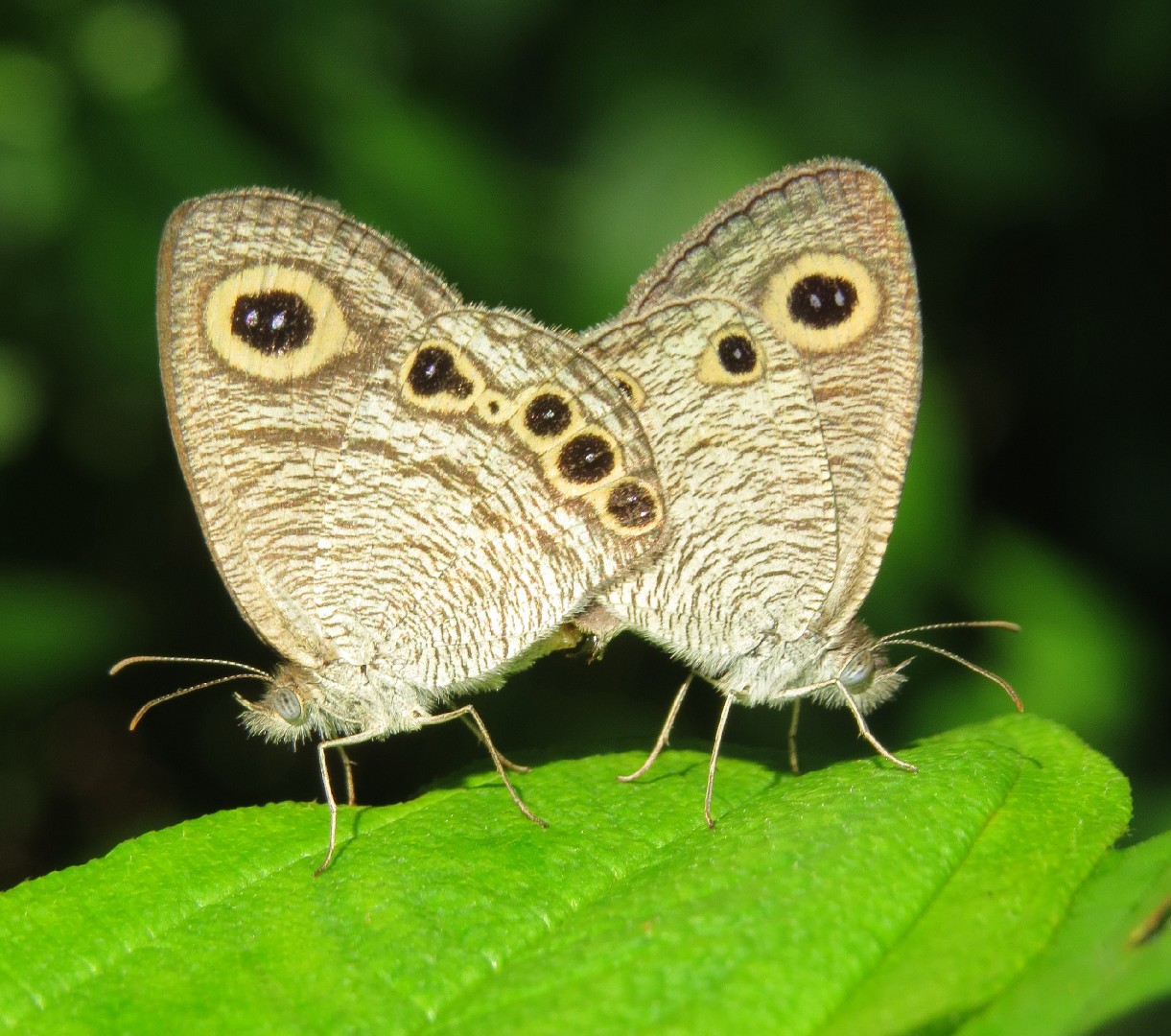
2. Common four-ring
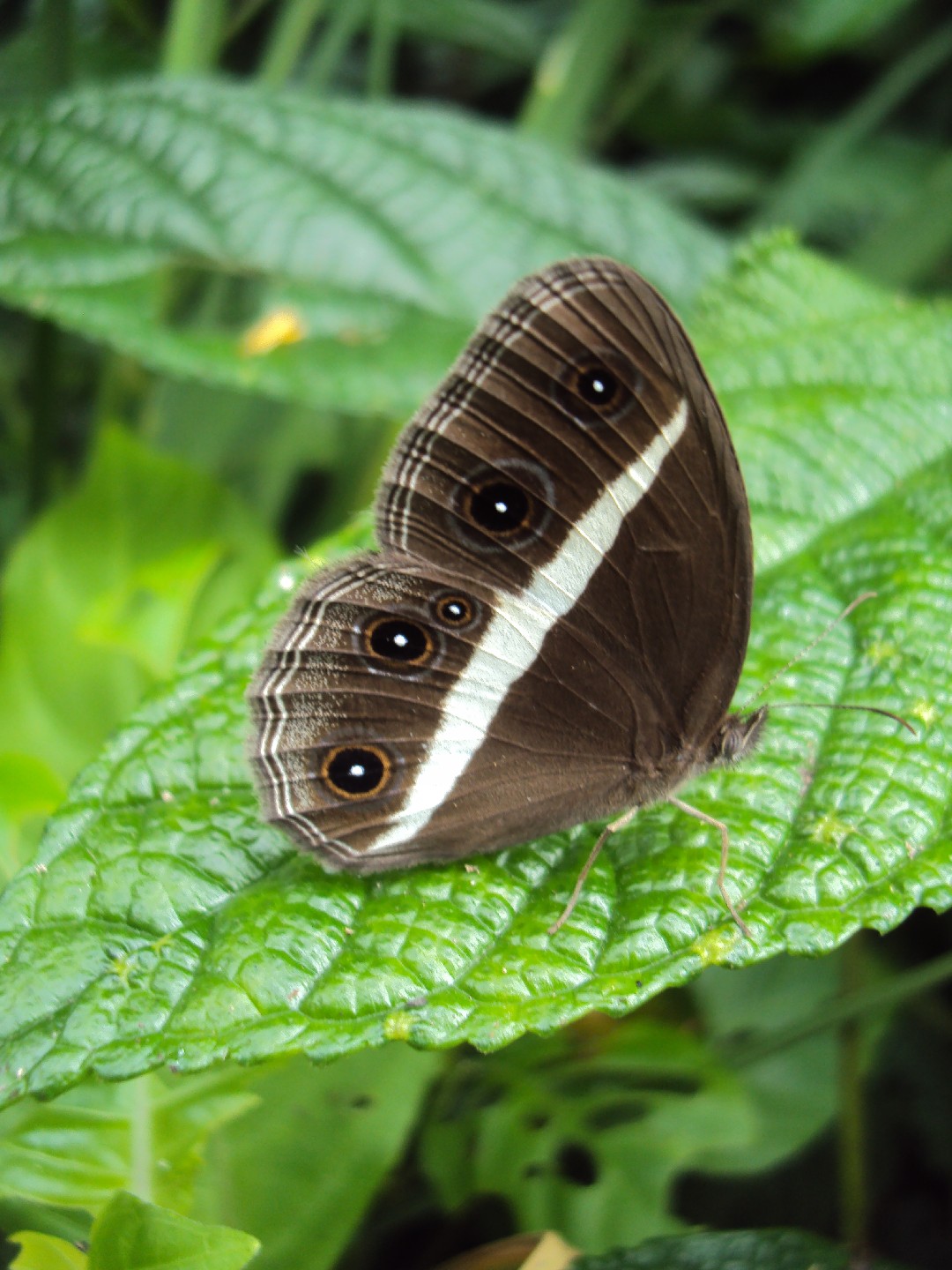
Wet-season form: Upperside greyish brown. Forewing with the usual comparatively large, bi-pupilled, yellow-ringed, black preapical ocellus. Hindwing usually with two, sometimes with three, very rarely without any, smaller similar uni-pupilled postdiscal ocelli. Underside greyish white, not very densely covered with transverse short brown striae. Forewing with the preapical ocellus as on the upperside, obscure discal and subterminal dull brown transverse fasciae and a narrow brown ring round the ocellus diffusely produced posteriorly. Hindwing with one apical and typically three postdiscal posterior ocelli placed in a curve; traces of transverse brown discal and subterminal fasciae in most specimens. Antenna, head, thorax and abdomen greyish brown, the abdomen paler beneath. Male without secondary sex-mark. Dry-season form: Similar, somewhat paler on both upper and under sides; the discal and subterminal transverse fasciae more pronounced; the ocelli on the underside of the hindwing minute or absent. Adults have a wingspan of 4 - 4.5 cm.
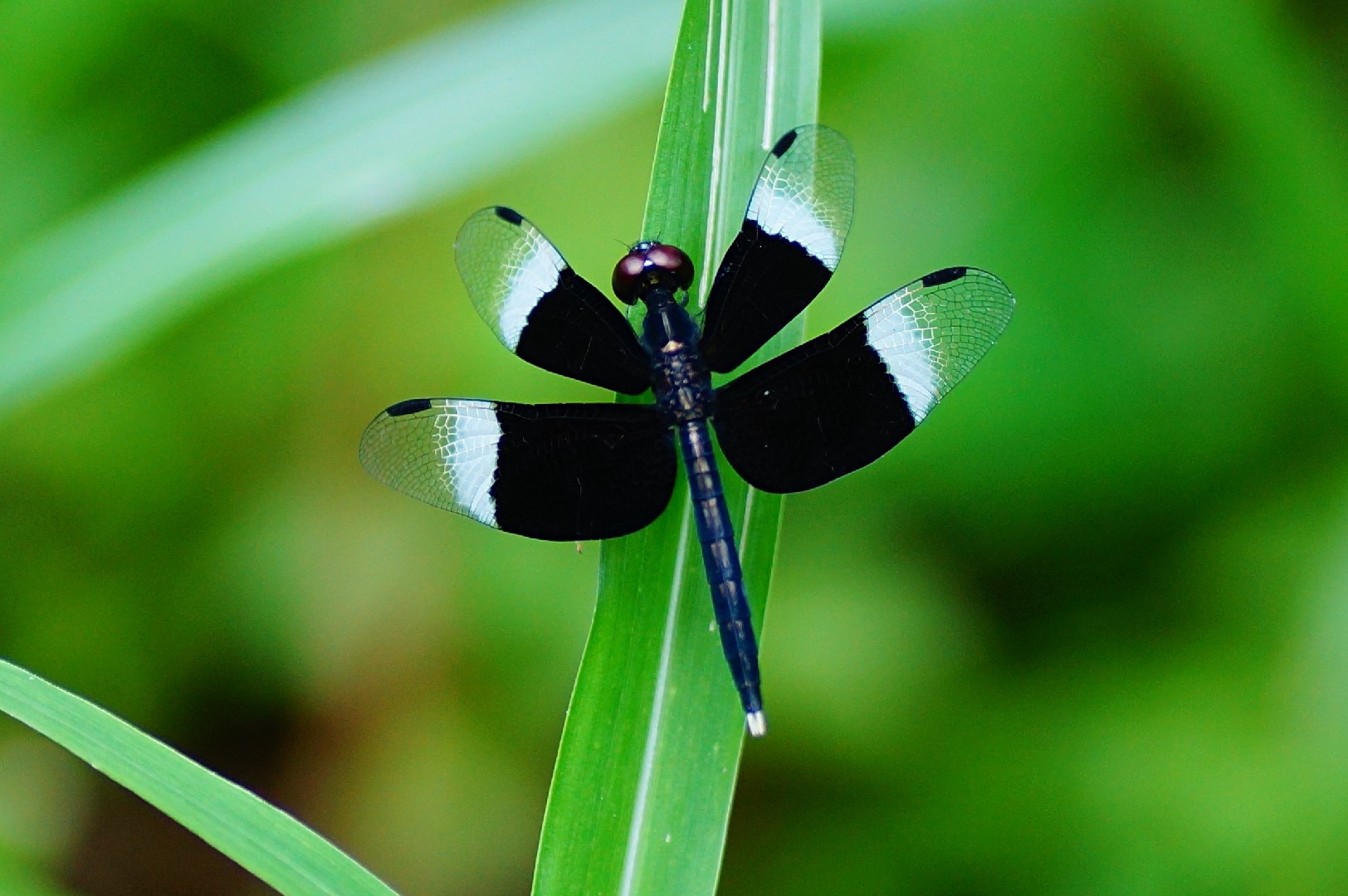
3. Pied paddy skimmer
The species is on the IUCN Red List as not endangered, year of assessment 2007.
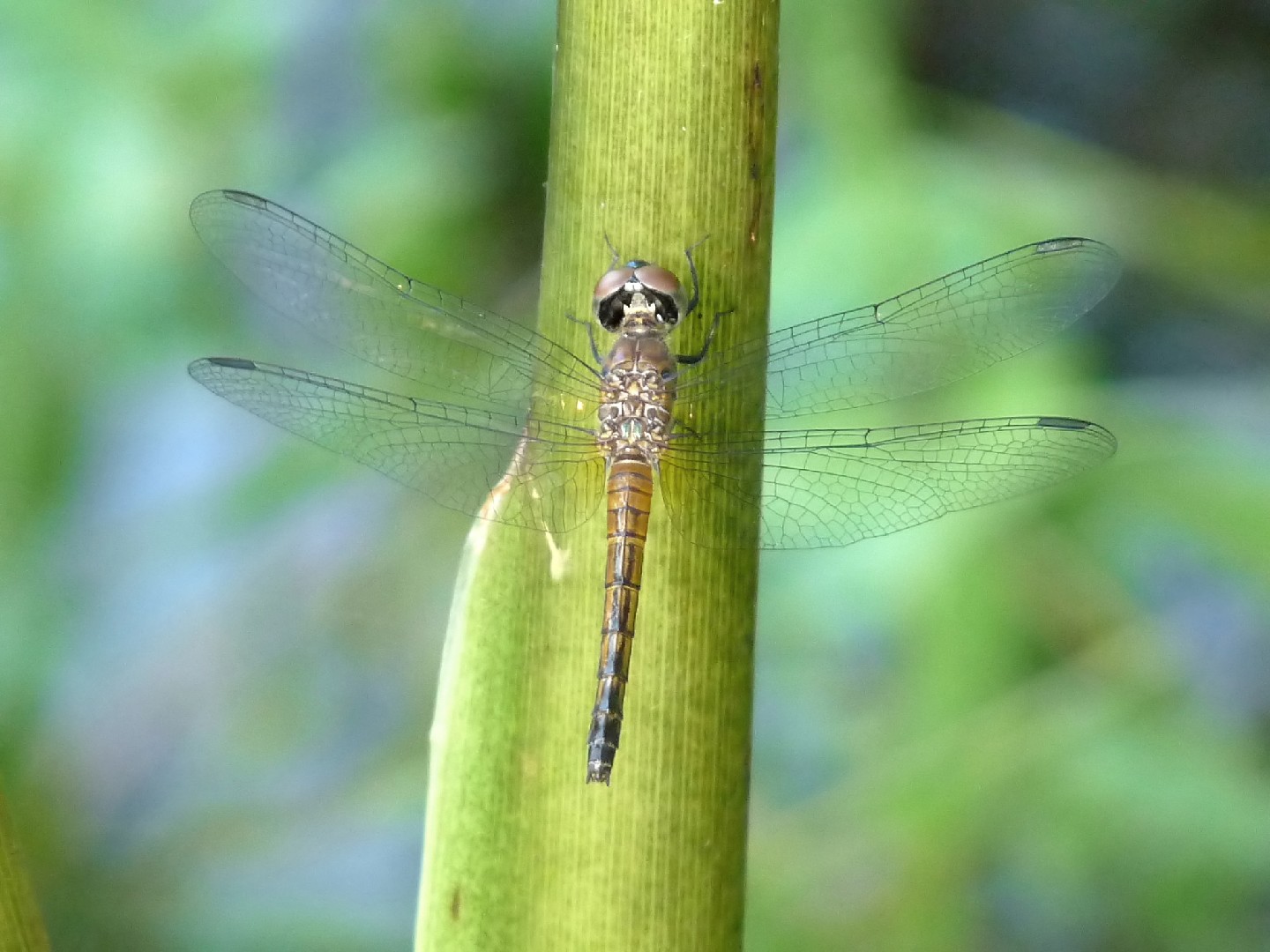
4. Blue dasher
The species is on the IUCN Red List as not endangered, year of assessment 2010, the trend of the population is stable according to the IUCN.
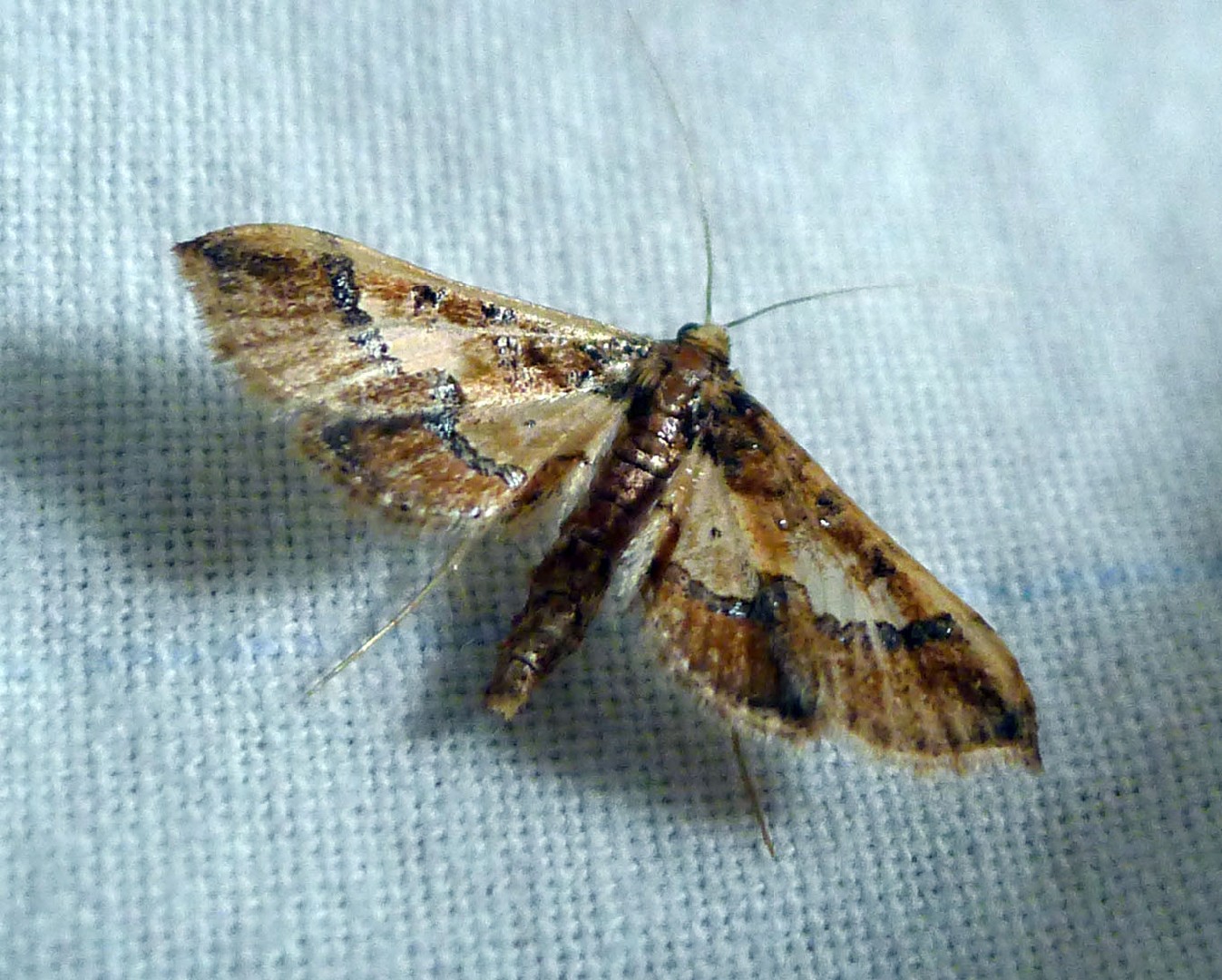
5. Ornate hydriris
The wingspan is about 1.6 cm.
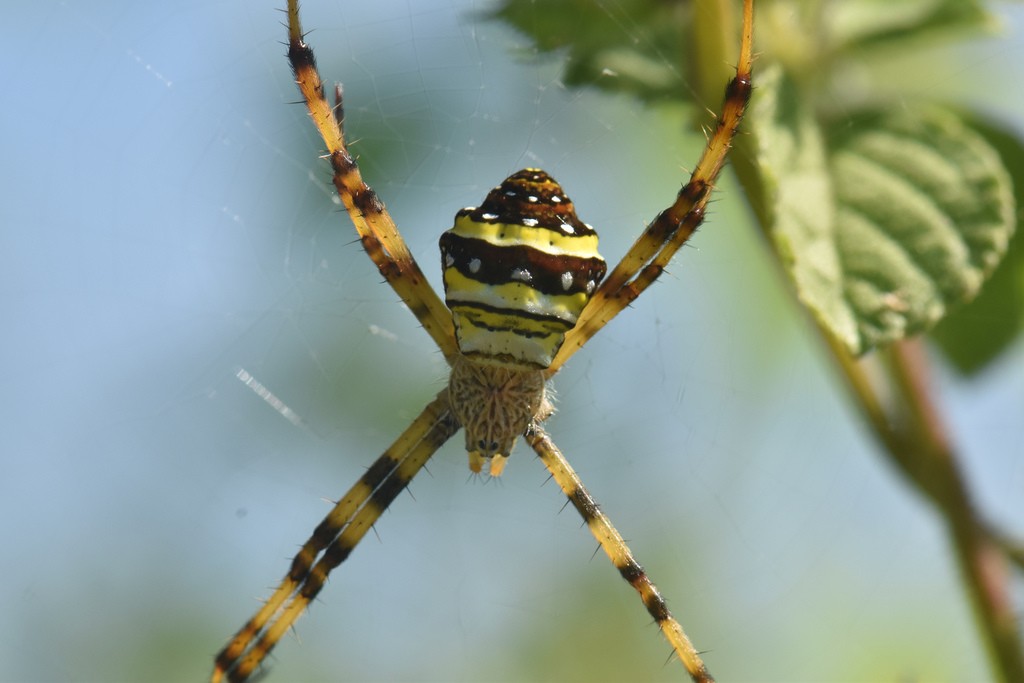
6. Signature spider
Female is about 8-12 mm long and male is 3.5-4.5 mm. After Cephalothorax greyish brown with hairs. Sternum heart shaped with hairy pubescent white patch. Palps bear spines. Legs greyish brown and hairy. Femora dorsally yellowish. Abdomen pentagonal and hairy. Dorsum yellowish with brown transverse bands. Three sigilla pairs distinct. Ventrum dark brownish with two longitudinal white patches.
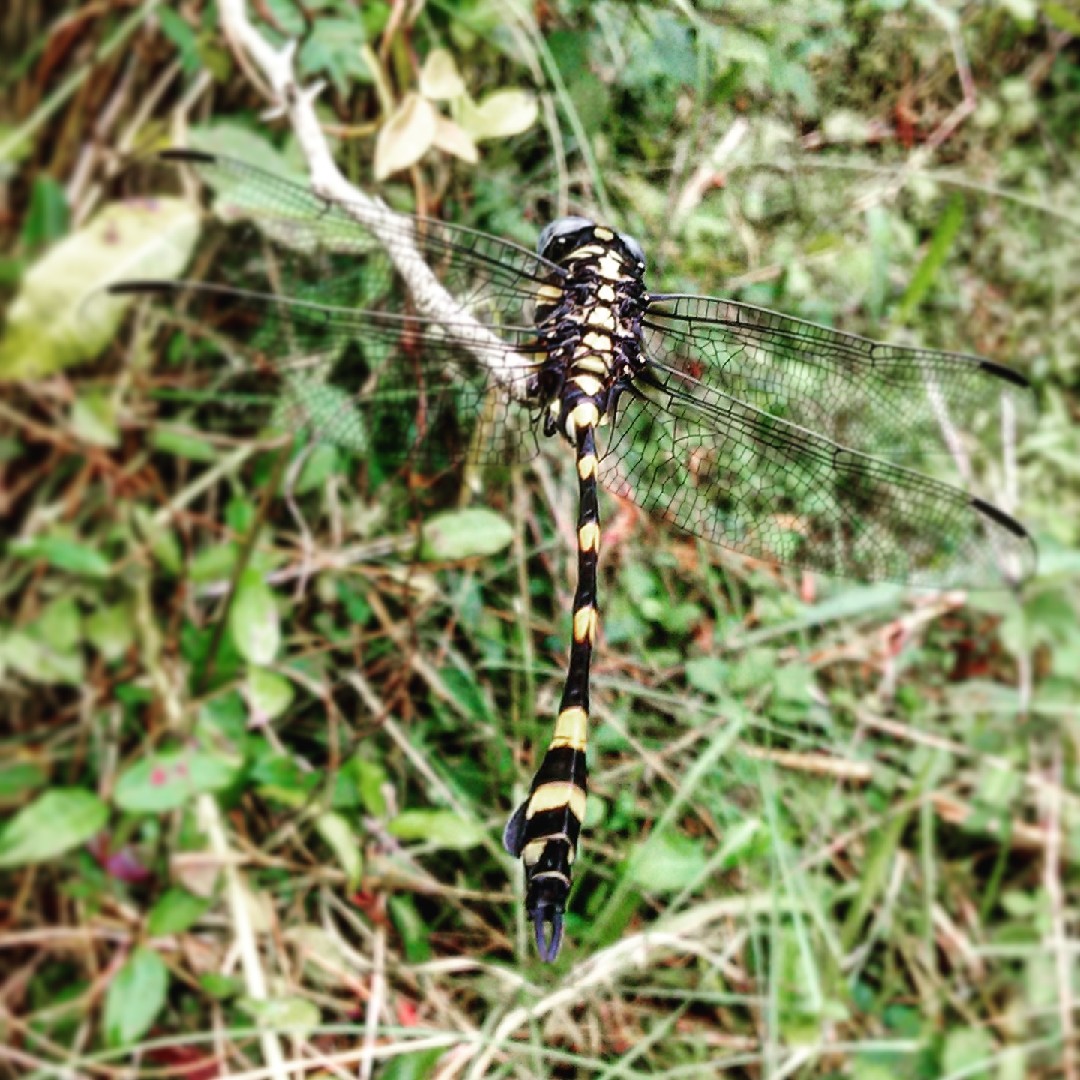
7. Indian common clubtail
It's a large yellow and black colored dragonfly with bluish-grey eyes. Its thorax is black, marked with yellow or greenish-yellow stripes. Its abdomen is also black with bright yellow marks. There is a leaf like expansion in both sides of segment 8. This species usually perches on a bare twig facing the water, commonly found in ponds, tanks and rivers. It breeds in running and still water.
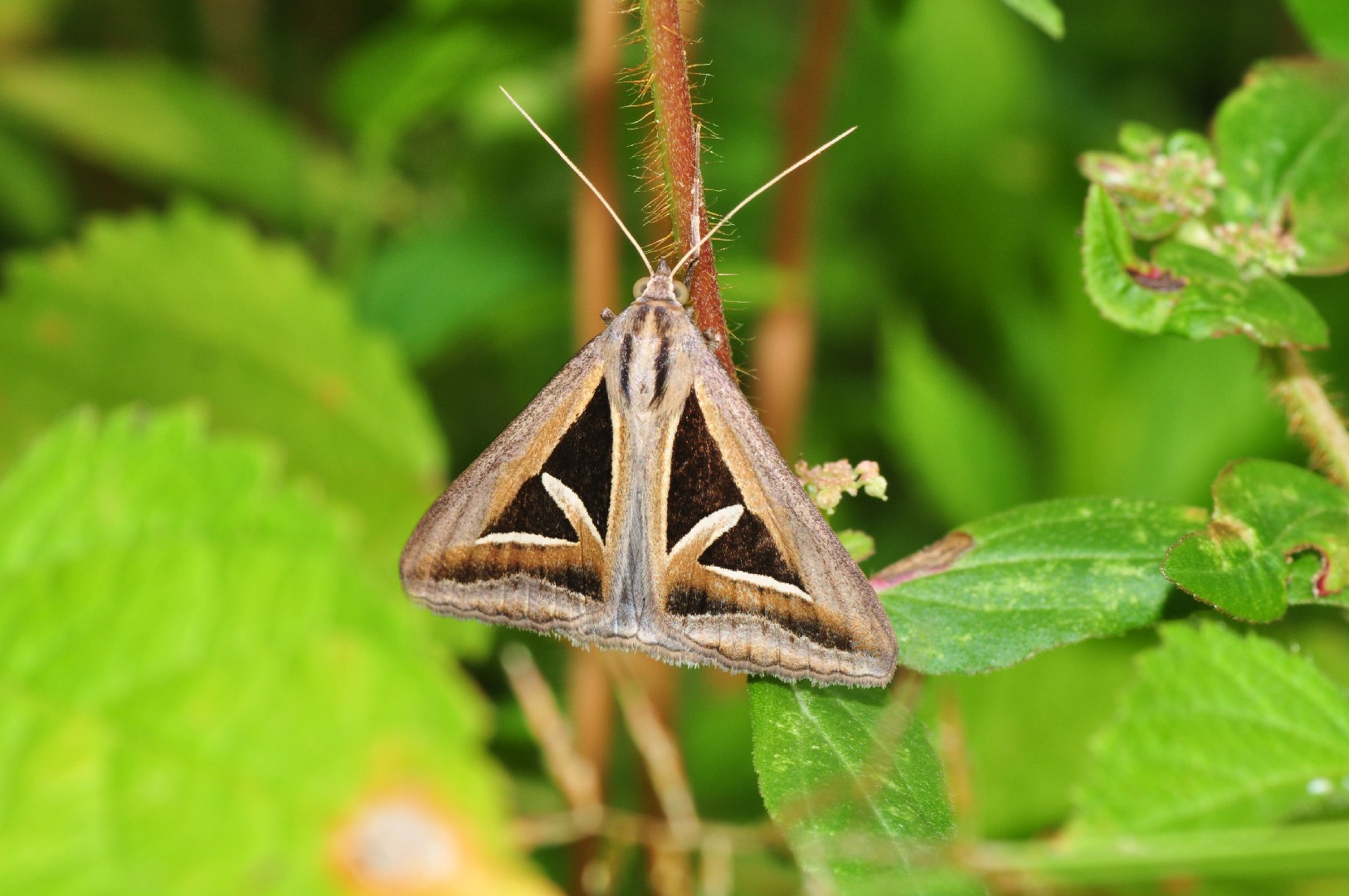
8. Triangles
The wingspan is about 3 - 4.5 cm. Antennae of male ciliated. Mid and hind tibia hairy. Body pale ochreous brown, slightly suffused with fuscous or dark grey brown. Forewings with a large black white-edged triangular patch easily distinguished below the cell from near base to towards outer angle. A similar smaller patch found beyond the cell on vein 5, with some pale fulvous behind it. A slightly sinuous submarginal pale line with patches of black suffusion found inside it and a series of black specks beyond it. A dark marginal line can be seen as well. Hindwings with indistinct medial line and fuscous suffused outer area. Larva has yellow upper half and brown ventral part. The yellow part is broken by longitudinal brown bands, which faints towards posterior and becomes intensive again in prolegs. Eggs olive green and speckled rusty red. First few instars are green with three lateral purple brown lines. Late instars are yellowish. Pupa within a slight cocoon of white silk, which spun amongst leaves.
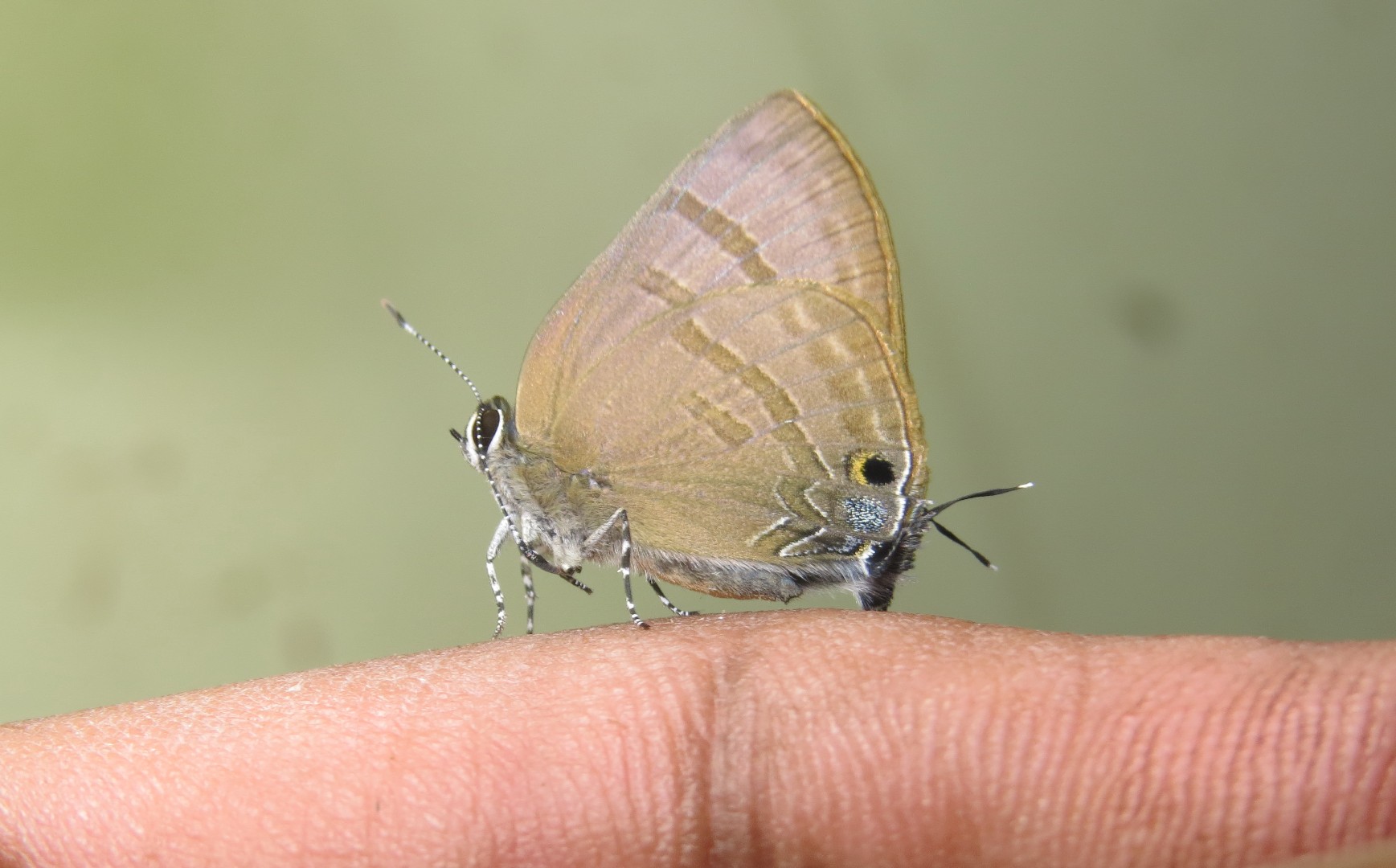
9. Slate flash
Rapala manea, slate flash, is a butterfly of the family Lycaenidae. It is found in most of the Indomalayan realm (excluding Taiwan). The wingspan is 24–26 mm. Adult males have dark brown wings with a hint of purple on the cell area of the wings. The underside is greyish brown with two irregular bands. Females are lighter and have androconial patches at the costal margin of the hindwing. The larvae of subspecies R. m. schistacea feed on the flowers of Rosaceae, Euphorbiaceae, Combretaceae and Leguminosae species, including Quisqualis indica and Acacia caesia. They are attended by ants. The larvae are dull rose red. Pupation takes place in a pinkish pupa, mottled with black. It is attached to the stem or a leaf of the host plant.
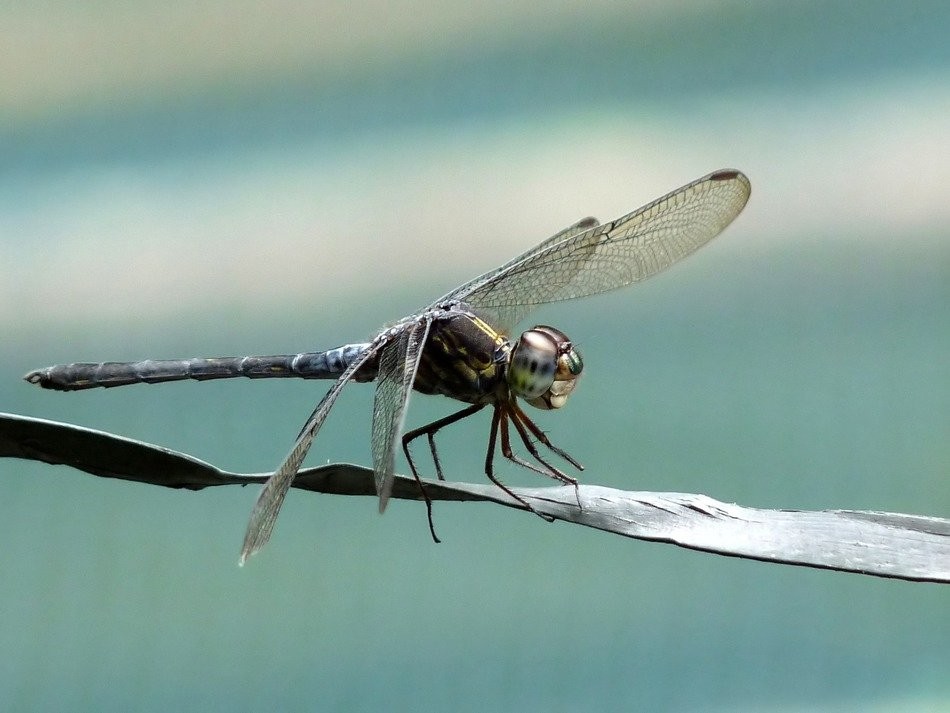
10. Emerald-banded skimmer
It is a medium-sized dragonfly with metallic-blue frons and brown-capped grey eyes. Its thorax is bronze-black, marked with yellow. There is a mid-dorsal carina, and an anterior and a posterior stripes narrowly separated and very irregular in shapes. There are four stripes on each sidel the first and third rather broad, the others narrow. Abdomen is black, marked with bright ochreous-yellow. Segments 1 and 2 have moderately broad lateral and mid-dorsal stripes. Segments 3 to 8 have fine stripes bordering the ventral borders of segments and mid-dorsal carina. Arial appendages are black. Female is similar to the male. It is commonly found in forested areas in lowland and montane regions. Prefers to breed in shaded muddy pools and marshes in forest.
More







