




Top 20 Most Common Insects in Bolpur
Insects, with their diverse forms and fascinating behaviors, pervade every corner of Bolpur, each uniquely adapted to their specific niches. The diverse geography of Bolpur, from mountain forests to coastal plains, creates a mosaic of habitats, affecting insect diversity. These tiny creatures, both fascinating and dreaded, play vital roles in our ecosystems, acting as pollinators, decomposers, or pests. Unearthing the relationship between Bolpur's environments and its insect inhabitants reveals the intricate dance of life happening under our noses. Come join us as we explore the 20 most common insects of Bolpur.

Most Common Insects
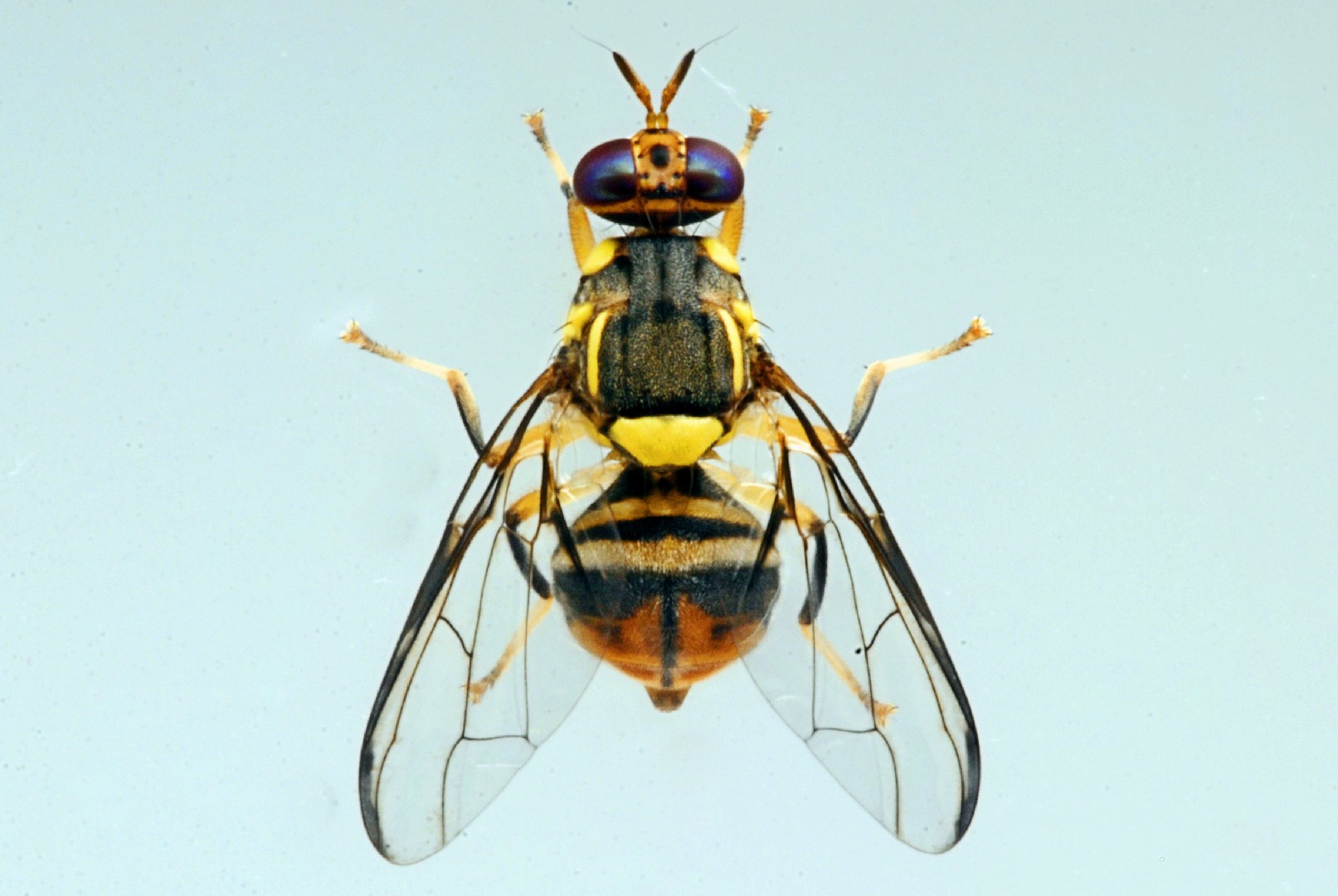
1. Oriental fruit fly
Bactrocera dorsalis is a fly species from the family of the drill flies (Tephritidae). The scientific name of the species was first validly published in 1912 by Hendel.
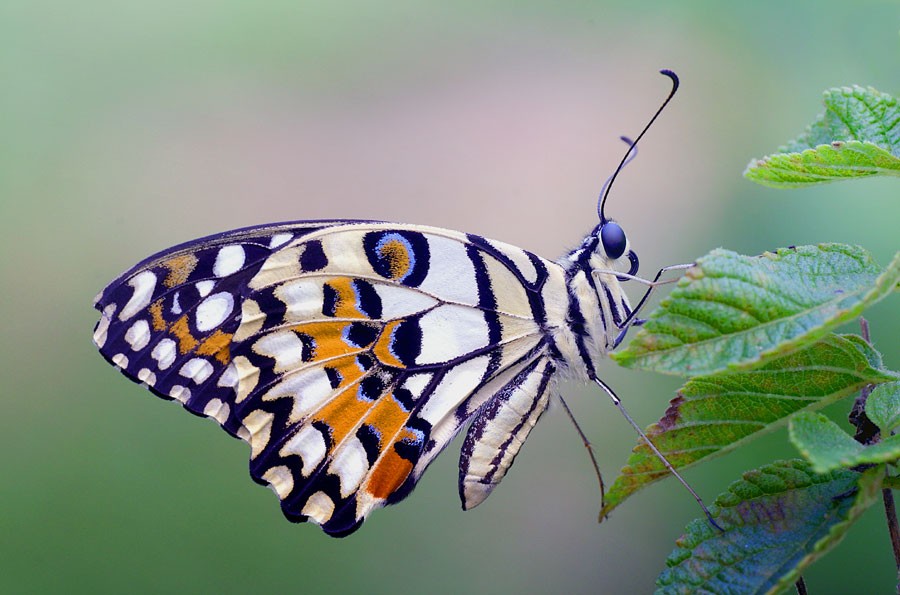
2. Lime swallowtail
The lime swallowtail (Papilio demoleus) has a beautiful black and white pattern, but it's considered a major pest to citrus trees. It feeds on nearly any type of citrus, including oranges and limes. This butterfly's small, green larvae are capable of defoliating an entire nursery grove. They are truly trouble makers in the citrus orchard.

3. Common mormon
The common mormon (Papilio polytes) is a beautiful, black butterfly with unique hindwings that have orange and white colorings and two spots jutting out. They are named after the Mormon religion, as the butterflies participate in polygamy, which is a common practice for Mormons. They are also known to mimic red-bodied swallowtail, who are inedible.

4. Peacock pansy
The adult butterfly has a wingspan of 5 - 6 cm,and exhibits seasonal polyphenism. "Upperside rich orange-yellow. Fore wing with a pale dusky and a much darker short transverse bar with lateral jet-black marginal lines across cell, another somewhat similar bar defining the discocellulars; costal margin, an inner and an outer subterminal line, and a terminal line dusky black; a large minutely white-centred ocellus with an inner slender and outer black ring on disc in interspace 2; two similar but smaller geminate subapical ocelli with an obscure pale spot above them and a short oblique bar connecting them to the black on the costa. Hind wing: a small minutely white-centred and very slenderly black-ringed discal ocellus in interspace 2, with a very much larger pale yellow and black-ringed ocellus above it spreading over interspaces 4, 5 and 6, the centre of this ocellus inwardly brownish orange, outwardly bluish black, with two minute white spots in vertical order between the two colours; finally postdiscal subterminal and terminal black sinuous lines. "Underside ochraceous brown, very variable. In most specimens the cell of the fore wing is crossed by three dark sinuous bands, the outermost along the discocellulars; these are very faint in some; both fore and hind wings crossed by a basal and a discal pale sinuous line, the latter margined outwardly by a dark shade, which is traversed by an obscure somewhat obsolescent row of dark spots, and outwardly bounded by a subterminal sinuous line, the dark shade in many cases spreading on the fore wing to the terminal edge of the wing; on the hind wing the subterminal line meets the discal in an acute angle at the tornus. Antennae dark brown; head, thorax and abdomen more or less orange-brown; paler beneath." "Upperside similar, the black markings deeper in colour and heavier, the subterminal and terminal lines more clearly defined. "Underside pale ochraceous. Fore wing: cell crossed by live short sinuous dark brown lines, a similar line on the discocellulars and another beyond it, both bent inwards at an angle and continued to the dorsum, the space between them forming a discal broad fascia, which pales to whitish posteriorly; the postdiscal ocelli, subterminal and terminal lines as on the upperside but paler. Hind wing: a slender transverse subbasal dark line, a discal whitish straight fascia in continuation of the one on the fore wing; the postdiscal ocelli, the subterminal and terminal lines much as on the upperside but paler; the anterior ocellus with a double iris and centre. Antennae dark brown; head, thorax and abdomen slightly darker than in the dry-season form. 
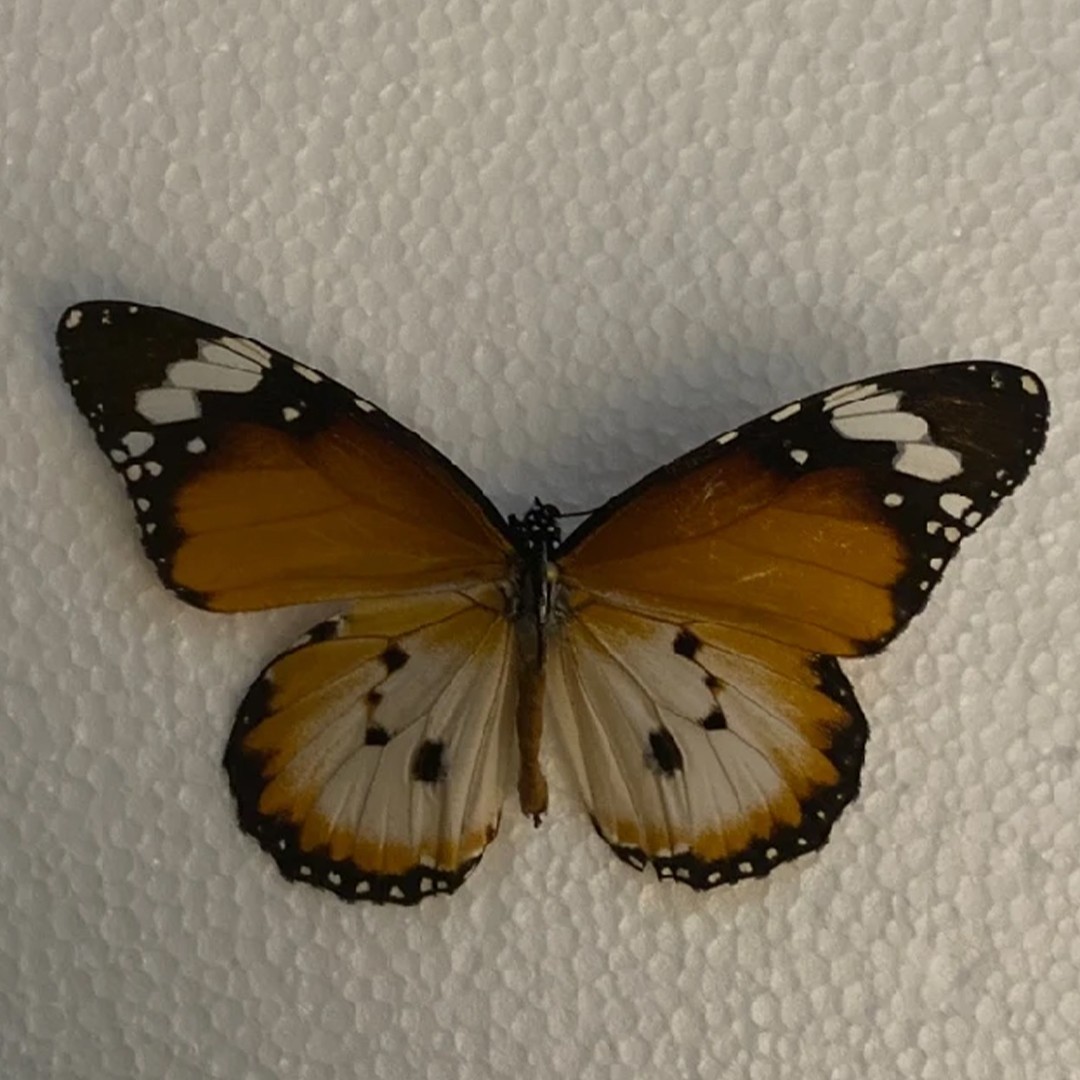
5. Plain tiger butterfly
D. chrysippus is a medium-sized butterfly with a wingspan of about 7–8 cm (2.8–3.1 in). The body is black with many white spots. The wings are orange, the upperside brighter and richer than the underside. The apical half of the forewing is black with a white band. The hindwing has three black spots in the center. The wings are bordered in black and outlined with semicircular white spots. This species exhibits slight sexual dimorphism, as the Male has large scent glands on his hindwings, which the female lacks. They appear as a large black spot with a white centre if viewed from the underside D. chrysippus is a polymorphic species, so the exact coloring and patterning vary within and between populations. It is similar in appearance to the Indian fritillary (Argynnis hyperbius), which may coexist with it.
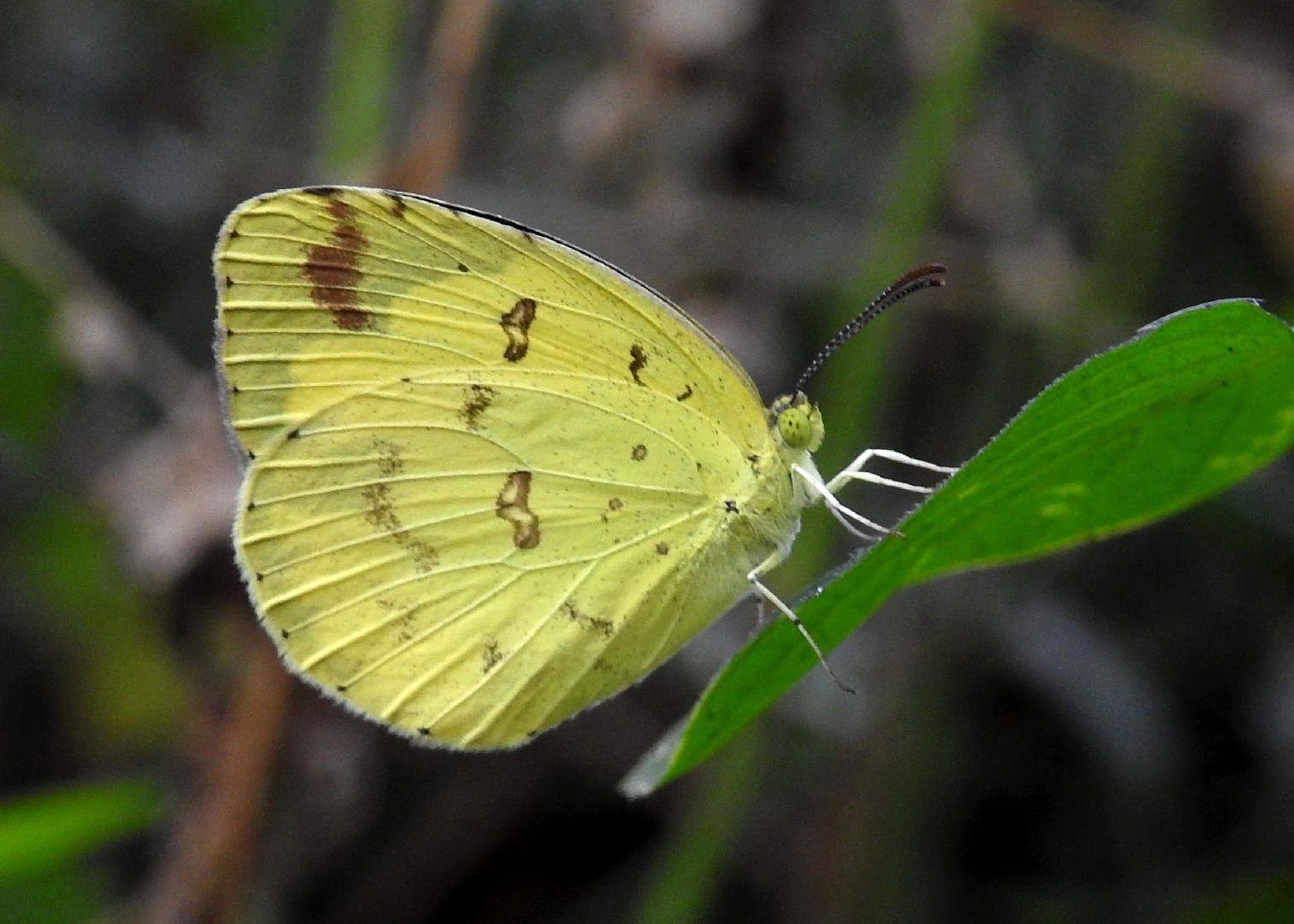
6. Common grass yellow
The common grass yellow (Eurema hecabe) can be found in groups around damp soil. Despite their name, they do not feed on grass, instead, they are known to frequently visit grasslands. It can change its form depending upon the season, as it is far more rough-looking if it comes during the dry season.
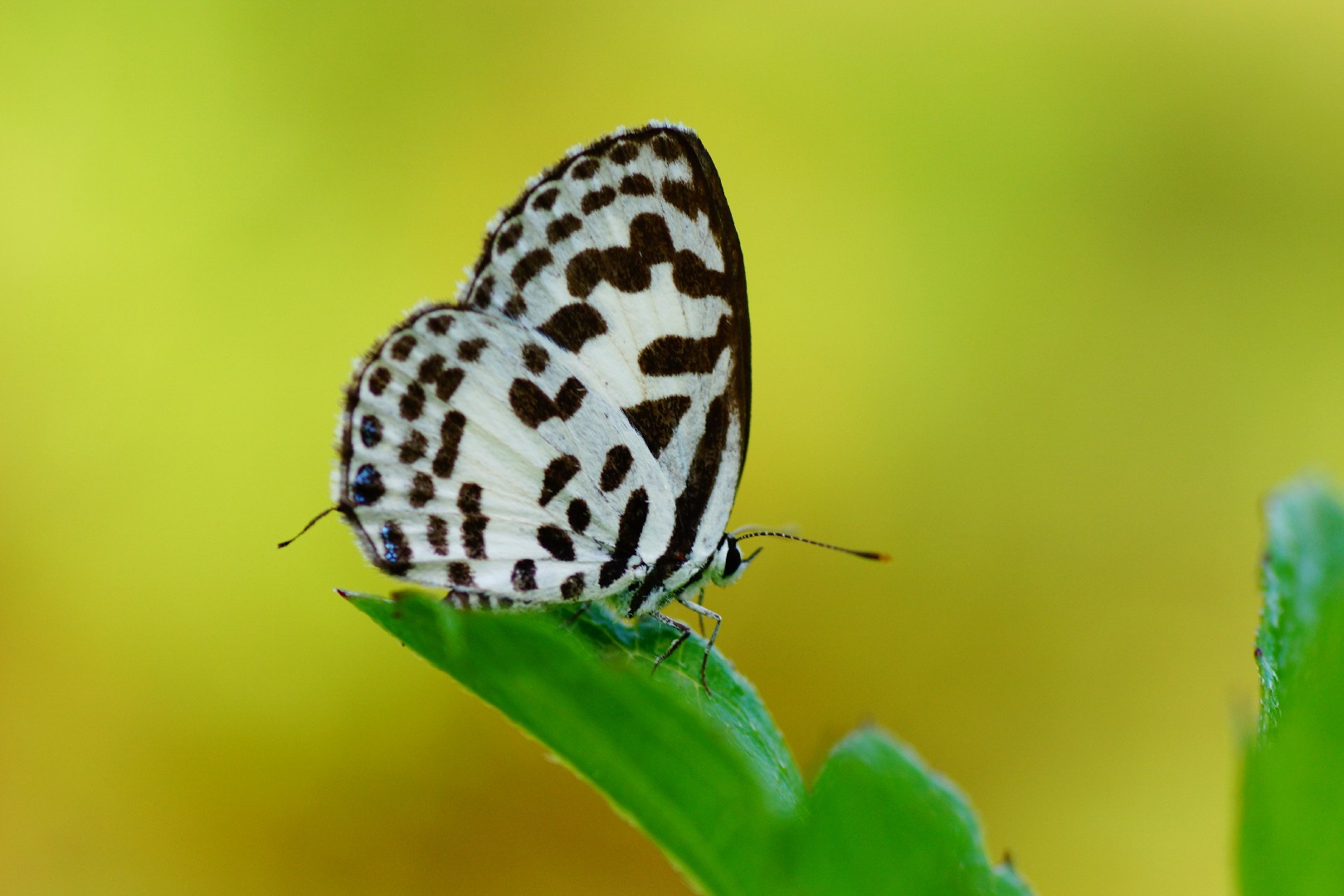
7. Common pierrot
Male. The upperside of its wings is mainly white. Forewing has the costa, apex and termen edged with black, the edging much broader on apex and termen; base outwards for a short distance more or less densely overlaid. with metallic blue scales which cover and make indistinct a large basal outwardly clavate (club-shaped) black spot; a transverse black oval spot on the discocellulars touching the black edging on the costa; an oblique irregular line of four quadrate black spots beyond, the upper spot coalesced with the black on the costal border, the next spot below shifted outwards out of line, touching, as does also the lowest spot, the terminal black edging; posterior to this is a quadrate black spot in the apical half of interspace 2, and placed obliquely outwards from 1b coalescent with the terminal black border, another similar spot in interspace 1. Hindwing: three basal black somewhat coalescent spots overlaid with metallic blue scaling; the costal margin above the subcostal vein and vein 7 black; this colour filling also the base of interspace 6, where in some specimens it is divided into a basal portion with a spot beyond; a postdiscal curved transverse black band followed by a subterminal transverse series of black spots, each spot edged inwardly and outwardly by very slender lunules of the white ground colour; on the inner side of the postdiscal band posteriorly is a broken line of four black generally coalescent spots two and two, the two upper often touching the postdiscal band. Underside primarily white. Forewing has a long oblique black band from base outwards to the costa; below it and obliquely placed an irregular black somewhat conical mark; following these are two outwardly oblique, medially interrupted, black macular bands; the inner of the two extended from costa along the discocellulars, is then widely interrupted below its posterior portion that is formed of two elongate coalescent spots and touches the inner subterminal transverse line of elongate spots just above the tornus; the outer, obliquely placed line is subapical and medially broken, the middle portion consisting of a quadrate spot is shifted outwards; finally, two parallel subterminal transverse series of black elongate spots, the inner series of broad, more or less rectangular spots, the outer series of more linear spots, the latter coalescent anteriorly with a slender anteciliary black line. Hindwing: a transverse basal black band, with an elongate black spot below it on the dorsum; a transverse subbasal line of four well-separated black spots; a transverse, oval, discocellular black spot and obliquely above it three subcostal similar spots, the inner two coalescent; postdiscal and terminal markings consist, the former of four black posterior spots two and two, each pair coalescent and placed en echelon, the latter of a transverse double series of subterminal black spots and an anteciliary black line; the upper portion of the postdiscal markings touches the inner subterminal line. Cilia of both forewings and hindwings white alternated with black at the apices of the veins; filamentous short tail to the hindwing black tipped with white. Antennae, head, thorax and abdomen black, the shafts of the antennae ringed with white, the head between the eyes and behind them white; beneath: the palpi, thorax and abdomen white, the last barred broadly with white on the sides.Female. Similar to the male but with the black markings on the upper and undersides broader. The larva is of the usual woodlouse form, much flattened towards the anal segment which is very broad; head concealed; colour bright green with a double, dorsal, yellow line and the sides powdered with small yellow spots. Pupa is intensely glossy as if covered with gum. It varies in colour, being sometimes black, at others green with inconstant black markings.
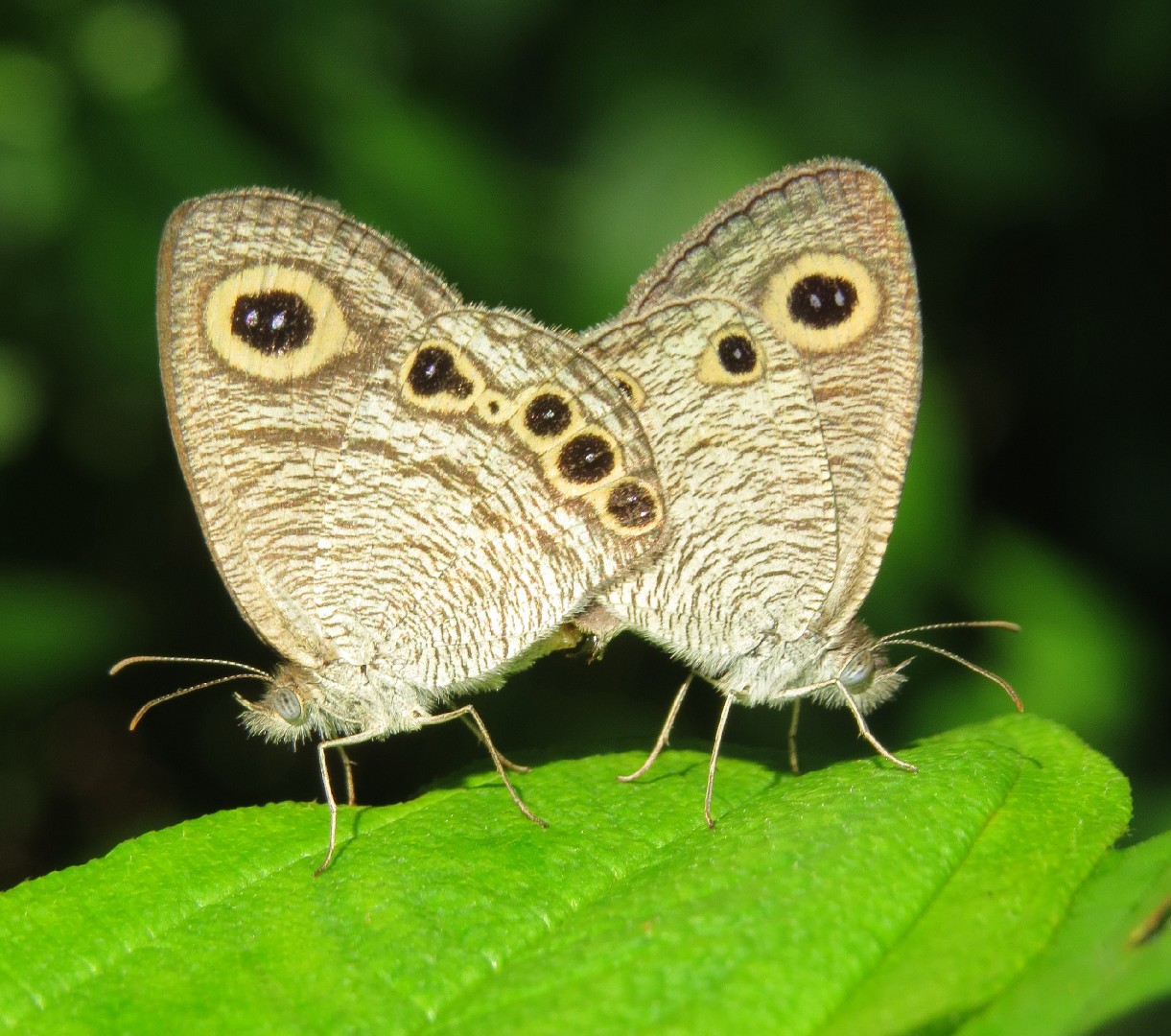
8. Common four-ring
Wet-season form: Upperside greyish brown. Forewing with the usual comparatively large, bi-pupilled, yellow-ringed, black preapical ocellus. Hindwing usually with two, sometimes with three, very rarely without any, smaller similar uni-pupilled postdiscal ocelli. Underside greyish white, not very densely covered with transverse short brown striae. Forewing with the preapical ocellus as on the upperside, obscure discal and subterminal dull brown transverse fasciae and a narrow brown ring round the ocellus diffusely produced posteriorly. Hindwing with one apical and typically three postdiscal posterior ocelli placed in a curve; traces of transverse brown discal and subterminal fasciae in most specimens. Antenna, head, thorax and abdomen greyish brown, the abdomen paler beneath. Male without secondary sex-mark. Dry-season form: Similar, somewhat paler on both upper and under sides; the discal and subterminal transverse fasciae more pronounced; the ocelli on the underside of the hindwing minute or absent. Adults have a wingspan of 4 - 4.5 cm.
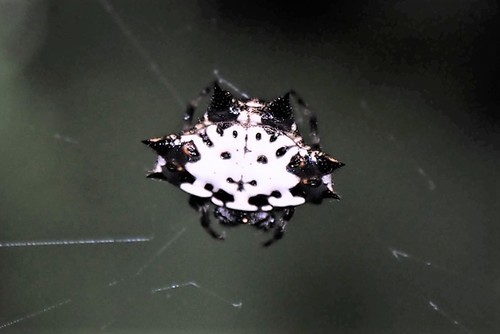
9. Black-and-white spiny spider
Female black-and-white spiny spider are 6 - 9 mm wide and possess a hard, shiny abdomen armed with six black conical spines. The upper surface of the abdomen is white to yellowish with variable black or dark brown markings and sigilla. Males are much smaller at 3 - 4 mm and in place of spines have small bumps on their abdomens.
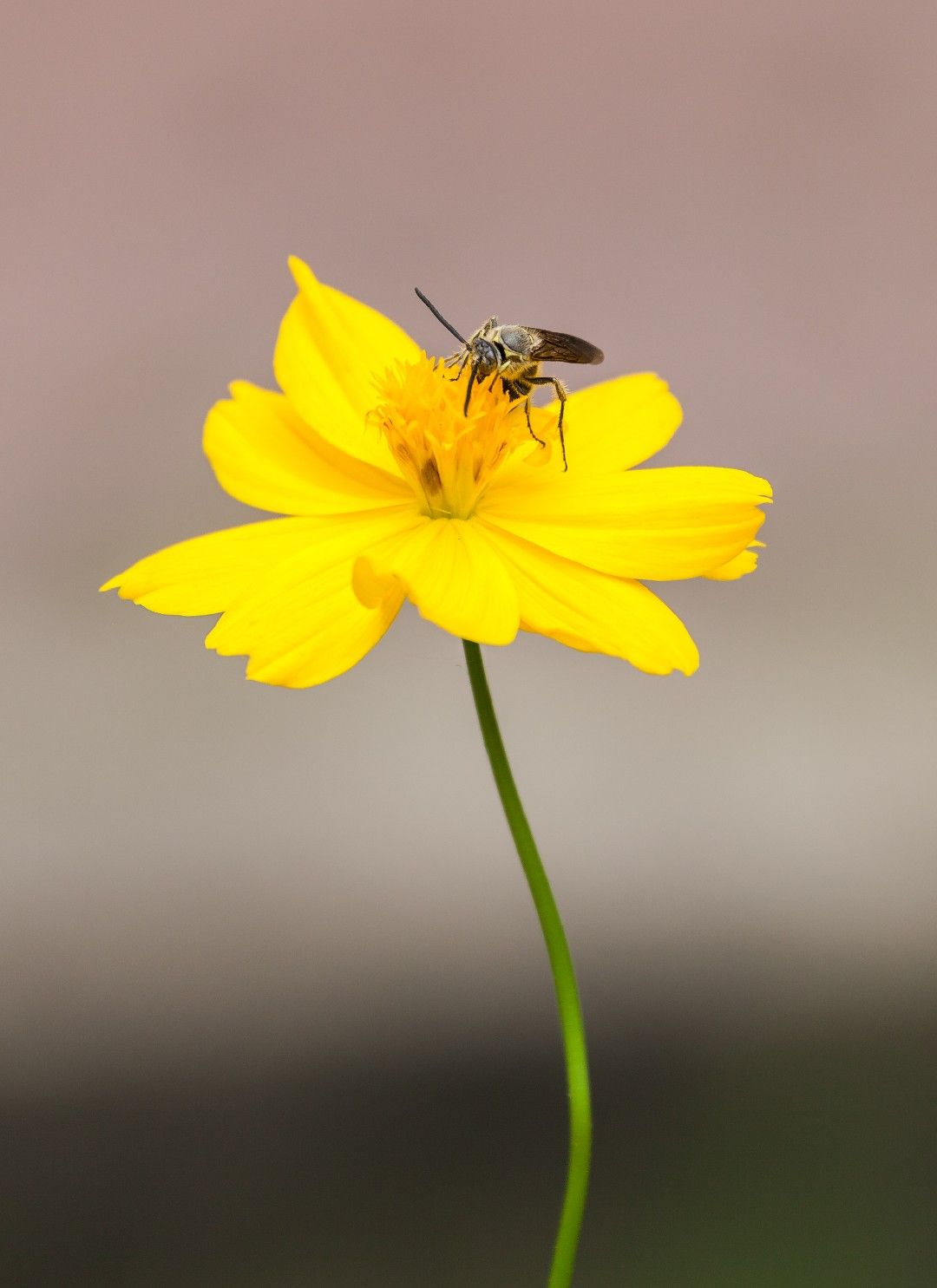
10. Chlorion lobatum
More







