




Top 20 Most Common Insects in Sorrento
Insects, nature's miniature marvels, form an integral part of Sorrento's unique ecosystem. These ubiquitous creatures, with telltale traits like exoskeletons and segmented bodies, thrive in diverse environments across Sorrento, contributing to the region's rich insect biodiversity. These tiny beings, often underappreciated, play pivotal roles from pest control to pollination. In this list, we've unraveled the top 20 most common insects in Sorrento, underlining the inseparable bond between Sorrento's natural milieu and its abundant insect inhabitants.

Most Common Insects
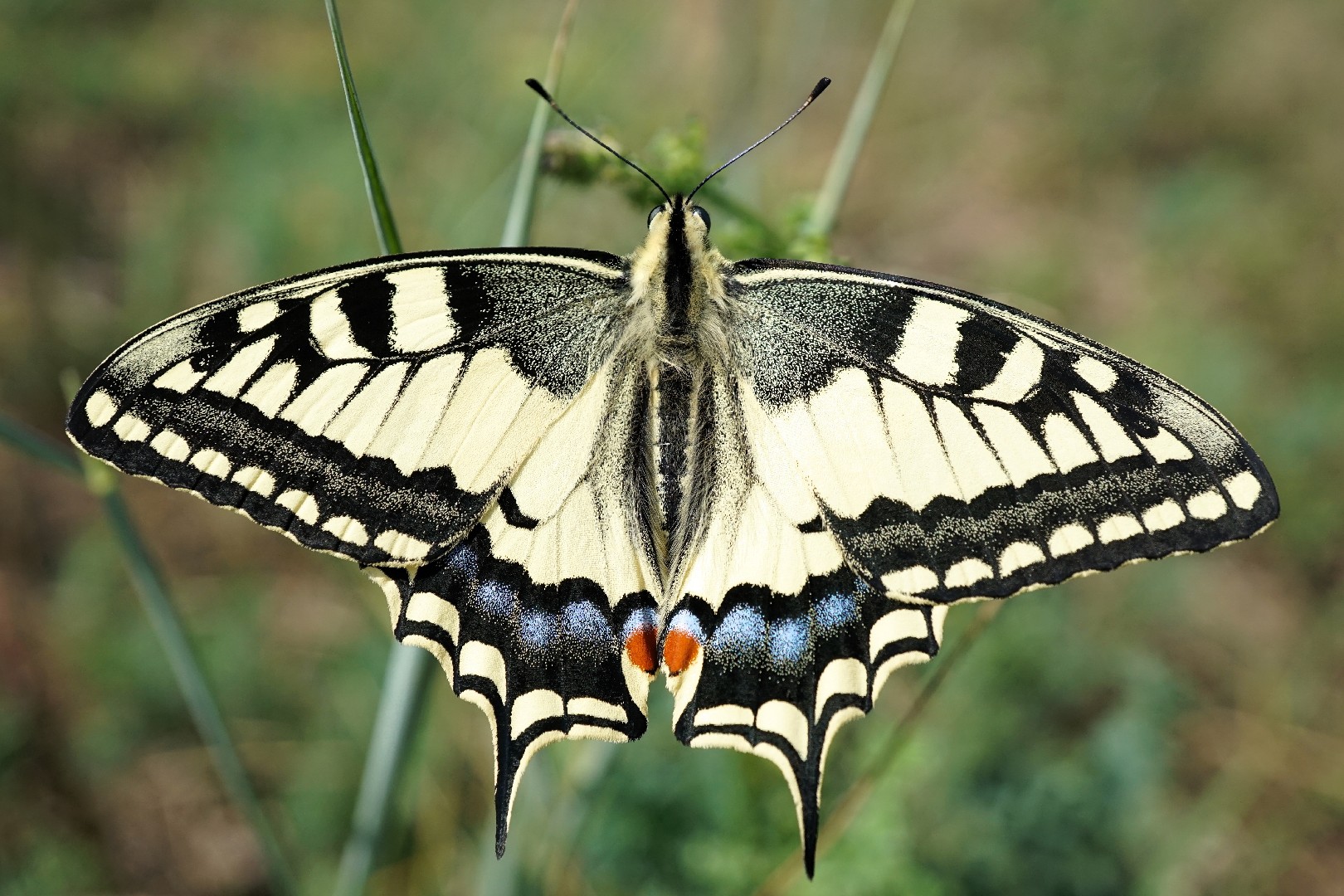
1. Old World swallowtail
The old World swallowtail (Papilio machaon) is commonly just called the "swallowtail," giving it the added title of "old world" to distinguish it and remind us that it comes from the "old world" (Asia, Africa, Europe). The upper side of them is a beautiful combination of pure white with black striping, the underside being a brownish version of the same thing. There is blue and two red dots on its back side.
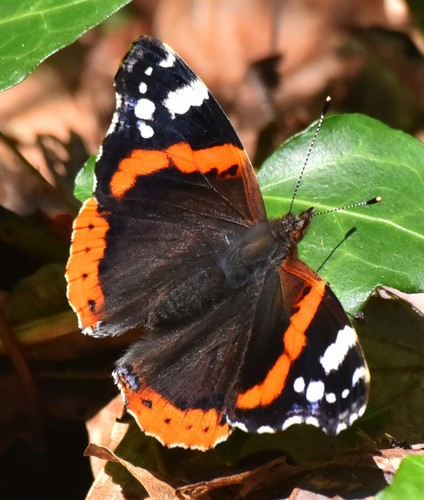
2. Red admiral
Red admiral (Vanessa atalanta) is a visually striking species of butterfly. Unusually territorial, males will compete for choice areas, and females will only mate with males that maintain their own territories. This butterfly is known for being particularly patient with human interactions, even to the point of perching on clothing or flesh.
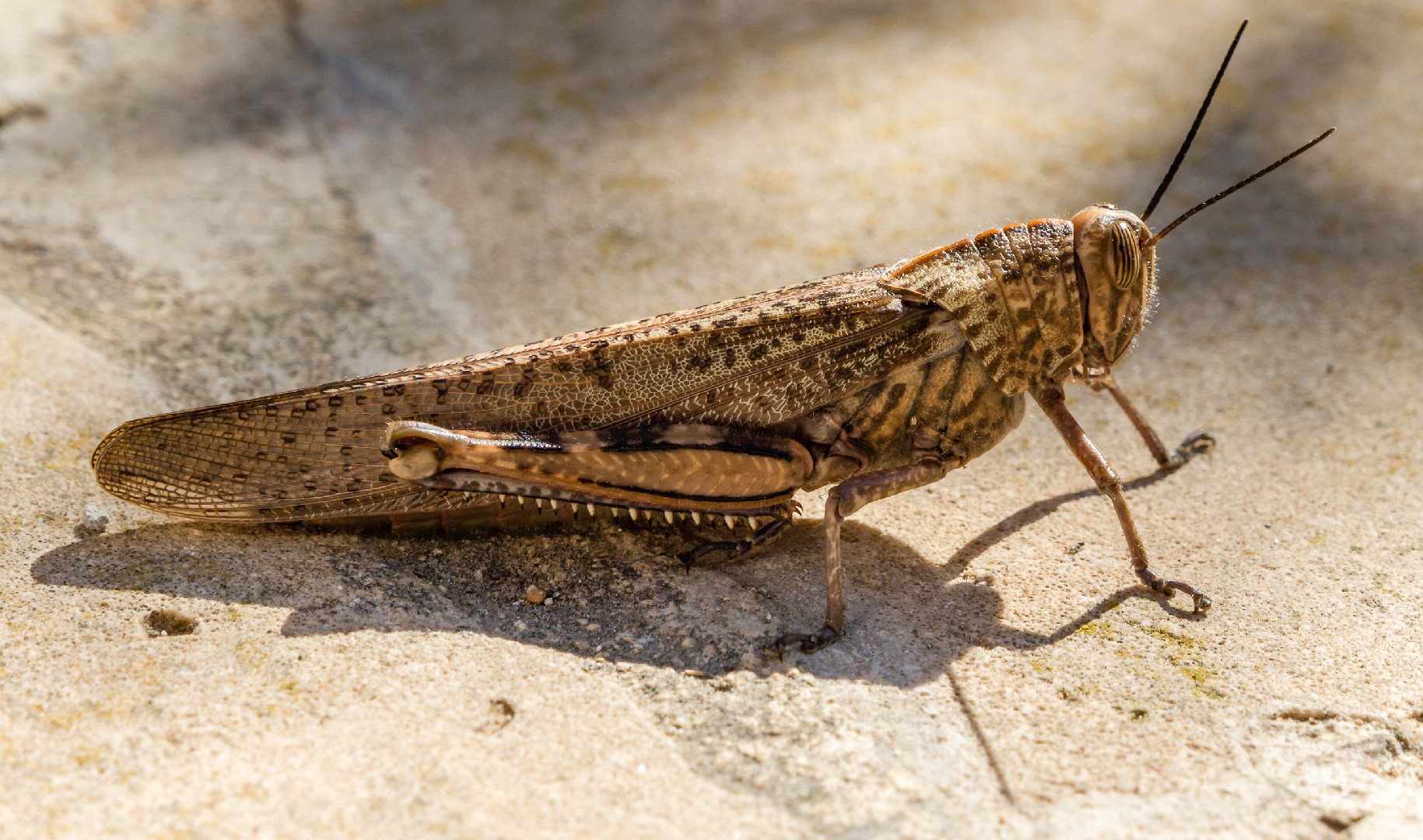
3. Egyptian locust
The egyptian locust( Anacridium aegyptium) is usually gray, brown, or olive in color has a mid-sized body with a pair of short and robust antennae on the head. It is generally regarded as a kind of minor pest as it essentially feeds on the leaves of various fruit trees in the orchards but does not cause serious harm to crops.
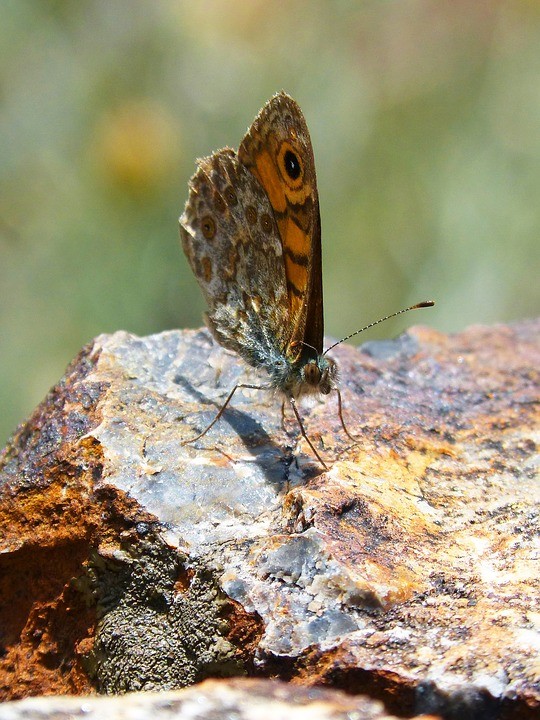
4. Wall brown
P. megera L. [— xiphie Boisd. pt (45d). Above reddish yellow, with a black mark which traverses the distal band from the cell of the forewing to the abdominal margin of the hindwing, short black stripes crossing the disc and the cell of the forewing. 
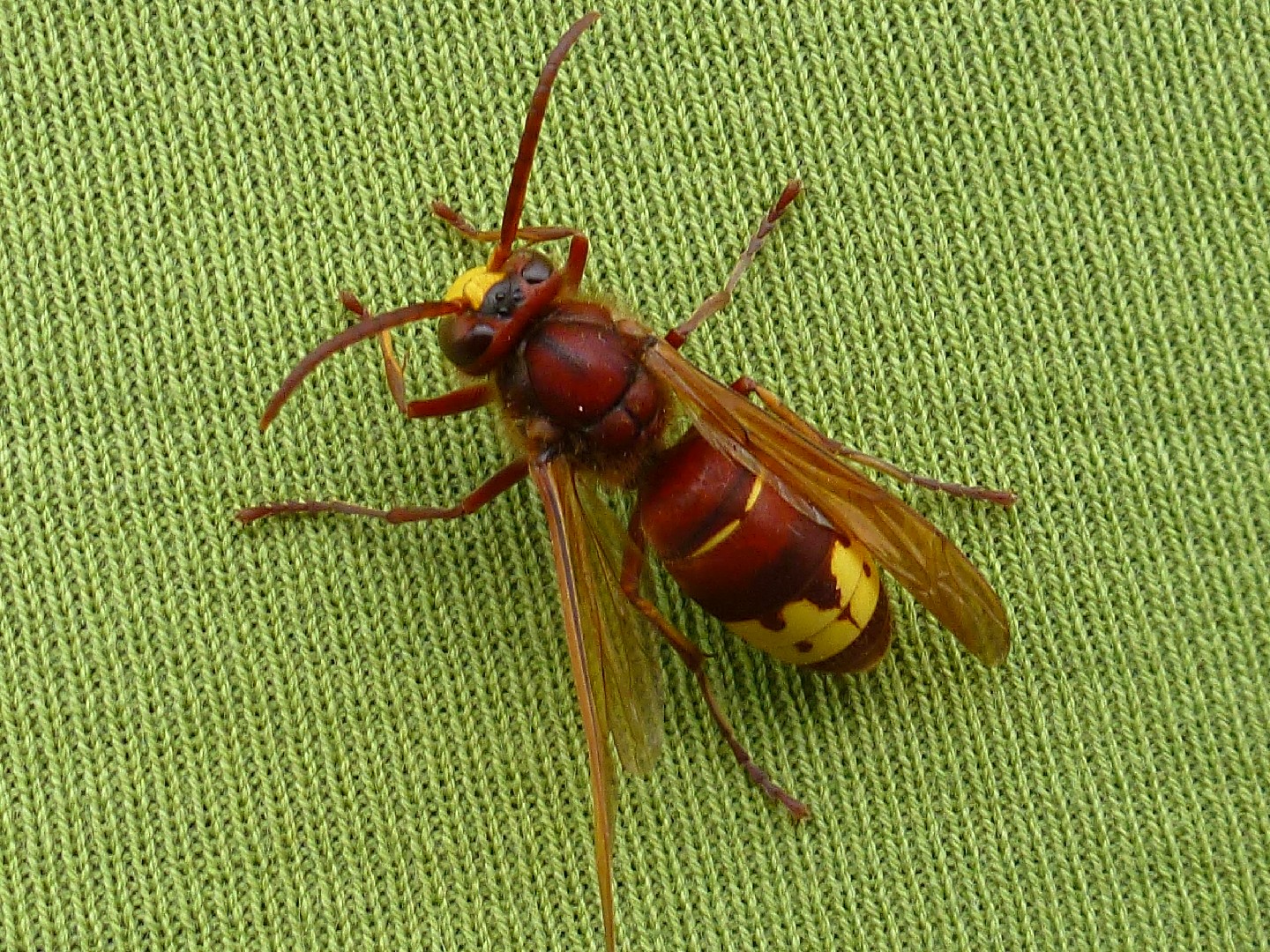
5. Oriental hornet
The oriental hornet (Vespa orientalis) is a polyphagous insect (the adults are vegetarian and the larvae eat animal protein) that communicates with sound vibrations underground. Otherwise, they are considered a pest to honey bees, as they attack them in order to steal honey and other proteins. While they are jerks to others, their internal community has everyone working for the good of the colony.
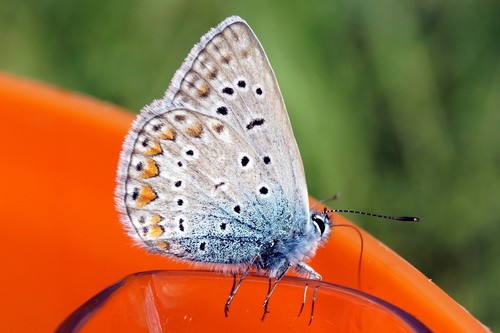
6. Common blue butterfly
Despite its common name, only male specimens of common blue butterfly (Polyommatus icarus) can accurately be described as blue; the females are predominately gray-brown, with only a dusting of blue and a scattering of orange spots. The adults live for only three weeks before dying.
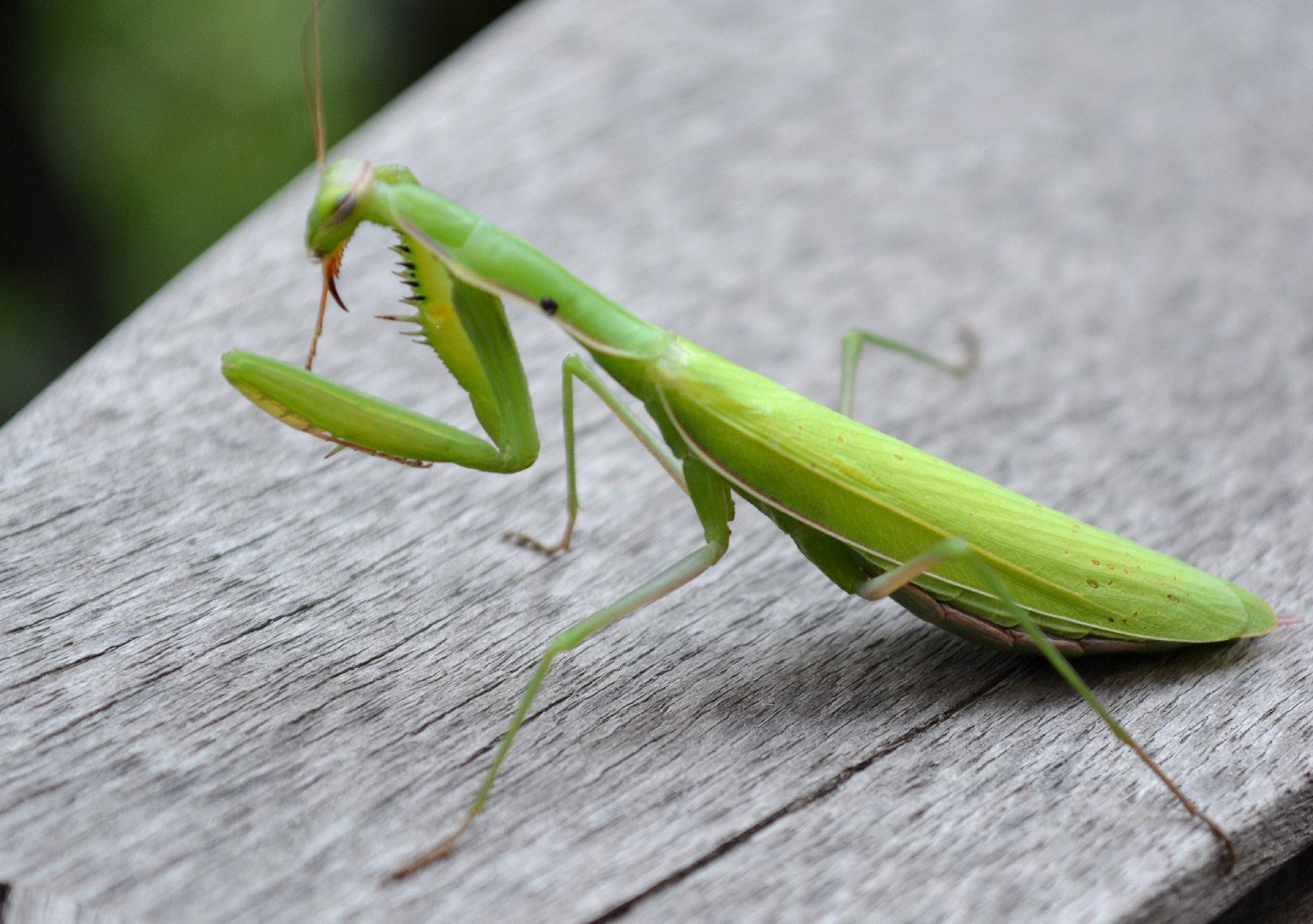
7. European mantis
The european mantis (Mantis religiosa) is a bright green mantis that can be distinguished by the two black spots with single white spots inside on its front legs. These spots resemble the eyes of a predator. If it's threatened, it will raise its wings and show off these intimidating "eyes". Also, it's a fierce species that will chase down its prey to catch it.
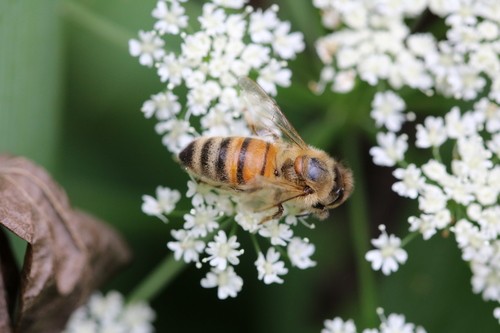
8. Western honey bee
Western honey bee(Apis mellifera) is the most common species of honeybee in the world. Among the first domesticated insects, its cultural and economic impact on humanity has been vast and far-reaching, providing honey, wax and its services as a pollinator. Western honey bee faces challenges worldwide, such as colony collapse disorder, and populations are thought to be decreasing.
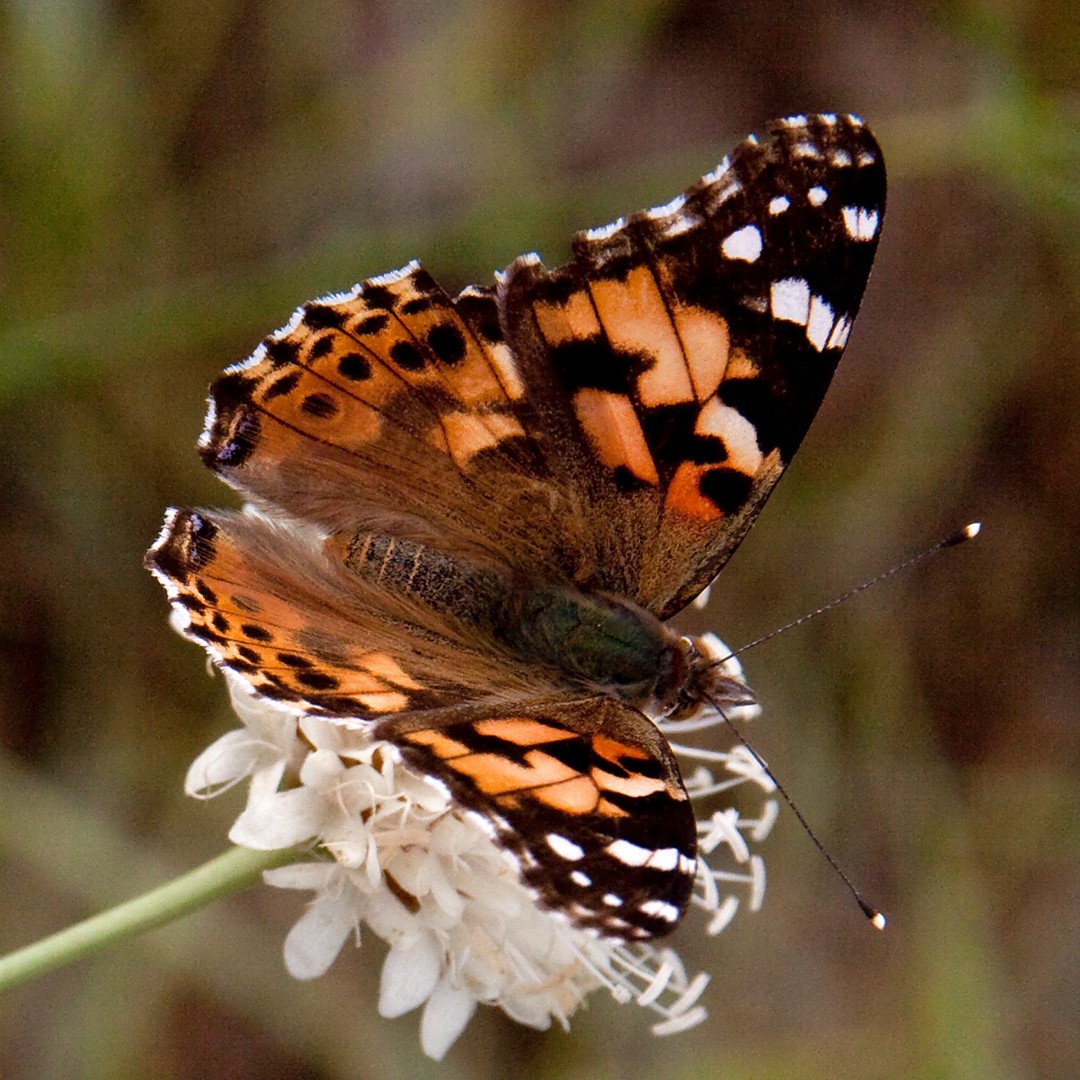
9. Painted lady
The painted lady is a migratory butterfly that spends part of the year in Northern Africa and then migrates to Europe during the warmer months. Although the adults feed on nectar from flowers, the larvae feed on the leaves of nettles and thistles.

10. Tree grayling
Hipparchia statilinus has a wingspan of 6 - 7 cm. These butterflies are rather variable, especially in the shades of brown present on the wings and in the intensity of the white bands. Usually the basic color of the upperside of the wings is dull brown in the male, lighter or ocher in the female, with a fringe on the edges. Two blind or very discreetly pupillated black eyespots are present on the forewings, while the hindwings show a very small eyespot. The underside is marbled with ocher and dusty white bands. On the underside of each forewing there are two black eyespots ringed in yellow, the upper one with a white central spot. Between the two black eyespots there are two white spots. On the underside of the hindwings there may be a black spot near the posterior and anal margin.The caterpillars are greenish-beige with green-brownish longitudinal stripes.
More







