




Top 20 Most Common Insects in Bologna
Insects, encapsulating a world of diversity, play vital roles in Bologna's unique ecosystems. Geography profoundly influences bug biodiversity in Bologna, as each area evolves distinct insect populations. Whether pests or helpful, insects play crucial roles in maintaining balance in the ecosystem. Stay tuned for a rundown of the top 20 most common insects in Bologna and how they shape our environment.

Most Common Insects
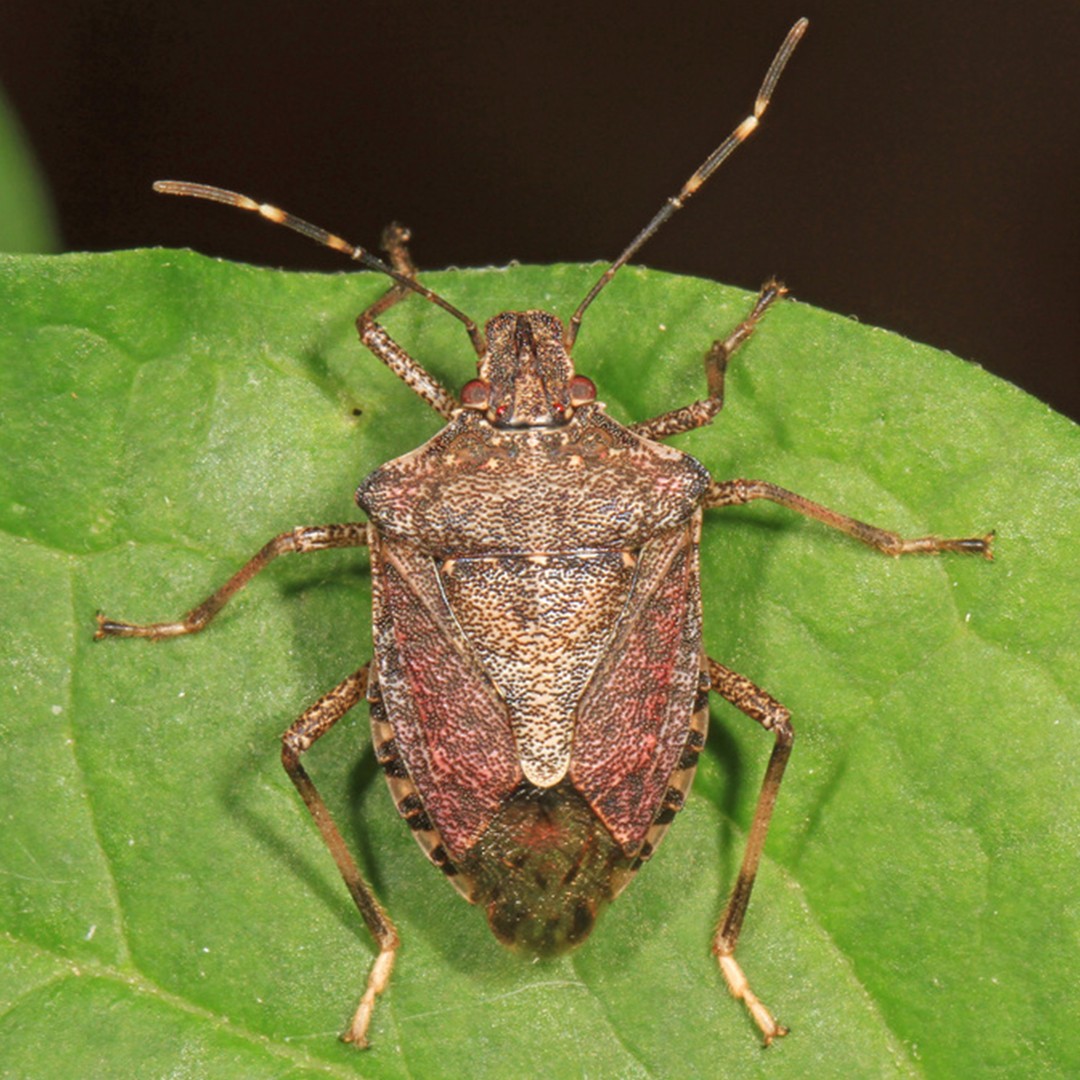
1. Brown marmorated stink bug
As evidenced by its name, brown marmorated stink bug (Halyomorpha halys) is most recognizable for its ability to exude a nasty, foul-smelling odor if disturbed. Capable of subsisting on over one hundred species of plant, it has become an enormous pest for many farmers in the U.S., costing over $30 million annually in apple crop losses alone. It often invades homes in autumn, as soon as the weather begins to chill.
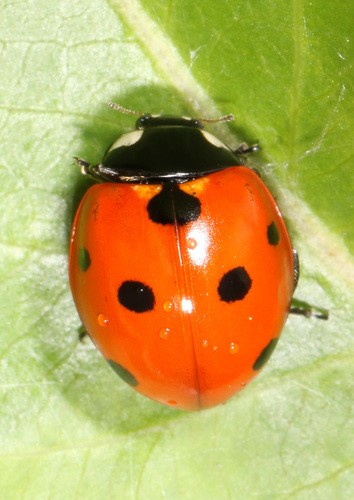
2. Seven-spotted ladybug
Seven-spotted ladybug (Coccinella septempunctata), known in North America as the "seven-spotted ladybug," is the most common species of ladybird in Europe and the official state insect of five U.S. states. While not native to North America, it has established itself there after being introduced to control aphid populations. Its bright coloring deters predators, and it may also play dead or secrete foul-smelling liquids to discourage consumption.

3. Multicolored asian ladybeetle
Often confused for the ladybug, multicolored asian ladybeetle (Harmonia axyridis) is a separate species that, unlike the ladybug, is a household pest. It is considered particularly annoying for its habit of returning to places from which it is removed. One of the most variable species in the world, there are many different colors and patterns multicolored asian ladybeetle may display, making identification potentially difficult.
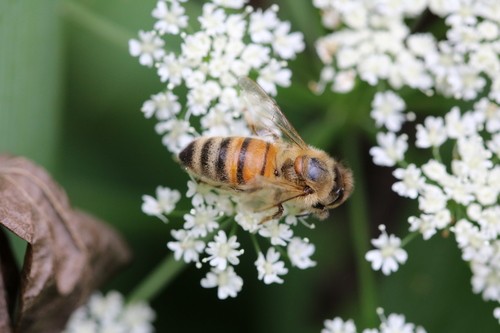
4. Western honey bee
Western honey bee(Apis mellifera) is the most common species of honeybee in the world. Among the first domesticated insects, its cultural and economic impact on humanity has been vast and far-reaching, providing honey, wax and its services as a pollinator. Western honey bee faces challenges worldwide, such as colony collapse disorder, and populations are thought to be decreasing.
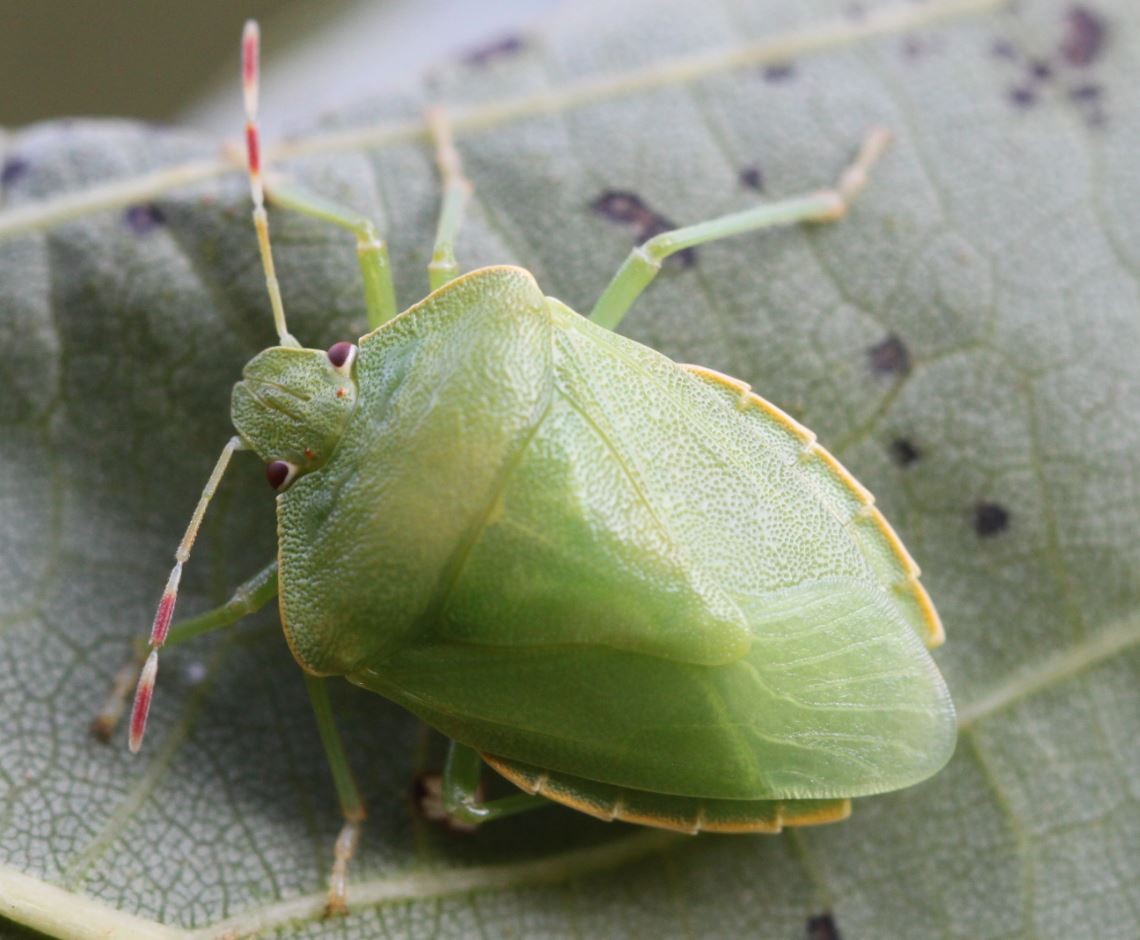
5. Southern green shield bug
The southern green shield bug larvae molt five times before they reach their mature size. They are named for their unpleasant scent and are considered pests due to their preference for feeding on leguminous plants such as soybeans. Wasps and flies that parasitize the southern green shield bug are sometimes used as biological controls for its population.
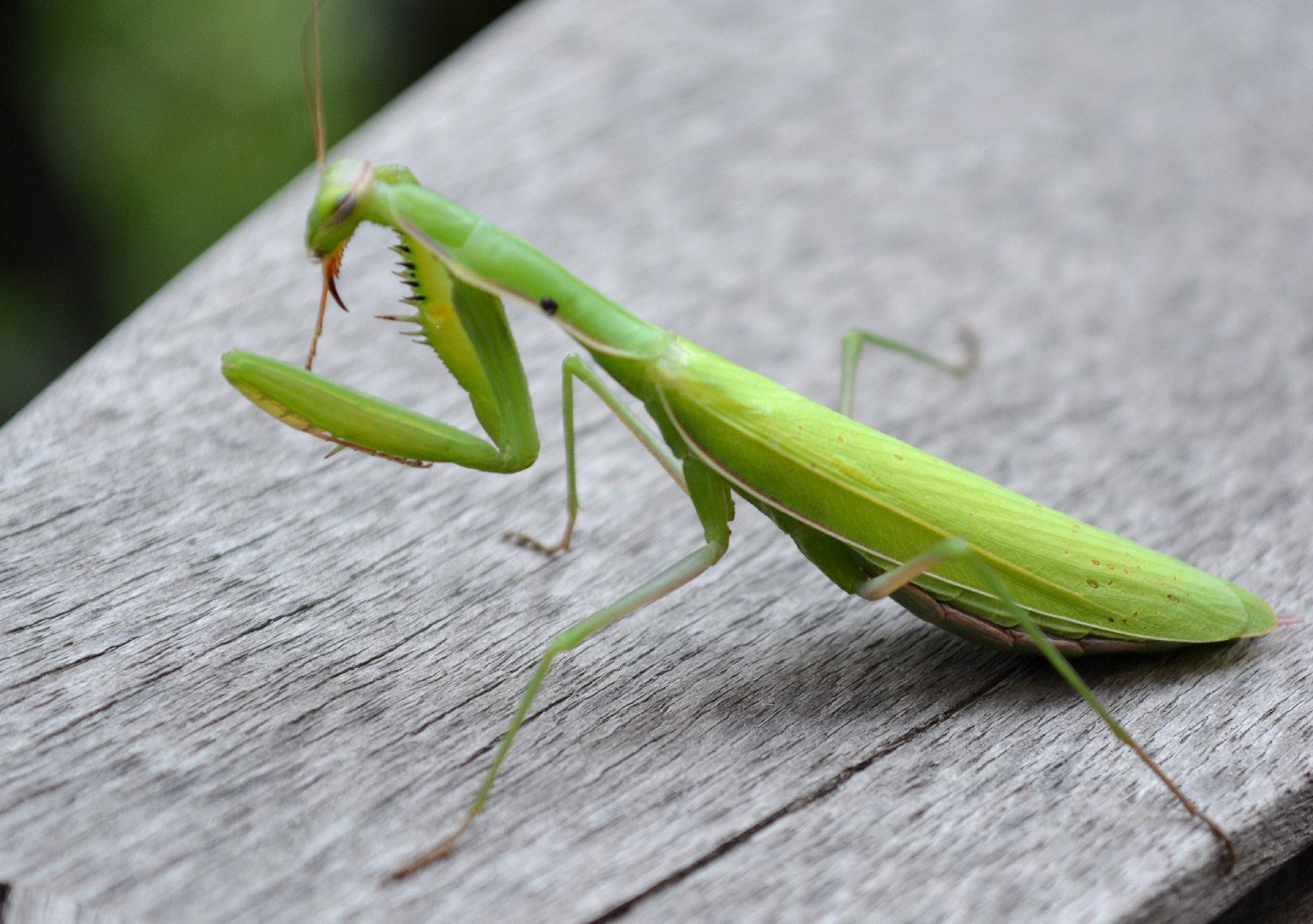
6. European mantis
The european mantis (Mantis religiosa) is a bright green mantis that can be distinguished by the two black spots with single white spots inside on its front legs. These spots resemble the eyes of a predator. If it's threatened, it will raise its wings and show off these intimidating "eyes". Also, it's a fierce species that will chase down its prey to catch it.
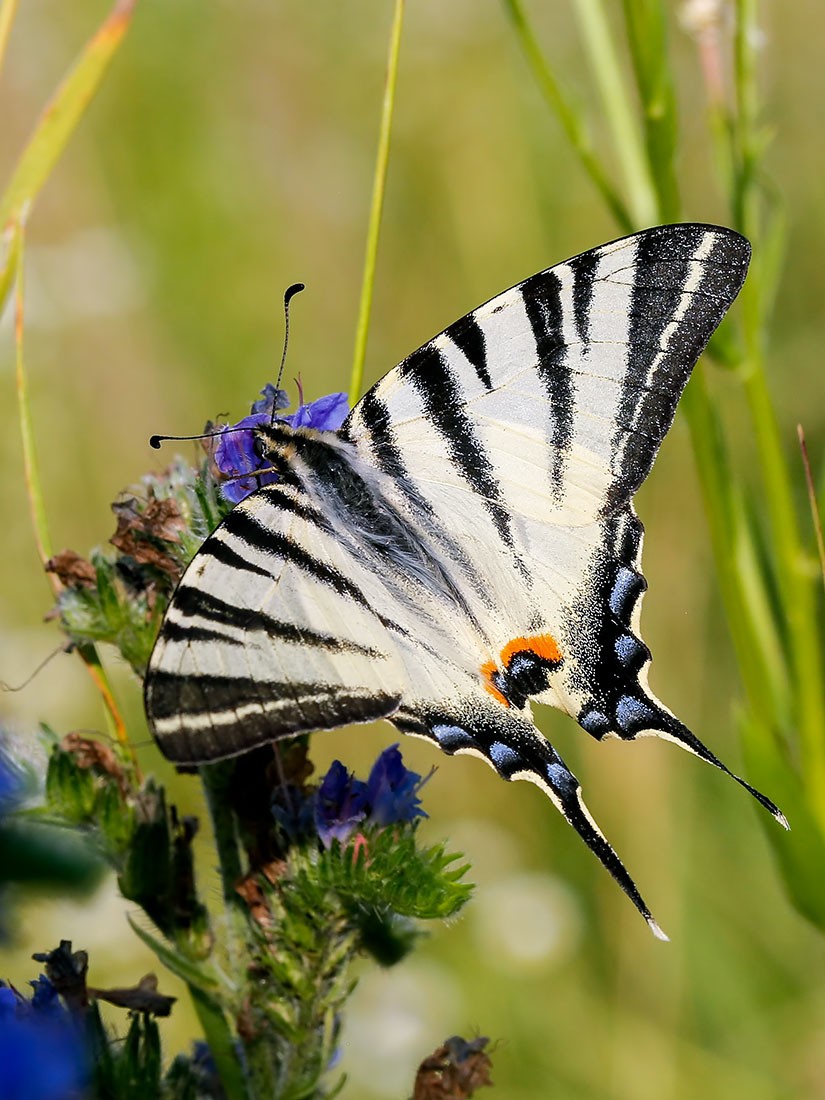
7. Scarce swallowtail
Its slow and floating flight pattern makes it easy to identify the scarce swallowtail as it soars over gardens, orchards, and scrublands. The butterfly has a large presence across Europe, the Middle East, and Asia. The adult lifespan is brief, only two or three weeks. Planting flowers like blackthorn can encourage the butterfly to visit a garden.
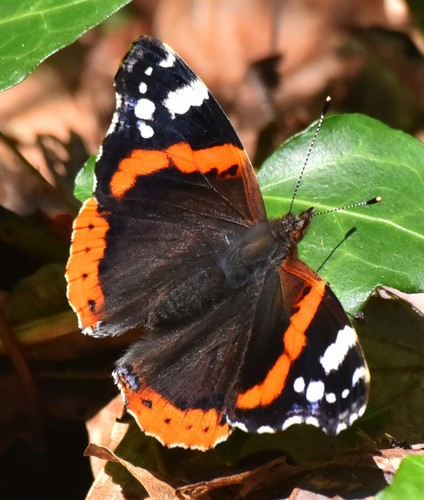
8. Red admiral
Red admiral (Vanessa atalanta) is a visually striking species of butterfly. Unusually territorial, males will compete for choice areas, and females will only mate with males that maintain their own territories. This butterfly is known for being particularly patient with human interactions, even to the point of perching on clothing or flesh.
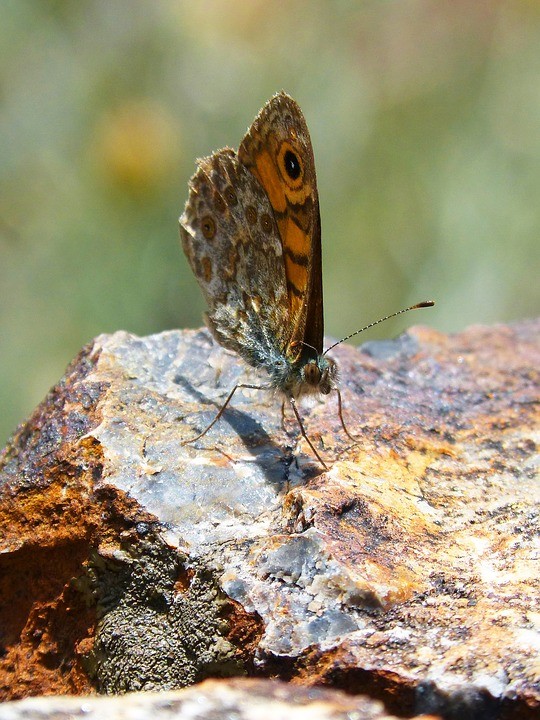
9. Wall brown
P. megera L. [— xiphie Boisd. pt (45d). Above reddish yellow, with a black mark which traverses the distal band from the cell of the forewing to the abdominal margin of the hindwing, short black stripes crossing the disc and the cell of the forewing. 
10. Silver-washed fritillary
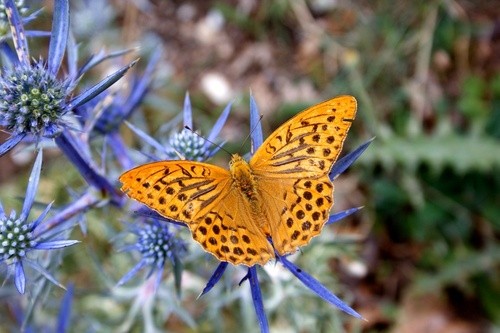
The silver-washed fritillary (Argynnis paphia) is a beautiful, orange butterfly that is covered in black spots. It earns the "silver-washed" portion of its name through silver streaks you can find running along with it. It produces a scent using "scales" that allows it to distinguish itself when females are trying to locate it.
More







