




Top 20 Most Common Insects in Pulau Pinang
Insects, remarkable creatures with defining features and diverse habitats, are ubiquitous in Pulau Pinang. The varied landscapes of Pulau Pinang cater to a myriad of these species, influencing their abundance and diversity. Insects play pivotal roles, both as ecosystem service providers and potential pests, effectively shaping their surroundings. In this list, we delve into the fascinating world of the 20 most common insects in Pulau Pinang, exploring how the environment and insects cohabitate and influence each other. Unfold the enthralling tales of these tiny titans and their intriguing habitats.

Most Common Insects

1. Weaver ant
The weaver ant can be found in silk-woven nests in the foliage of Southeast Asia and Oceania. These ants have a painful bite and prey on other small insects. Larvae have many uses for local regions, including being a popular fishing bait and a good choice of bird food.

2. Blue moon butterfly
Hypolimnas bolina, the great eggfly, common eggfly or in New Zealand the blue moon butterfly is a species of nymphalid butterfly found from Madagascar to Asia and Australia. 
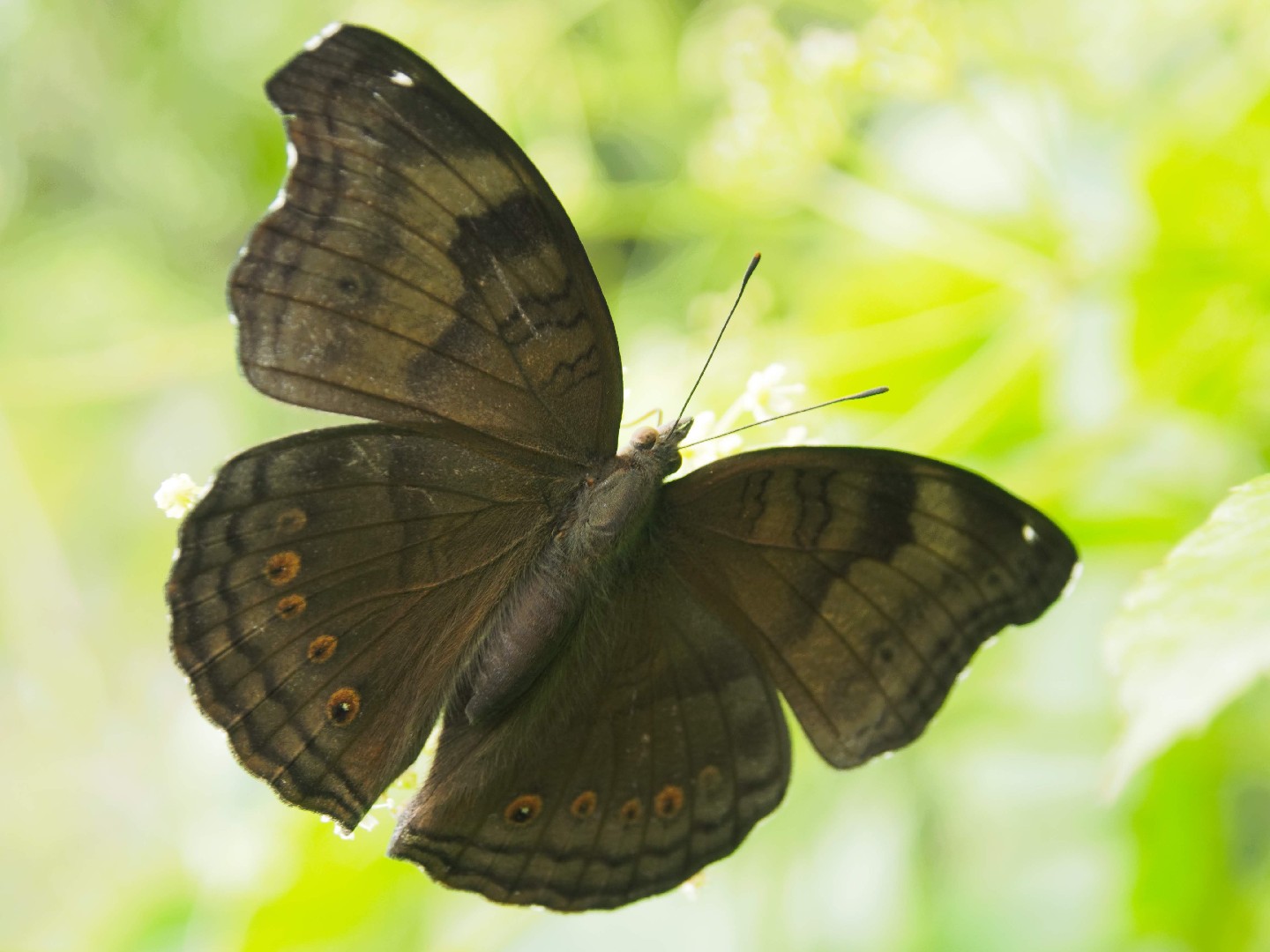
3. Chocolate soldier
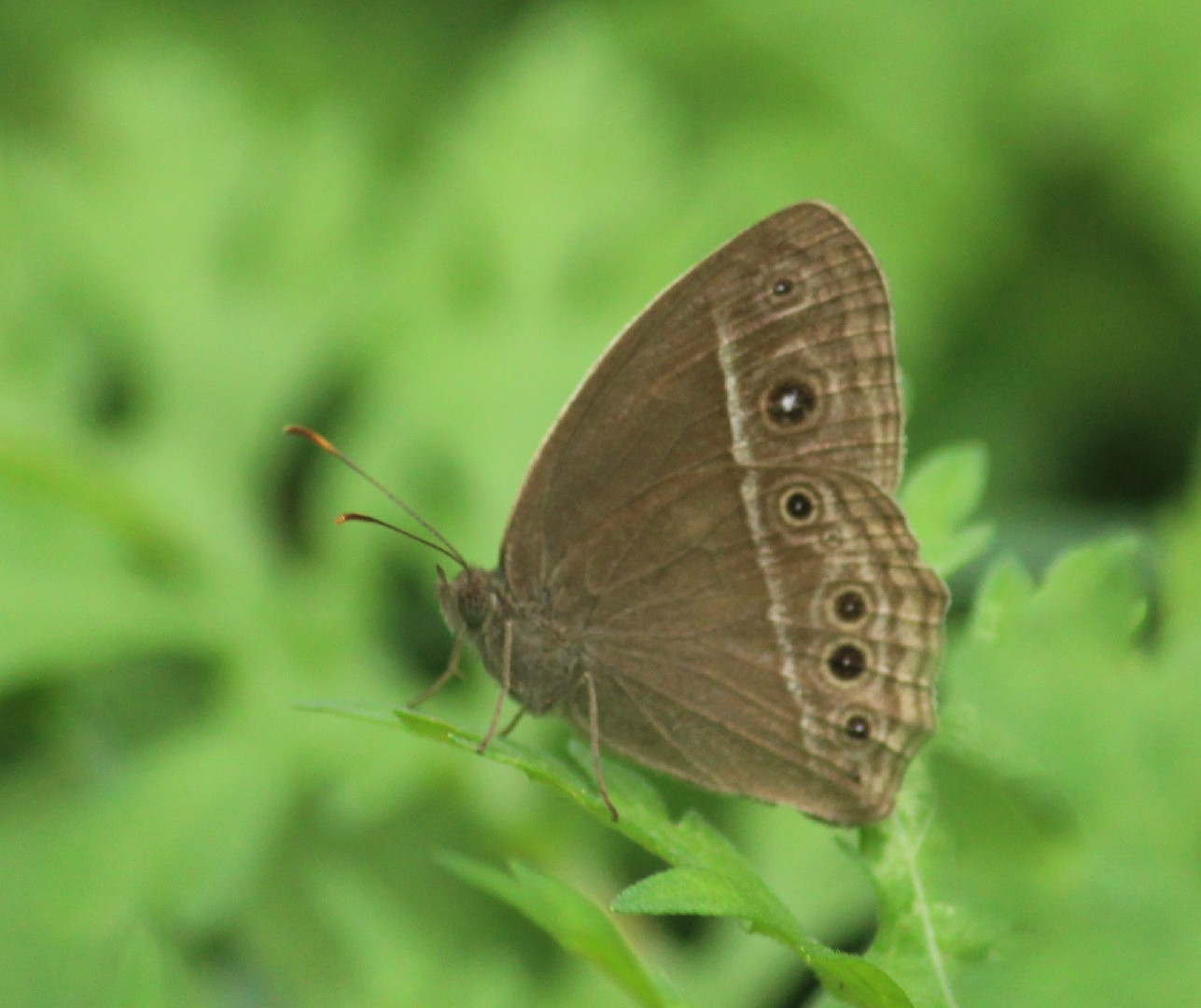
Upperside of both sexes brown of varying depths of colour. Forewing: cell with one pair of subbasal and one pair of apical transverse sinuous fasciae, the outermost defining the discocellulars; a short, broad, dark, oblique fascia beyond to vein 4, its inner margin diffuse, its outer sinuous but sharply defined; below vein 4 a sinuous, transverse, more faint fascia, followed by a discal blackish fascia, very broad and diffuse, below costa, bordered by a row of faint ocelli, and a postdiscal and a subterminal similar fascia following the outline of the termen. Hindwing with a slender blackish loop near apex of cellular area; a broad inwardly diffuse, outwardly well-defined short discal fascia in continuation of the one on the forewing; a series of postdiscal somewhat ochraceous ocelli with black pupils minutely centred with white; postdiscal and subterminal broad lines as on the forewing. Underside brown, with very broad darker brown transverse fasciae, the interspaces between the markings irrorated (sprinkled) with purplish silvery scales. Forewing with two sinuous fasciae on basal half succeeded by a discal fascia, very broad at the costal margin and decreasing in width to the dorsum, bearing on its outer border a row of obscure ocelli. This is succeeded by a zigzag dark line, and sinuous subterminal and terminal lines; apex and tornal area suffused with purplish silvery. Hindwing: two irregular, very broad, dark brown, curved short fasciae near base; a straight, transverse, prominent, narrow ochreous-brown discal band defined outwardly by a black line; a transverse postdiscal dark brown fascia, widest in the middle and bearing outwardly a curved row of ochreous-brown white-centred ocelli, followed by a zigzag dark line in continuation of the one on the forewing; a subterminal somewhat diffuse dark fascia and a terminal dark line. Antennae, head, thorax and abdomen dark brown.

4. Common mormon
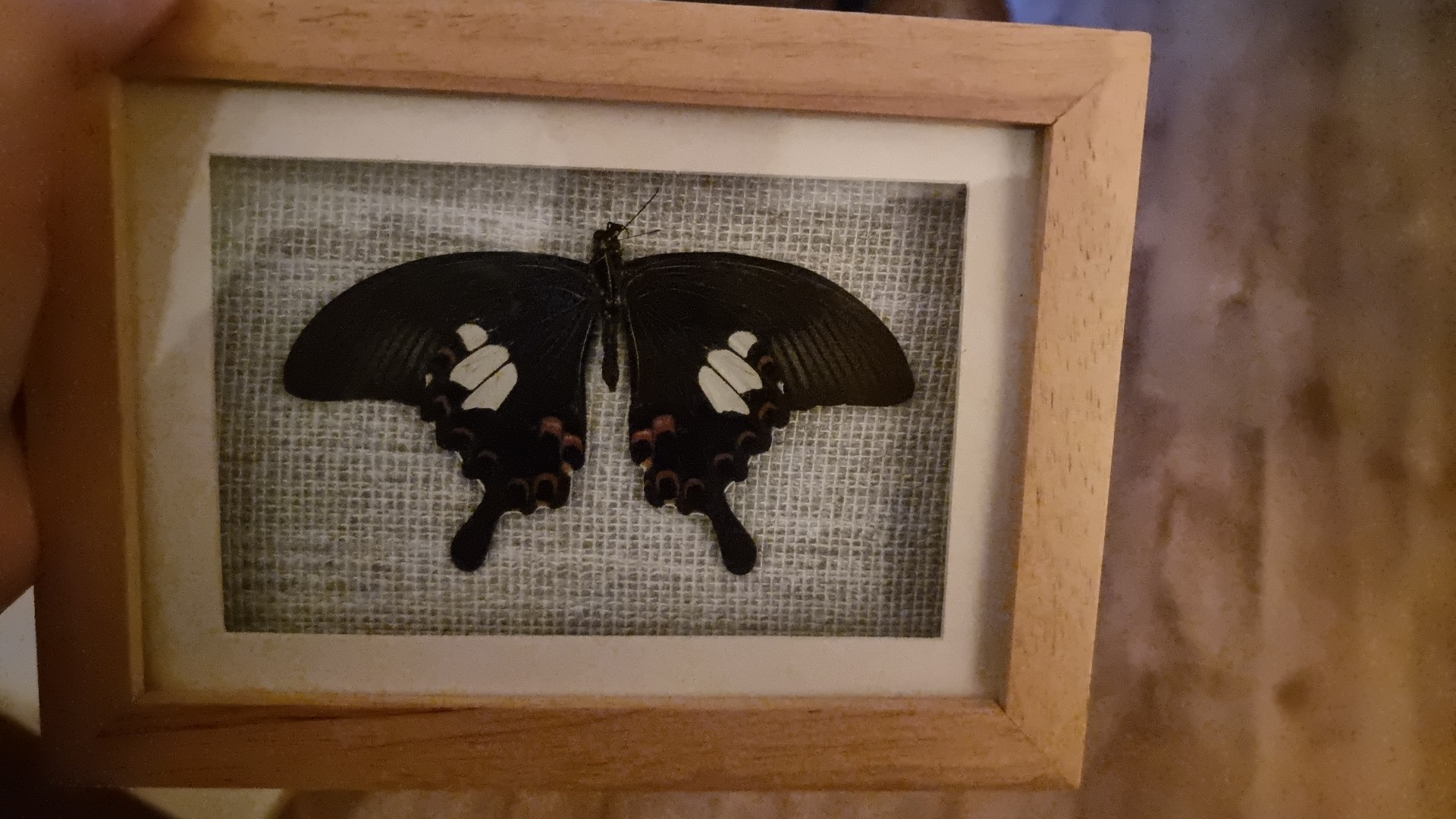
The common mormon (Papilio polytes) is a beautiful, black butterfly with unique hindwings that have orange and white colorings and two spots jutting out. They are named after the Mormon religion, as the butterflies participate in polygamy, which is a common practice for Mormons. They are also known to mimic red-bodied swallowtail, who are inedible.
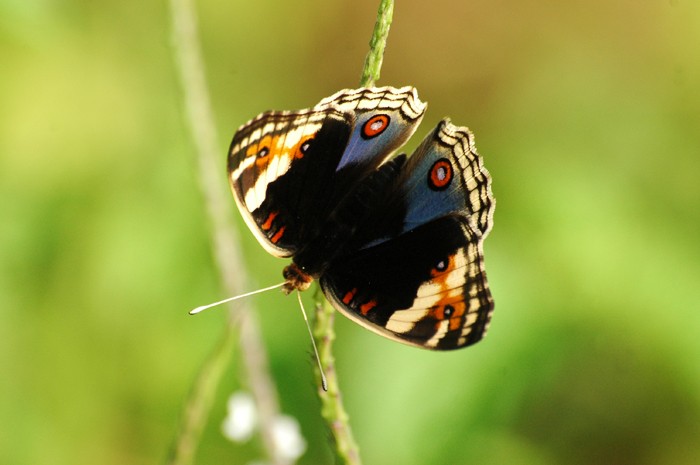
5. Blue pansy
Male upperside: somewhat more than half the forewing from base velvety black, apical half dull fuliginous; cell-area with or without two short transverse orange bars; a blue patch above, the tornus; the outer margin of the basal black area obliquely zigzag in a line from the middle of costa to apex of vein 2, including a large discal, generally obscure ocellus, which, however, in some specimens is prominently ringed with orange yellow. Beyond this a broad white irregularly oblique discal band followed by a short oblique preapical bar from costa; a small black orange-ringed ocellus beneath the bar, a subterminal continuous line of white spots in the interspaces and a terminal jet-black slender line; cilia alternately dusky black and white. Hindwing blue shaded with velvety black towards base; a postdiscal black white-centred orange and black-ringed ocellus in interspace 2, a round minutely white-centred velvety-black spot (sometimes entirely absent) in interspace 5; the termen narrowly white, traversed by an inner and an outer subterminal and a terminal black line; cilia white. Underside forewing: basal half with three black-edged, sinuous, broad, ochraceous-orange transverse bands, followed by the pale discal baud; ocelli, preapical short bar, subterminal and terminal markings much as on the upperside; the discal band margined inwardly by a broad black angulated line which follows the outline of the black area of the upperside. Hindwing irrorated (sprinkled) with dusky scales and transversely crossed by subbasal and discal slender zigzag brown lines and a postdiscal dark shade, on which are placed the two ocelli as on the upperside; subterminal and terminal faint brown lines, and a brownish short streak tipped black at the tornal angle below the lower ocellus. Female. Similar, with similar but larger and more clearly defined ocelli and markings; the basal half of the forewings and hindwings on the upperside fuliginous (sooty) brown, scarcely any trace of blue on the hindwing. Antennae brown, head reddish brown, thorax and abdomen above brownish black: palpi, thorax and abdomen beneath dull white.

6. Lemon pansy
It is brown with numerous eyespots as well as black and lemon-yellow spots and lines on the upperside of the wings. The underside is a dull brown, with a number of wavy lines and spots in varying shades of brown and black. There is also an eyespot on the lower side of the forewing. The wet- and dry-season forms differ considerably in coloration and even shape. In the wet-season form the markings are distinct and vivid and the wing shape is a little more rounded. In the dry-season form the markings are obscure and pale especially on the underside and the wing margin is more angular and jagged.
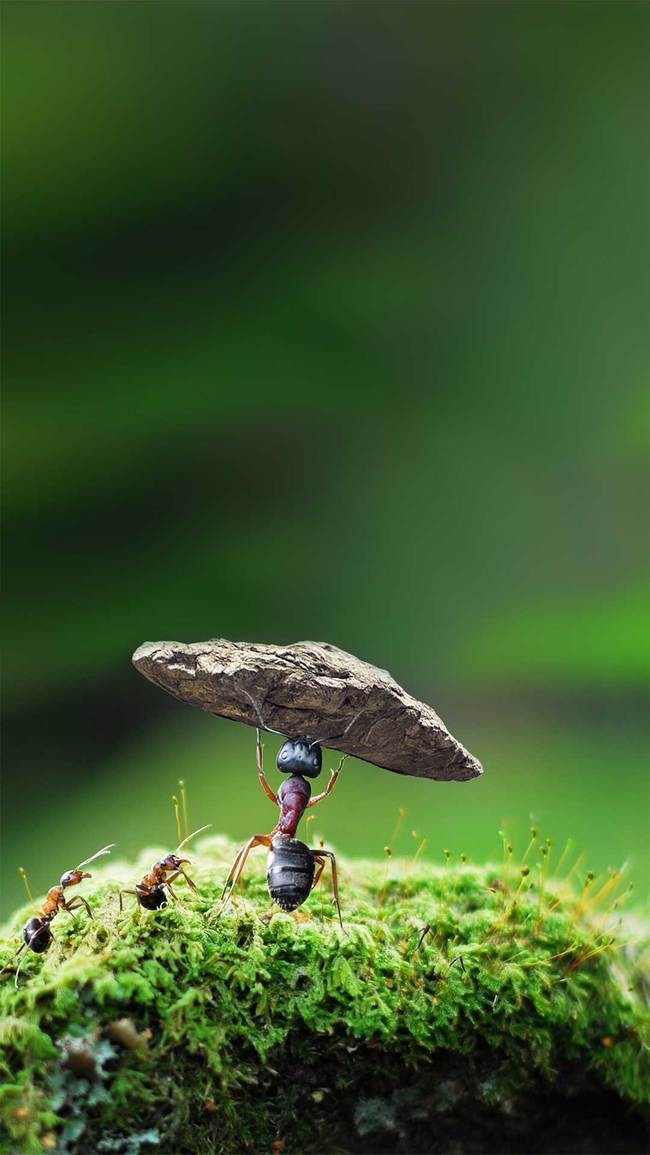
7. Bi-coloured arboreal ant
They have a well developed sting and when stung can cause allergic reactions in human beings.
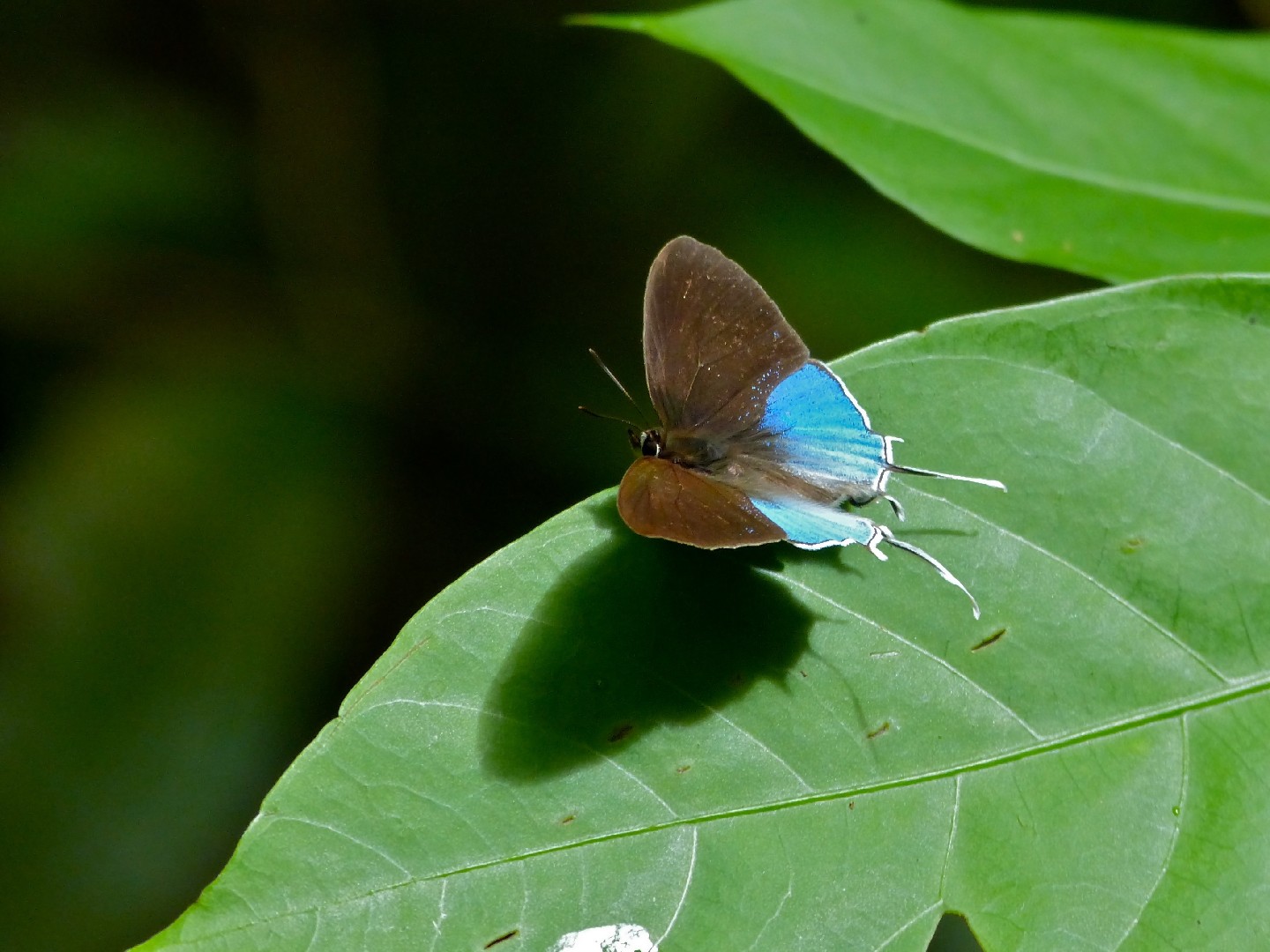
8. Common posy
Drupadia ravindra has a wingspan of about 3 - 3.5 cm. On the upperside the forewings of males are dark brown, while the hindwings are metallic blue. The females lack the metallic sheen. The underside of the hindwings of these butterflies show a pattern of black markings on a white background, while the forewings are orange. On the hindwings there are long tails.
9. Rustic
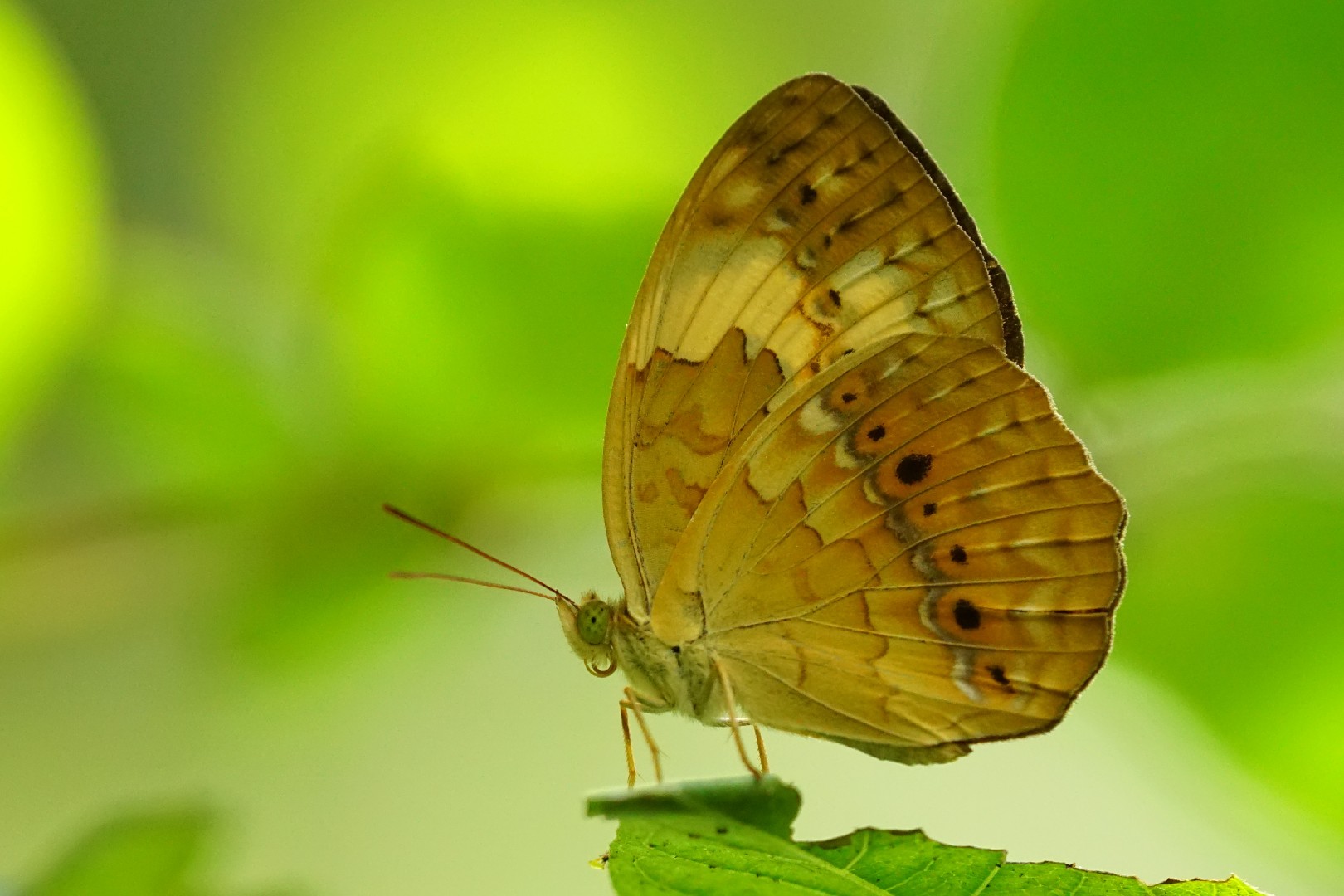
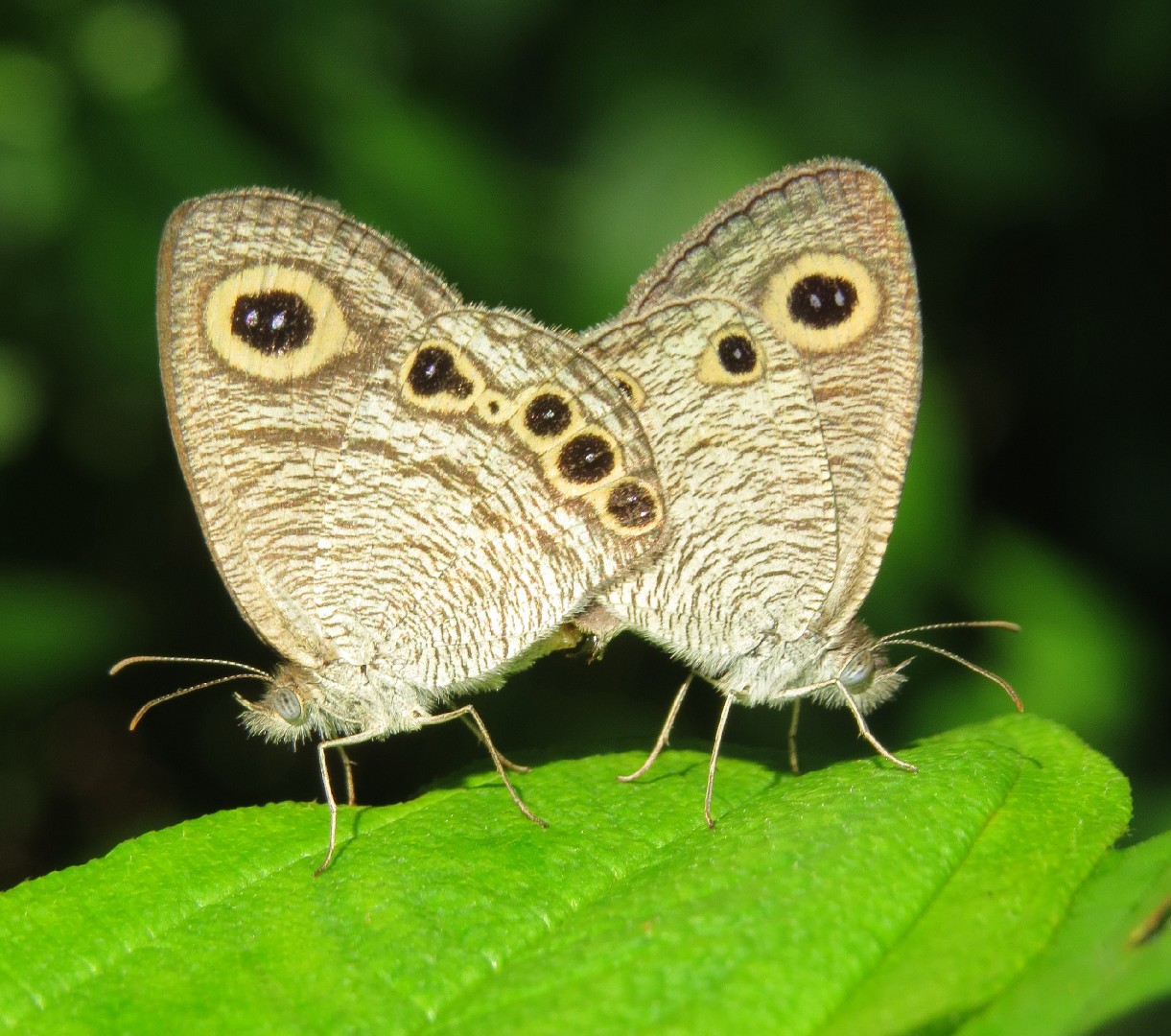
The upperside of the rustic is ochraceous light brown. Its forewing displays some loop-like, slender, dark cellular markings with a broad, somewhat curved, transverse yellow discal band from costa to vein 1. The band does not reach the termen but broadens posteriorly.The margins of the forewing are irregularly sinuous, with the inner defined broadly with black, and produced outwards in interspaces 3 and 4. Below this, the margin is squarely indented inwards in interspace 2 and outwardly convex in interspace 1. There is a curved series of three black spots. The largest is in interspaces 1, 2 and 3. The apical area beyond the band is black, with a conspicuous yellow subapical spot in interspace 5, and a paler ill-defined similar spot above it in interspace 6. In the posterior, the black area is produced narrowly to the tornus and encircles a yellow spot near the apex of interspace 2. The hindwing features a transverse sinuous and very slender black line. This line is followed by a slender and somewhat lunular line; a transverse discal series of five black spots in interspaces 2 to 6; a postdiscal medially disjointed series or broad black lunules; a subterminal series of similar but straighter lunges; and a narrow terminal black band. The outer subbasal transverse line broadens at the costa, and is outwardly margined by pale spots in the interspaces. These are anteriorly white and well defined, and posteriorly obscure or often absent. The underside of the wing is much paler. The discal band on the forewing is pale, and the black lunules on the apical area are replaced by pale brownish ochre. There are some obscure markings in the cells of both the forewings and hindwings. Markings on the forewing include a discal, transverse, slender, chestnut-brown lunular line, bent inwards above vein 5, and bordered outwardly by a series of dark spots. The large black spot in interspace 1 is the same as that on the upperside. There are inner and outer transverse subterminal series of small dentate spots. On the hindwing are indistinct cellular markings. The outer subbasal dark transverse line is similar to that on the upperside, but is more clearly defined and very sinuous. There is a transverse discal series of uneven lunules, paler than the ground colour, followed by a series of dark spots. There is a postdiscal very obscure pale lunular band, and a subterminal series of dentate dark spots, often obscure or obsolescent. The antennae, head, thorax and abdomen are ochraceous brown. Beneath, the palpi, thorax and abdomen are a very pale ochraceous white. The caterpillar is brown, with a dorsal and lateral series of darker brown markings. The head has two slender branched spines. Succeeding segments on either side feature a lateral series of semitransparent similar brown spines. The pupa is green, studded with eight slender pink filaments and four small pink tubercles.
10. Striped albatross
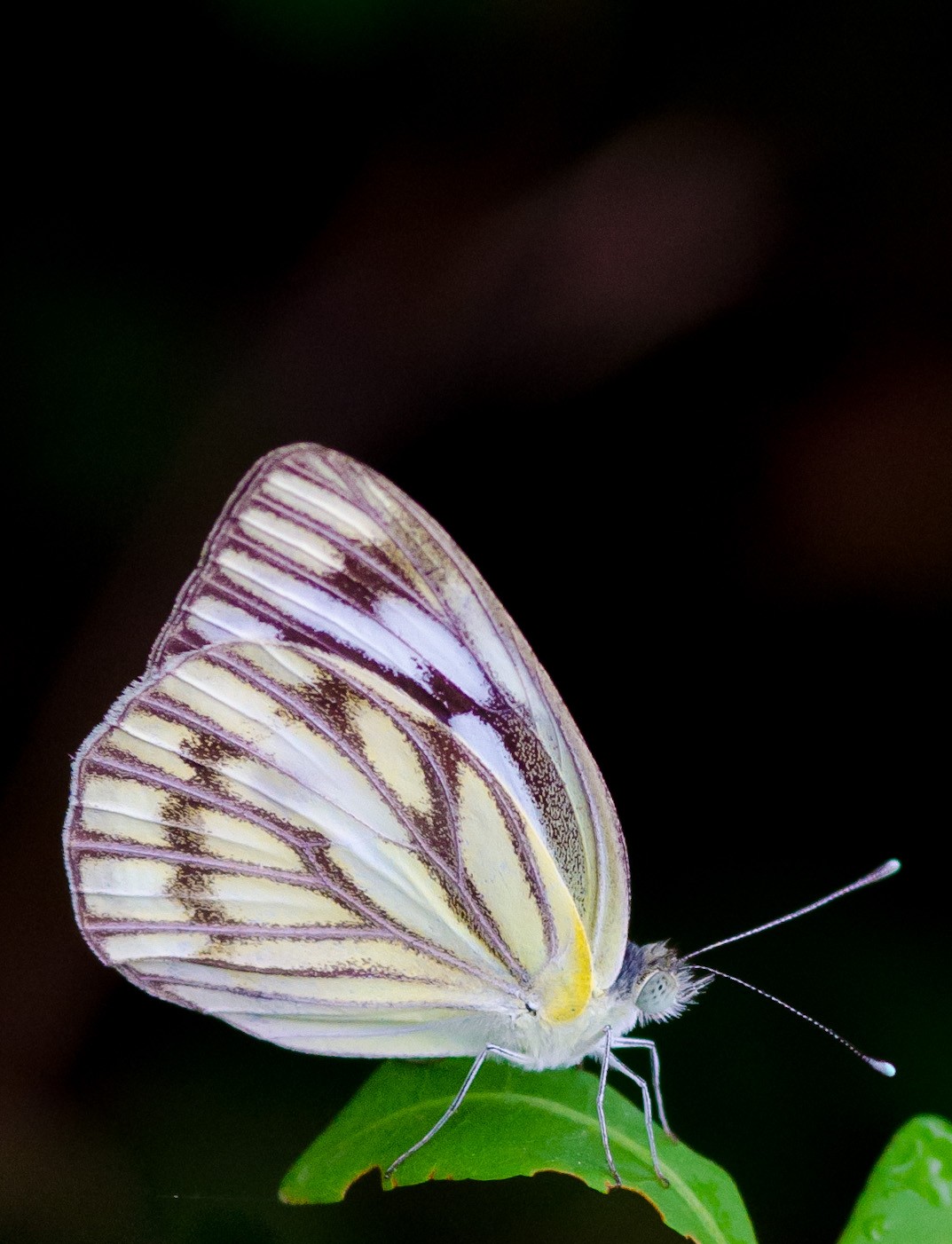
The striped albatross (Appias libythea) is a combination of whites and greys and yellows that allow this butterfly to resemble many different types of flowers. They are part of a family that exhibits mud-puddling, where they stomp about wet puddles in order to get salt.



More







