




Top 20 Most Common Insects in Puerto Escondido
Insect life in Puerto Escondido is as varied as its geographical regions, ranging from coastal plains to towering mountains. This diversity supports a multitude of insects, each uniquely adapted to their habitat. From pests with damaging consequences to beneficial insects enhancing ecosystems, they play critical roles that ripple through Puerto Escondido's environment. Our list of 'Top 20 Most Common Insects' delves deeper into these fascinating creatures, unravelling their significance in Puerto Escondido's vibrant biodiversity.

Most Common Insects
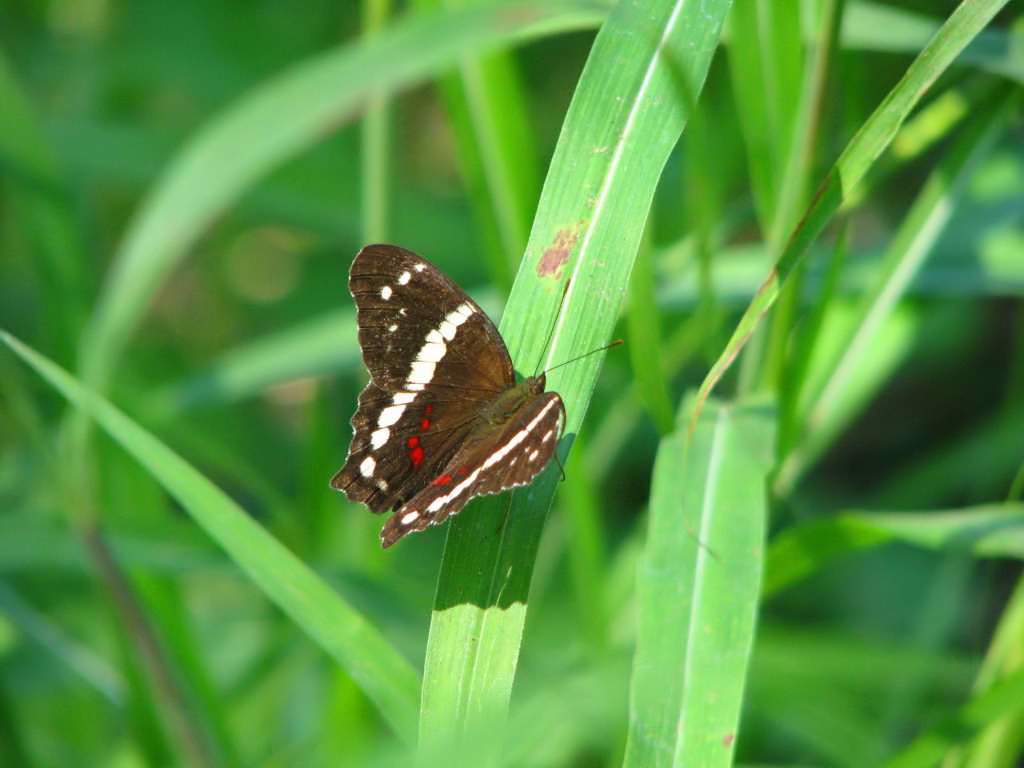
1. Banded peacock
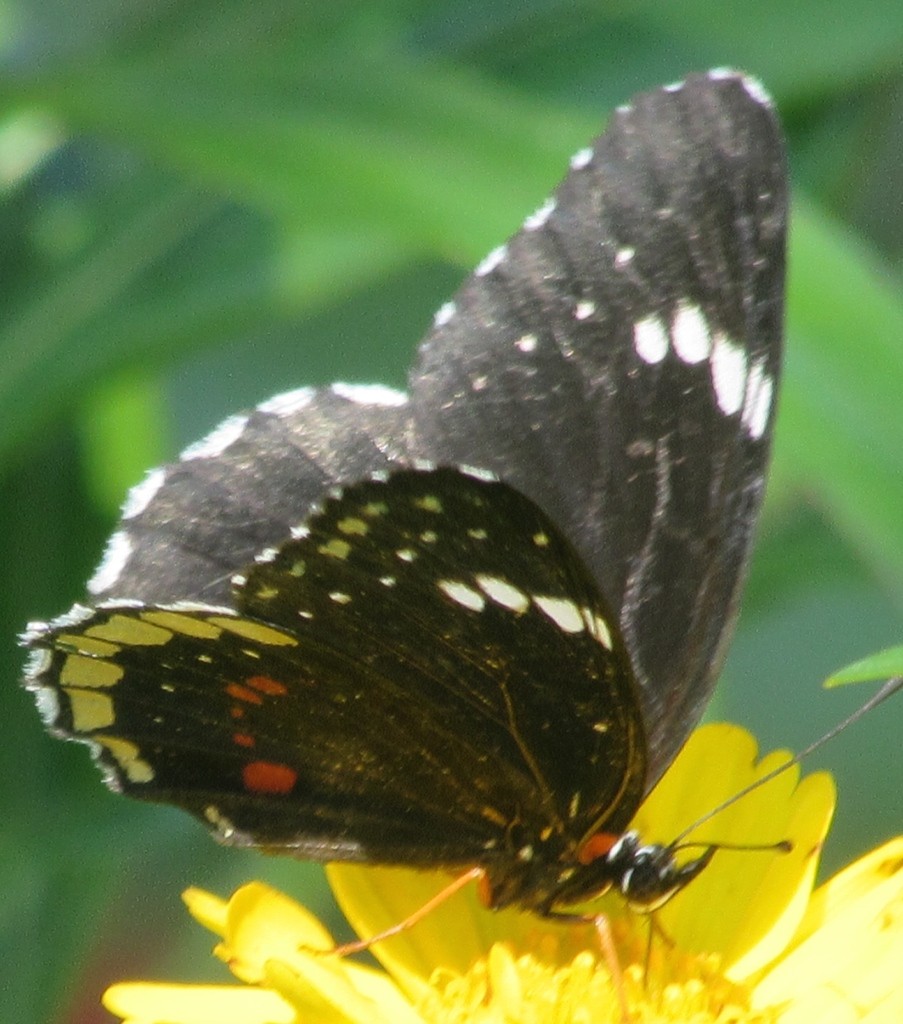
The wingspan of the moths is 60 to 70 millimeters. The basic color of the wings is black-brown to black. On the front wing top, a white, sometimes yellowish bandage extends through the Diskalregion, which continues on the hind wings. Near the apex, some small whitish spots are highlighted. The hind wings show some striking red, sometimes orange spots. The tail at the Analwinkel are very short. All wing bottoms show similar drawing elements as the tops, but these are paler and weaker.
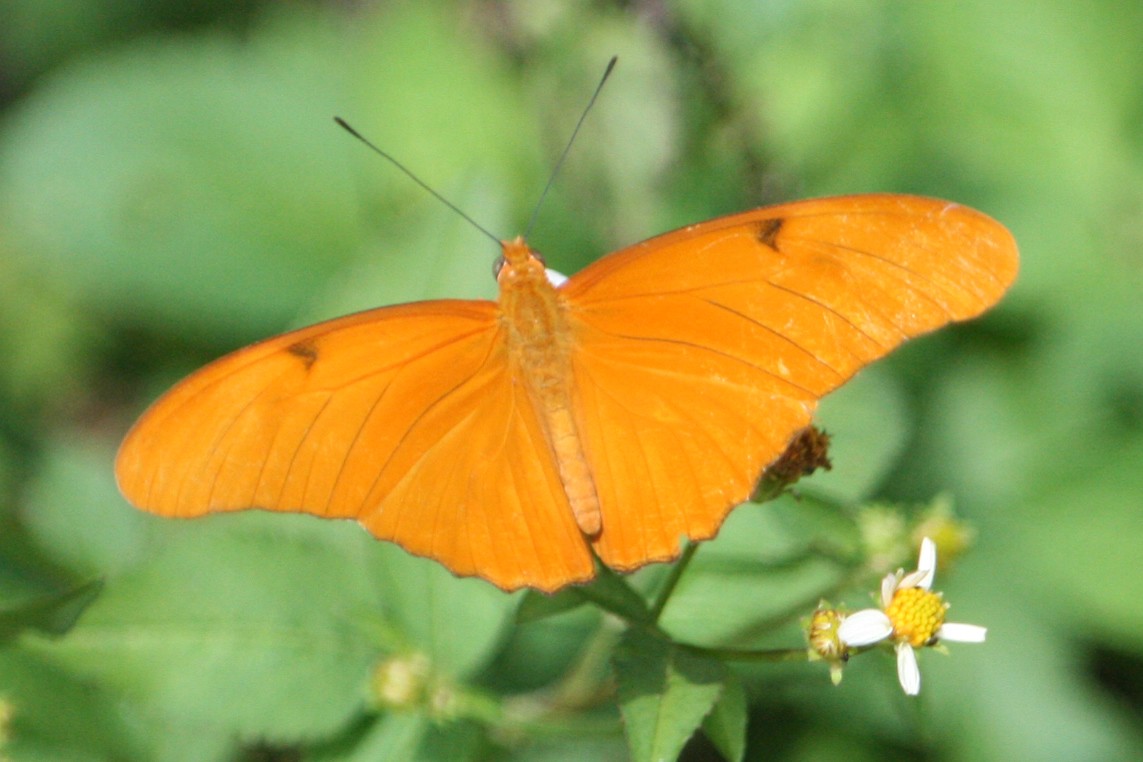
2. Julia heliconian
The julia heliconian feeds on nectar, with the passionfruit vine being a common host plant. The males will suck fluid from mud and decomposing plant matter to gain essential minerals, and they sometimes irritate the eyes of caimans and turtles in order to suck the tears they produce.
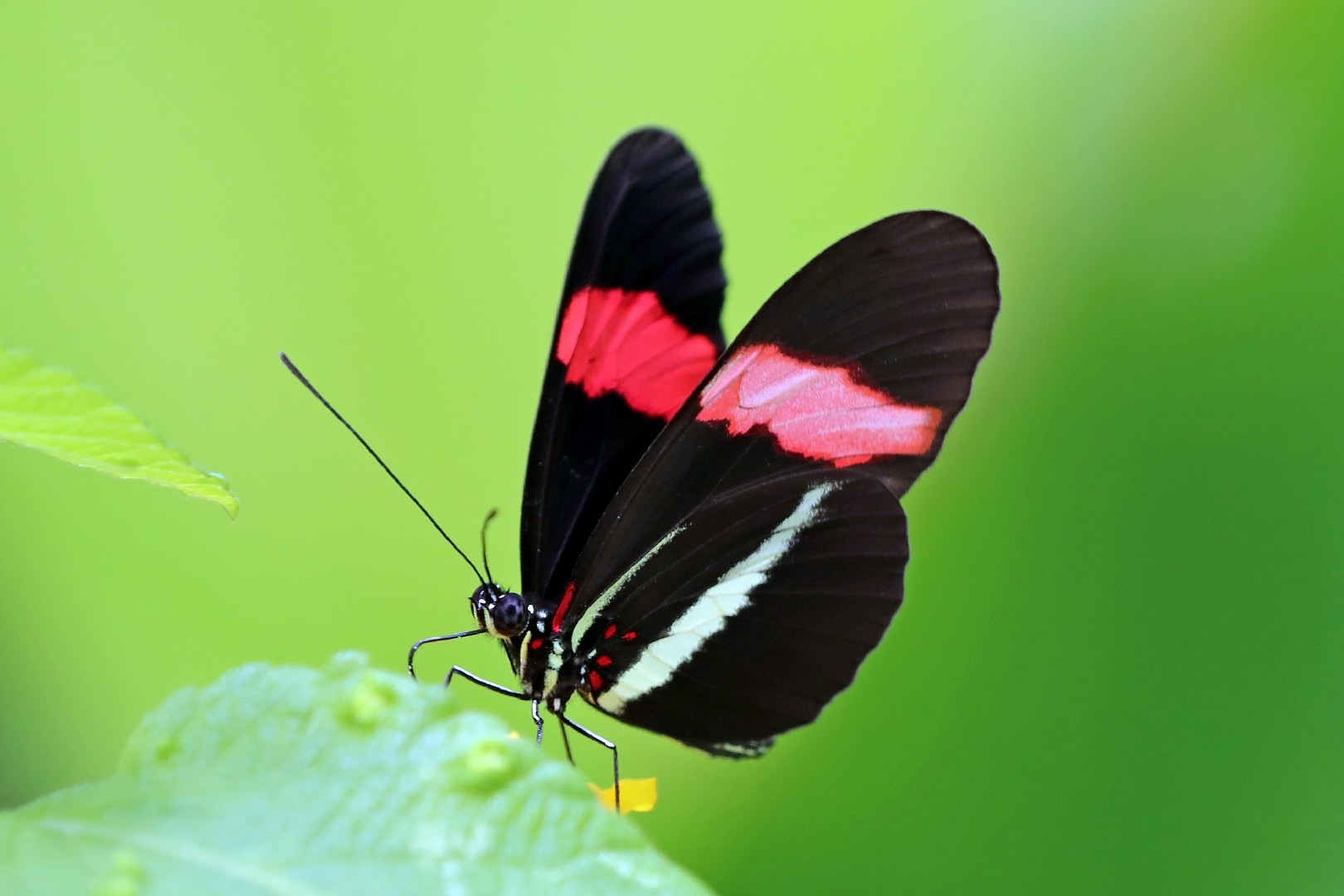
3. Red postman butterfly
The red postman butterfly (Heliconius erato) is a beautiful black and white butterfly that is a skilled actor. It exhibits mimicry to resemble a butterfly similar to the Common postman to deter predators. Also, its favorite host plants are passion flowers. But it has been known to be picky about the quality of the flower.
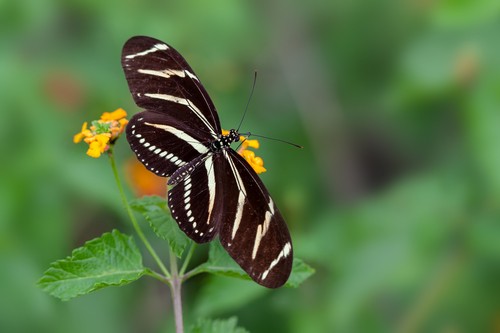
4. Zebra longwing
The zebra longwing (Heliconius charithonia) is a beautiful butterfly that has a texture resembling a zebra. They feast and pollen and nectar, using the pollen to produce chemicals that poison predators if they are eaten, deterring most predators from attack. Unfortunately, their populations have been decimated after being caught in the crossfire of sprays meant to control mosquitos.
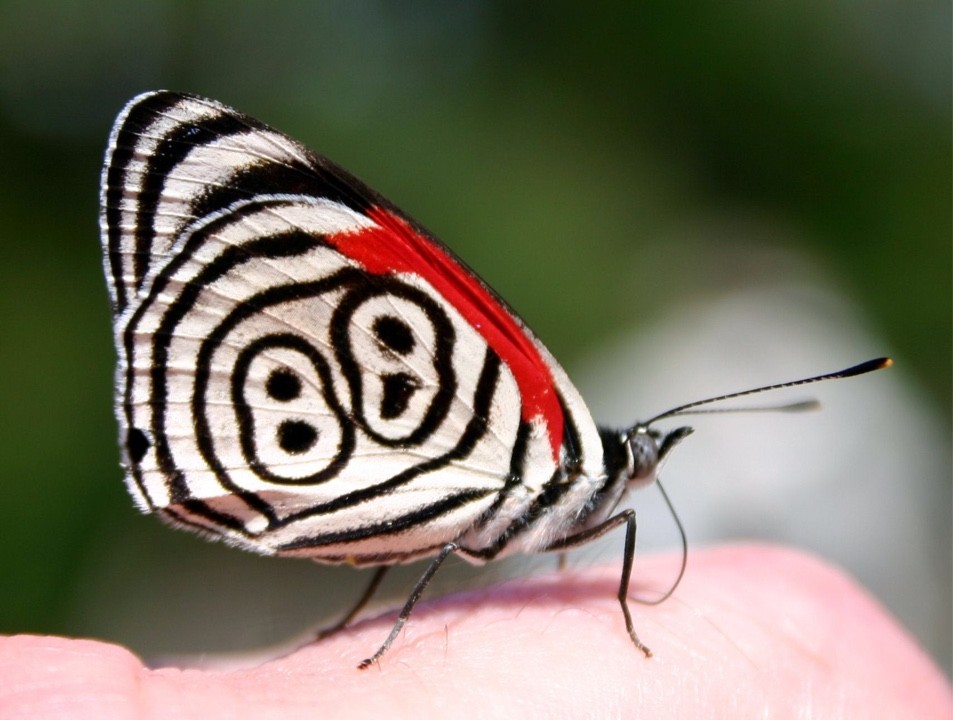
5. Anna’s eighty-eight
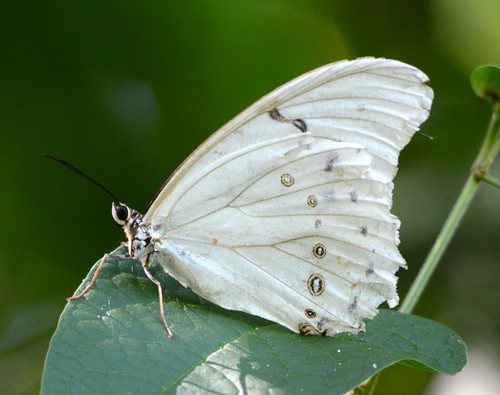
Its upperside is dark brown with a metallic bluish-green band on the forewings. The underside of the forewings are red, which is followed by a wide, black band and then white tips; the underside of the hindwings is white, with lines that approximate a black-outlined "88". 

6. Red rock crab
Grapsus grapsus is a typically shaped crab, with five pairs of legs, the front two bearing small, blocky, symmetrical chelae (claws). The other legs are broad and flat, with only the tips touching the substrate. The crab's round, flat carapace is slightly longer than 8 centimetres (3.1 in). Young G. grapsus are black or dark brown in colour and are camouflaged well on the black lava coasts of volcanic islands. Adults are quite variable in colour; some are muted brownish-red, some mottled or spotted brown, pink, or yellow.
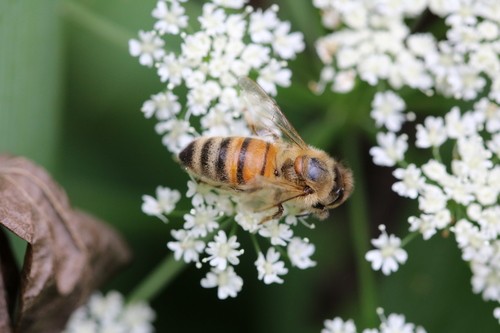
7. Western honey bee
Western honey bee(Apis mellifera) is the most common species of honeybee in the world. Among the first domesticated insects, its cultural and economic impact on humanity has been vast and far-reaching, providing honey, wax and its services as a pollinator. Western honey bee faces challenges worldwide, such as colony collapse disorder, and populations are thought to be decreasing.
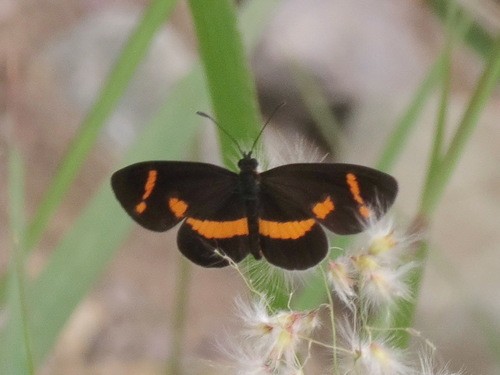
8. Elf butterfly
Microtia elva is a butterfly from the Nymphalidae family. The scientific name of the species was first validly published in 1864 by Henry Walter Bates.
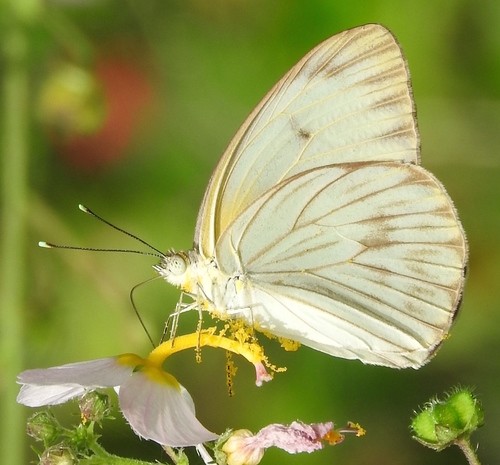
9. Great southern white
In this species the sexes may differ with the female being either light or dark colored.Larvae have distinct body segments within which there appears to be four to six subsegments. They are purplish-green with two longitudinal, greenish-yellow stripes on each side and the dorsal side. When full-grown, they are approximately 3 cm long.The wingspan in adults is 6 - 9 cm.
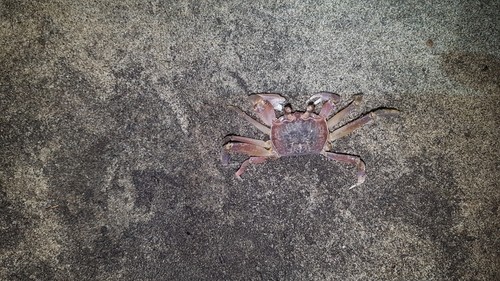
10. Gulf ghost crab
Gulf ghost crabs are medium-sized ghost crabs with deep bodies, reaching a maximum overall body diameter of 6 in (15 cm). The upper surface of the body is generally dark gray with lighter colored marbling. The underside of the body, the tips of the walking legs, and the claws are creamy white. Their coloration varies, usually matching the color of the sand surrounding them, but they are easier to see on black volcanic sand and on light-colored dry sand. The carapace is squarish in shape and wider than it is long, with a length around 43 mm (1.7 in) and a width of 50 mm (2.0 in). It is thickly covered with rough, small bumps (tubercles). Their eyestalks are large and elongated, but do not possess "horns" as in some other ghost crab species. The outer half of margins of the eye sockets curve distinctly inwards, with the outer edges (exorbital angles) triangular in shape with a sharp, forward-facing, pointed end. Like other ghost crabs, one of the claw appendages (chelipeds, the first pereiopod pair) of gulf ghost crabs is much bigger than the other. The palm of the larger cheliped is elongated with a serrated lower edge and covered with tubercles on the upper surface. It features stridulating (sound-producing) ridges on the inner surface of the palm, which is important for identifying different species within the subfamily Ocypodinae. In gulf ghost crabs, the stridulating ridge is short and composed of a row of 21 to 22 tubercles. The smaller cheliped tapers towards a pointed end. The second pair of walking legs are not more than two and a half times the length of the carapace. The fourth pair is relatively smaller and weaker in comparison to the other three pairs, reaching only to the middle of the propodus of the third pair. The mera and carpi of all the legs are naked, but the propodi possess fur-like bristles (setae) on for the first three walking leg pairs varying by sex. In males, the propodi of the first and second pair of walking legs have their upper forward surfaces covered with setae. The propodi of the third pair of walking legs only have setae on the upper margin of the propodi. In females, the propodi of the third and last pair of walking legs do not possess bristles on the upper surfaces of their propodi. The first gonopods (modified copulatory organs) of males are also distinctively complex in shape, with a triangular cross-section at the base and becoming hoof-like towards the end. This characteristic is one of the diagnostic criteria for the genus. The covering (operculum) of the genital duct of the females has four sides and is membranous and slightly calcified. The genital slit is narrow and aligned along the middle of the operculum.

More







