




Top 18 Most Common Insects in Erongo
Insects, recognized by their segmented bodies and six legs, play an integral role in the ecosystem of Erongo. The diversity seen in the top 18 insects is influenced by Erongo's varying geographies. Ranging from pests impacting our daily lives, to pollinators fostering our flora's growth, these insects exhibit a fascinating relationship with Erongo's environment.

Most Common Insects
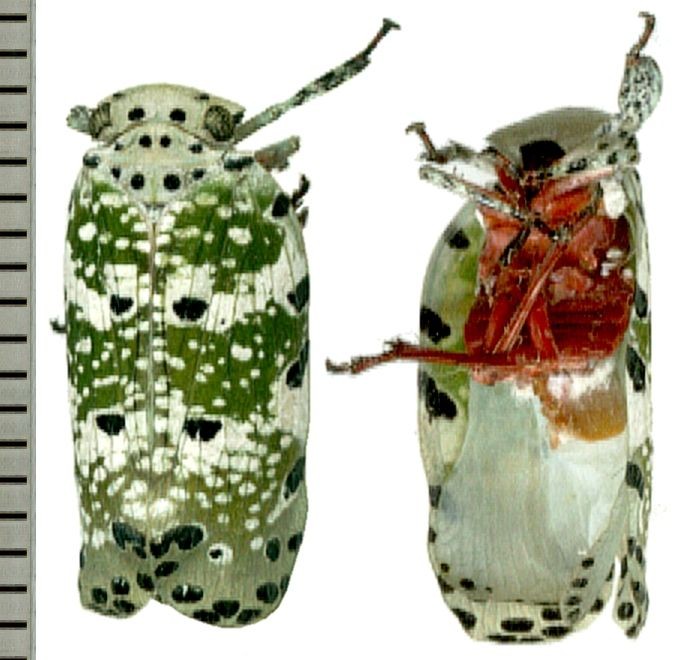
1. Paropioxys jucundus
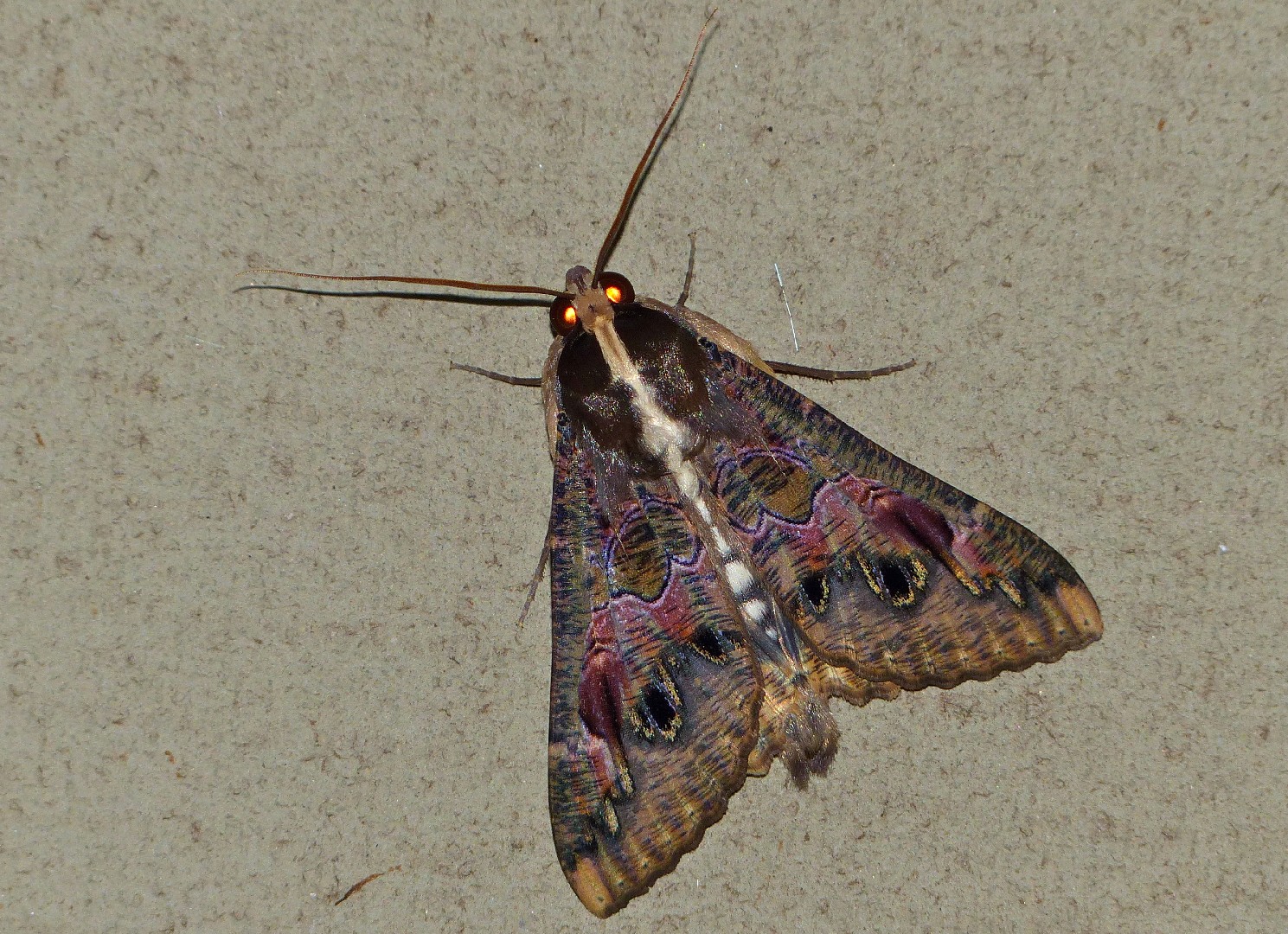
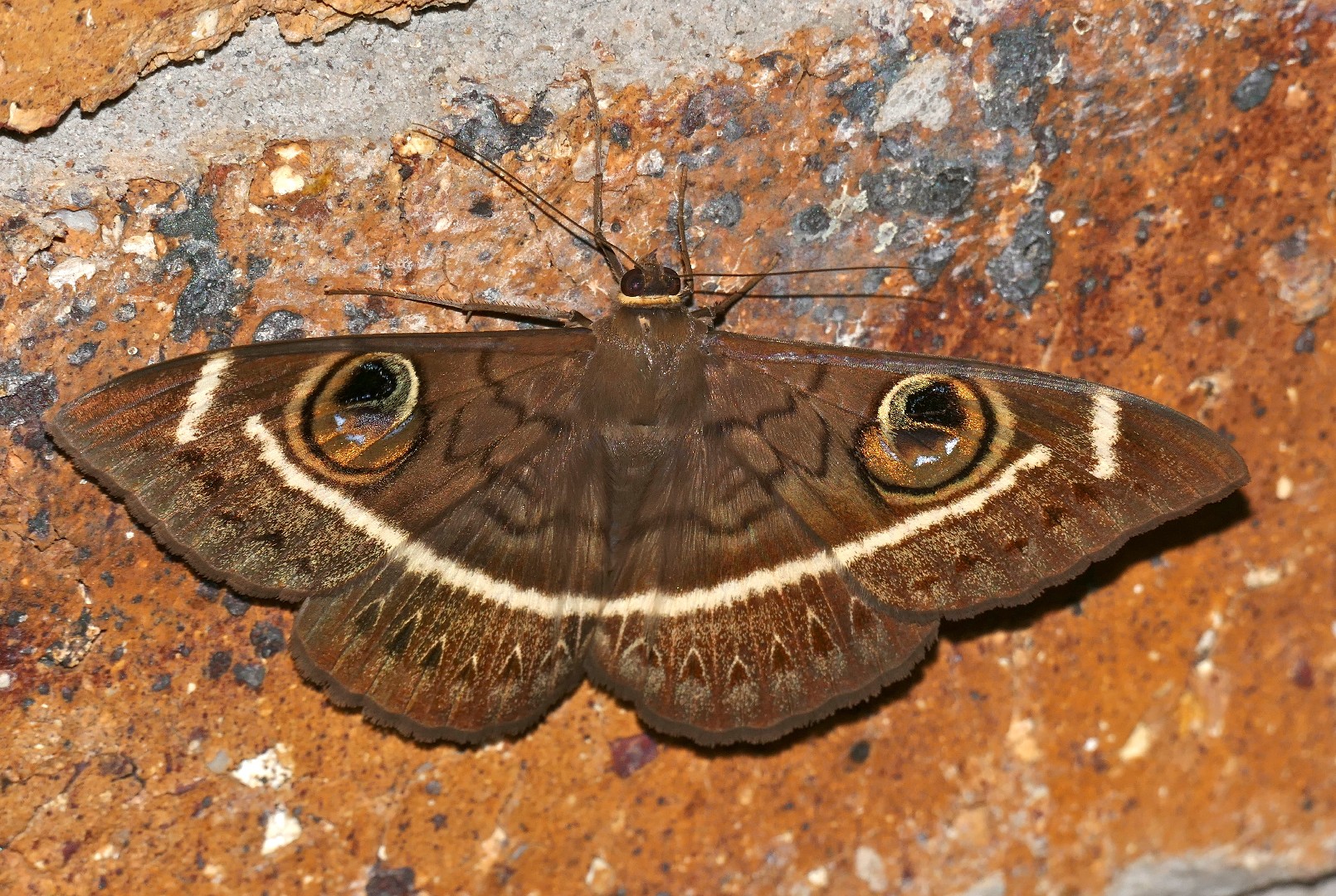
2. Sundowner moth
Its wingspan is about 60–84 mm. Head ochreous white, the basal joint of palpi dark brown. Thorax dark brown above with a broad ochreous-white stripe on vertex. Abdomen dark brown above, with a series of dorsal ochreous-white spots. Forewings reddish-brown with dark stria. There is a pale patch at base of inner margin and an indistinct antemedial angulate line. An irregularly waved medial line with pale outer edge and somewtimes tinged with purple and rufous. Some vinous patches beyond it. Reniform is a narrow lunule with a vinous dash beyond it. There is a crenulate postmedial line found with medial black lunules on it and one towards inner margin, and joined by a crenulate line from near apex. A marginal black specks series also present. Hindwings are fuscous brown where the base and a diffused medial irregular band are pale. An ochreous patch with black strai on it at center of outer margin. Cilia pale. Ventral side pale with fuscous submarginal band towards inner margin of each wing. 
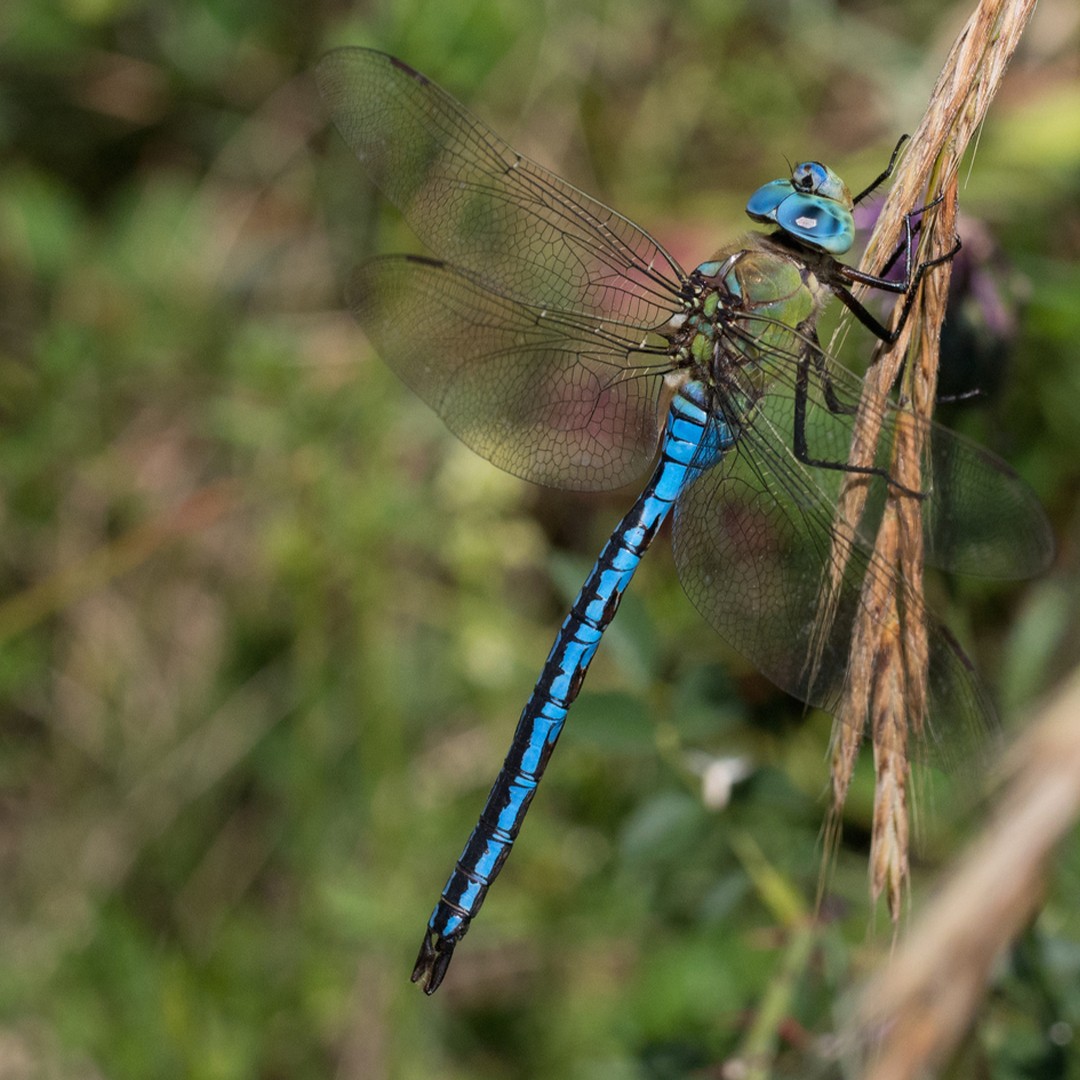
3. Emperor dragonfly
The emperor dragonfly or blue emperor (Anax imperator) is a large species of hawker dragonfly of the family Aeshnidae, averaging 78 millimetres (3.1 in) in length.
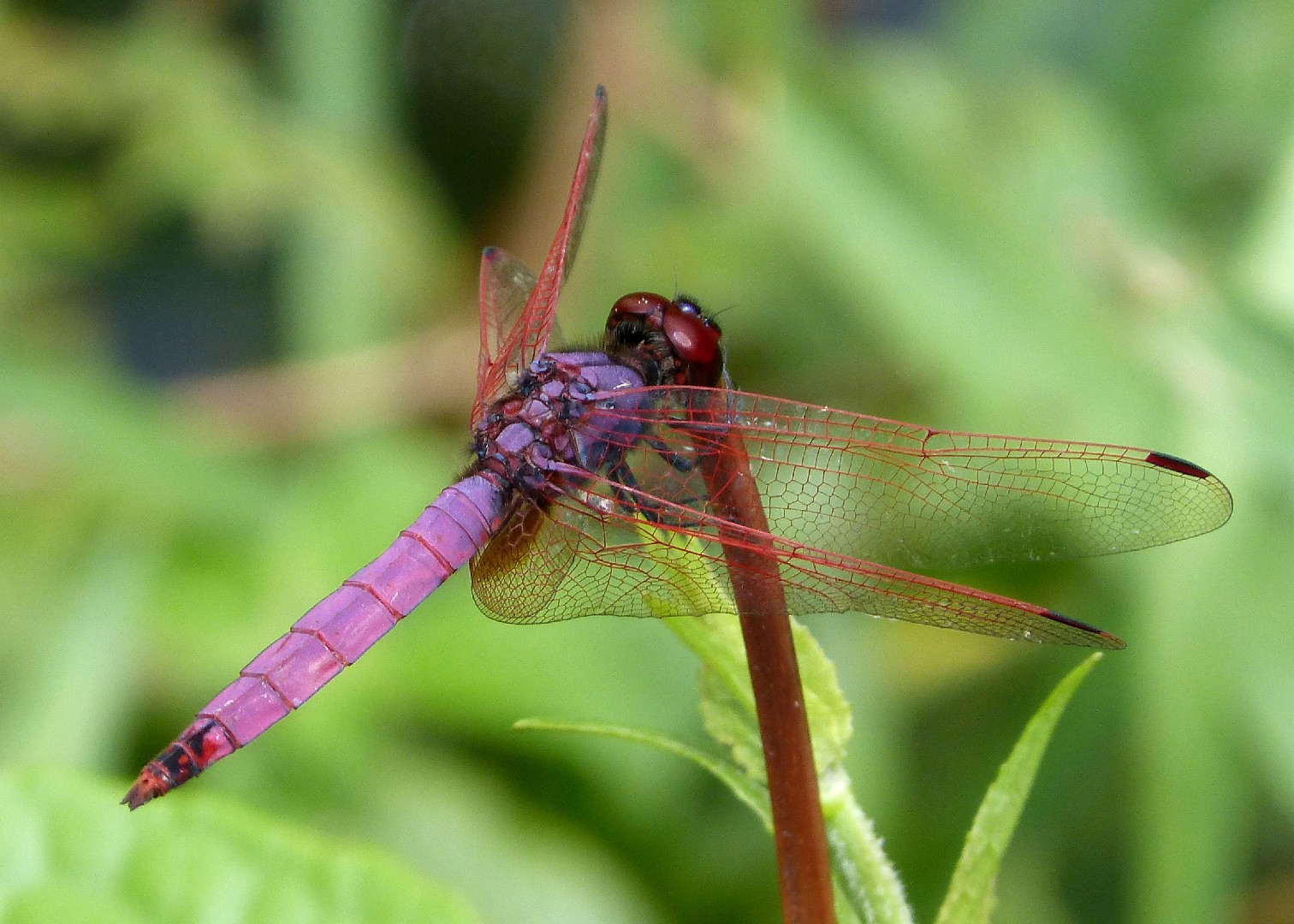
4. Violet dropwing
Trithemis annulata is a robust medium-sized species with a wingspan of 6 cm. The mature male has a dark red head and a yellow labium with brown central spot. The eyes are red with white spots on the rear edge, and the frons is dark metallic purplish-red. The prothorax is violet with slightly darker longitudinal stripes. The membranous wings have distinctive red veins, the pterostigma is orange-brown and there is a large orange-brown splash at the base of the hind wings. The abdomen is fairly broad and is pinkish-violet, with purple markings on the top of each segment and blackish markings on the terminal three segments. Females are a similar size to males but the thorax is brownish and the abdomen is yellow with dark brown markings. The wings of females lack the red veins of males but have similar orange-brown patches.
5. Yellow pansy butterfly
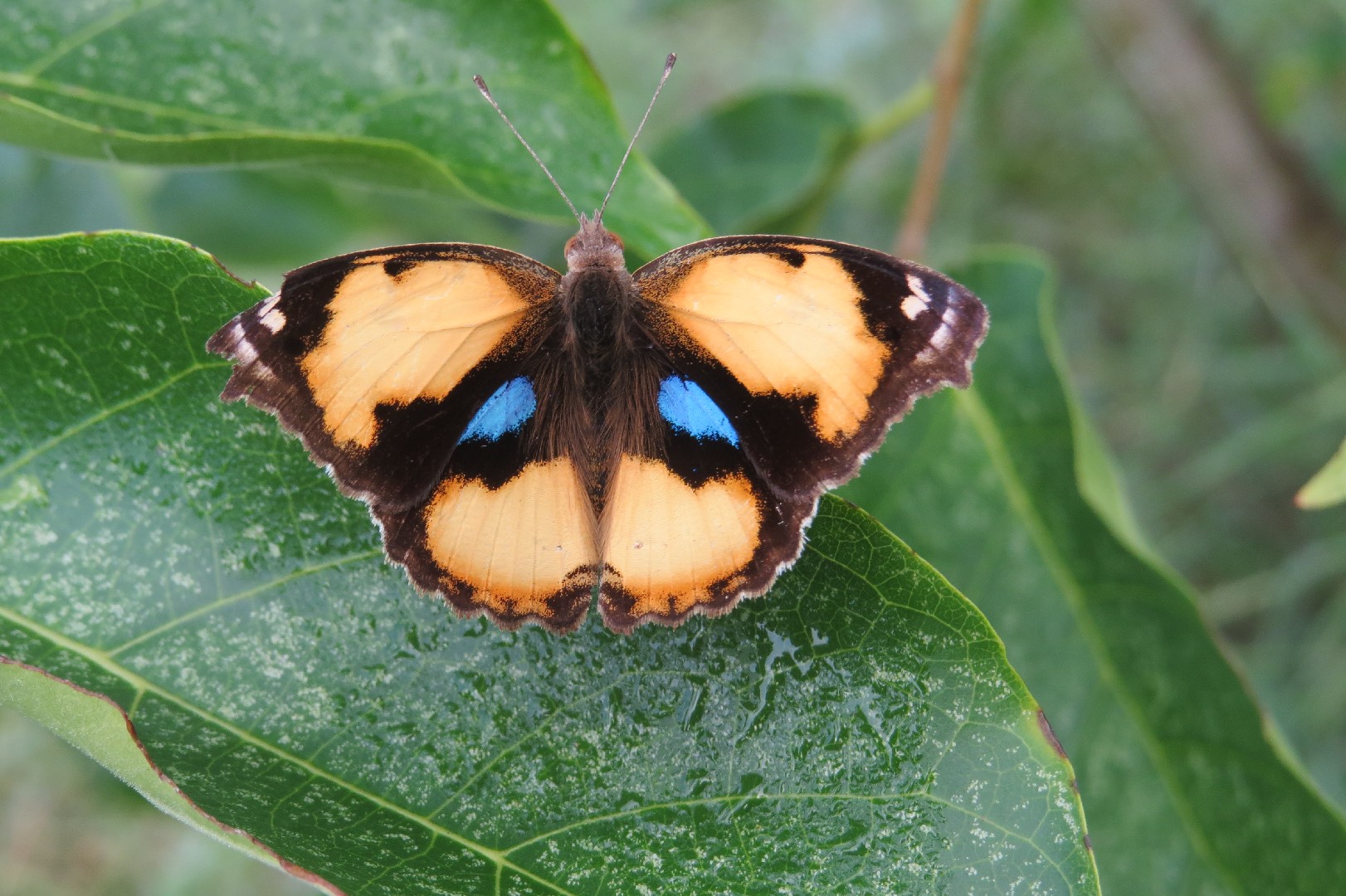
The male upperside is bright yellow. The costa of the forewing has a broad triangular jet-black projection downwards at the discocellulars, and the dorsum has a triangular projection upwards near the tornus; this black margin narrows near the middle of the termen and bears on the apex two short transverse preapical white streaks crossed by the black veins. Below these is an obscure ocellus that is sometimes absent. The anterior half and the terminal margin of the hindwing is black, and the dorsum is broadly shaded with brown while the anterior black area has a large brilliant blue spot. The cilia of both forewings and hindwings are white alternated with brown.The underside of the forewing is pale yellow. The cell is crossed by three laterally black-margined orange-yellow bars, beyond that is a short, broad, irregular jet-black oblique band from costa to base of vein 4. The hindwing is greyish yellow, and in the dry season its form is strongly irrorated (sprinkled) with dusky scales. With a prominent transverse brown discal fascia, its margins are highly sinuous. There is a brownish broad shade on the middle of the termen and some obscure lunular marks on the basal area. The antennae is pale, and the head, thorax and abdomen are dark brownish black; beneath that is a dull ochraceous white. The female is similar, although the colours are duller. The cell of the upperside forewing has a more or less complete transverse black fascia and another at the discocellulars. A blue-centred well-marked ocelli is in interspaces 2 and 5 on the disc of the forewing, and smaller ocelli in interspaces 2 and 5 on the disc of the hindwing. The forewings and hindwings have a fairly well-defined pale subterminal line, though the blue spot on the anterior black area on the hindwing is small and ill-defined; the rest is as the male. The underside is also as the male, but generally has heavier and more clearly defined markings.
6. Oleander hawk-moth
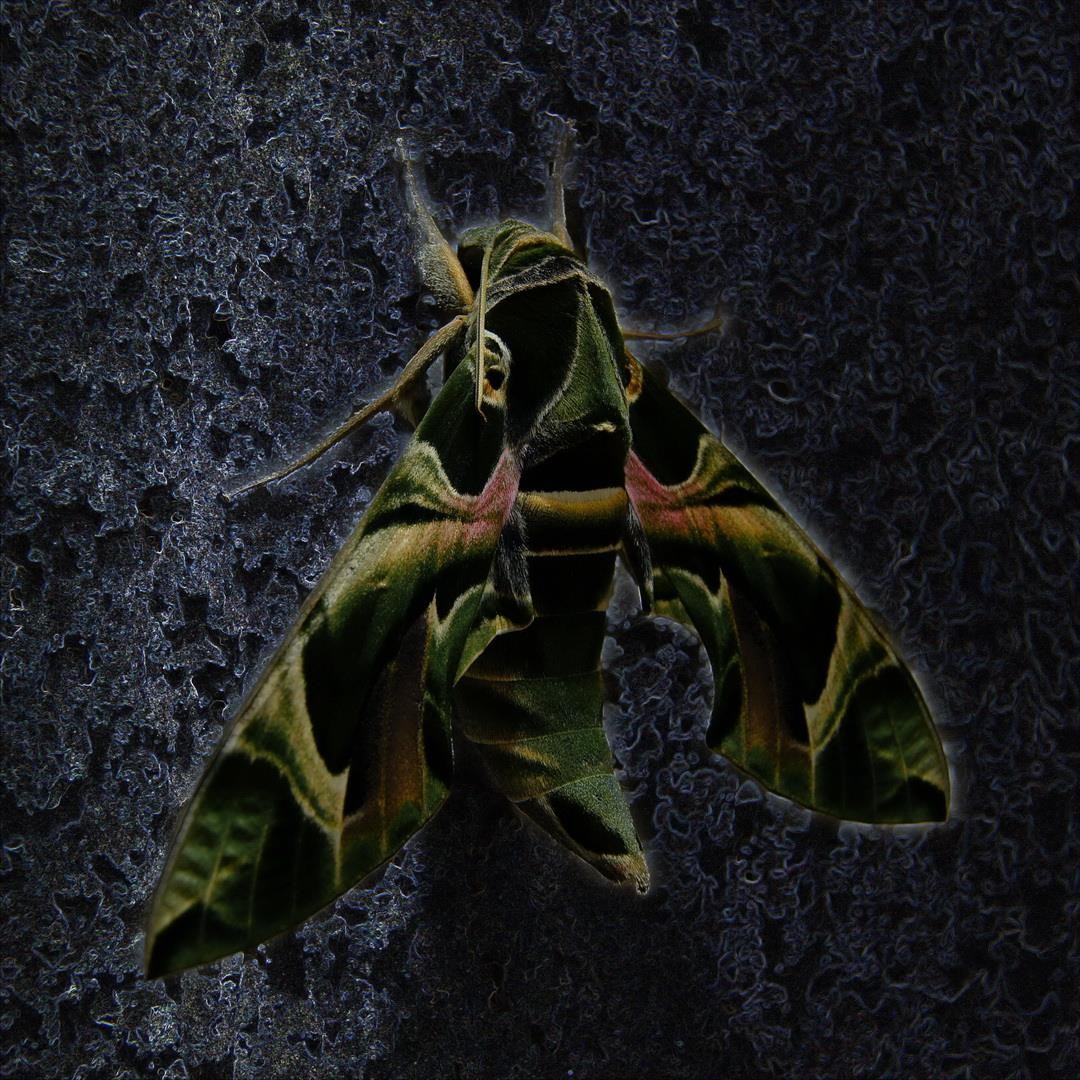
Daphnis nerii, the oleander hawk-moth or army green moth, is a moth of the family Sphingidae. It was described by Carl Linnaeus in his 1758 10th edition of Systema Naturae.
7. African social spider
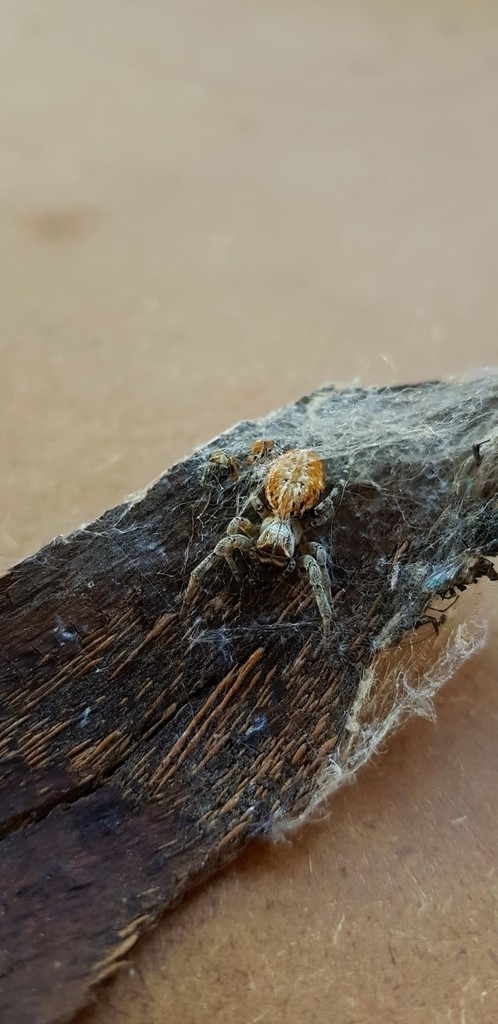
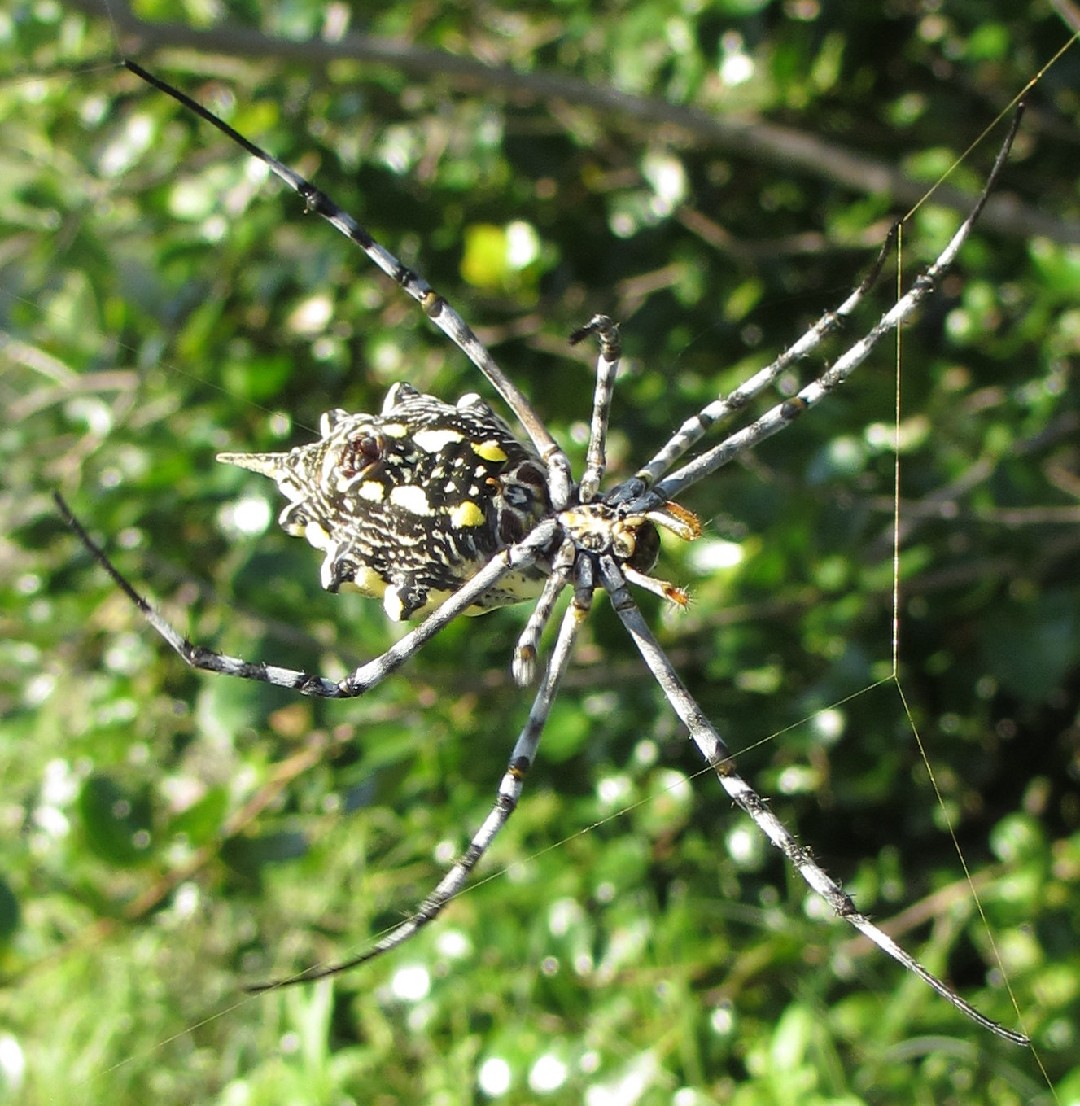
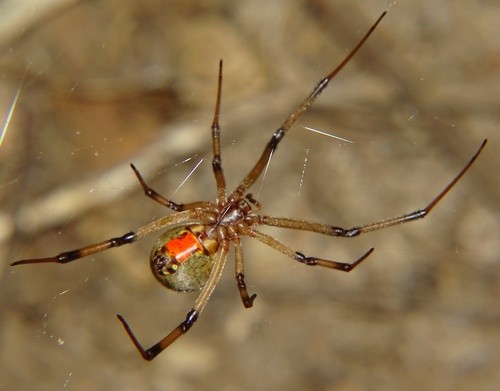
This spider has been studied living in large colonies or family groups, in unkempt and messy webs. Due to slow female maturing only about 40% of them get to mate. The other 60% have been dubbed "virgin spiders" and they share in childcare duties alongside their sisters. The female feeds instar at the second stage by regurgitation and by providing them with captured prey, where in final instars, mother female devoted her life for the babies to use her body fluids and then dies. The males of this species die shortly after mating.
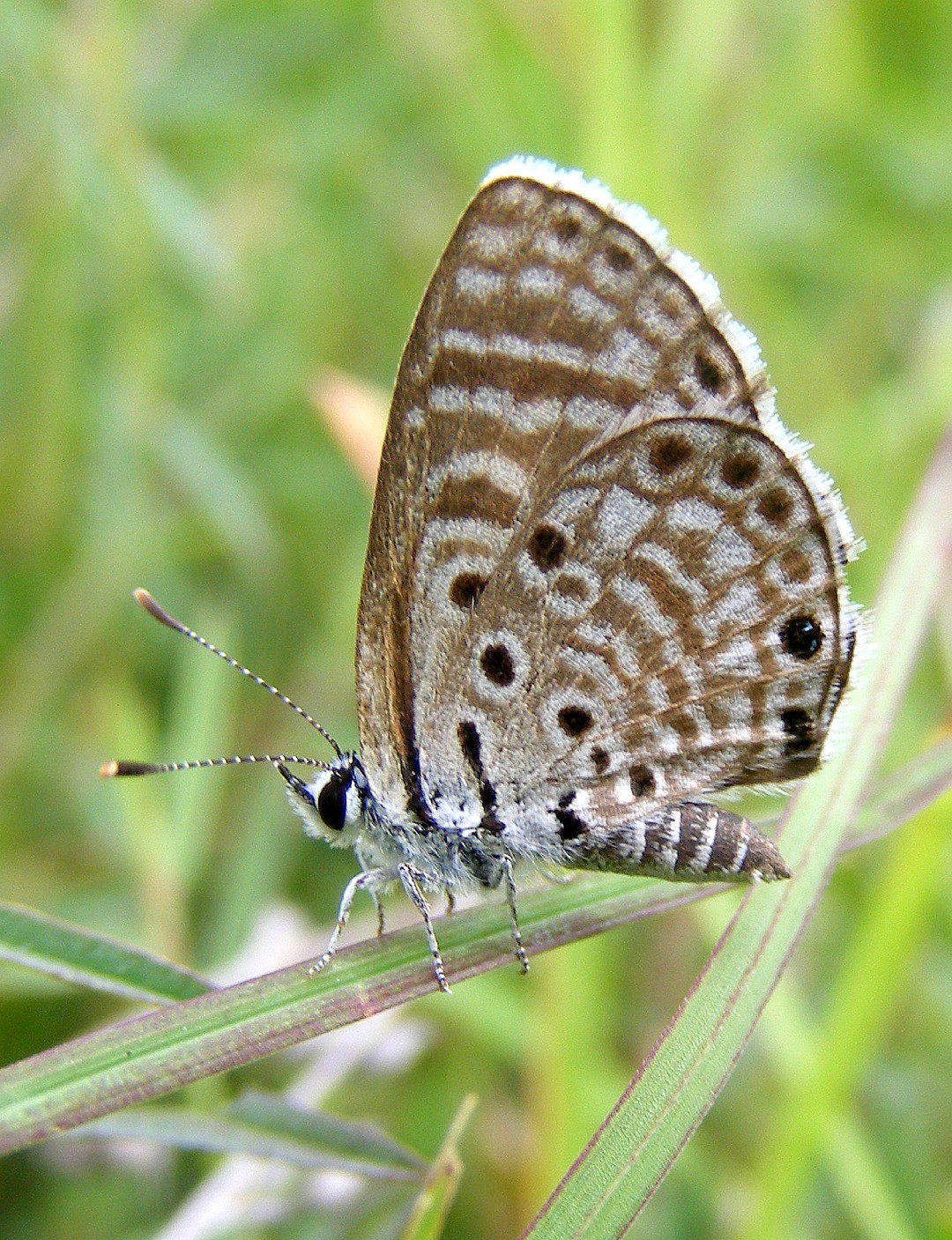
8. Pea blue
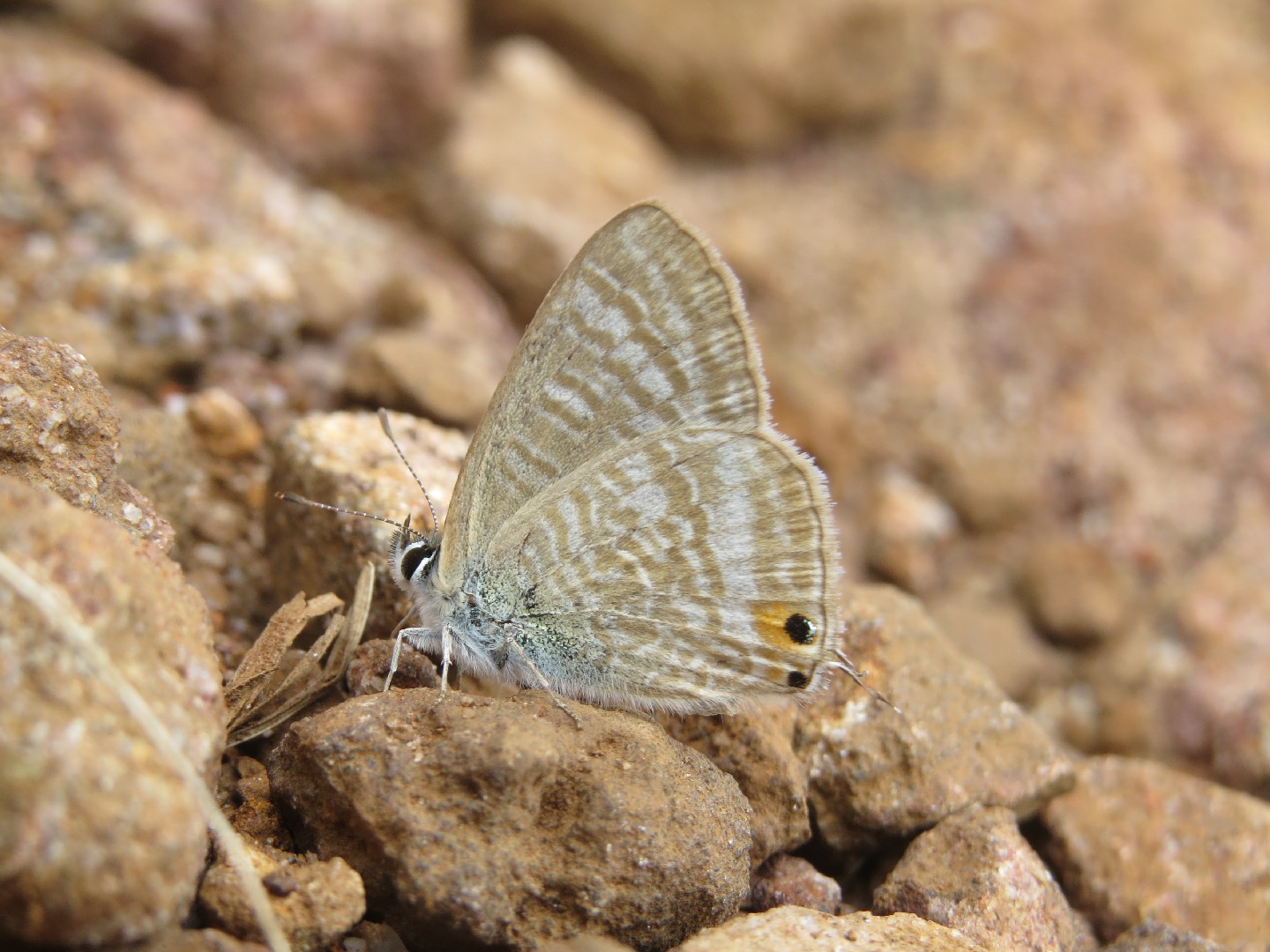
The wingspan is 24–32 mm for males and 24–34 mm for females. In these small butterflies the males have a mainly blue violet upper face of the wings with the brown edges, while the females have only a small amount of blue colour in the centre of the wings (sexual dimorphism). Both sexes have a thin, long tail in the hindwings and two black spots in the anal angle. The underface of the wings is ocher and adorned with white markings and with a larger white submarginal streak. The underface of each hindwing shows a pair of small black eye-spots beside each tail, with an orange marginal spots at the anal angle.
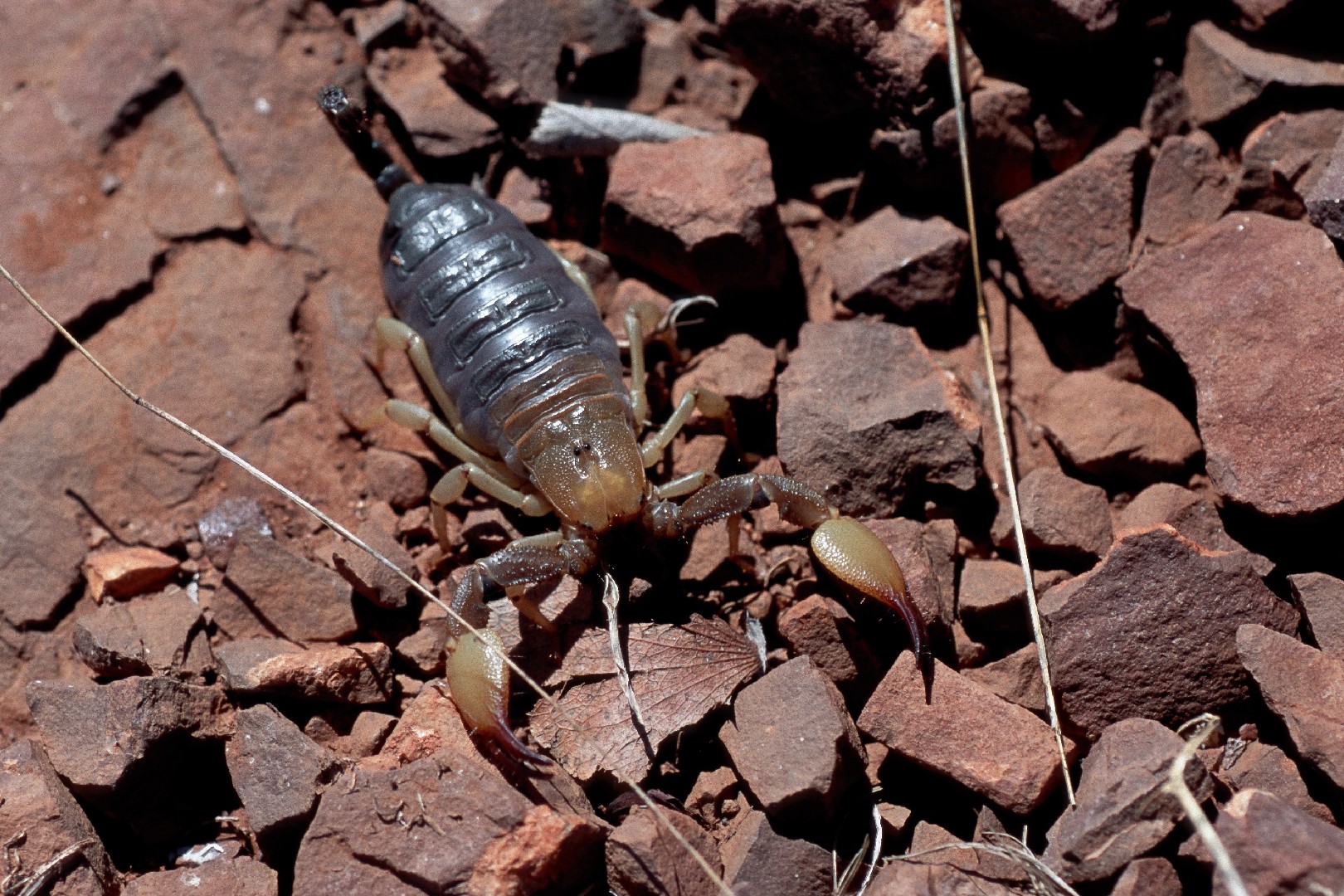
9. Robust burrowing scorpion
The robust burrowing scorpion (Opistophthalmus carinatus) is a widespread species of scorpion in the drier regions of southern Africa. It is a burrowing scorpion, which often places its burrow beside a large rock. Compared to others of its genus, it has a particularly sturdy body with large pinchers.
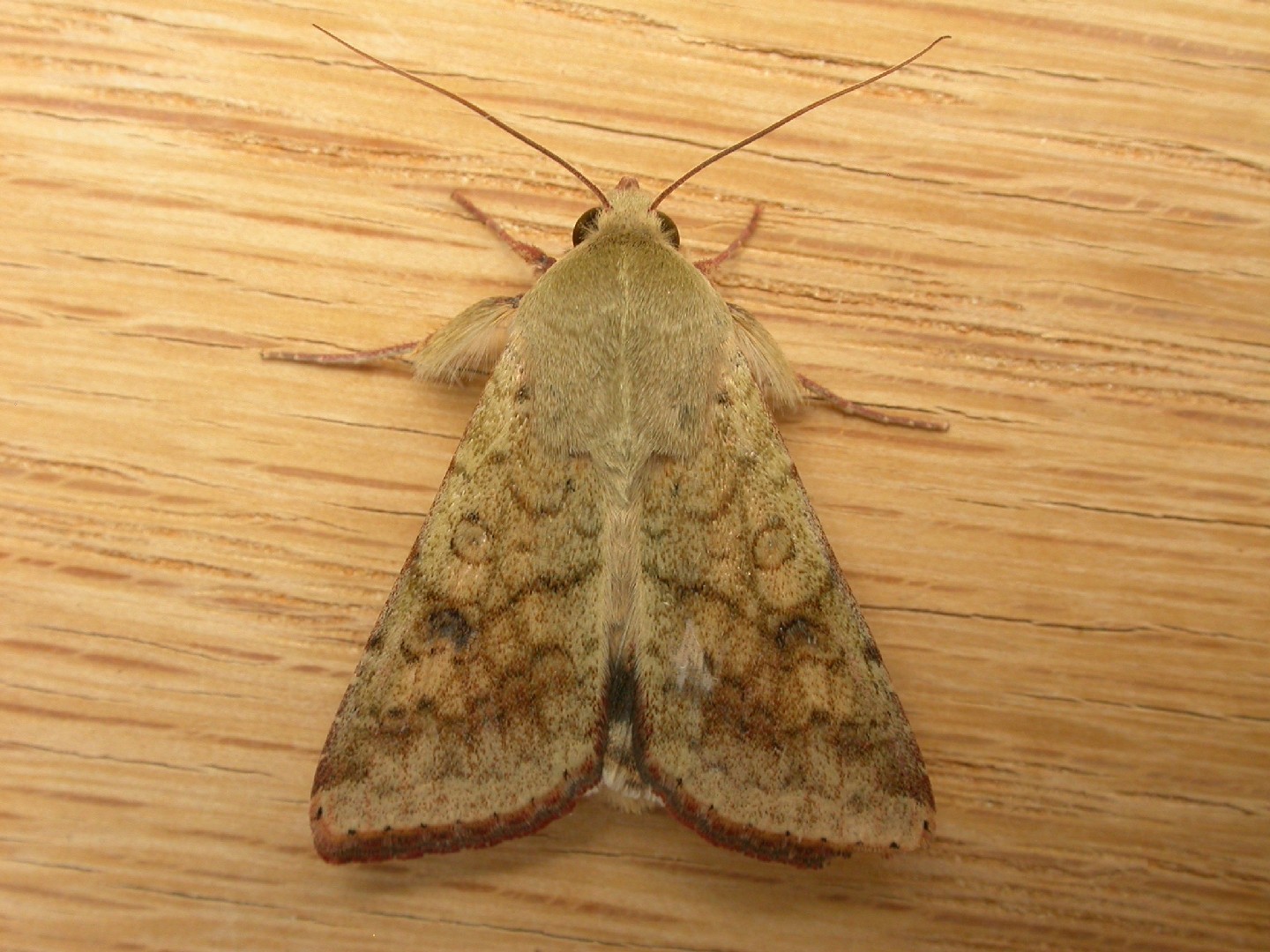
10. Cotton bollworm
The cotton bollworm (Helicoverpa armigera) is an insect that enjoys a lot of different food. Unfortunately for us, much of this food comes from commercial crops. They are considered a major pest of cotton, which is where they got their name. They can also attack tomatoes, alfalfa, and tobacco.
More







