




Top 16 Most Common Insects in Nigeria
Insects, in their stunning diversity, are an integral part of Nigeria's rich ecosystem. Diverse geographies from arid Savannah to lush rainforests contribute to the variance in insect species inhabiting the country. Swing in our 'Top 16 most common insects” list to understand how Nigeria's unique environmental factors, humans’ interpellation, and climate blends to shape its insect biodiversity. Remember, not all insects are pests; many play vital roles in pollination and pest control.

Most Common Insects
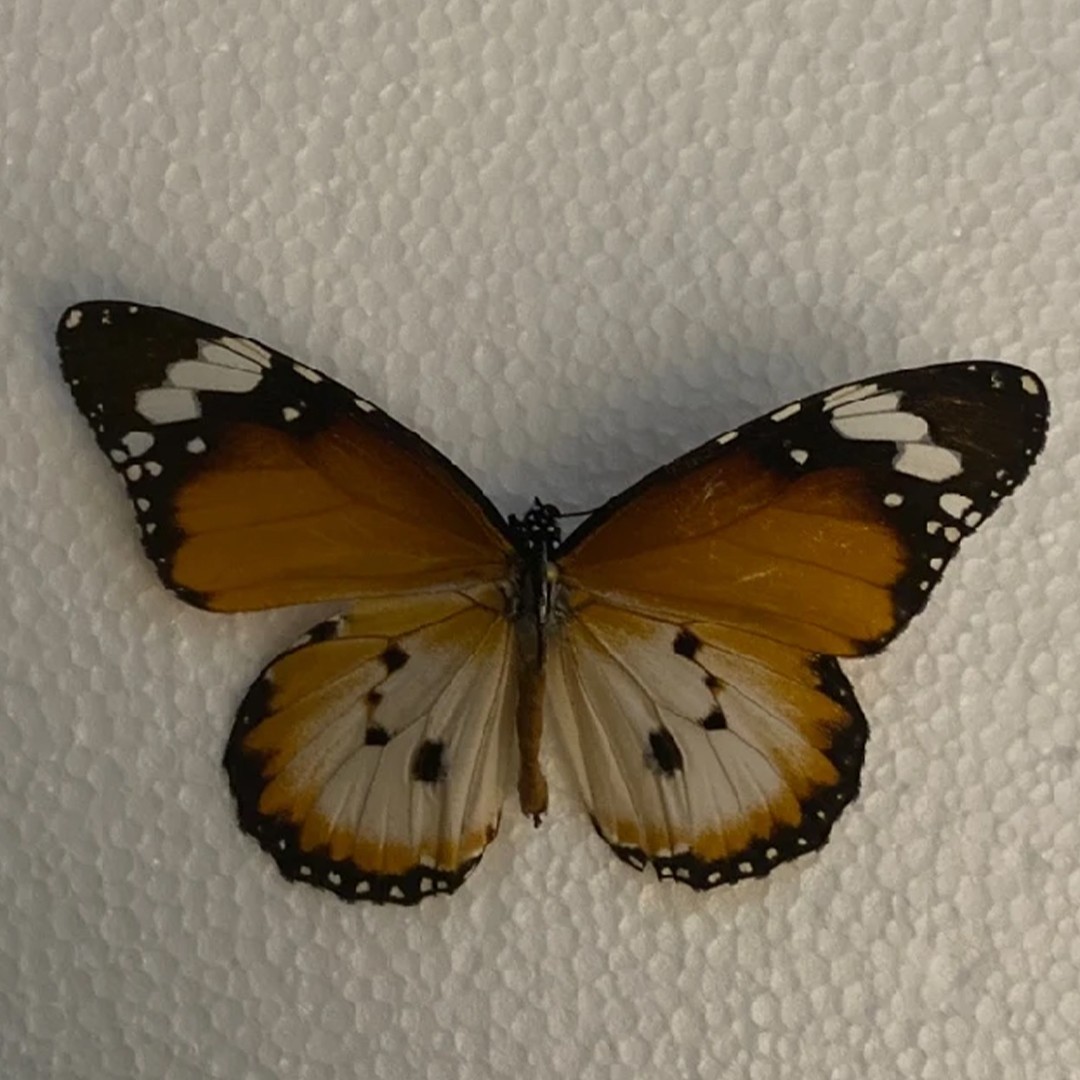
1. Plain tiger butterfly
D. chrysippus is a medium-sized butterfly with a wingspan of about 7–8 cm (2.8–3.1 in). The body is black with many white spots. The wings are orange, the upperside brighter and richer than the underside. The apical half of the forewing is black with a white band. The hindwing has three black spots in the center. The wings are bordered in black and outlined with semicircular white spots. This species exhibits slight sexual dimorphism, as the Male has large scent glands on his hindwings, which the female lacks. They appear as a large black spot with a white centre if viewed from the underside D. chrysippus is a polymorphic species, so the exact coloring and patterning vary within and between populations. It is similar in appearance to the Indian fritillary (Argynnis hyperbius), which may coexist with it. 

2. Danaid eggfly
The danaid eggfly (Hypolimnas misippus) is a unique butterfly where females tend to have a strong advantage. Males are identified by being blackish with white spots. Females exhibit polymorphism, or the ability to have multiple forms. This means that they can resemble males in some cases, but also resemble toxic butterflies like the Monarch butterfly.

3. Citrus swallowtail
Papilio demodocus , also known under the English name Citrus Swallowtail ("Citrus Swallowtail"), is a butterfly from the family of the knight butterflies (Papilionidae).
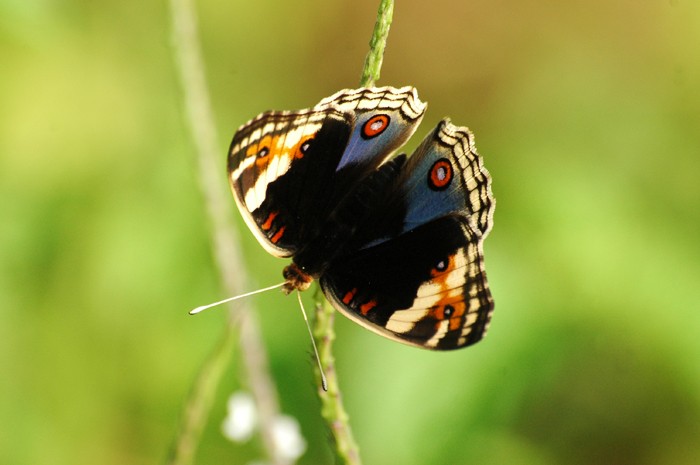
4. Blue pansy
Male upperside: somewhat more than half the forewing from base velvety black, apical half dull fuliginous; cell-area with or without two short transverse orange bars; a blue patch above, the tornus; the outer margin of the basal black area obliquely zigzag in a line from the middle of costa to apex of vein 2, including a large discal, generally obscure ocellus, which, however, in some specimens is prominently ringed with orange yellow. Beyond this a broad white irregularly oblique discal band followed by a short oblique preapical bar from costa; a small black orange-ringed ocellus beneath the bar, a subterminal continuous line of white spots in the interspaces and a terminal jet-black slender line; cilia alternately dusky black and white. Hindwing blue shaded with velvety black towards base; a postdiscal black white-centred orange and black-ringed ocellus in interspace 2, a round minutely white-centred velvety-black spot (sometimes entirely absent) in interspace 5; the termen narrowly white, traversed by an inner and an outer subterminal and a terminal black line; cilia white. Underside forewing: basal half with three black-edged, sinuous, broad, ochraceous-orange transverse bands, followed by the pale discal baud; ocelli, preapical short bar, subterminal and terminal markings much as on the upperside; the discal band margined inwardly by a broad black angulated line which follows the outline of the black area of the upperside. Hindwing irrorated (sprinkled) with dusky scales and transversely crossed by subbasal and discal slender zigzag brown lines and a postdiscal dark shade, on which are placed the two ocelli as on the upperside; subterminal and terminal faint brown lines, and a brownish short streak tipped black at the tornal angle below the lower ocellus. Female. Similar, with similar but larger and more clearly defined ocelli and markings; the basal half of the forewings and hindwings on the upperside fuliginous (sooty) brown, scarcely any trace of blue on the hindwing. Antennae brown, head reddish brown, thorax and abdomen above brownish black: palpi, thorax and abdomen beneath dull white.
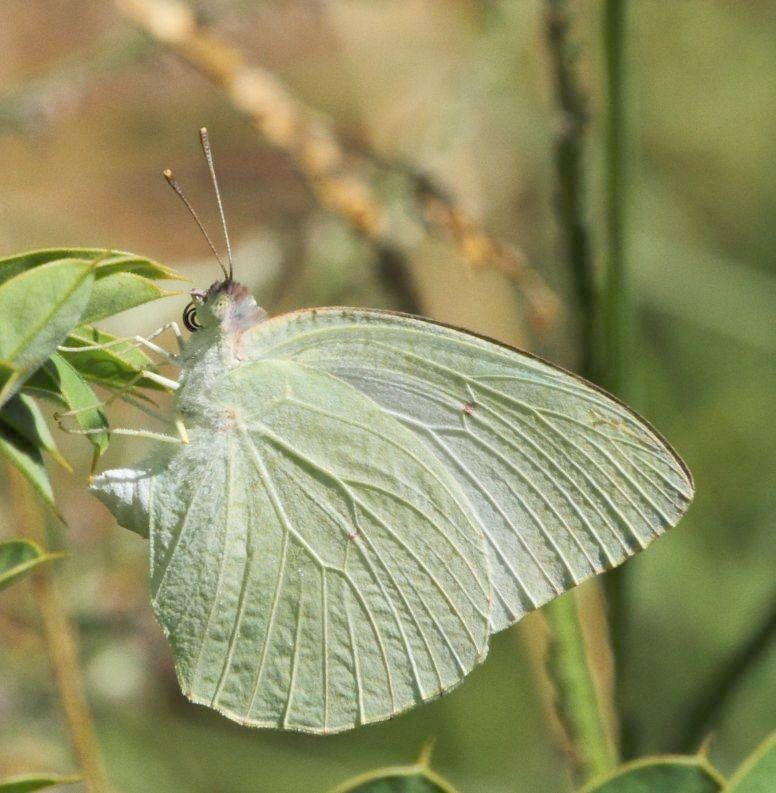
5. African emigrant
The wingspan is 5 - 6 cm for males and 6 - 7 cm for females.
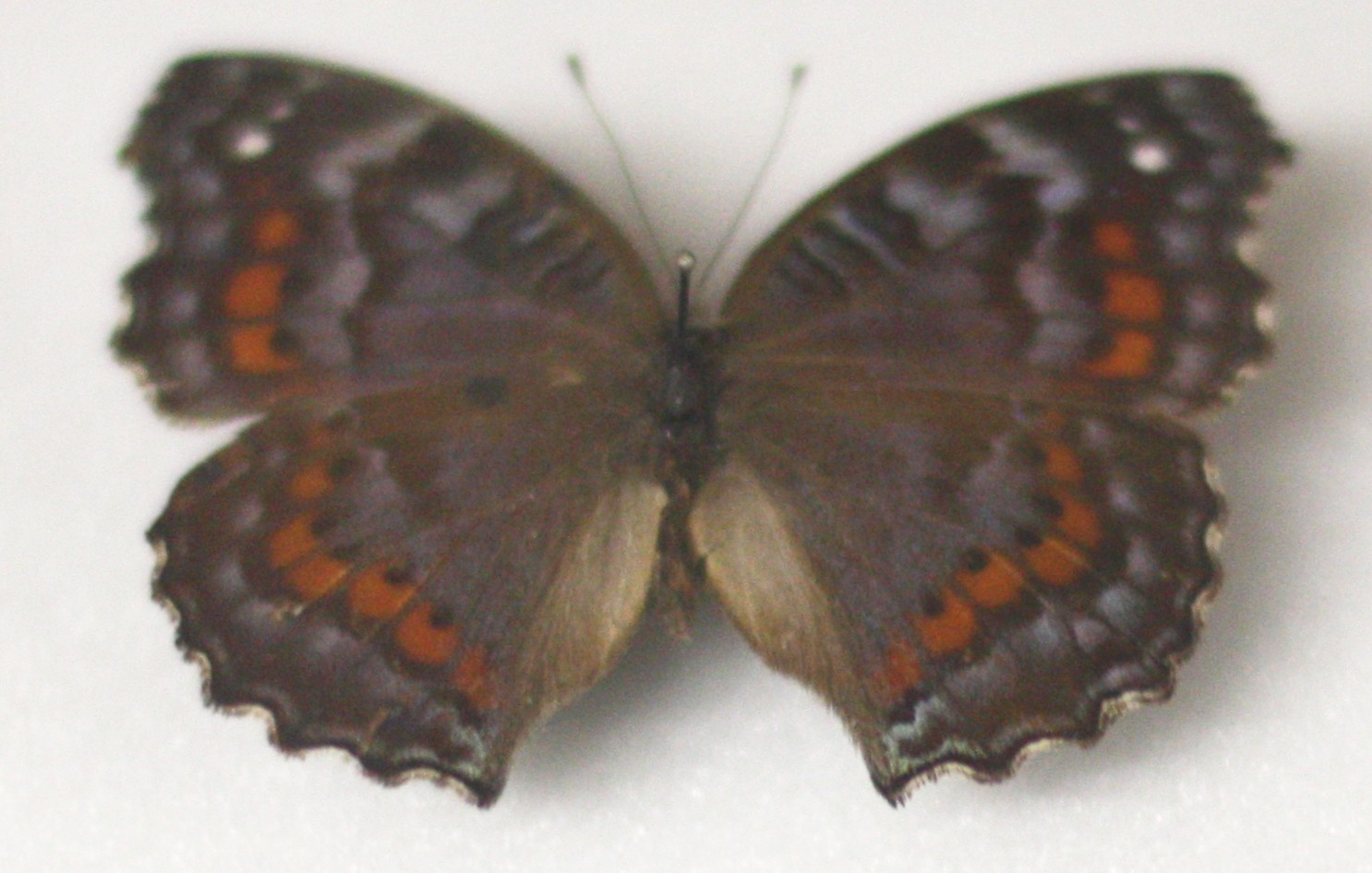
6. Gaudy commodore
It has a wet season form, which is orange with a pinkish flush and black markings on the upperside, and a dry season form which is shining blue with a vivid red band on the hindwing.

7. Blue pansy
The wingspan is 4 - 5 cm. The upper surface of the forewings is black with white markings towards the apex. The upper surface of the hindwings is black with white markings on the outer edge, and a characteristic large metallic-blue spot. This blue spot is smaller and more a dull purple in females. The underside of the forewings is brown with white markings corresponding to those on the upper surface. The under surface of the hindwings is almost uniform brown.
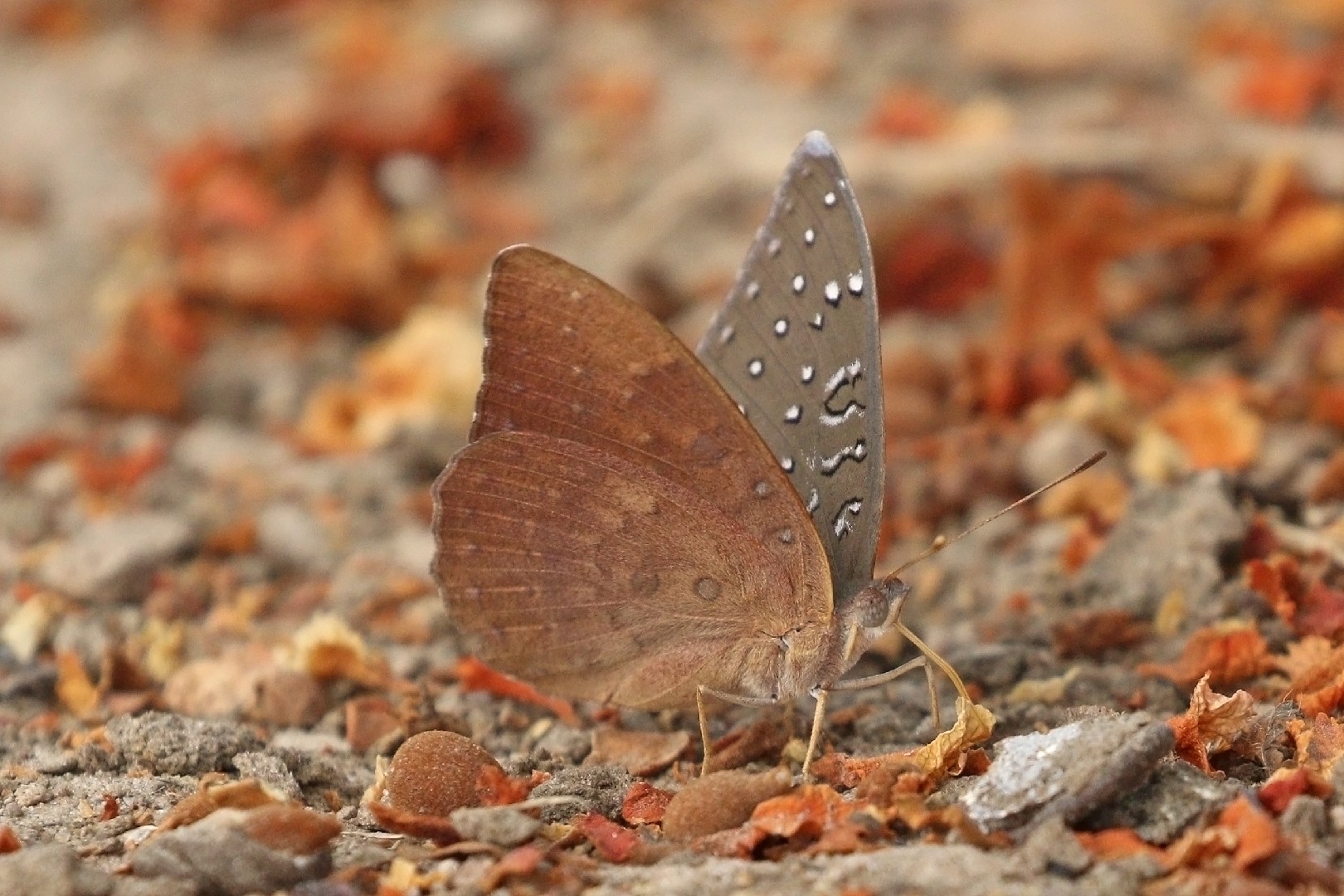
8. Guineafowl
The wingspan is 55–65 mm for males and 60–78 mm for females.
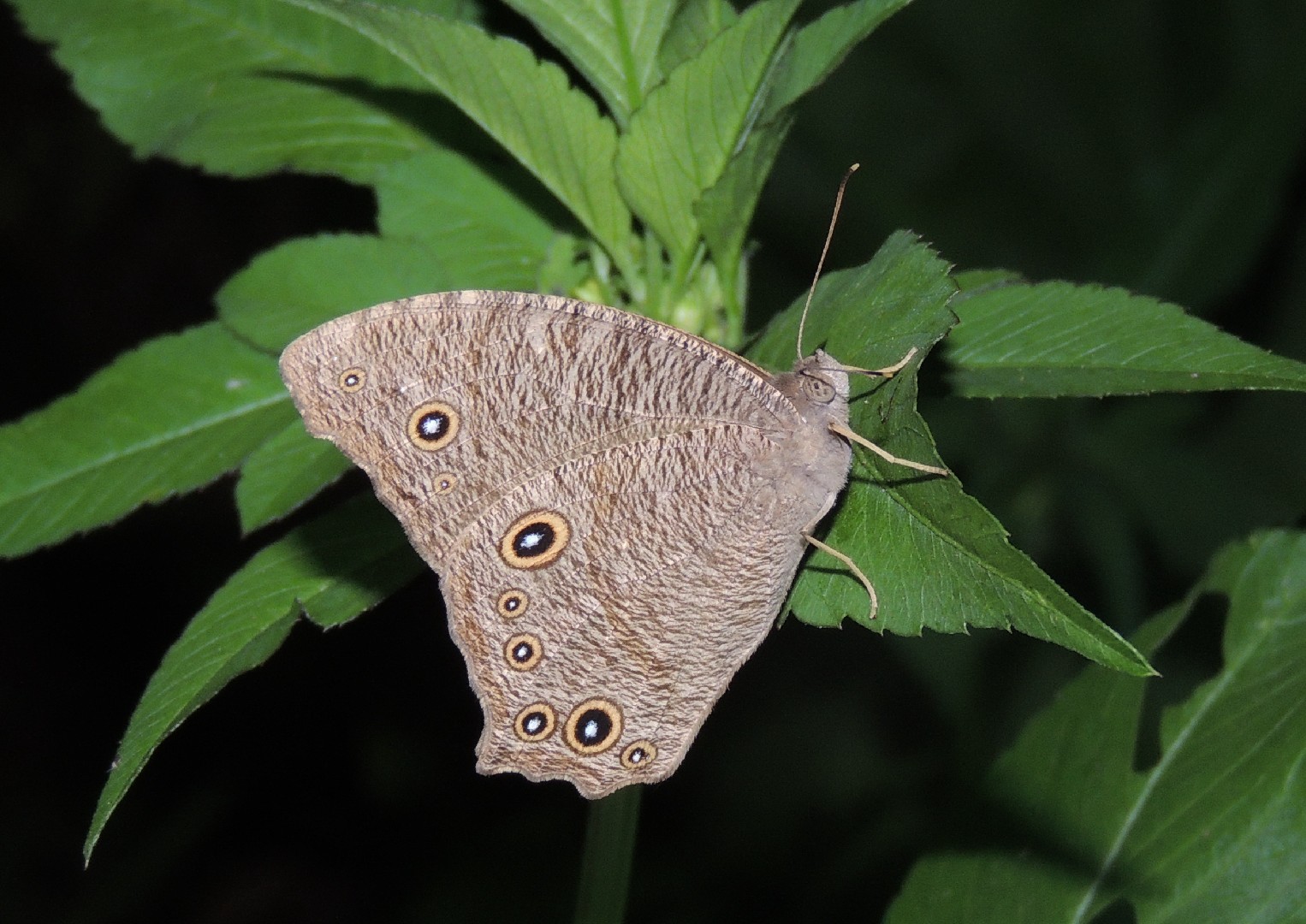
9. Common evening brown
The common evening brown (Melanitis leda) changes its appearance based on the season. During wet seasons, it has a pale brown underside and a dark brown top. Then, during dry seasons, it often has more distinguished bands or spots. It uses these neutral colors to help it blend into leaves and trees. It usually only flies during the evening, resting during daylight.
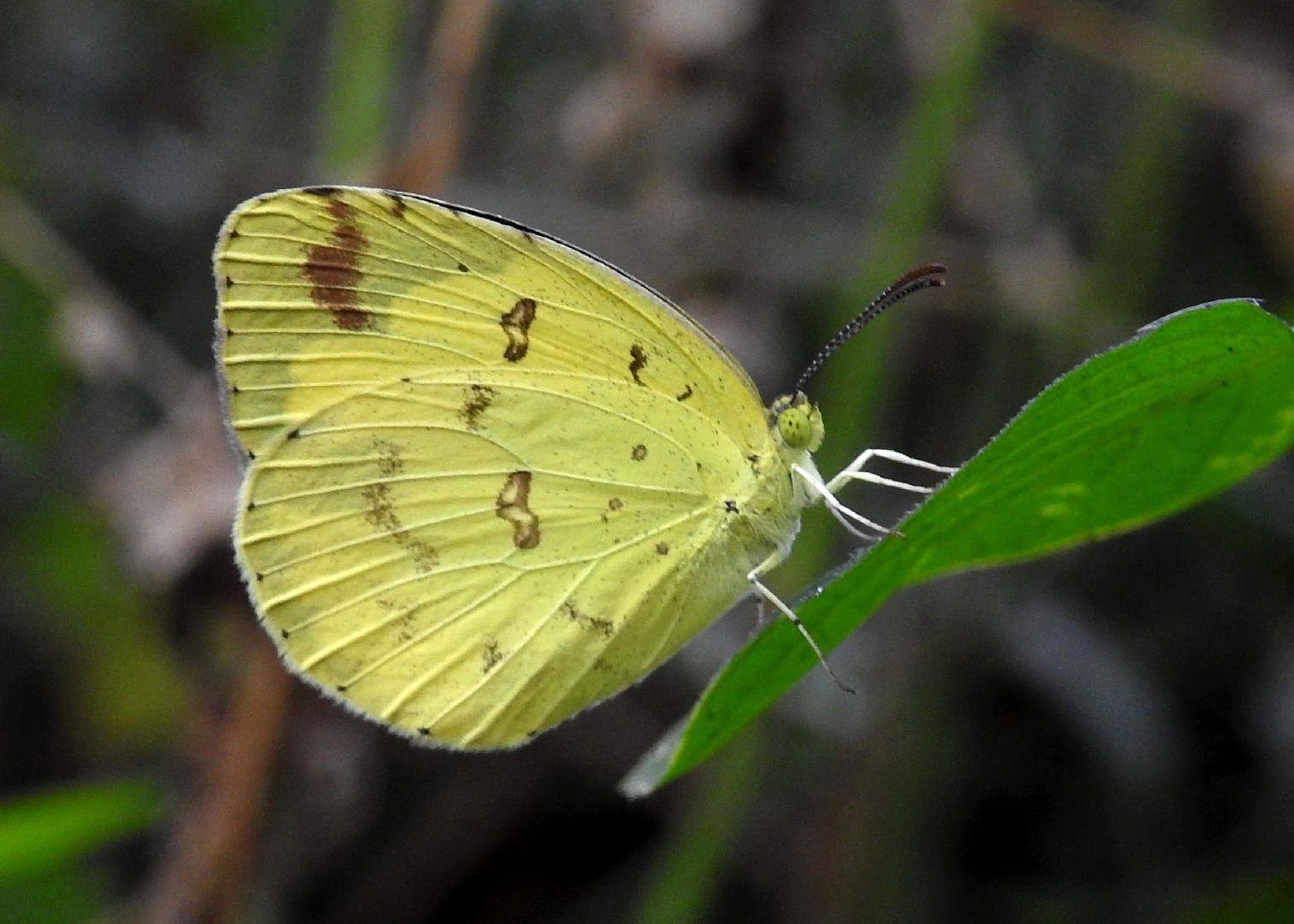
10. Common grass yellow
The common grass yellow (Eurema hecabe) can be found in groups around damp soil. Despite their name, they do not feed on grass, instead, they are known to frequently visit grasslands. It can change its form depending upon the season, as it is far more rough-looking if it comes during the dry season.

More







