




Top 20 Most Common Insects in Cagayan
Insects, nature's quiet achievers, are a fascinating spectacle, thriving in diverse habitats within Cagayan. The geographical structuring of Cagayan greatly contributes to its bustling insect diversity. Insects fulfill crucial ecological roles – they can be both beneficial pollinators and irritating pests. This underscores the dynamic relationship between a region's environments and its residing insects. Join us as we explore the top 20 most common insects in Cagayan.

Most Common Insects

1. Common mormon
The common mormon (Papilio polytes) is a beautiful, black butterfly with unique hindwings that have orange and white colorings and two spots jutting out. They are named after the Mormon religion, as the butterflies participate in polygamy, which is a common practice for Mormons. They are also known to mimic red-bodied swallowtail, who are inedible.
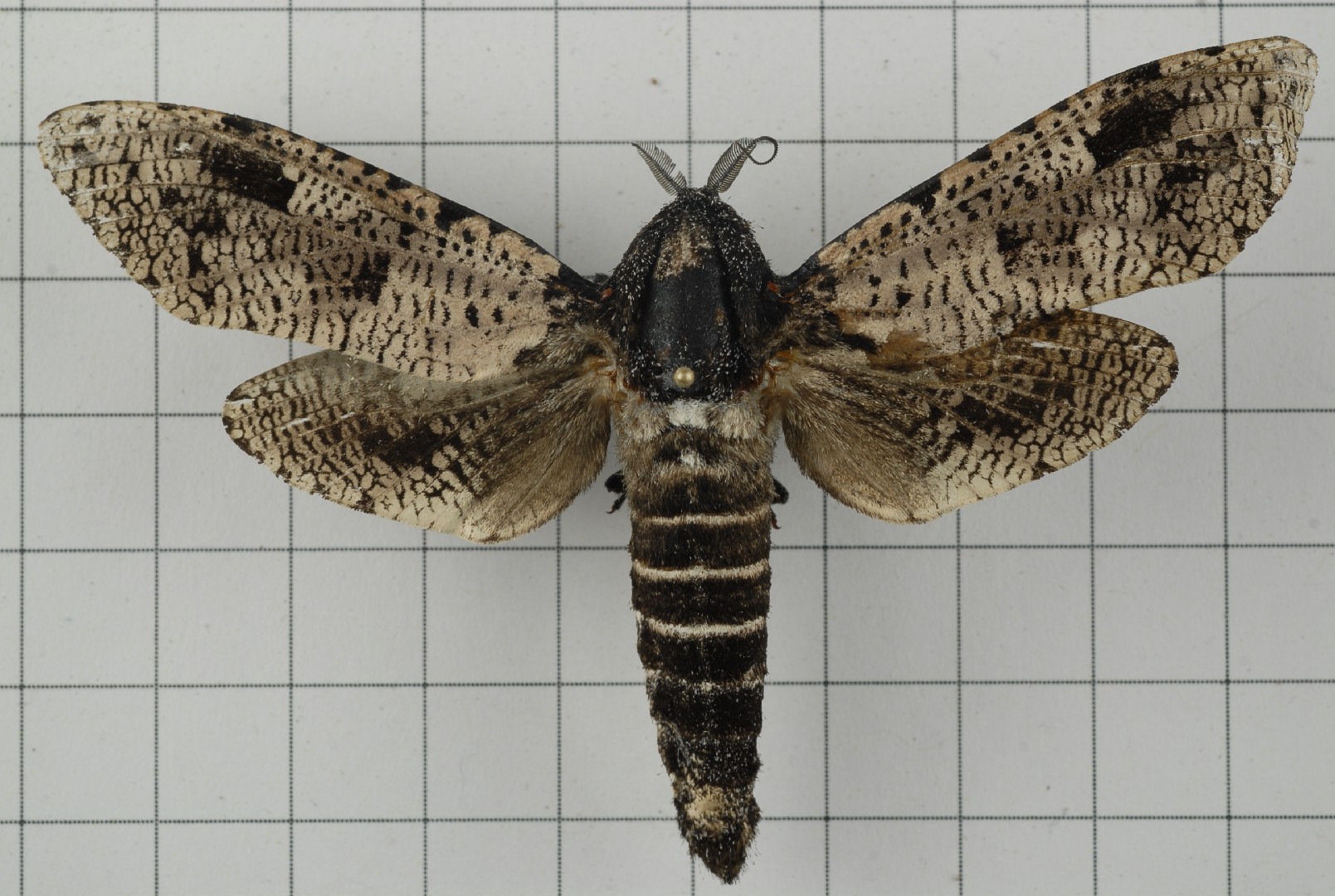
2. Xyleutes strix
Xyleutes strix is a moth of the family Cossidae. It is found in India, south-eastern Asia, Sundaland, the Philippines, Sulawesi, the Moluccas and New Guinea. 
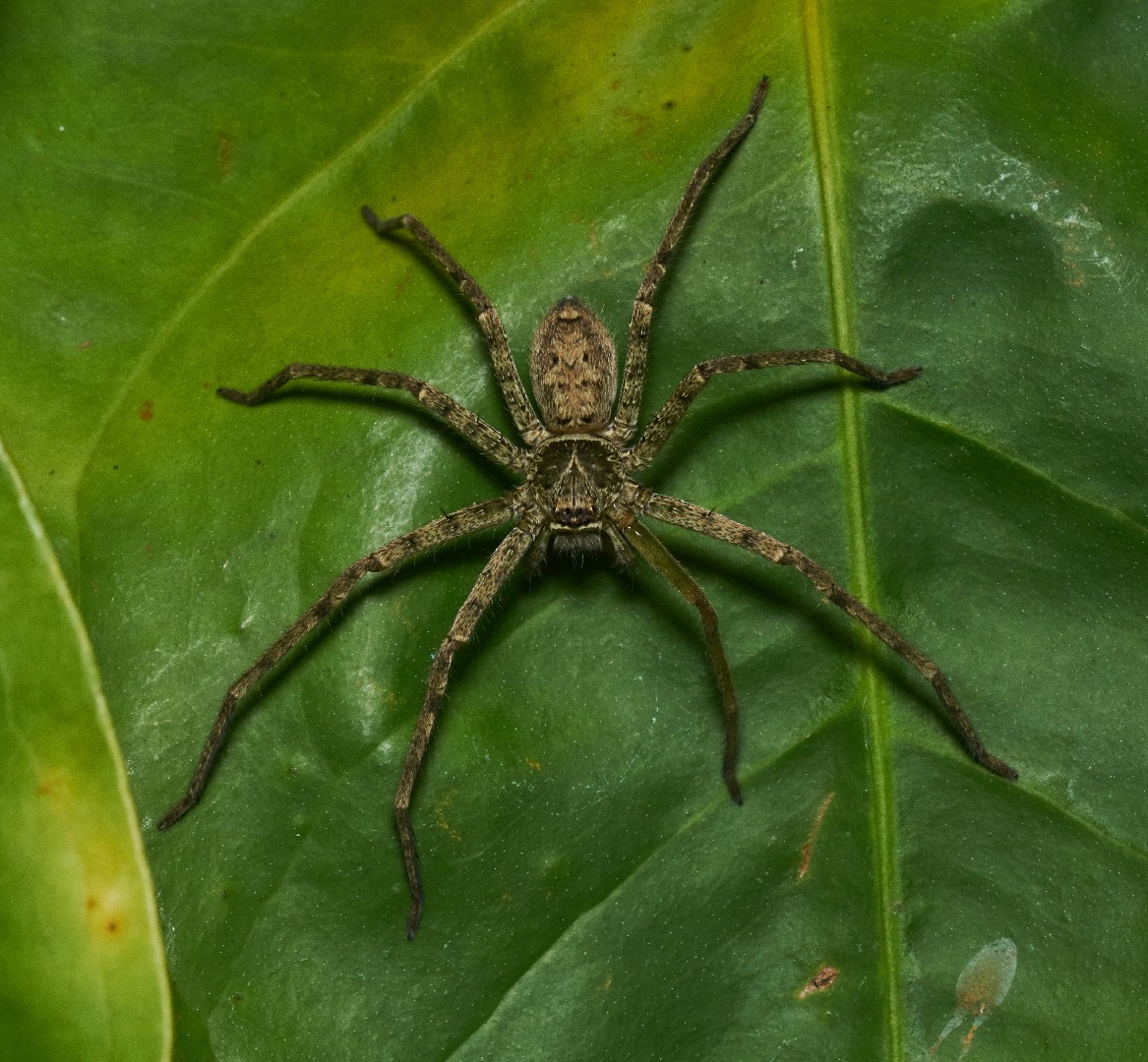
3. Giant Crab Spider
The giant Crab Spider is a large spider native to the tropics; the largest reported individual had a leg span of 30 cm. This cosmopolitan spider is highly valued in some areas, as it's able to catch cockroaches and other indoor pests. Reportedly, it hunts even scorpions and bats. This spider is venomous and sometimes bites humans, but it's considered harmless.

4. Indonesian red-winged dragonfly
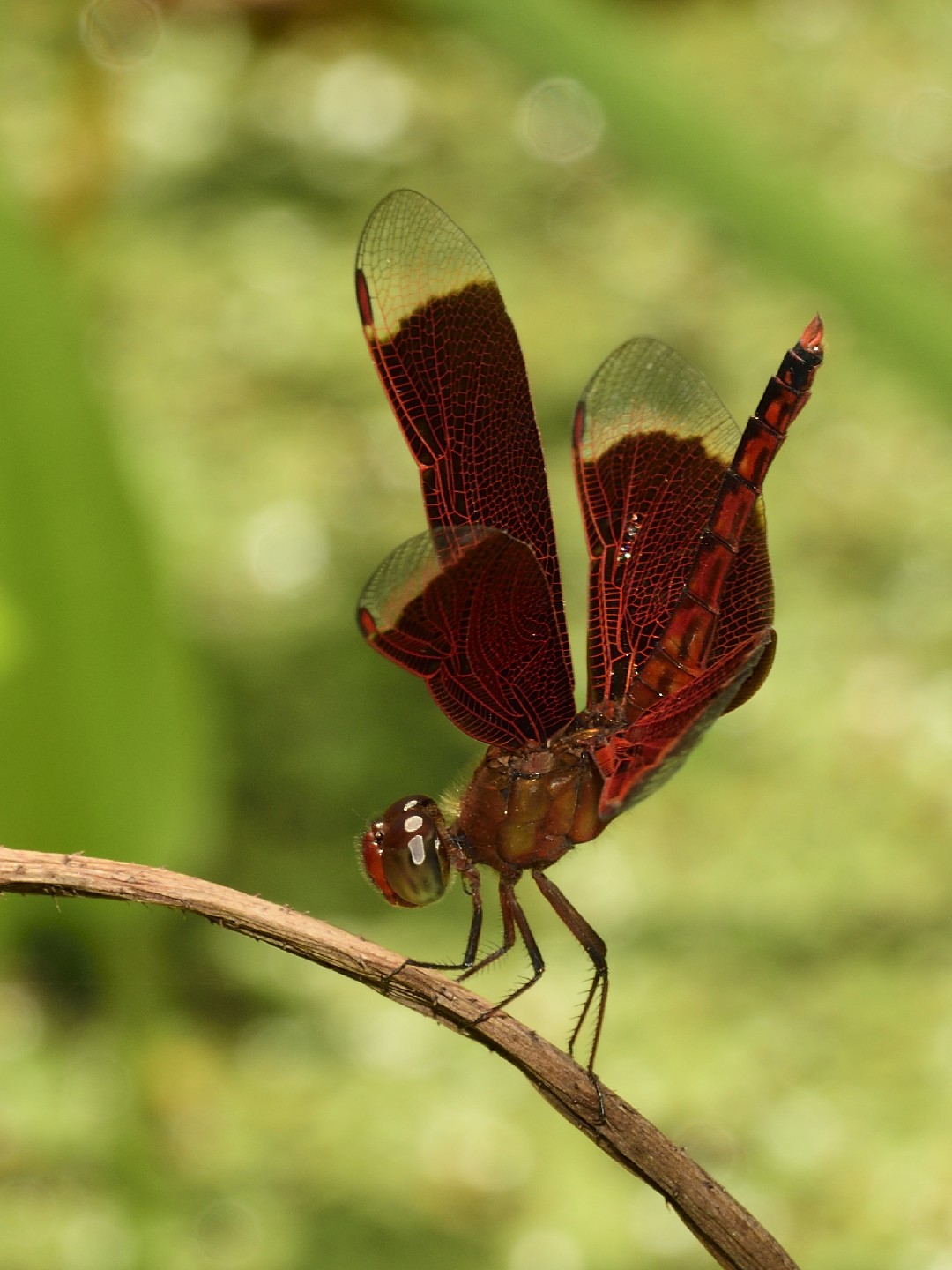
Neurothemis terminata is a species of dragonfly in family Libellulidae. Neurothemis terminata is a widespread and often common species which can occur in man-made habitats, from Peninsular Malaysia and Japan to the Lesser Sundas in Indonesia. Male N. terminata have red colour on its body and wings, while the female have yellowish colour. The adult has 8-11 cm body length.
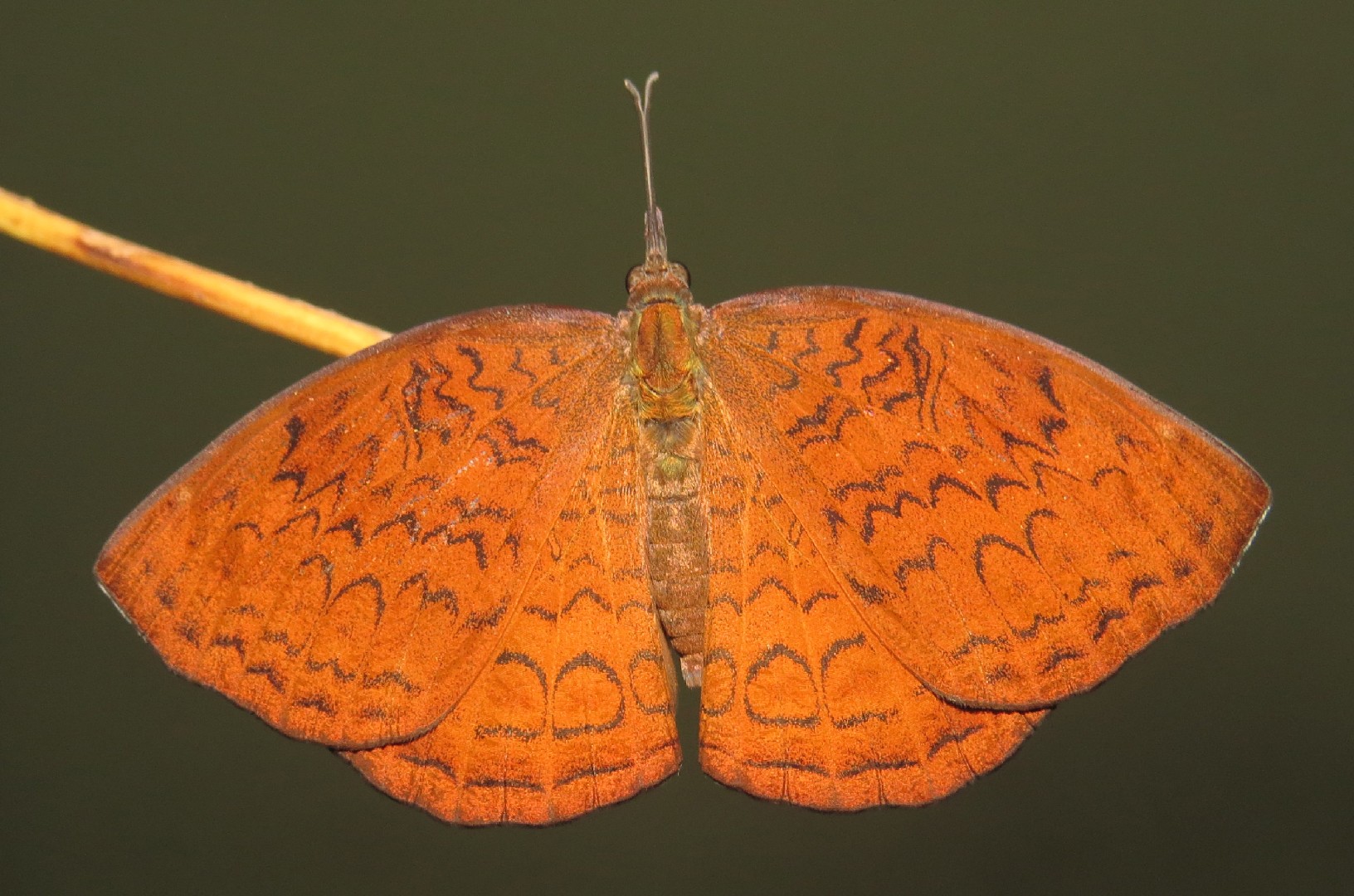
5. Common castor
Male in Wet-season form: Upperside brownish ochraceous. Forewings and hindwings crossed by slender, somewhat obscure, very sinuous or zigzag dark basal, two subbasal and two discal lines disposed in pairs, followed by a single, sometimes double, postdiscal and a single subterminal slender line. All these lines more or less interrupted anteriorly on the hindwing, which has a smooth unmarked uniform appearance from costa to subcostal vein and vein 5. On the forewing there is in addition a series of obscure spots between the postdiscal and subterminal markings, arid a small white subcostal spot before the apex.Underside much as in Ariadne ariadne, but the transverse chestnut bands broader, more diffuse.Sex-mark on the underside of the forewing as in A. ariadne no sex-mark on upperside of hindwing. Female in Wet-season form: Similar; but on the upperside the transverse lines broader, more diffuse, with a greater tendency to form bands; the postdiscal line always double, forming a band traversed by a series of dark ochraceous spots in the interspaces; these lines and bands continuous, not interrupted anteriorly on the hindwing as they are in the male. Underside: except for the sex-mark, as in the male.Upperside of male and female in dry-season form : ground colour much paler, the transverse lines more distinctly in pairs, forming bands, the ground colour between each pair more dusky brown. Underside similar to that in the wet-season form, but the ground colour paler, the bands more diffuse.Wingspan 5 - 6 cm .
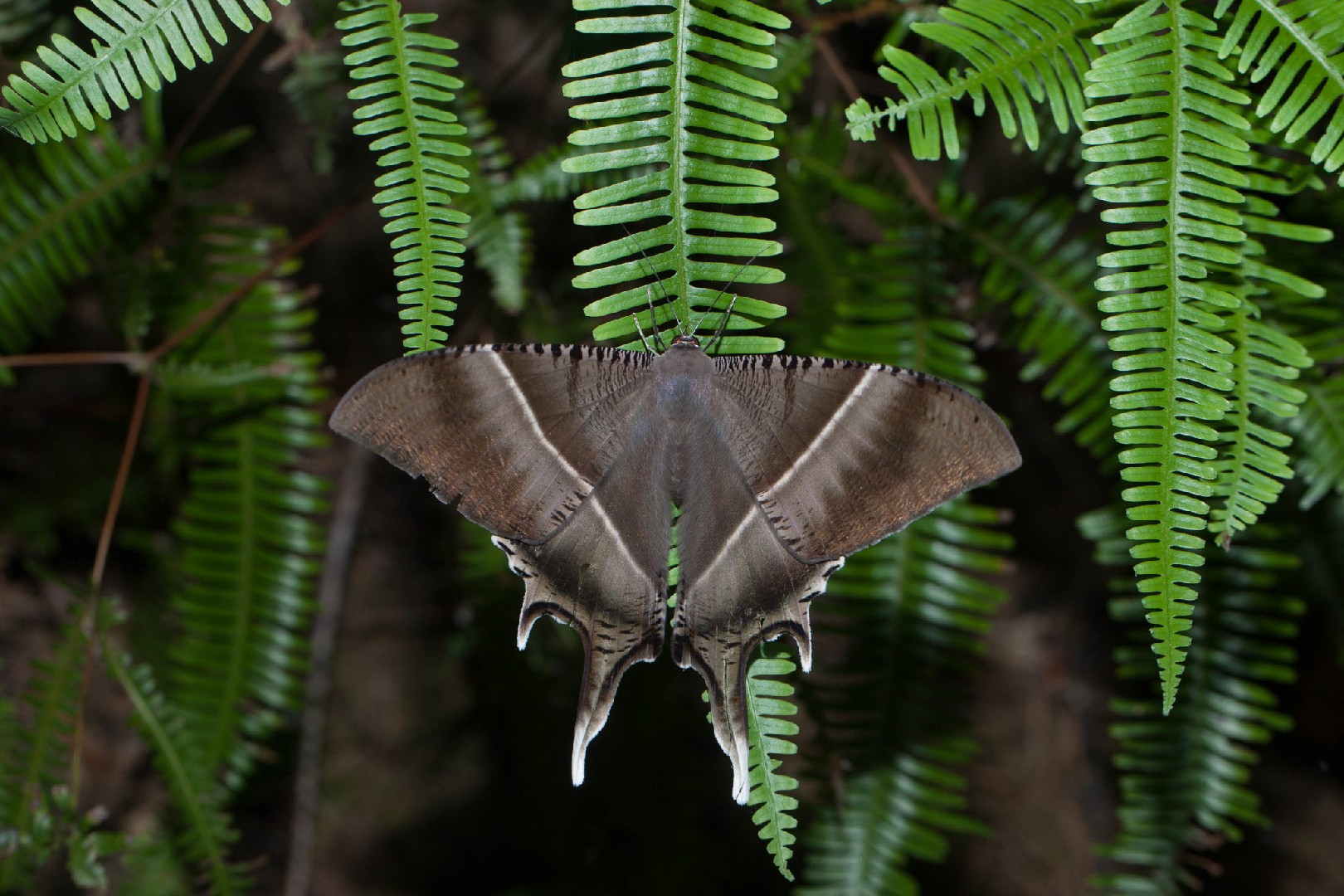
6. Tropical swallowtail moth
The tropical swallowtail moth (Lyssa zampa) is a moth that has a taste for rubber trees. It is also attracted to lights in urban areas, as it does cross over into human territory. It's a beautiful moth that has darker wings with two white lines located on its wings, it led someone to mistake it for a butterfly.
7. Pied flat
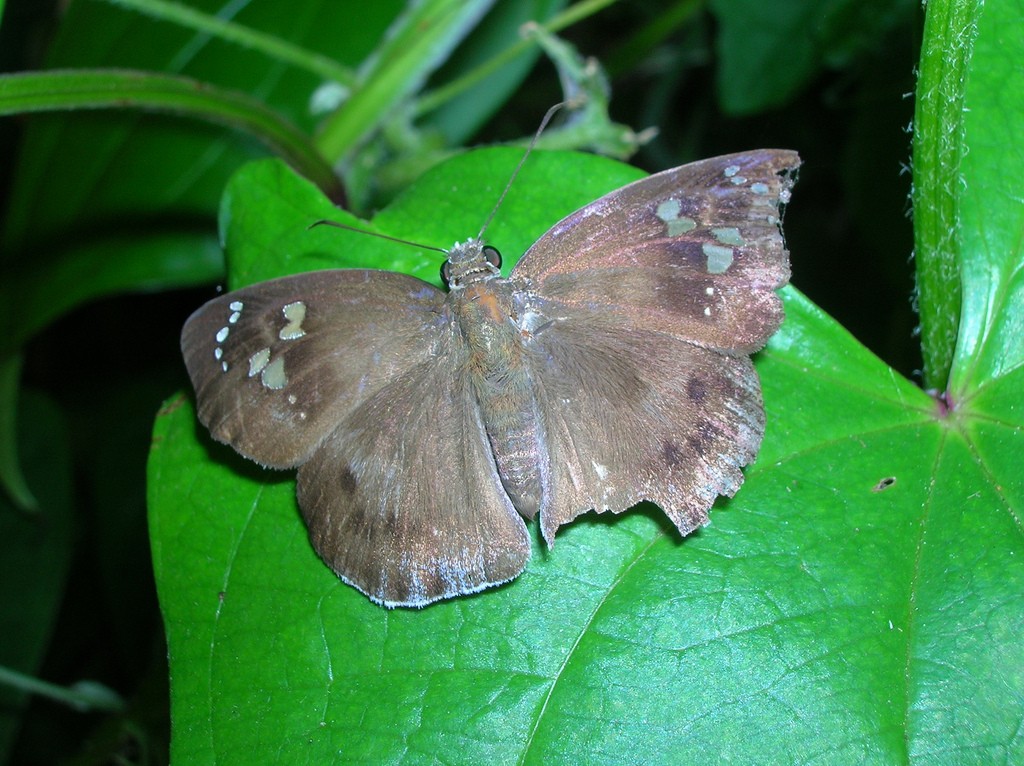
Male. Upperside fuliginous-brown. Forewlng with three minute subapical white dots, one of them, sometimes two of them, often absent; a minute dot at the end of the cell, another near the base of the second median interspace, and a third below it, in the middle of the first median interspace, sometimes one, sometimes two of them only present, sometimes all are wanting. Hindwing with indications of a curved discal series of spots darker than the ground colour, often altogether invisible. Cilia of both wings brown. Underside. Forewlng paler than it is above, the hinder marginal area and a broad squarish patch at the hinder angle paler than the rest of the wing, the minute dots as above. Hindwing greyish-white, the costal and outer marginal areas somewhat suffused with brown; a curved series of dark brown discal spots, the lower ones usually mere dots, often invisible. Female. Upperside coloured like the male, but the shade of colour more variable in different examples in this sex than it is in the male, the sub-apical dots often larger (not always) and generally three in number; the spots in the disc much larger, the one at the end of the cell round, the outer spot near the base of the second median interspace usually conical, the one below it the largest and quadrate and two small spots lietween it and the hinder margin. Hindwing with an obscure blackish spot at the end of the cell and a discal series, all of them very indistinct in many examples. Underside. Forewing somewhat paler than the upperside, markings similar. Hindwing usually much darker grey, sometimes blue-grey, a small hlack dot at the end of the cell, in some examples a complete discal irregular series of black spots, but very variable in its prominence, and in many examples no better indicated than it is in the male; head and body above concolorous with the wings; palpi and body below concolorous with the hindwing.
8. Autumn leaf
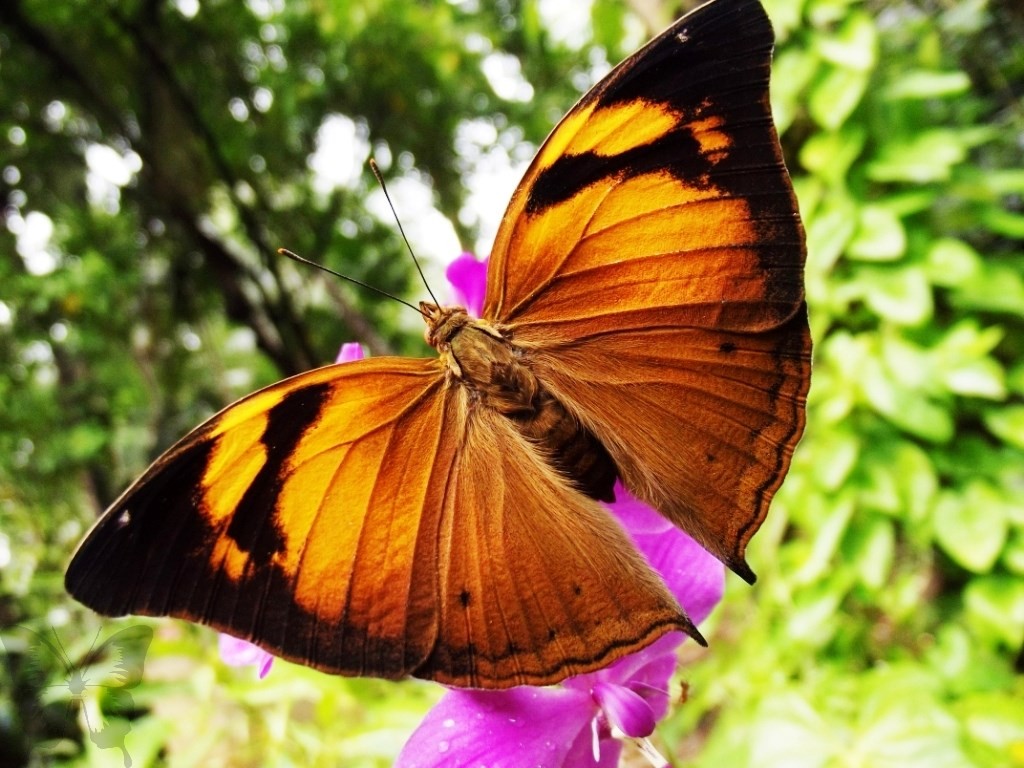
The larvae are black, with two rows of dorsal white spots. Head with a pair of branched spines; rest of the segments with a dorsal and a lateral row of blue branched spines on each side. The pupae are yellowish with numerous black spots; constricted in the middle; head produced into two points. Male's and female's underside yellowish brown, paling anteriorly to rich golden yellow on the forewing, shading anteriorly into dusky brown on the hindwing. Forewing: the apical half black, following a line from vein 12 opposite the discocellulars, passing through apex of cell, obliquely across middle of interspace 3 and curving down to tornus; a black spot near apex of cell coalescing with the inner margin of 1he black colour; a short, very oblique, broad golden-yellow band, broader in the female than in the male, from middle of costal margin to interspace 5; a spot beyond in line with it in interspace 4; two, sometimes three, minute, preapical white specks; the cilia fulvous (tawny), touched with white, anteriorly. Hindwing uniform; the costal margin broadly as noted above, a subterminal narrow band and narrower terminal line posteriorly, dusky black; a postdiscal black spot in interspaces 2 and 5 respectively; the cilia fulvous. The ground colour varies from reddish to dark greenish brown with irrorations (speckles) of greyish and black scales; apex of the forewing and the terminal margin posteriorly of the hindwing more or less lilacine; forewings and hindwings crossed by a dark narrow discal fascia, generally bordered on the inner side by a greyish line; this fascia bent inwards at right angles above vein 6 of the forewing and in most specimens, bordered internally by a diffuse pale patch and externally by an oblique whitish mark, beyond which is a subcostal white spot, followed by a transverse sinuous postdiscal series of obscure ocelli crossing both wings, each ocellus centred by a minute dot, white on the fore, black on the hindwing. In the male there are generally, but not invariably, a number of whitish spots on the basal areas of both wings. Antennae blackish brown, ochraceous at apex; head, thorax and abdomen dark fulvous brown; beneath, the palpi white, the thorax and abdomen pale brown. Wingspan is about 8 - 9 cm.
9. Gray wall jumper
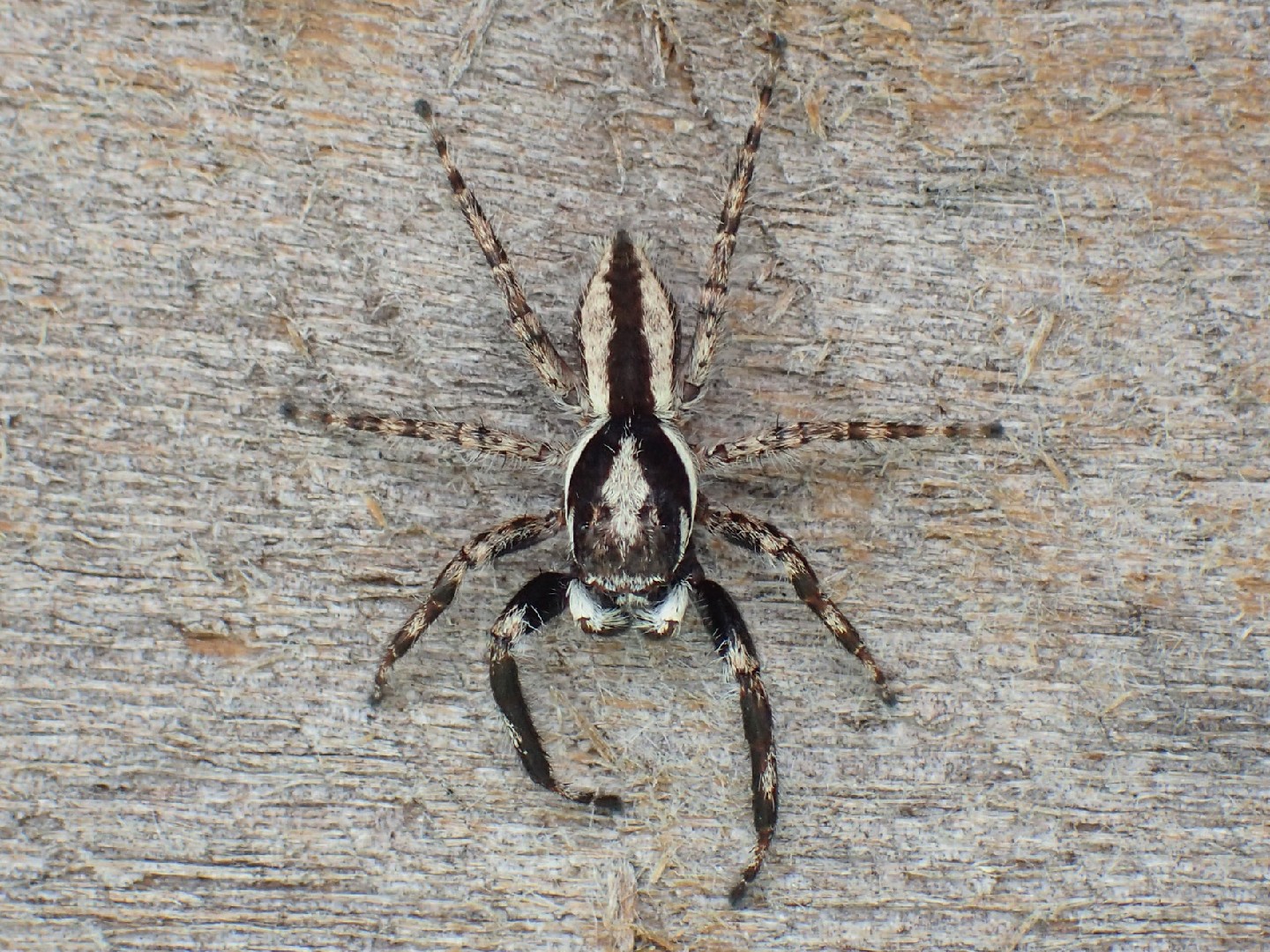
The female gray wall jumper lays her eggs in cracks or other hidden areas. The young and mature spiders feed on flies, making them useful residents in a household. They do not make webs, but carefully hunt and jump on their prey.
10. Angled red forester
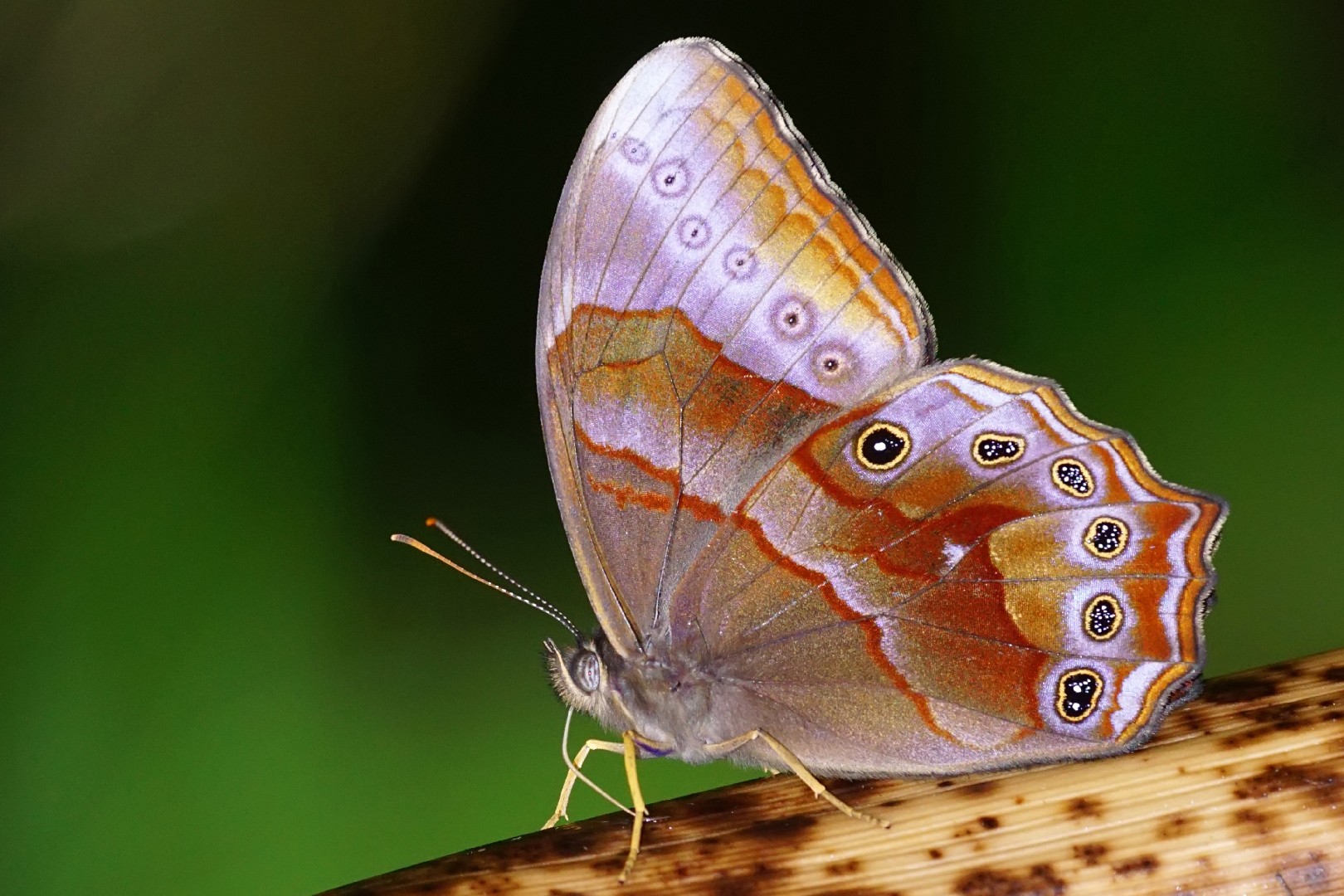
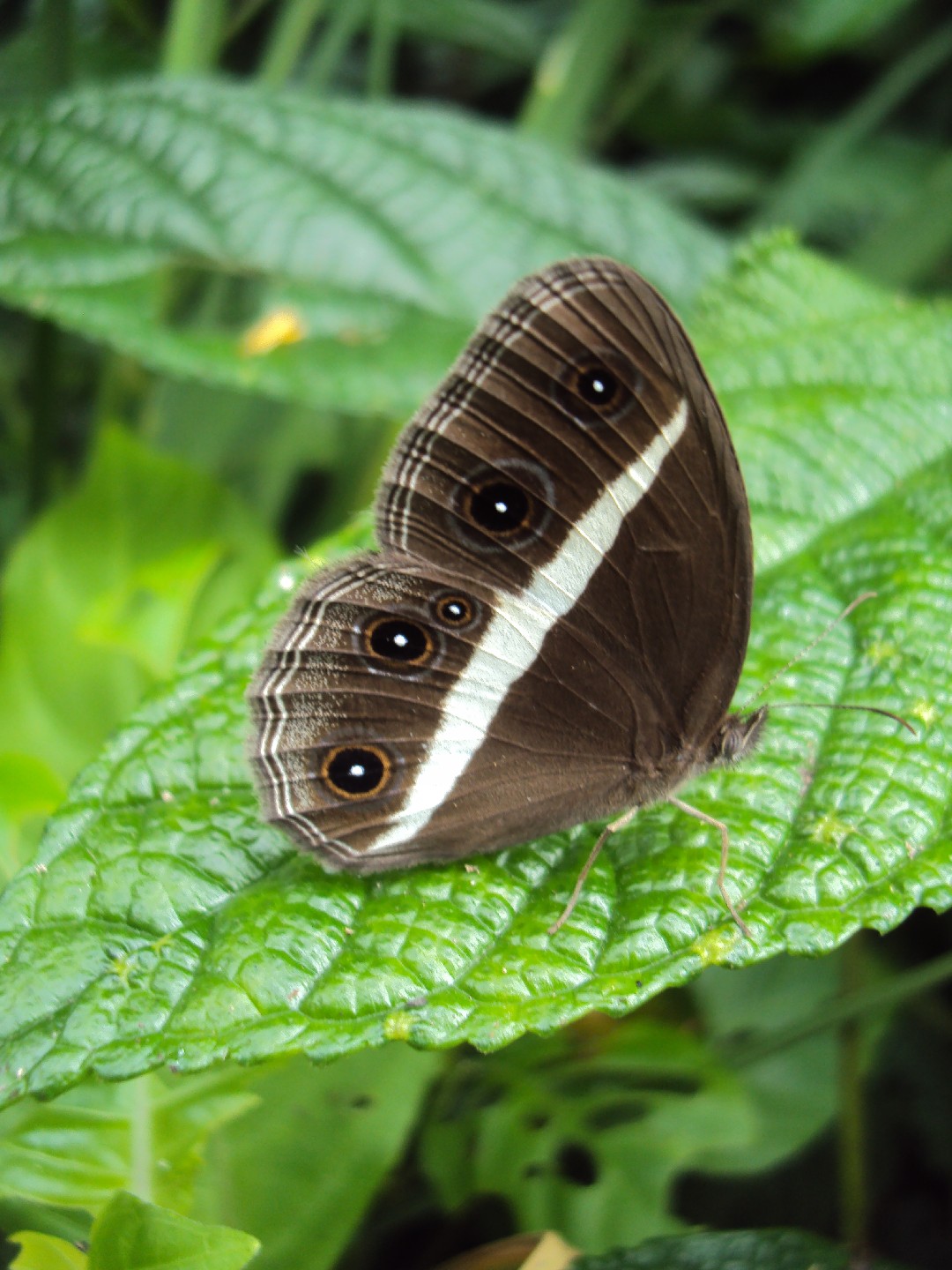
Lethe chandica is a butterfly from the subfamily Satyrinae of the Nymphalidae family. The scientific name of the species was first validly published in 1857 by Frederic Moore.


More







