




Top 20 Most Common Insects in Poland
Insects, a captivating yet complex component of Poland's biodiversity, come in an astounding variety owing to the country's diverse geographies. Remarkable differences in ecology across Poland influence insect distribution, fostering both common pests and beneficial insects. This list delves into the Top 20 most prevalent insect species in Poland, unraveling their unique roles in influencing our environment and daily lives.

Most Common Insects
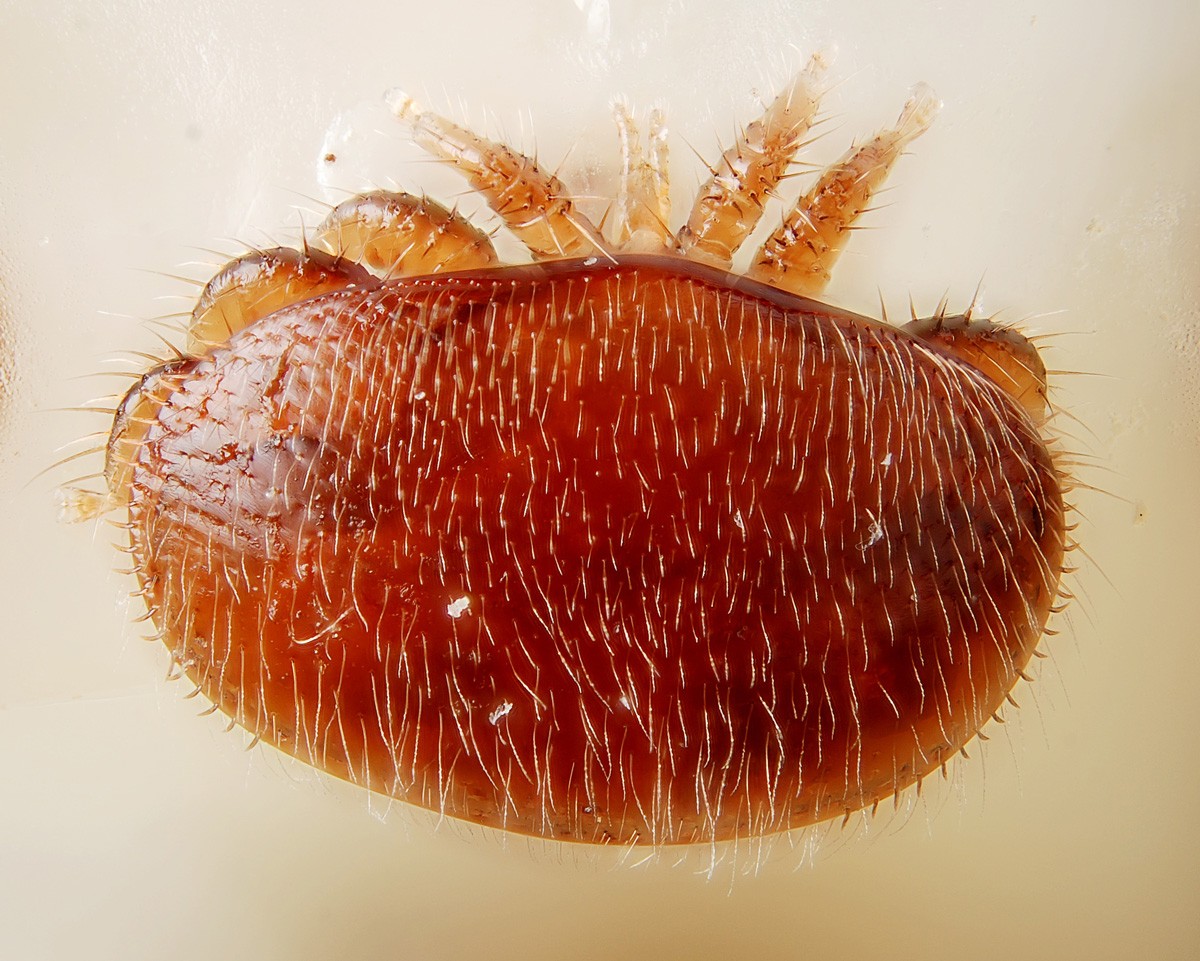
1. Varroa mite
The varroa mite is a tiny insect that attaches itself to and feeds on the bodies of honeybees. Beehives with heavy infestations of these mites suffer significant losses in population and can eventually be completely destroyed. This tiny parasite deals a large economic blow to the beekeeping industry. 
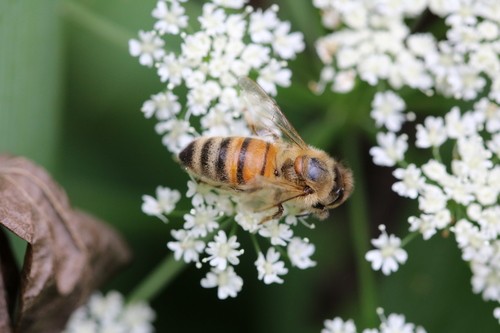
2. Western honey bee
Western honey bee(Apis mellifera) is the most common species of honeybee in the world. Among the first domesticated insects, its cultural and economic impact on humanity has been vast and far-reaching, providing honey, wax and its services as a pollinator. Western honey bee faces challenges worldwide, such as colony collapse disorder, and populations are thought to be decreasing.
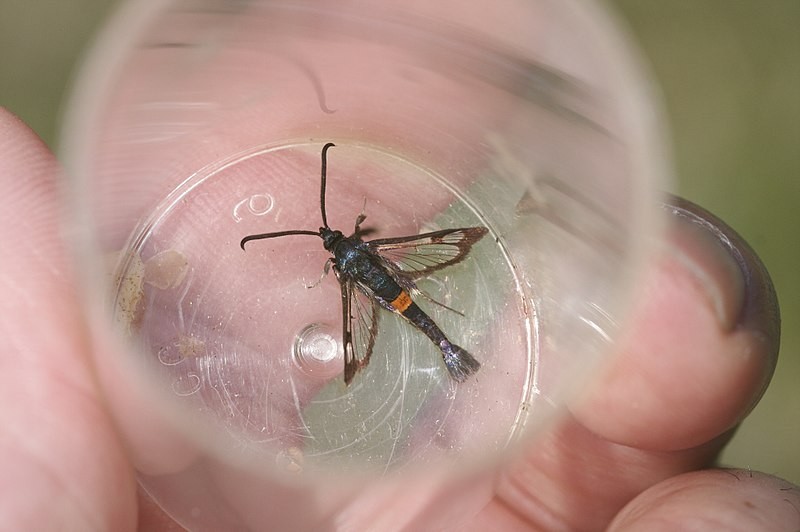
3. Red-Belted Clearwing
Synanthedon myopaeformis is a moth of the family Sesiidae and the order Lepidoptera. In Europe it is known as the red-belted clearwing and in North America as the apple clearwing moth. The larvae create galleries under the bark of fruit trees, especially old trees with damaged trunks. During this process, the larvae cause significant damage to host trees. Particular attention has been paid to the damage they cause to apple trees. Their status as a pest of apple orchards has led to many research projects aimed at controlling populations of the moth. This moth is native to Europe, the Near East and North Africa. Recently, the moth was introduced into North America, being first detected in Canada in 2005. There are several organisms that threaten the larvae, including parasitoids, nematodes, and bacteria.
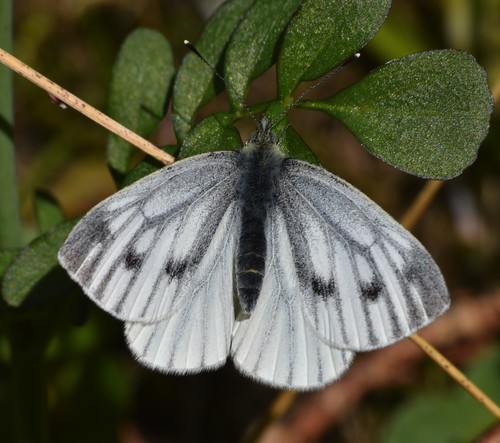
4. Green-veined white
Green-veined white (Pieris napi) is a distinctively white-winged butterfly that lays its eggs in a variety of food plants. This species displays observable differences dependent on sex: males possess only one dark spot on each forewing, whereas females display two. Unlike several of its cousin species, green-veined white prefers not to lay eggs in garden cabbages, rendering it less of a pest to farmers.
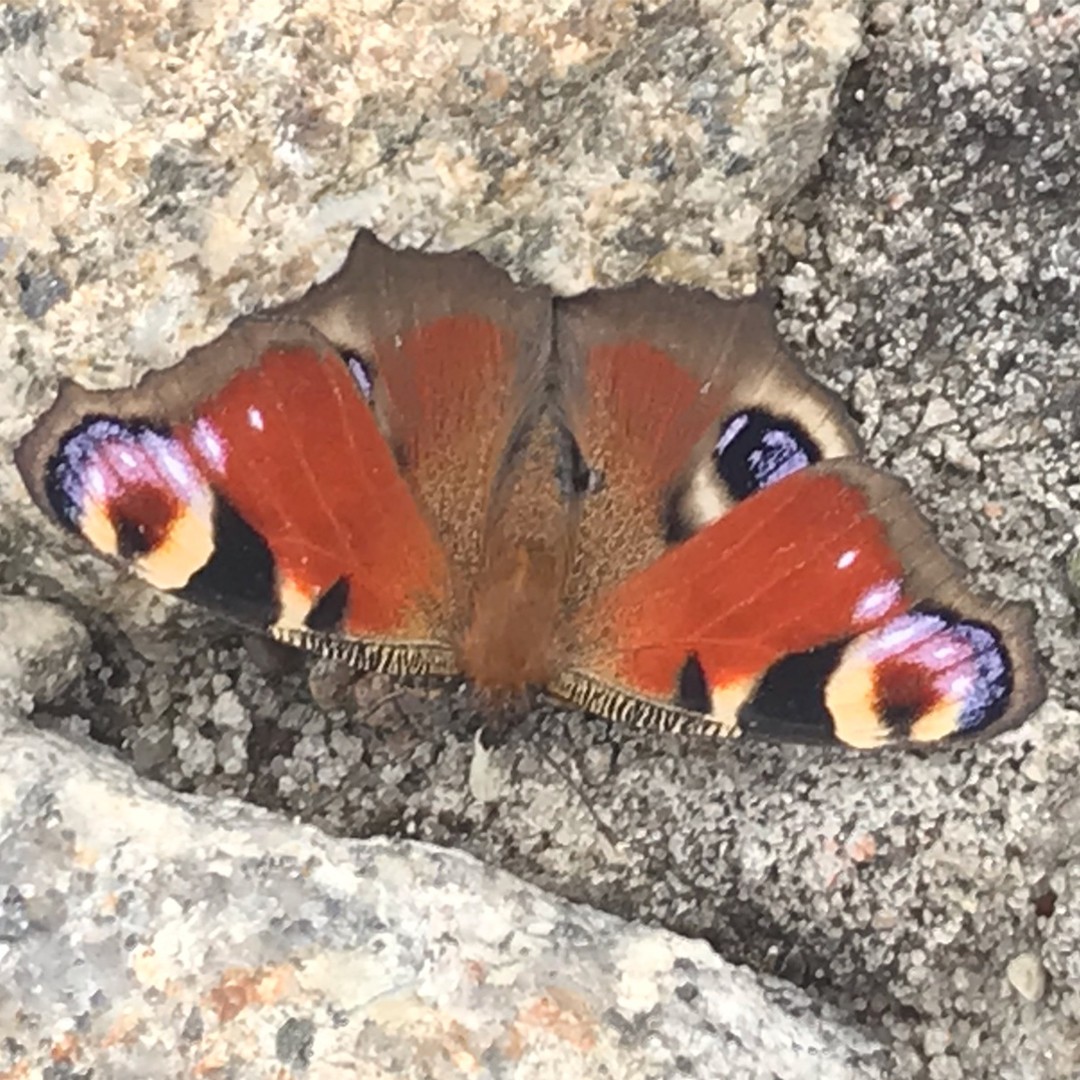
5. European peacock
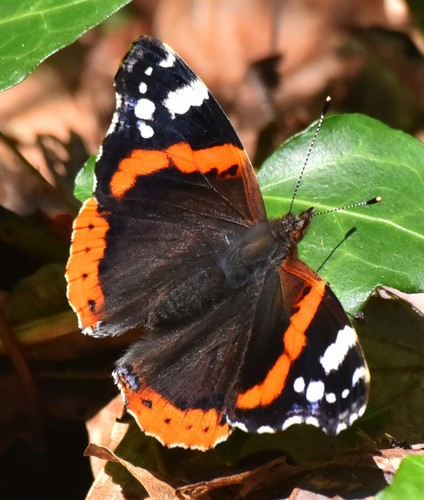
European peacock (Aglais io) is a colorful butterfly that resides in temperate Asia and Europe – hence its common name. Its prominent eyespots deter would-be predators, who mistake them for the eyes of a bigger, more dangerous species. In recent years, this species appears to be expanding its range into previously uncolonized territory.
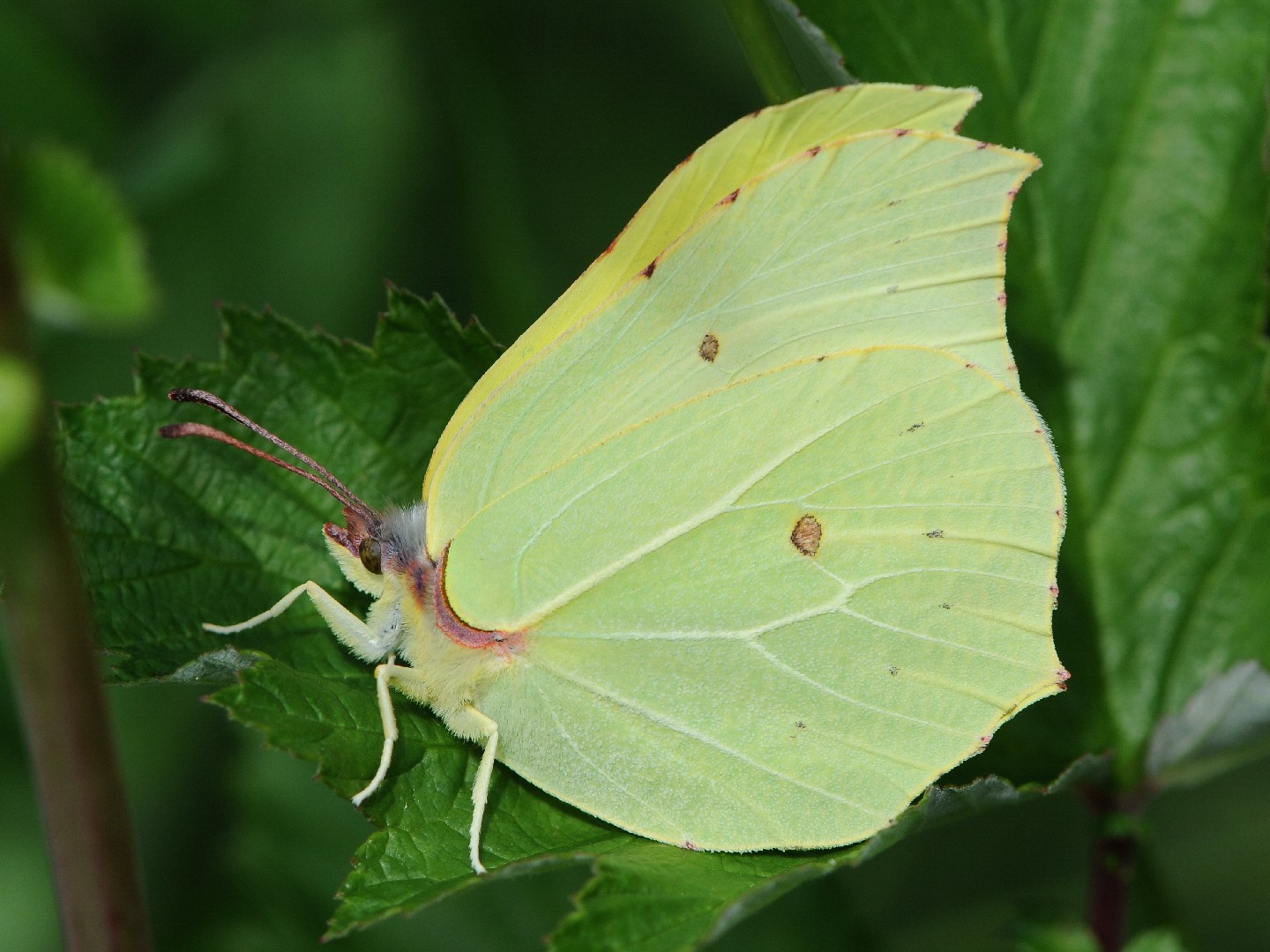
6. Common brimstone
Common brimstone (Gonepteryx rhamni) is an attractive species of butterfly; males display iridescence and have yellow wings, whereas females have white-green, non-iridescent wings. This species is wholly reliant on two species of buckthorn plant to lay its eggs. Consequently, the larvae consume large amounts of buckthorn.
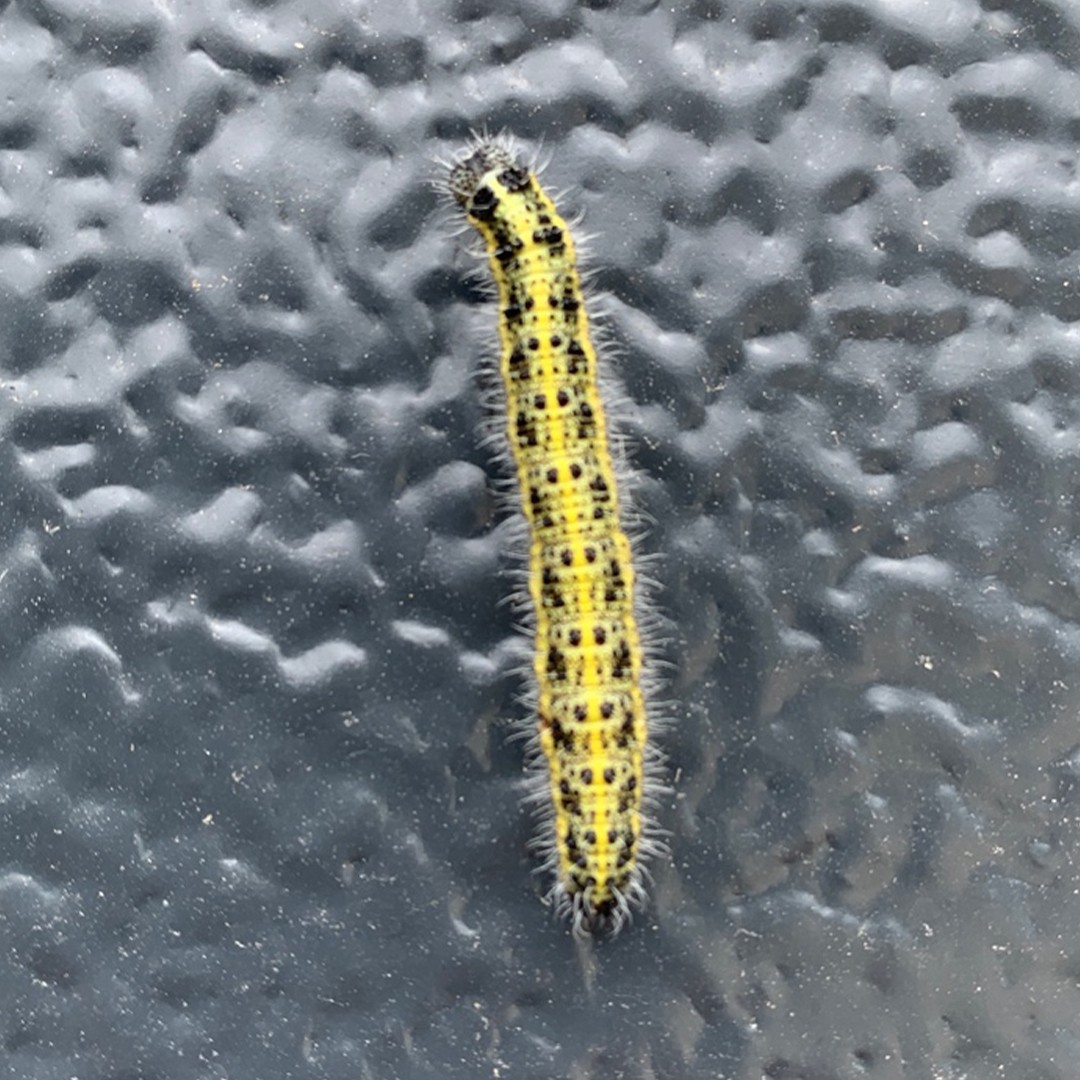
7. Large white
Large white (Pieris brassicae) is visually similar but quite larger than its close relative P. rapae. It lays its eggs on food plants such as cabbages – the origin of its common name – leading to many farmers' classifying this species as a pest.
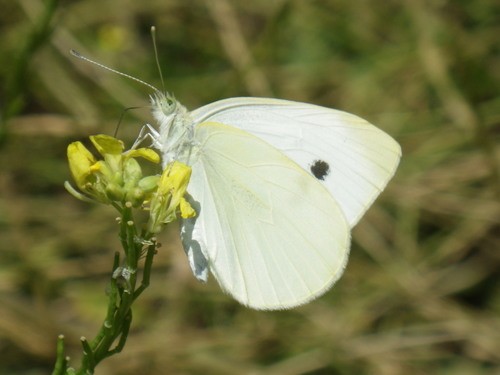
8. Cabbage white
Cabbage white (Pieris rapae) derives its common name from its habits as a caterpillar, which is a ferocious pest for cabbage, kale and broccoli farmers. In North America, it is one of the first butterflies to emerge in spring, heralding the beginning of the season.
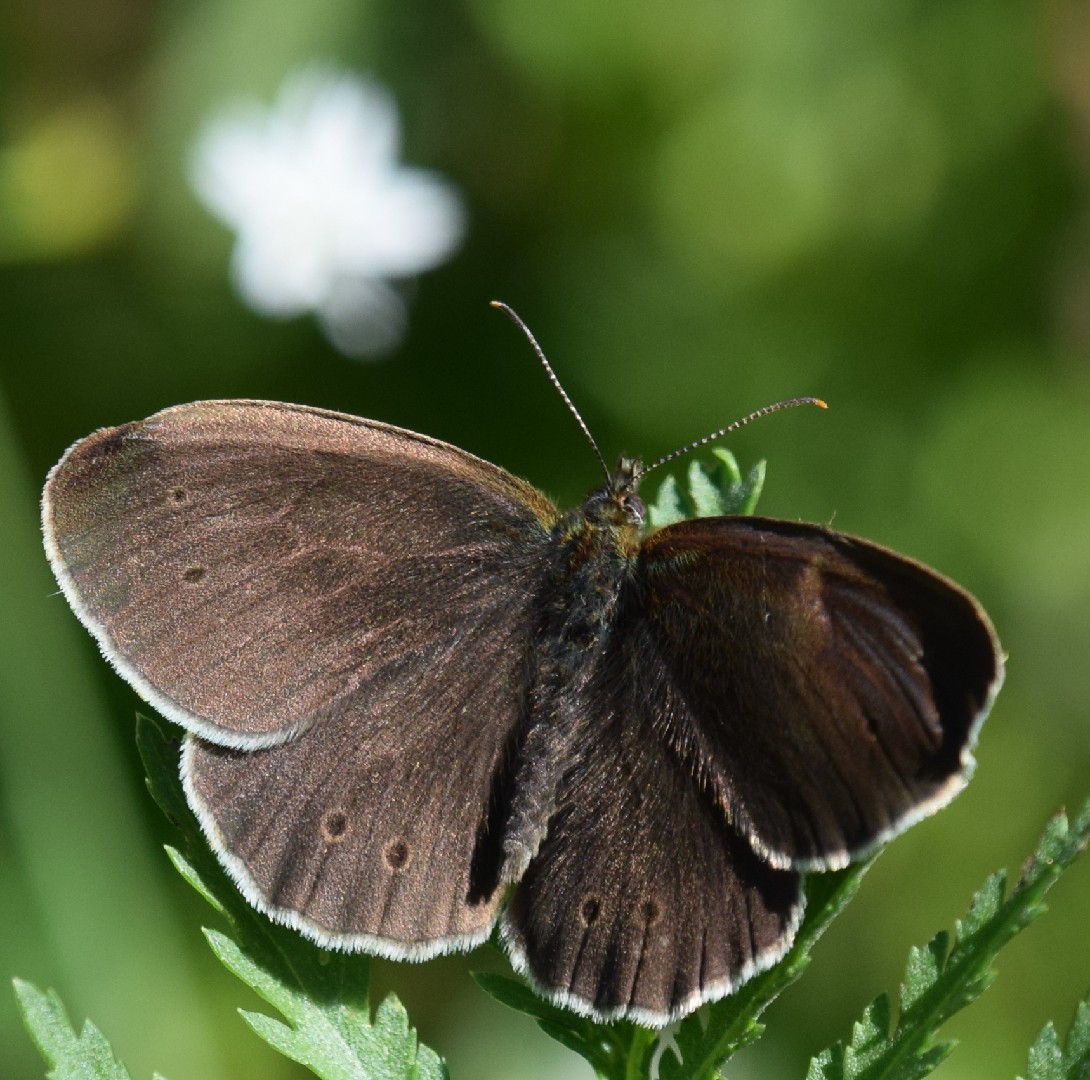
9. Ringlet
Aphantopus hyperantus is a medium-sized butterfly with a wingspan of up to 3.5 - 4 cm . The wing upper and lower sides are solid brown with small, yellowish-rimmed eyespots. The newly emerged ringlet has a velvety appearance and is almost black with a white fringe to the wings. The number and size of the eyespots is variable, they may be missing on the upper wing surface. The eggs are pale yellow when first laid, but become pale brown.The caterpillars are about 2.5 cm long. They are gray or light reddish brown and have dark, reddish brown and very fine dots. Dorsally there is a dark longitudinal line, which is widened at the segment boundaries. Toward the rear, this line is more intensely colored. The head is darker and has several faint longitudinal stripes.
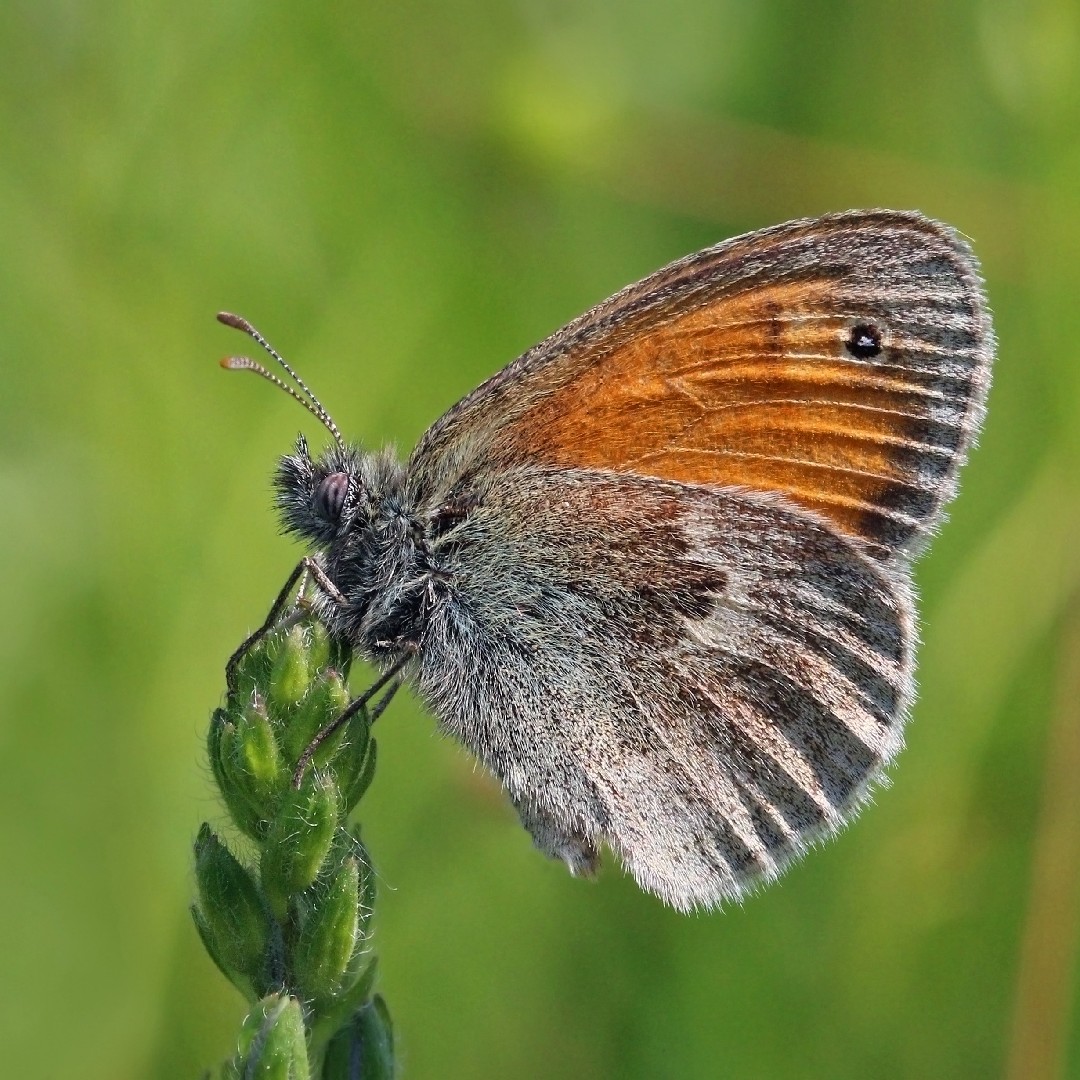
10. Small heath
It rests with closed wings when not in flight.
More