




Top 20 Most Common Insects in Jaen
Insect populations in Jaen are as diverse as the landscapes they inhabit, from mountainous regions to coastal areas. The diversity of these unique creatures, with their remarkable structural features and varying survival tactics, directly mirror the richness of the habitats found throughout Jaen. Insects, both pests and beneficiaries, play significant roles in maintaining the balance of ecosystems. As we explore the top 20 insects in Jaen, we appreciate their impact on our environment, and ultimately, our lives.

Most Common Insects
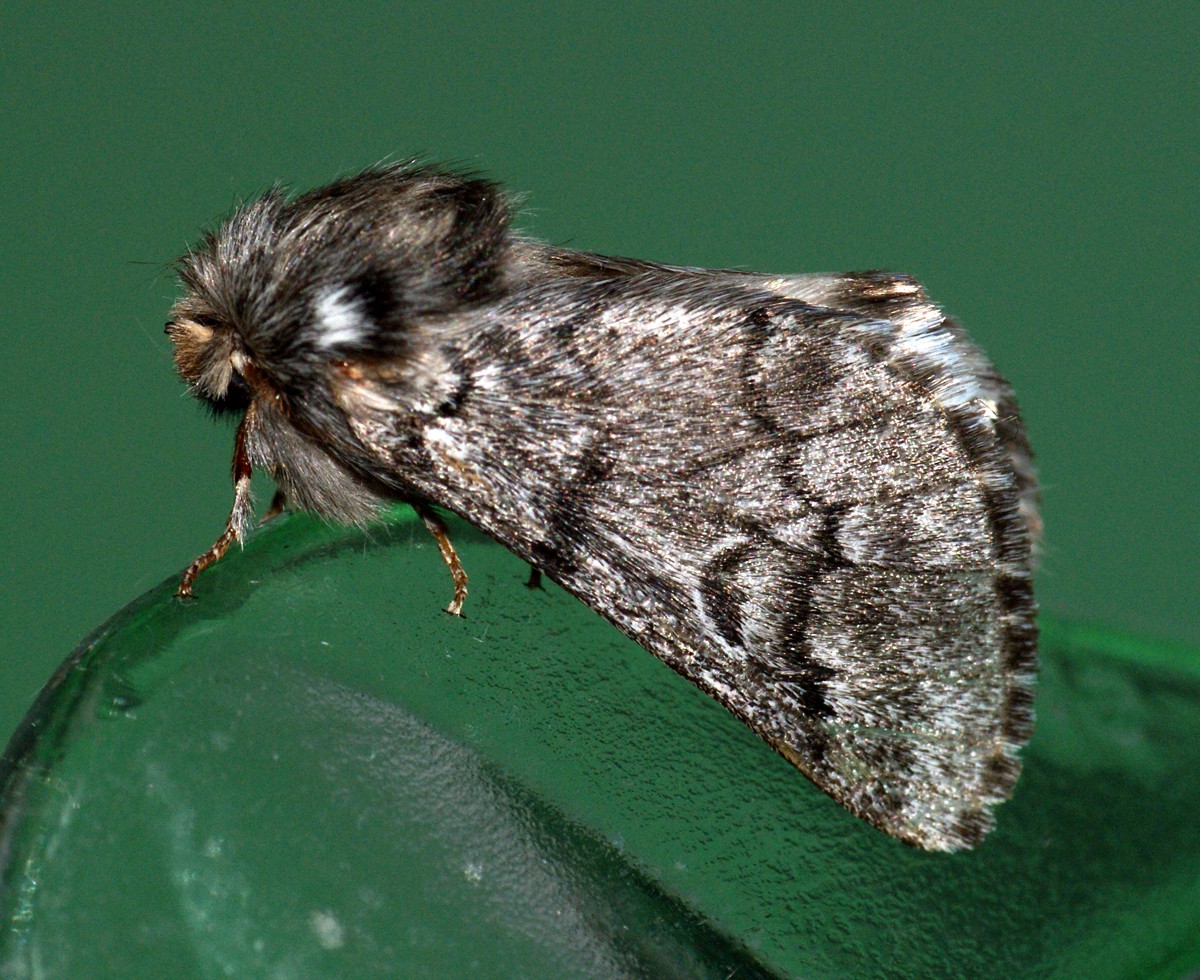
1. Pine processionary
The pine processionary (Thaumetopoea pityocampa) have very boring looking adult stages, as though they have to calm down after being major jerks in their caterpillar stages. Their caterpillars are known to be major pests that munch down many pine trees, hanging out in tent-like structures as they do so. They are also known to cause harmful effects on anyone foolish enough to touch their hairs.
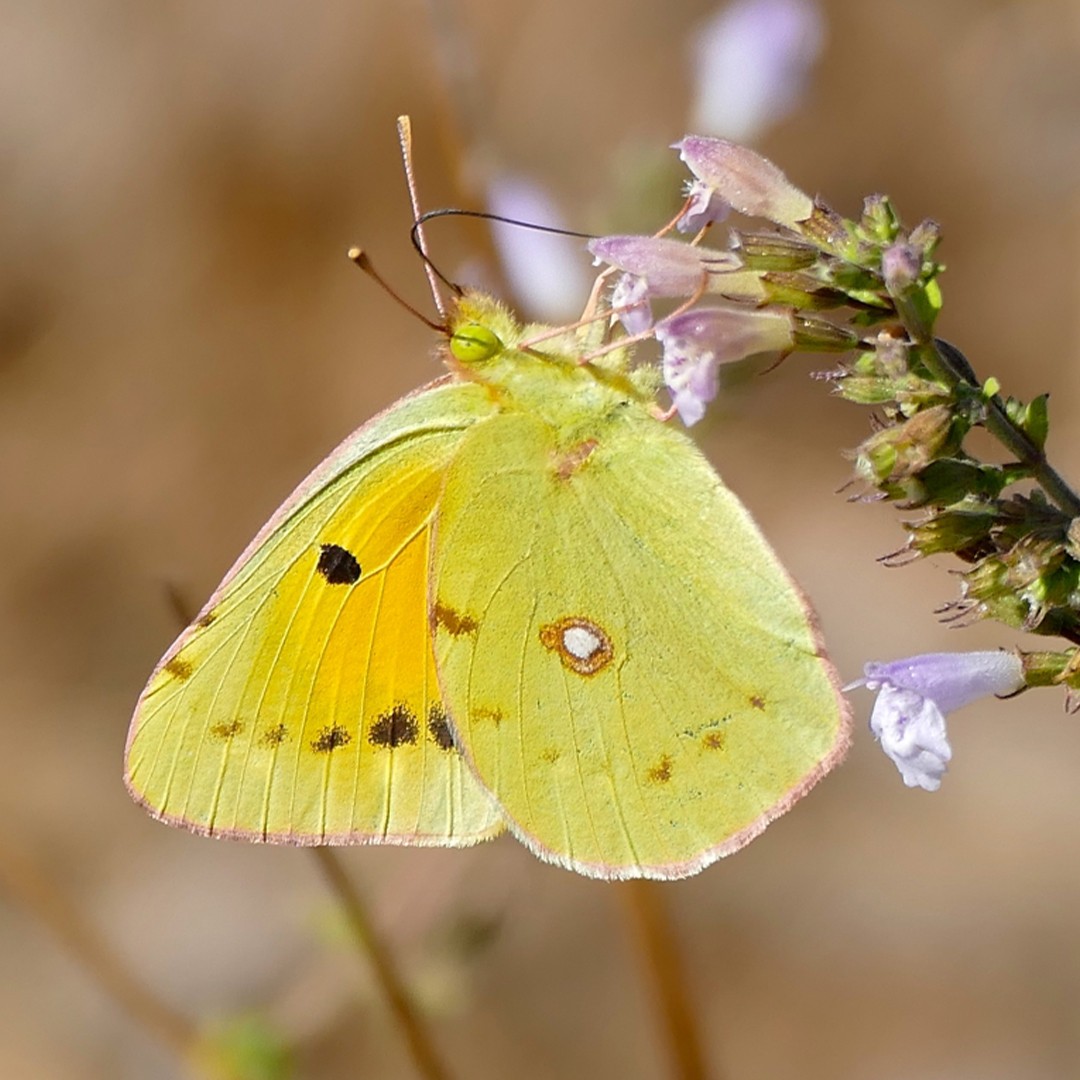
2. Clouded yellow
Colias croceus has a wingspan of 46–54 millimetres (1.8–2.1 in). The upperside of the wings is golden to orange yellow with a broad black margin on all four wings and a black spot near the centre forewing. Usually these butterflies settles with its wings closed, consequently the black margin of the uppersides of the wings is difficultly visible. The underside lacks the black borders and is lighter, with a more greenish tint, particularly on the forewings. In the forewing underside is the same dark spot as on the upperside, but often with a light centre; the hindwing underside has a white centre spot, often with a smaller white or dark dot immediately above it. Sometimes, a row of black dots occurs on the underwings' outer margins, corresponding to where the black border ends on the upperside. Females differ from the males in having yellow spots along the black borders on the upperside. In flight, Colias croceus is easily identifiable by the intense yellow colouring, much brighter than that of the lemon-yellow male common brimstone which also lacks black markings. Like all Colias species they never open their wings at rest. In a small proportion of females (about 5%) the golden upperside colouration is replaced by a pale cream colour. These females have been distinguished as form helice. The pale form helice does not seem to be that distinct as intermediates exist and the variation is to some extent related to humidity during development, with dryer conditions producing paler colouration. These pale forms helice can be confused with Berger's clouded yellow (Colias alfacariensis) and the rarer Pale clouded yellow (Colias hyale). Even the palest C. croceus tends to have more black on the upperside however, in particular on the hindwings. Young caterpillars are yellow-green, with a black head. Later they become completely dark green, with a white red spotted lateral line after the third moult. The pupae are green and have a yellow side stripe. This species is rather similar to Colias myrmidone, Colias chrysotheme, Colias erate, Colias hyale, Colias alfacariensis, Colias caucasica, Colias aurorina. 
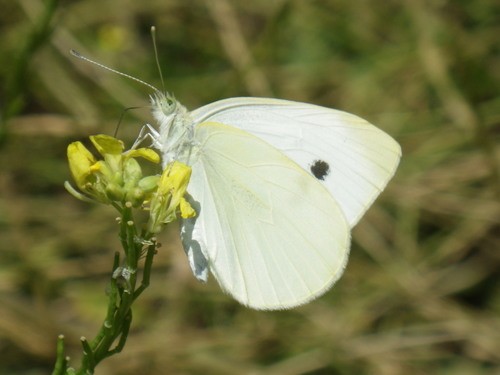
3. Cabbage white
Cabbage white (Pieris rapae) derives its common name from its habits as a caterpillar, which is a ferocious pest for cabbage, kale and broccoli farmers. In North America, it is one of the first butterflies to emerge in spring, heralding the beginning of the season.
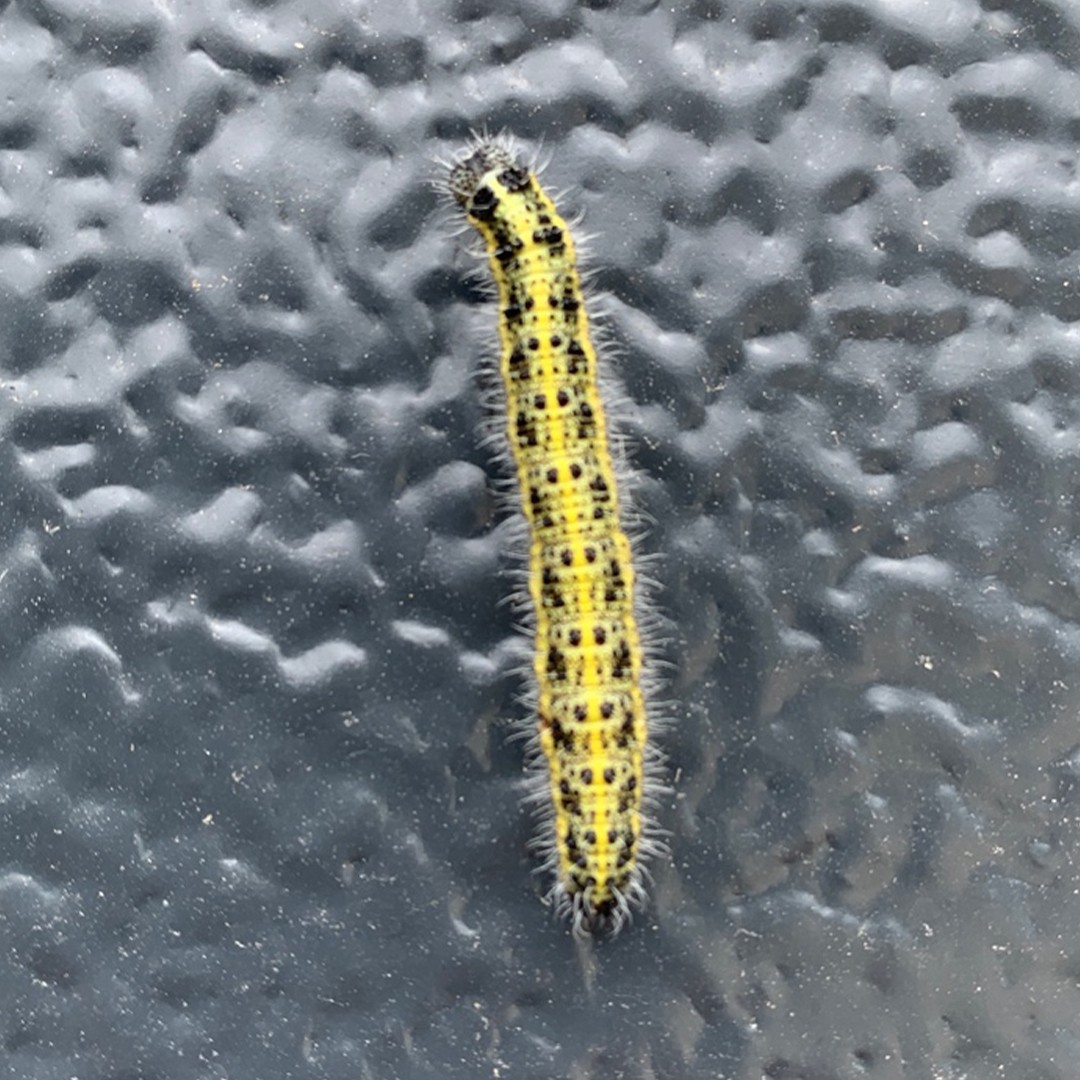
4. Large white
Large white (Pieris brassicae) is visually similar but quite larger than its close relative P. rapae. It lays its eggs on food plants such as cabbages – the origin of its common name – leading to many farmers' classifying this species as a pest.
5. Red admiral
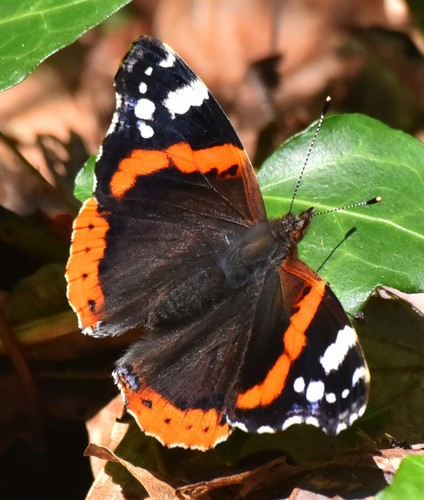
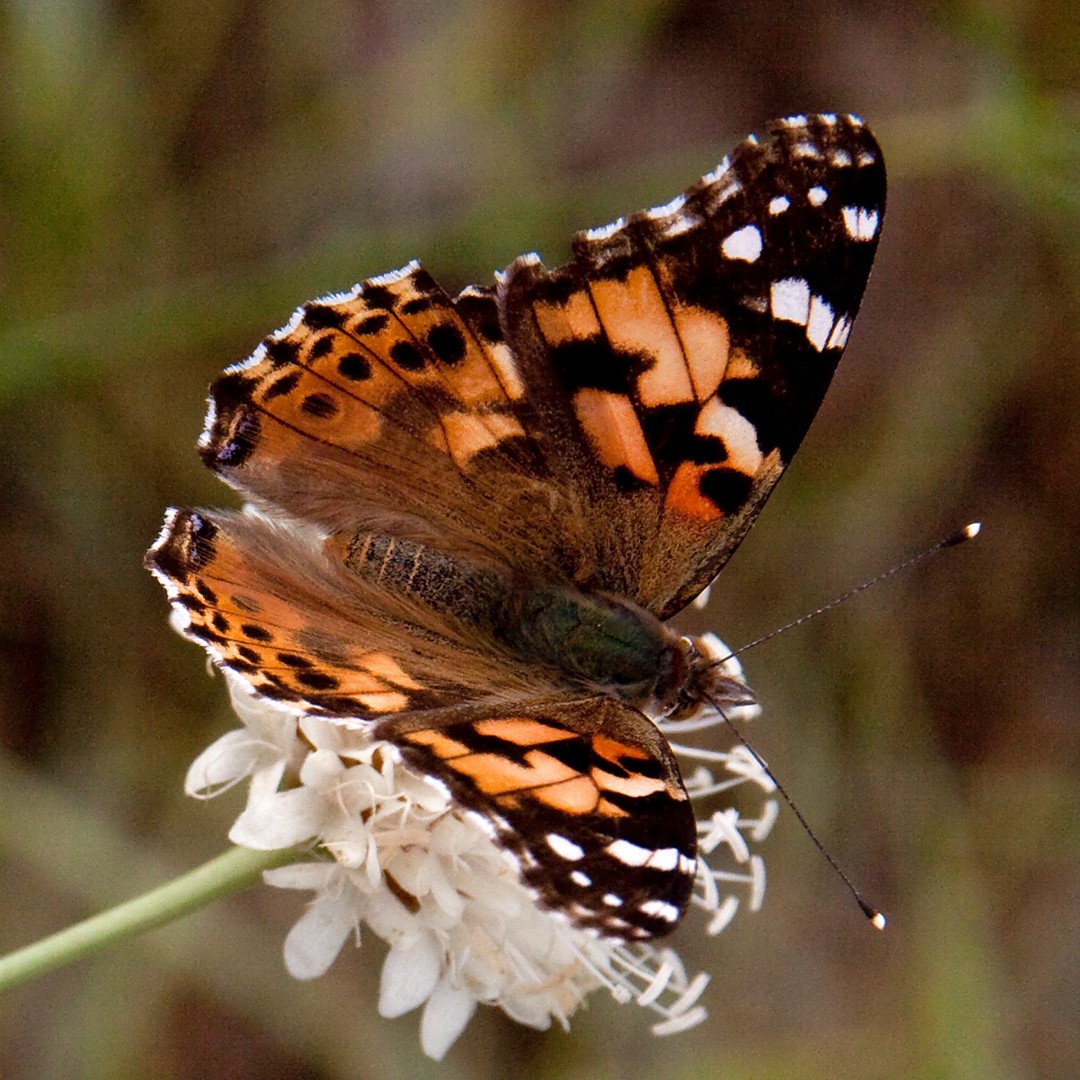
Red admiral (Vanessa atalanta) is a visually striking species of butterfly. Unusually territorial, males will compete for choice areas, and females will only mate with males that maintain their own territories. This butterfly is known for being particularly patient with human interactions, even to the point of perching on clothing or flesh.
6. Speckled wood
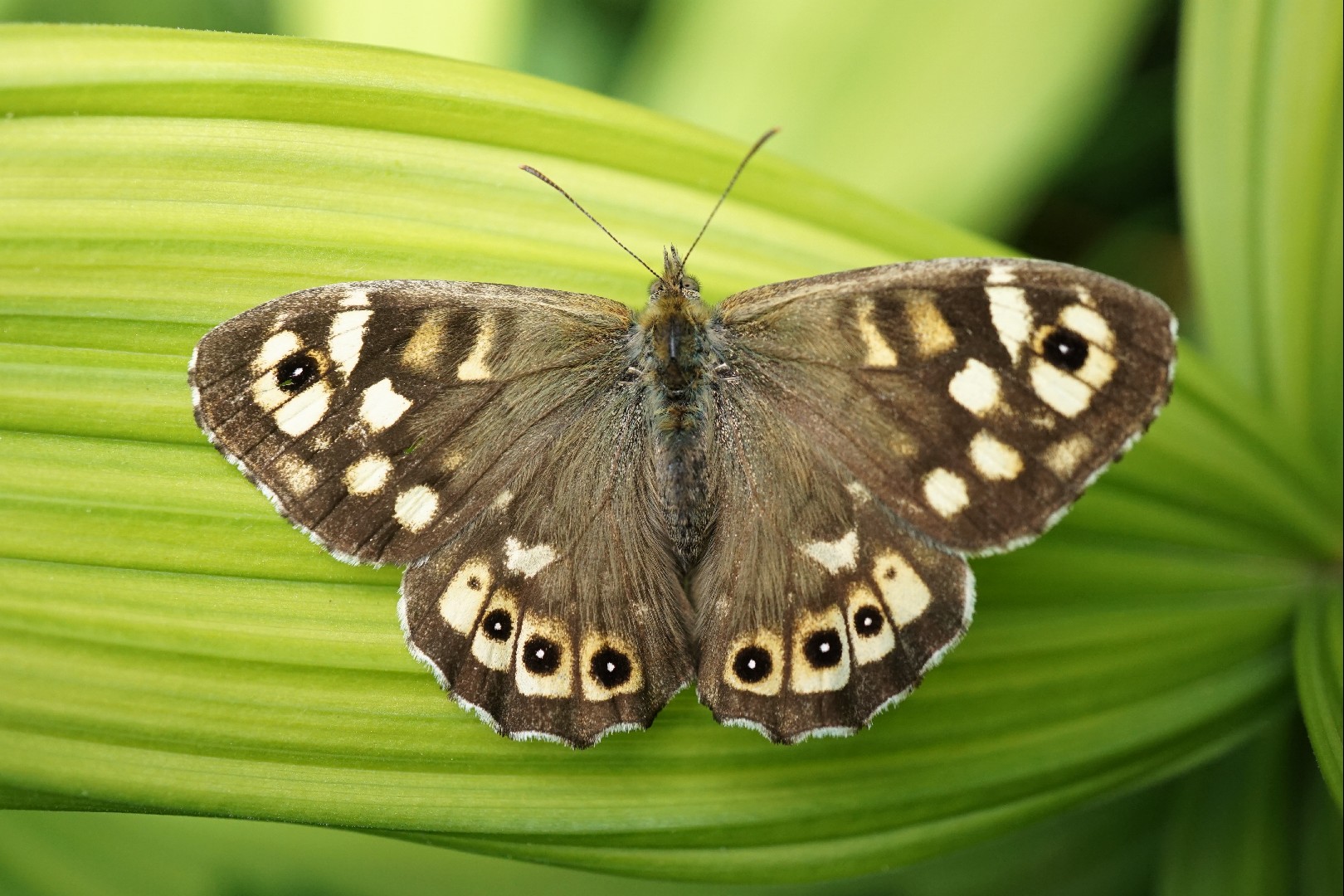
The speckled wood (Pararge aegeria) prefers to live in damp, dark woodlands. Unlike other butterflies, it's more active in shadier habitats rather than sunny ones. Males often fight over a perch, spiraling up to the treetops until they determine a winner. These perches are where the males find passing females.
7. Small heath
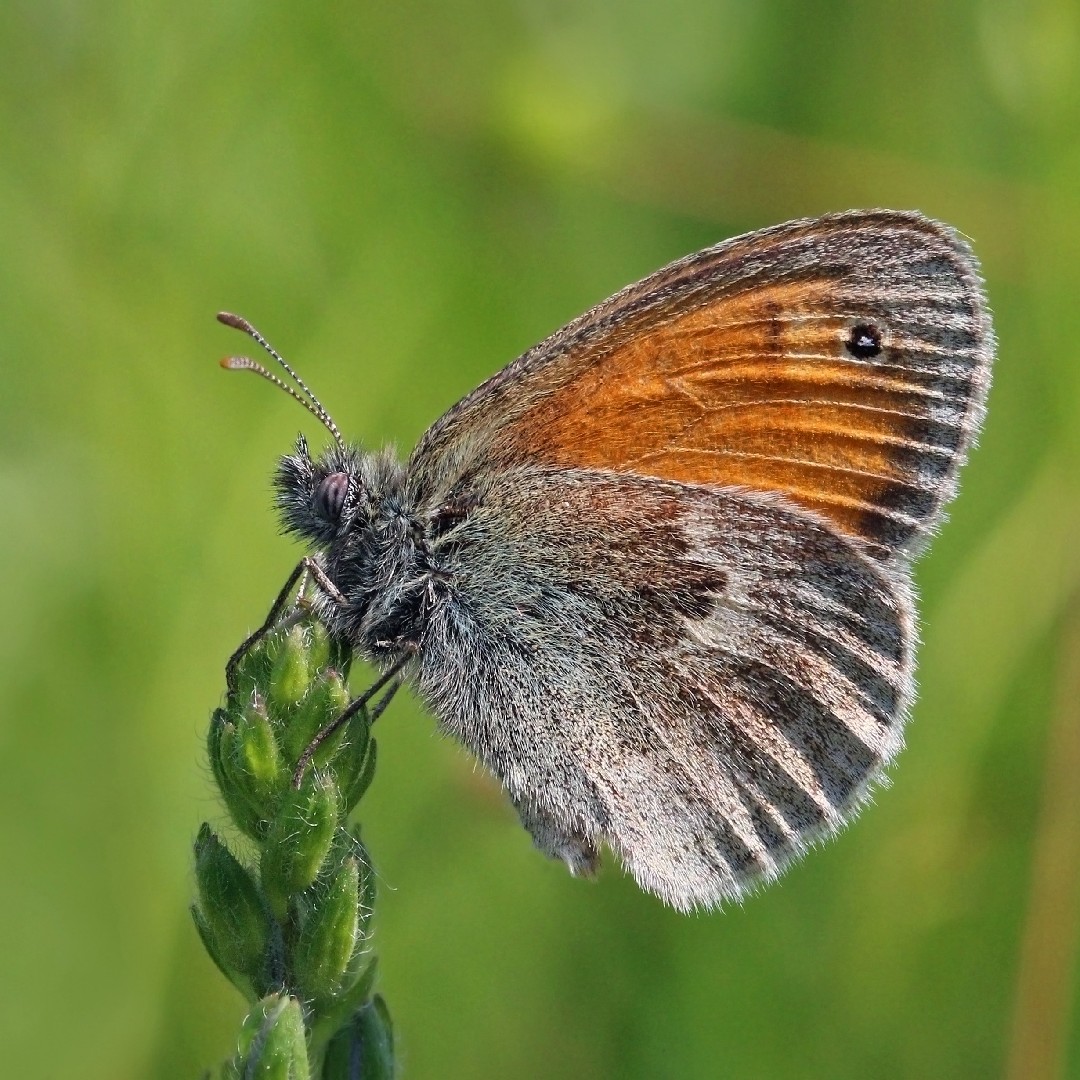
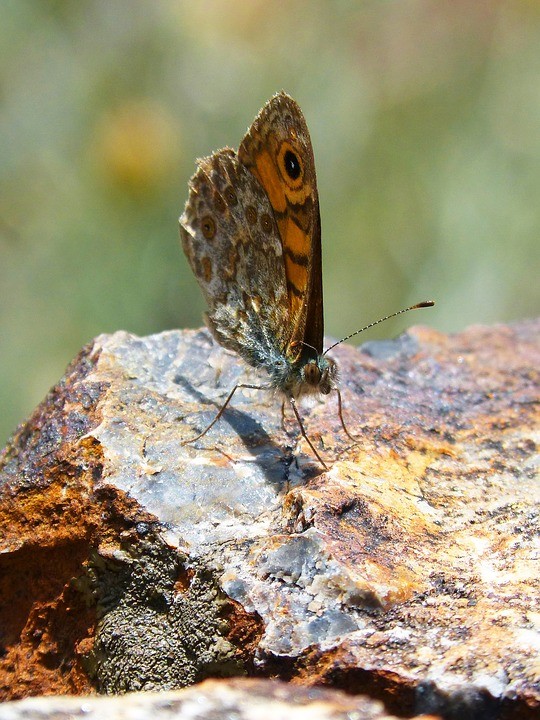
It rests with closed wings when not in flight.
8. Bath white
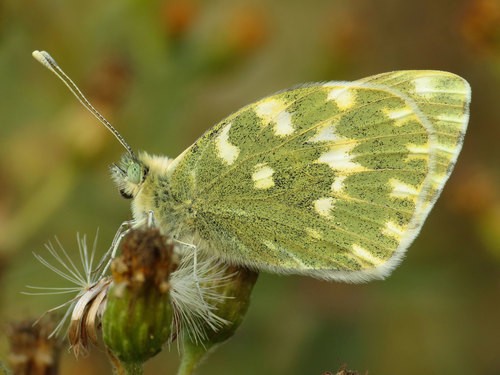
The bath white is a small white butterfly with a wingspan of 45 to 50 mm. The underside of the hindwing has a pattern of greenish blotches, which is characteristic of the Bath whites and easily identifies it fromThe Bath white is a small white butterfly with a wingspan of 4.5 - 5 cm. The underside of the hindwing has a pattern of greenish blotches, which is characteristic of the Bath whites and easily identifies it from other pierids. Sexes can be differentiated by markings on the forewing. The male is differentiated from the female by the markings on the upperside of the forewing. The apex of the forewing is black with white spots and lines. There is a black spot at the end of the cell. In the case of the female, there is an additional discal spot in 1b. The female also has an obscure row of terminal and marginal spots on the upper hindwing. Male: Upperside: white. Forewing: basal half of costa narrowly irrorated with black scales, a broad irregular quadrate black spot over the discocellulars; apex and termen anteriorly, above vein 3 broadly black, with a subterminal series of spots of the ground colour, prolonged as fine lines to the terminal margin. Hindwing: uniform, the markings on the underside showing faintly through; a costal spot before the apex, and in some specimens, some obscure, anterior terminal markings indicated by irrorated black scaling. Underside: white. Forewing: the form of the markings as on the upperside but the base of the cell with an irroration of green scales, the black discocellular spot extended to the costa, often washed with green or with a green centre to the black; the apical patch green not black, with the spots of the ground colour on it ill-defined and obscure; a black or greenish-black spot in the outer half of interspace 1. Hindwing: green; costal margin at base yellow; dorsal margin white; a spot in middle of cell, another above it in interspace 7, a curved irregular discal series of conjoined spots beyond the cell, of which the upper two spots in interspaces 1 to 6, white; the veins sometimes faintly yellow. Antennae dusky-black; head, thorax and abdomen fuscous black; beneath; head, thorax and abdomen white. Female: Upperside: differs as follows: Forewing: a dusky-black streak extends from the base along costa and terminates at the black spot on the discocellulars; a transverse, somewhat quadrate black spot in the outer half of interspace 1, with sometimes a short ill-defined black streak below it; the black area on apex and anterior portion of termen broader, the white spots on it blurred and obscure. Hindwing: a large costal black spot before apex; a broad, black, subterminal, inwardly diffuse, curved band in continuation of the same, and a terminal series of clavate black marks that start from the outer margin of the black subterminal band. Underside: markings much as in the male but broader. Antennae, head, thorax and abdomen as in the male. Wingspan: 5 - 6 cm
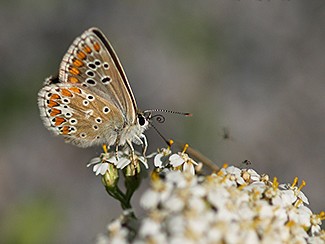
9. Southern Brown Argus
In specimens [ of astrarche ] from the Canaries the red macular band of the upperside is occasionally quite uncommonly broad and of even width, so that it forms a regular band, only transected by the black veins; this is ab. cramera Eschsch. (= canariensis Black.) (80 a). I also caught very extreme specimens of this form on the slopes of the Aures Mts. in Algeria, although only singly; on the other hand I met on the Canaries with specimens of astrarche which certainly did not belong to cramera, but rather to calida.
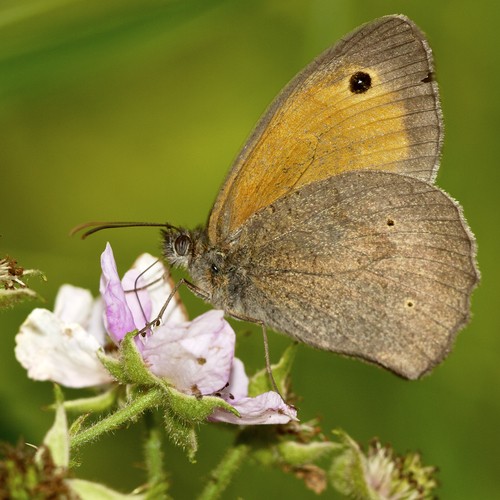
10. Meadow brown
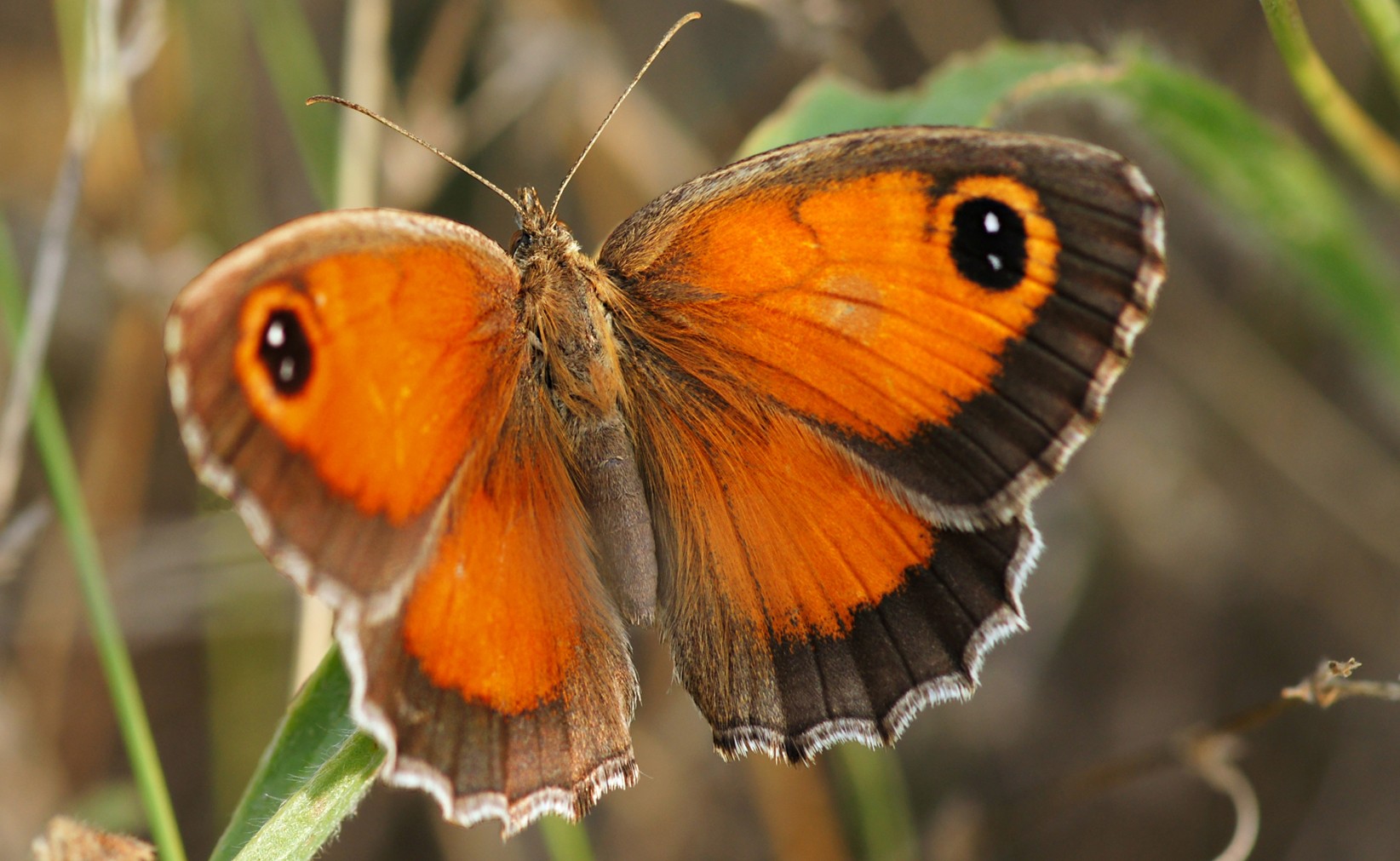
The meadow brown (Maniola jurtina) is similar to the Gatekeeper in the way that it rests with its wings open due to the "eye spots" on either end of its wings that ward off predators. While the color is a deep brown, the caterpillar form is a beautiful bright green with little, white hairs and a dark line leading down its back.
More







