




Top 20 Most Common Insects in Alicante
Welcome to the fascinating world of insects in Alicante, an area teeming with biodiversity. Insects, the spineless champions of survival, thrive in diverse settings, from coastlines to forested hills, each type adapted to its unique environment. They play critical roles in our ecosystem; from being a nuisance as pests to acting as effective natural pollinators. As we uncover the 20 most common insects in Alicante, you'll come to appreciate the intricate link between ecology and its inhabitants.

Most Common Insects
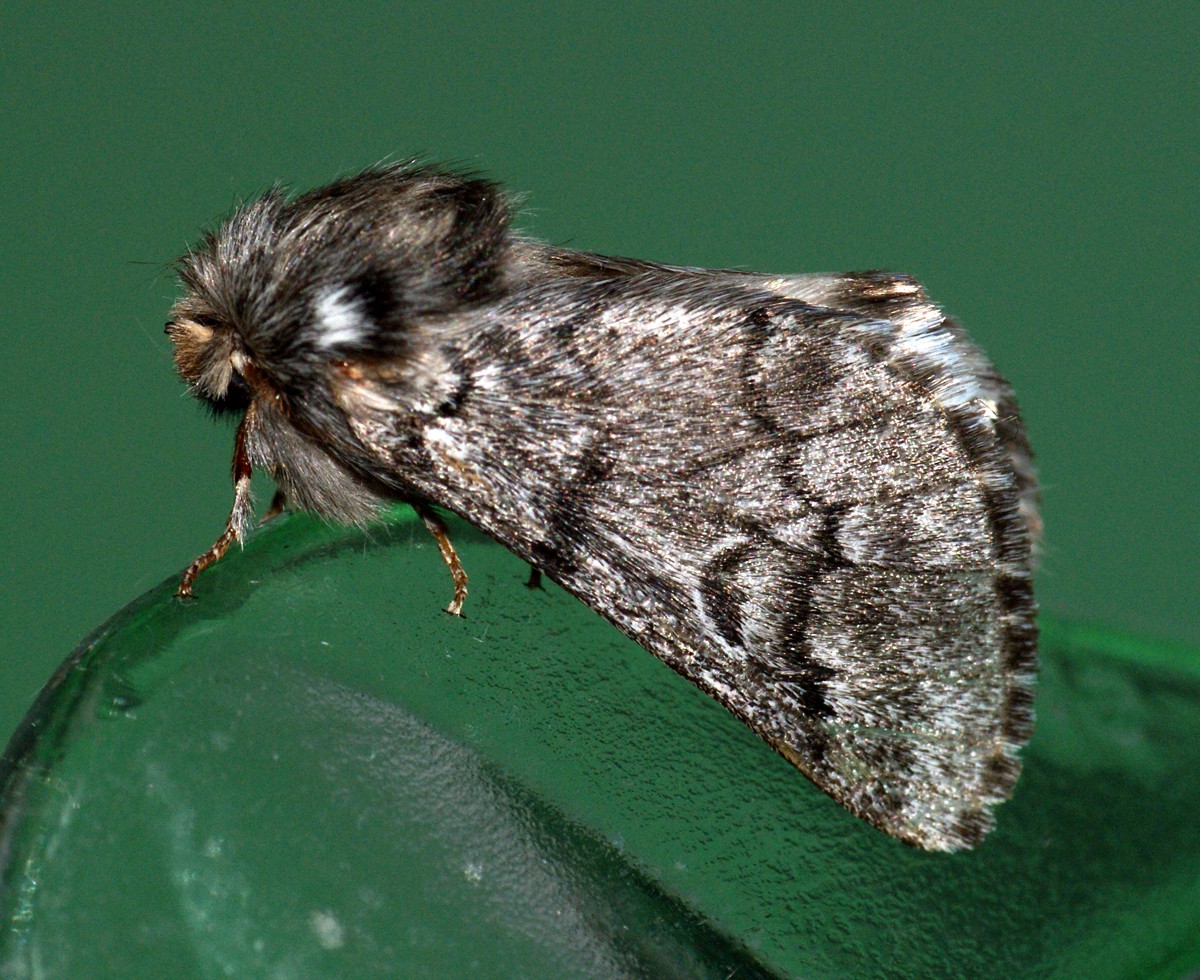
1. Pine processionary
The pine processionary (Thaumetopoea pityocampa) have very boring looking adult stages, as though they have to calm down after being major jerks in their caterpillar stages. Their caterpillars are known to be major pests that munch down many pine trees, hanging out in tent-like structures as they do so. They are also known to cause harmful effects on anyone foolish enough to touch their hairs.
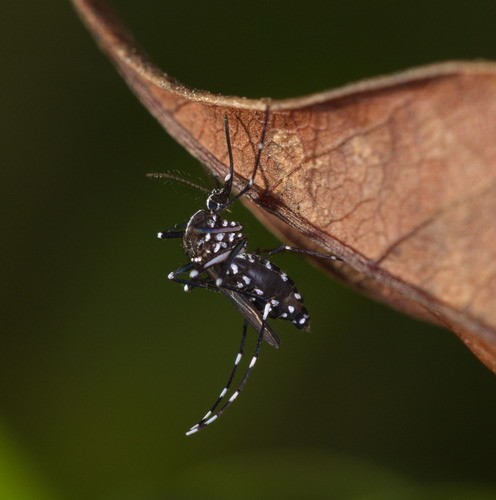
2. Asian Tiger Mosquito
The asian Tiger Mosquito (Aedes albopictus) has recently (the 1970s) infested every corner of the world through the shipment of used tired, lucky bamboo (Dracaena sanderiana), and other similar products. The asian Tiger Mosquito is known to transmit many deadly diseases that include West Nile Virus.
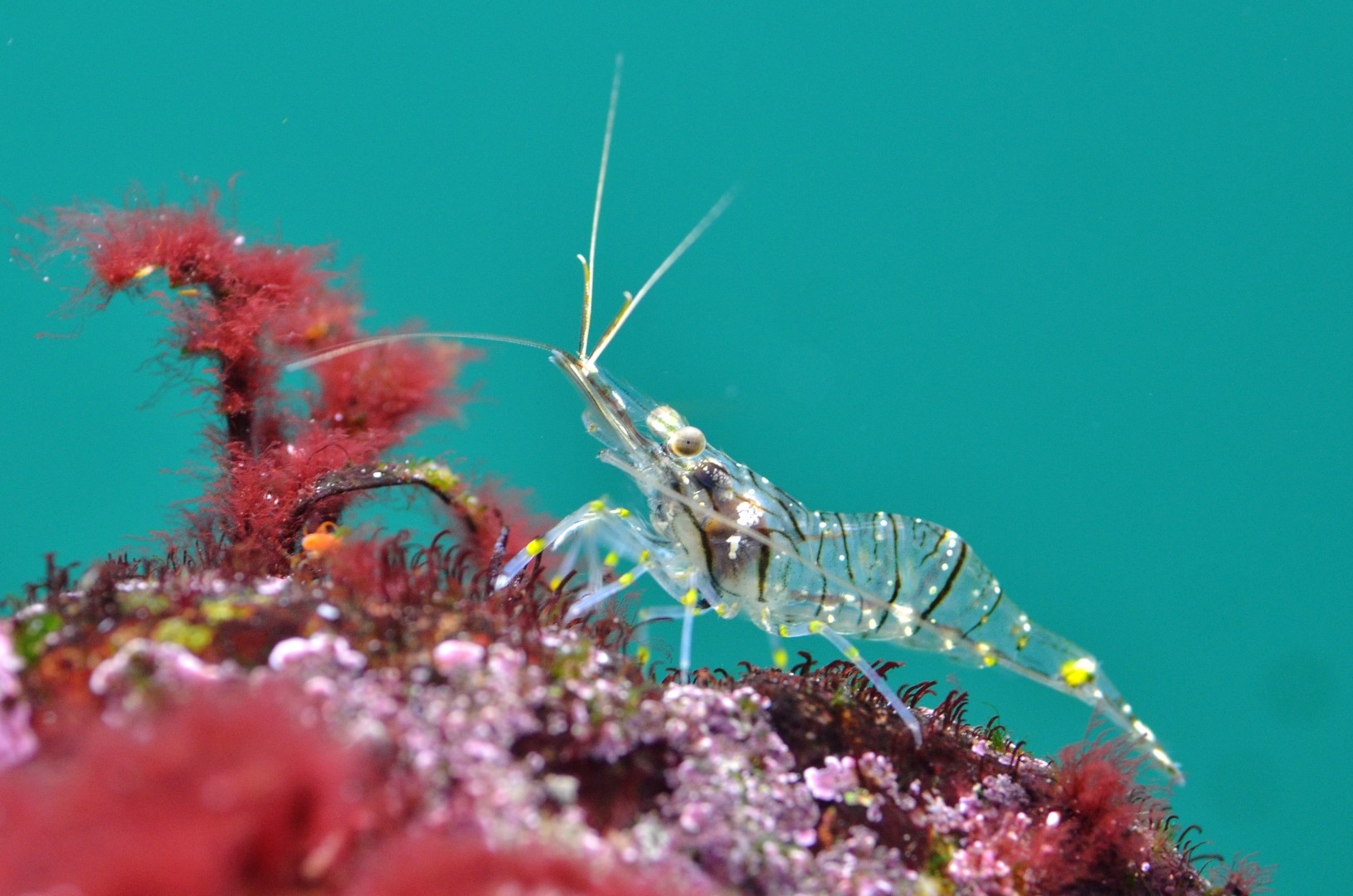
3. Common prawn
P. serratus may be distinguished from other species of shrimp by the rostrum, which curves upwards, is bifurcated at the tip and has 6–7 along its upper edge, and 4–5 teeth on the lower edge. Other speciesmay have a slightly curved rostrum, but then the teeth on its dorsal surface continue into the distal third, which is untoothed in P. serratus. P. serratus is pinkish brown, with reddish patterns, and is typically 100 millimetres (3.9 in) long, making it the largest of the native shrimp and prawns around the British Isles. P. serratus is one of the few invertebrates to have its hearing studied in detail; it is sensitive to frequencies between 100 Hz and 3 kHz, with an acuity similar to that of generalist fish. While the hearing range of a P. serratus individual changes as it grows, all are capable of hearing tones at 500 Hz. 
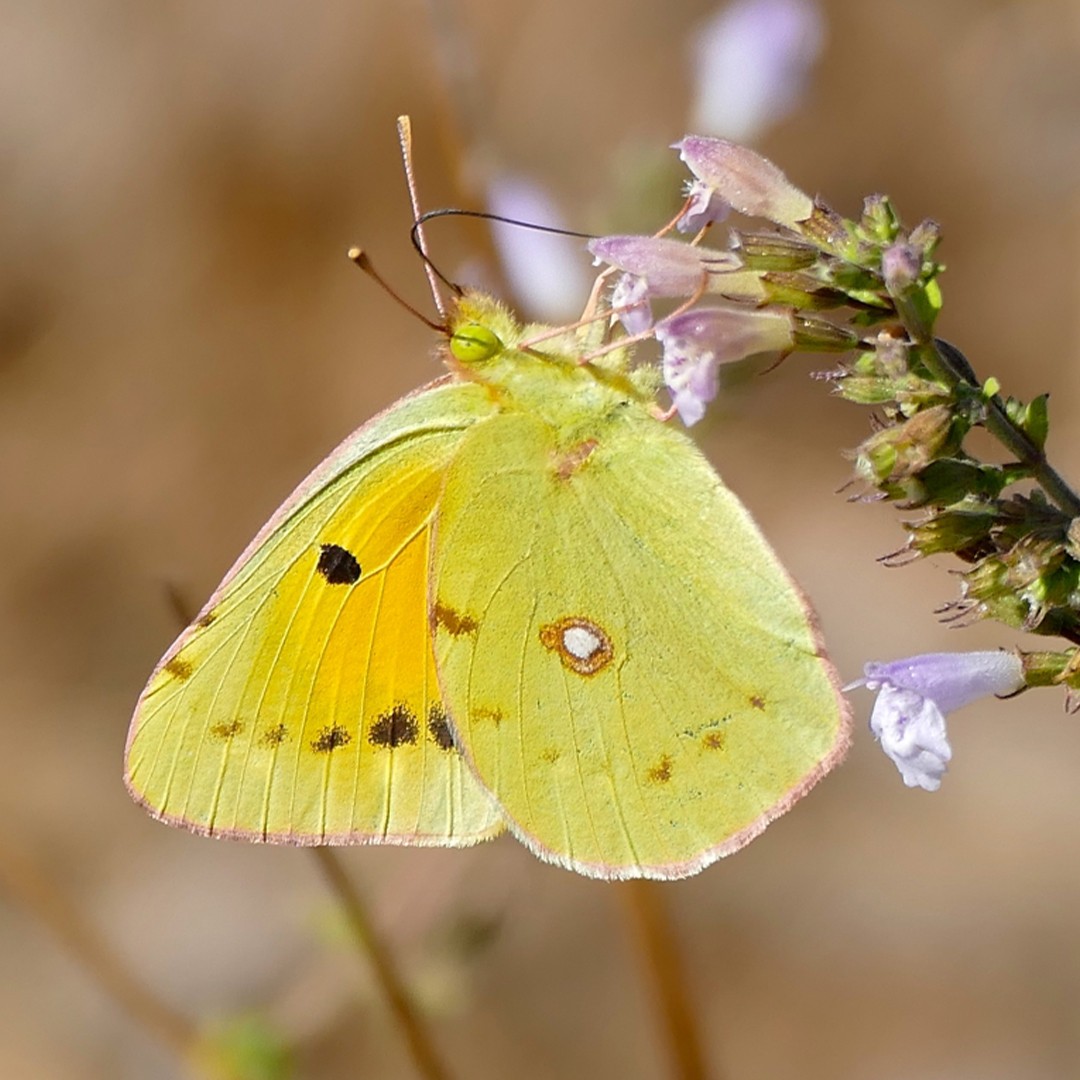
4. Clouded yellow
Colias croceus has a wingspan of 46–54 millimetres (1.8–2.1 in). The upperside of the wings is golden to orange yellow with a broad black margin on all four wings and a black spot near the centre forewing. Usually these butterflies settles with its wings closed, consequently the black margin of the uppersides of the wings is difficultly visible. The underside lacks the black borders and is lighter, with a more greenish tint, particularly on the forewings. In the forewing underside is the same dark spot as on the upperside, but often with a light centre; the hindwing underside has a white centre spot, often with a smaller white or dark dot immediately above it. Sometimes, a row of black dots occurs on the underwings' outer margins, corresponding to where the black border ends on the upperside. Females differ from the males in having yellow spots along the black borders on the upperside. In flight, Colias croceus is easily identifiable by the intense yellow colouring, much brighter than that of the lemon-yellow male common brimstone which also lacks black markings. Like all Colias species they never open their wings at rest. In a small proportion of females (about 5%) the golden upperside colouration is replaced by a pale cream colour. These females have been distinguished as form helice. The pale form helice does not seem to be that distinct as intermediates exist and the variation is to some extent related to humidity during development, with dryer conditions producing paler colouration. These pale forms helice can be confused with Berger's clouded yellow (Colias alfacariensis) and the rarer Pale clouded yellow (Colias hyale). Even the palest C. croceus tends to have more black on the upperside however, in particular on the hindwings. Young caterpillars are yellow-green, with a black head. Later they become completely dark green, with a white red spotted lateral line after the third moult. The pupae are green and have a yellow side stripe. This species is rather similar to Colias myrmidone, Colias chrysotheme, Colias erate, Colias hyale, Colias alfacariensis, Colias caucasica, Colias aurorina.
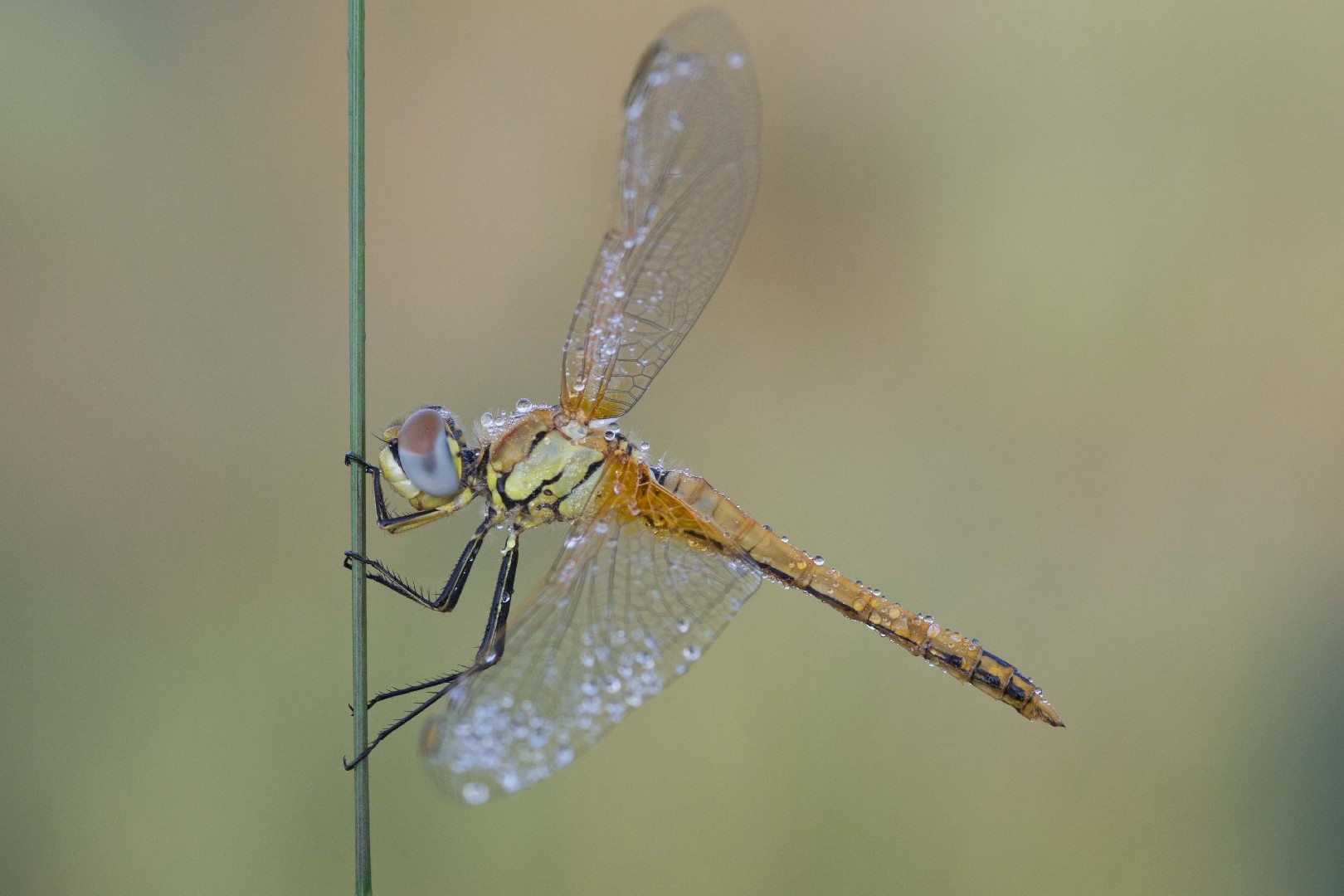
5. Red-veined darter
The Early Darter (Sympetrum fonscolombii) is a species of dragonfly in the family of the leaflets (Libellulidae), which belongs to the great dragonfly (Anisoptera).
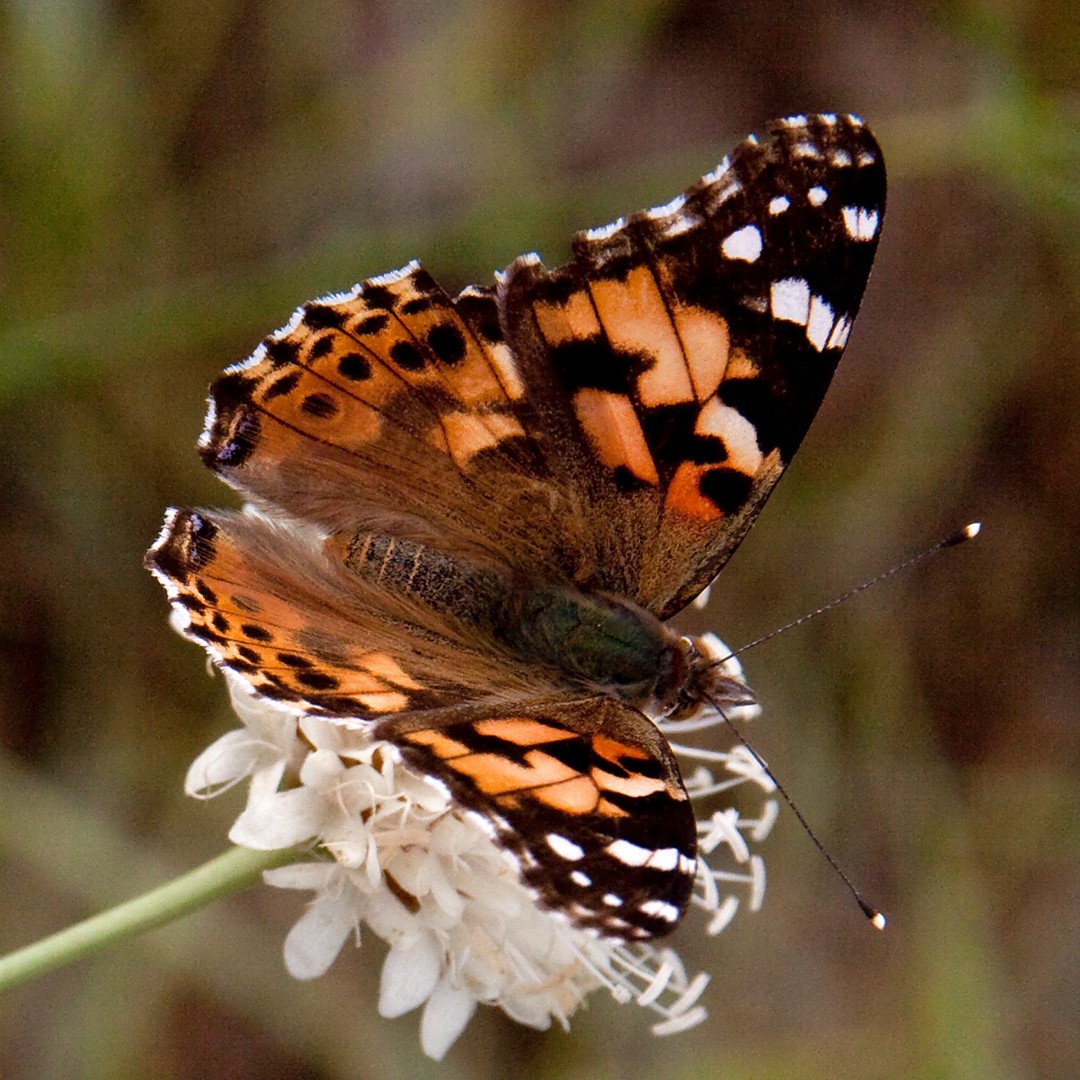
6. Painted lady
The painted lady is a migratory butterfly that spends part of the year in Northern Africa and then migrates to Europe during the warmer months. Although the adults feed on nectar from flowers, the larvae feed on the leaves of nettles and thistles.
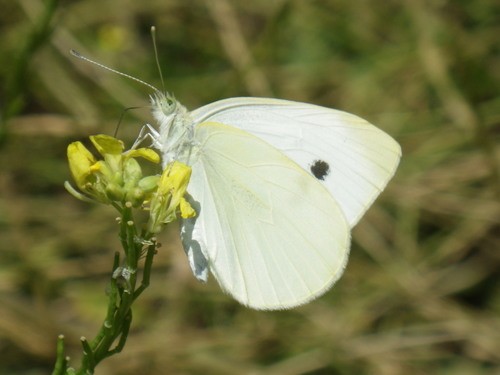
7. Cabbage white
Cabbage white (Pieris rapae) derives its common name from its habits as a caterpillar, which is a ferocious pest for cabbage, kale and broccoli farmers. In North America, it is one of the first butterflies to emerge in spring, heralding the beginning of the season.
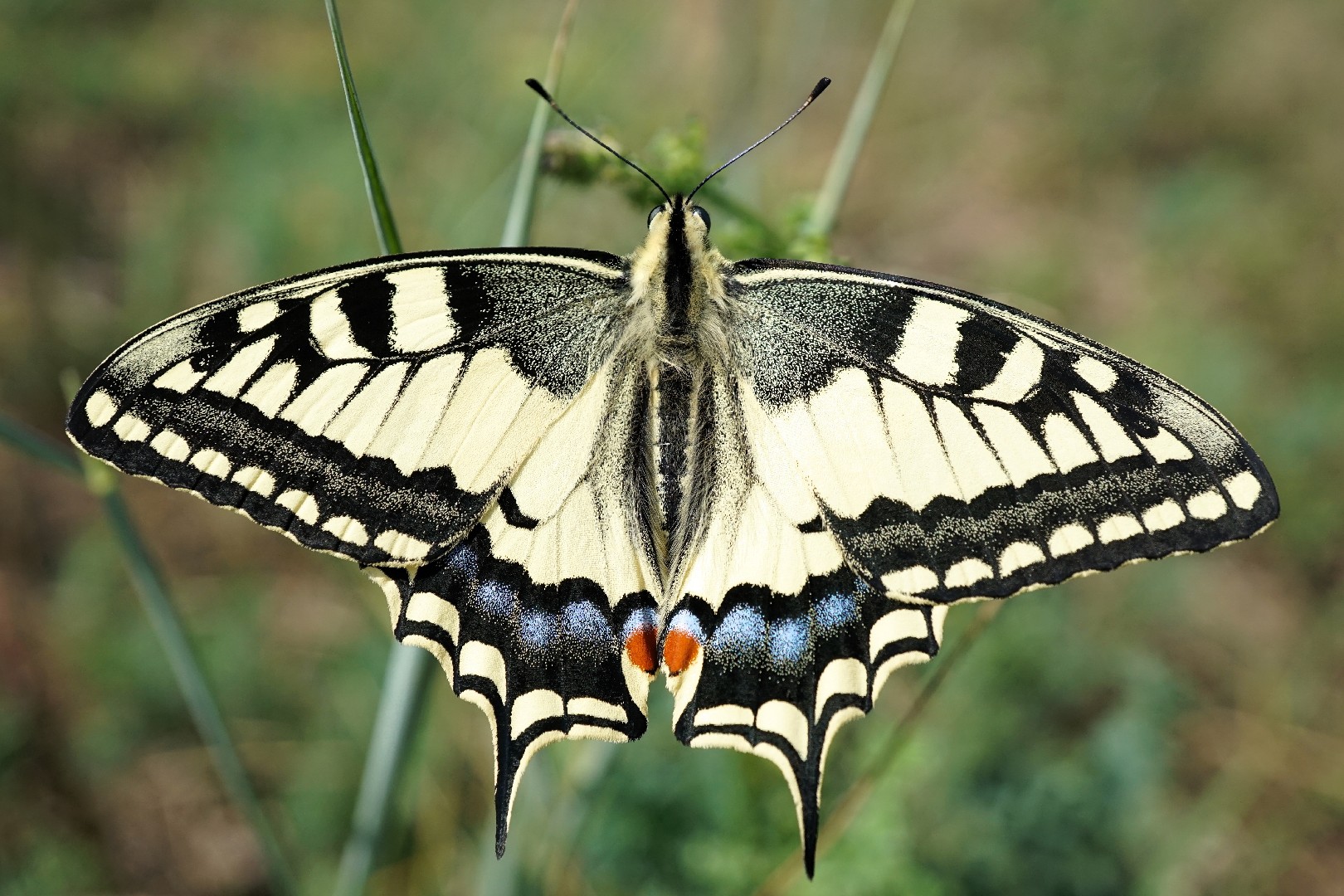
8. Old World swallowtail
The old World swallowtail (Papilio machaon) is commonly just called the "swallowtail," giving it the added title of "old world" to distinguish it and remind us that it comes from the "old world" (Asia, Africa, Europe). The upper side of them is a beautiful combination of pure white with black striping, the underside being a brownish version of the same thing. There is blue and two red dots on its back side.
9. Wall brown
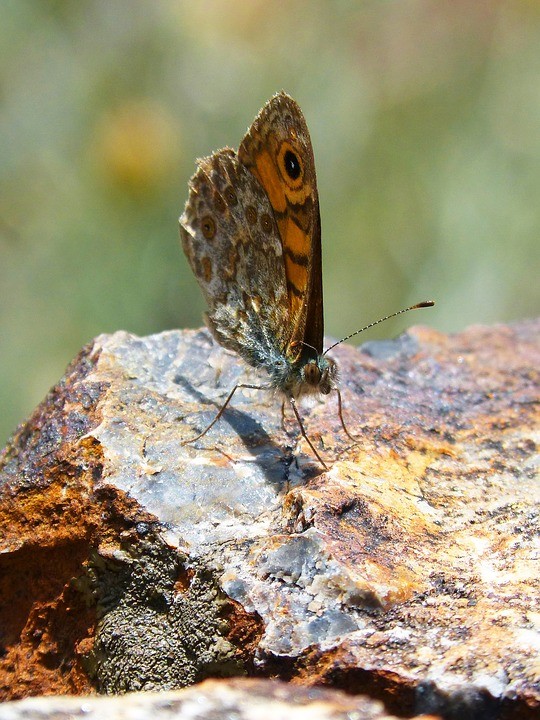
P. megera L. [— xiphie Boisd. pt (45d). Above reddish yellow, with a black mark which traverses the distal band from the cell of the forewing to the abdominal margin of the hindwing, short black stripes crossing the disc and the cell of the forewing.
10. Spanish gatekeeper
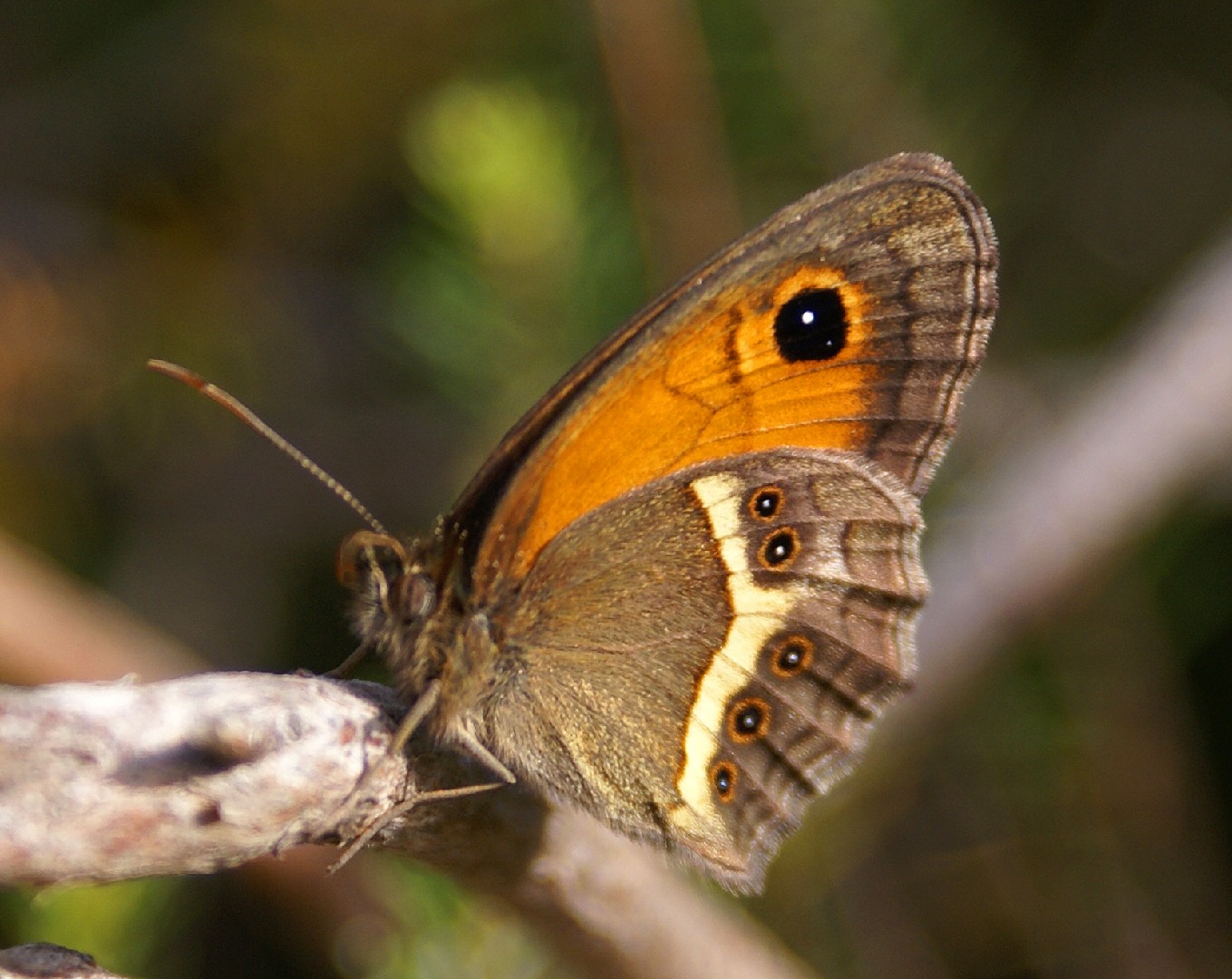
The wingspan is 1.8 - 1.9 cm.

More







