




Top 18 Most Common Insects in Fouchana
Insects, a fascinating group known for their distinctive characteristics, often mirror the ecosystem's diversity of their home - Fouchana. In Fouchana, geographical variations significantly contribute to the myriad insect population. As vital cogs in the ecological machinery, insects provide crucial services, from pest control to pollination. Our 'Top 18 most common insects in Fouchana' list elucidates this state specific insect-human-ecosystem relationship, spotlighting both beneficial insects and pests.

Most Common Insects
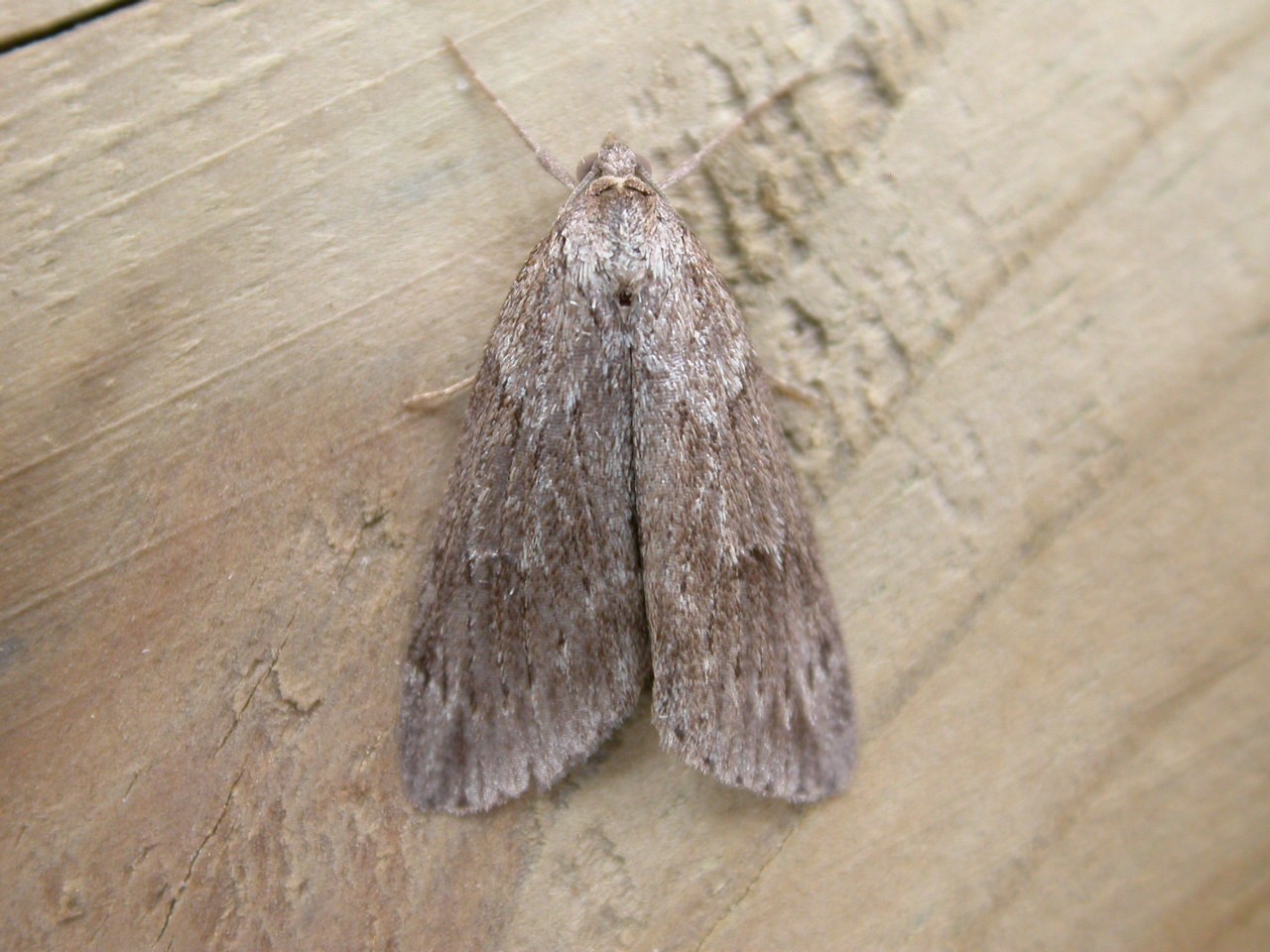
1. Horse chestnut
Pachycnemia hippocastanaria, the horse chestnut moth, is a moth of the family Geometridae. It is found in most of Europe. The wingspan is 28–32 mm. Adults are on wing from April to May, and again in a partial second generation in August, usually with fewer and smaller moths. The larvae feed on Calluna species, although both the English and Latin names refer to the horse chestnut. 
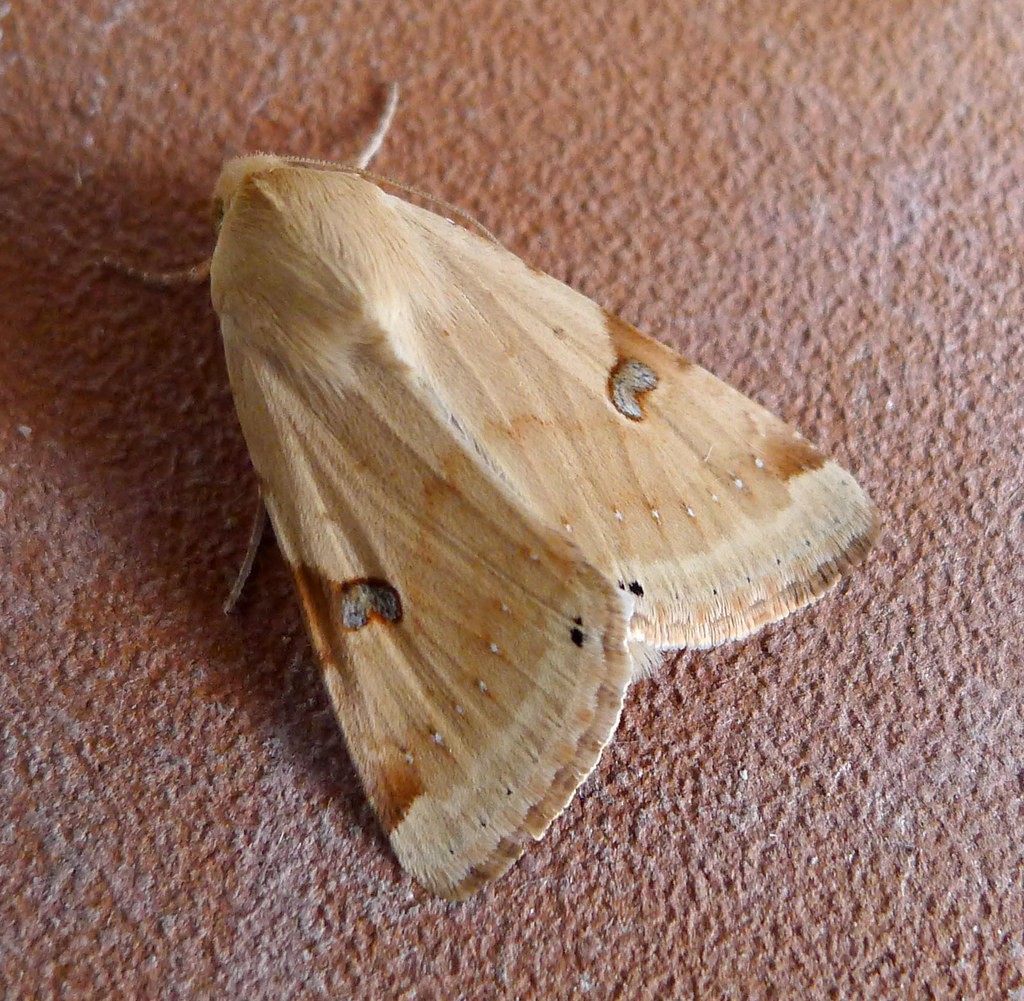
2. Bordered Straw
Heliothis peltigera has a wingspan of 29–40 mm and forewings reaching a length of 16–19 mm. These moths are rather variable in pattern and colour. Forewings are usually greyish ochreous, flushed with pale brown, except the narrow marginal area; lines are brown, indistinct; orbicular stigma is a dark dot. On middle of costa there is a reniform grey dot, with dark brown edge and centre, joined to a brown mark. A brown band appears between outer and submarginal lines. A black dot is present below vein 2 before margin. Hindwings show a broad brown-black marginal border, containing a pale blotch between 2 and 4. Cellspot is dark and fringes are white. Larvae are reddish grey or ochreous, dotted with white. Dorsal and subdorsal lines are dark, while spiracular line is white. This species is quite similar to Heliothis nubigera, that shows less evident kidney markings, and to Helicoverpa armigera, that has lighter colored hindwings.
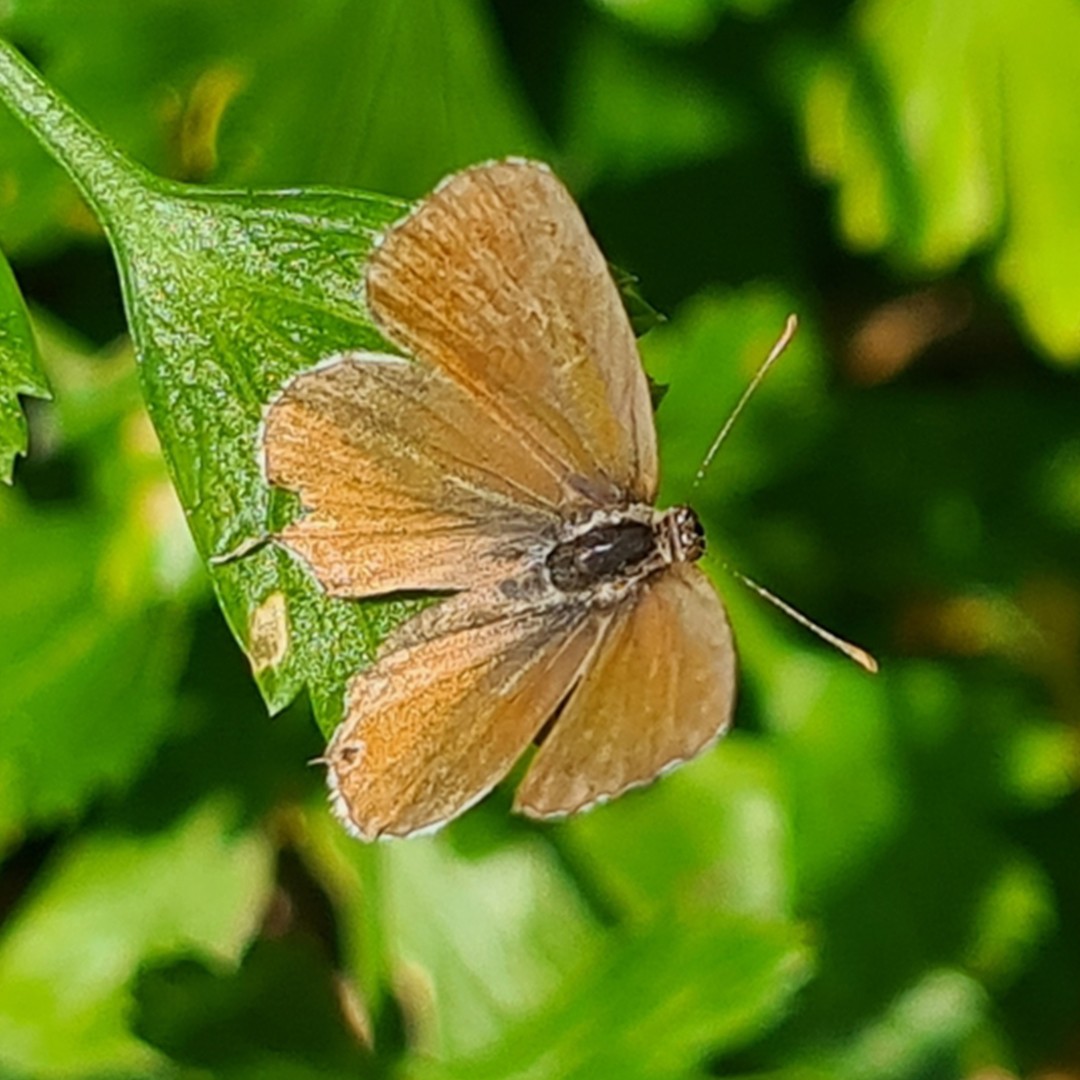
3. Geranium bronze
The adult geranium bronze butterfly's wingspan ranges from 15–23 mm in males and 18–23 mm in females. The wings are brown/bronze with a white border outlining the wings. The underside is a grey-brown with darker bands interlaced with white, creating an intricate pattern. The hindwings contain an eye spot in order to divert predators from attacking. The male and female are similar in appearance.
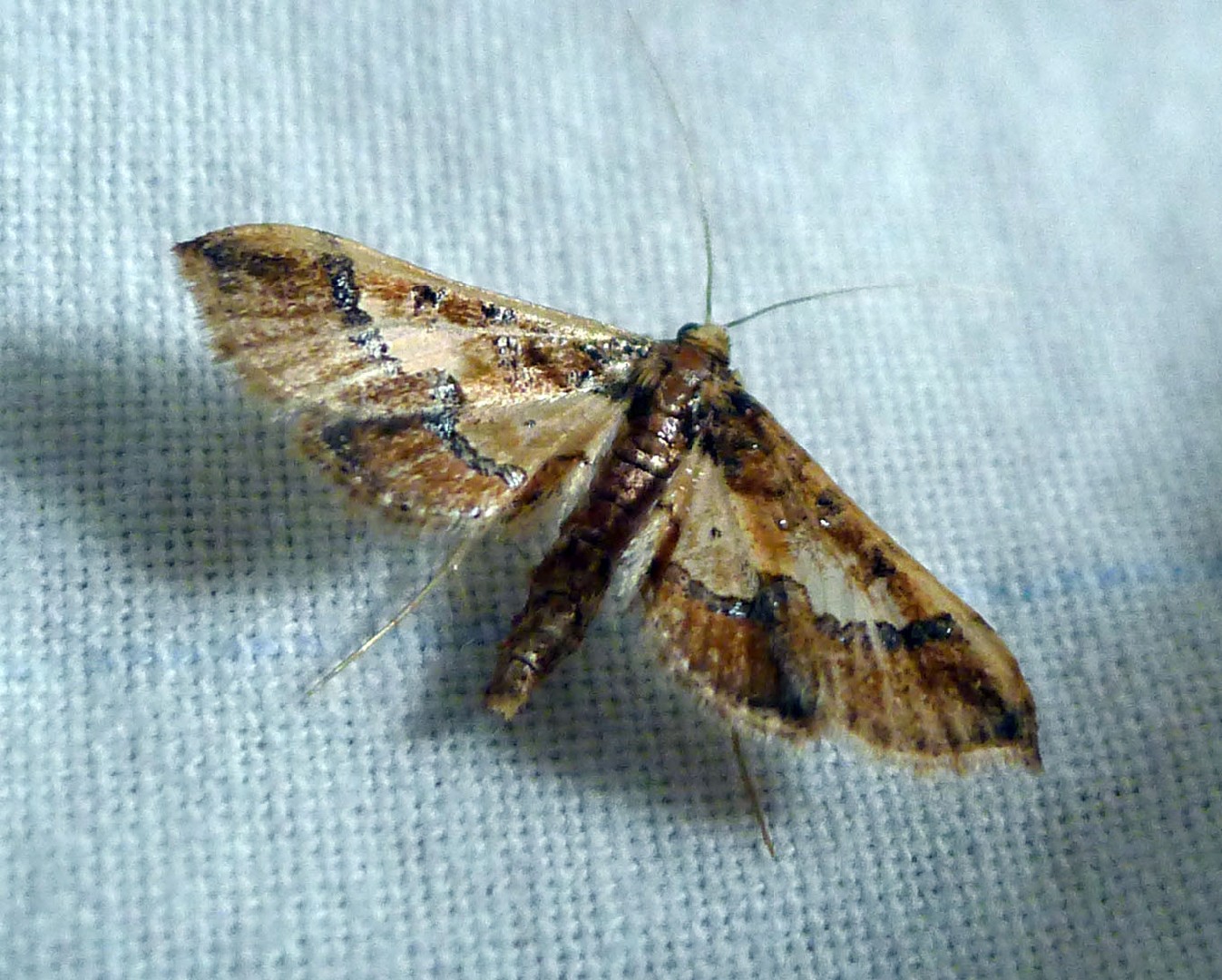
4. Ornate hydriris
The wingspan is about 1.6 cm.
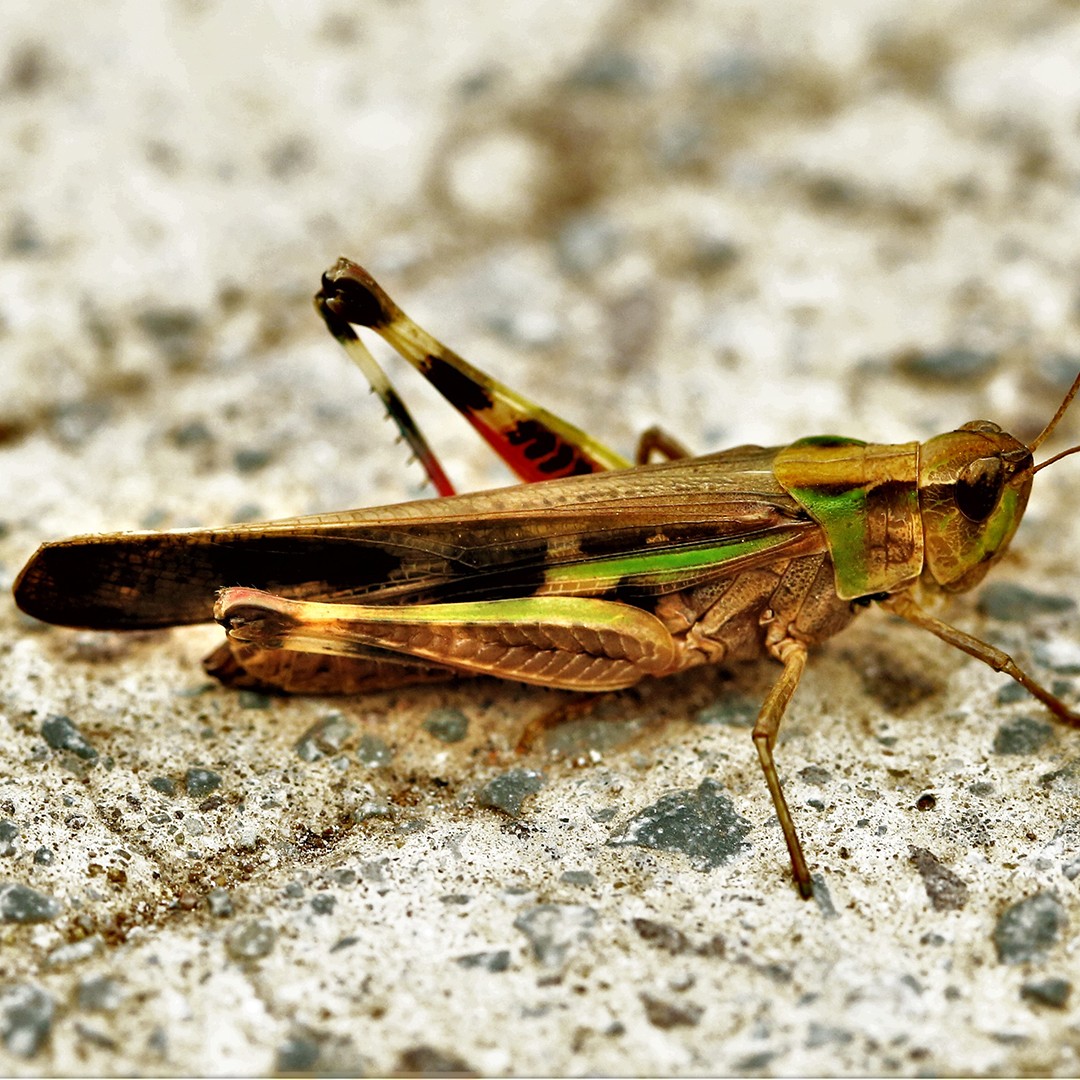
5. Long-winged grasshopper
Aiolopus thalassinus is a species of grasshopper belonging to the family Acrididae, subfamily Oedipodinae. It is present in many countries of Europe (but not the British Isles or Scandinavia), and in the Afrotropical realm to Asia and the Pacific islands. The colouration of this species is generally from clear brown to dark brown. Females have a size of 21–29 mm and males of 15–19 mm.
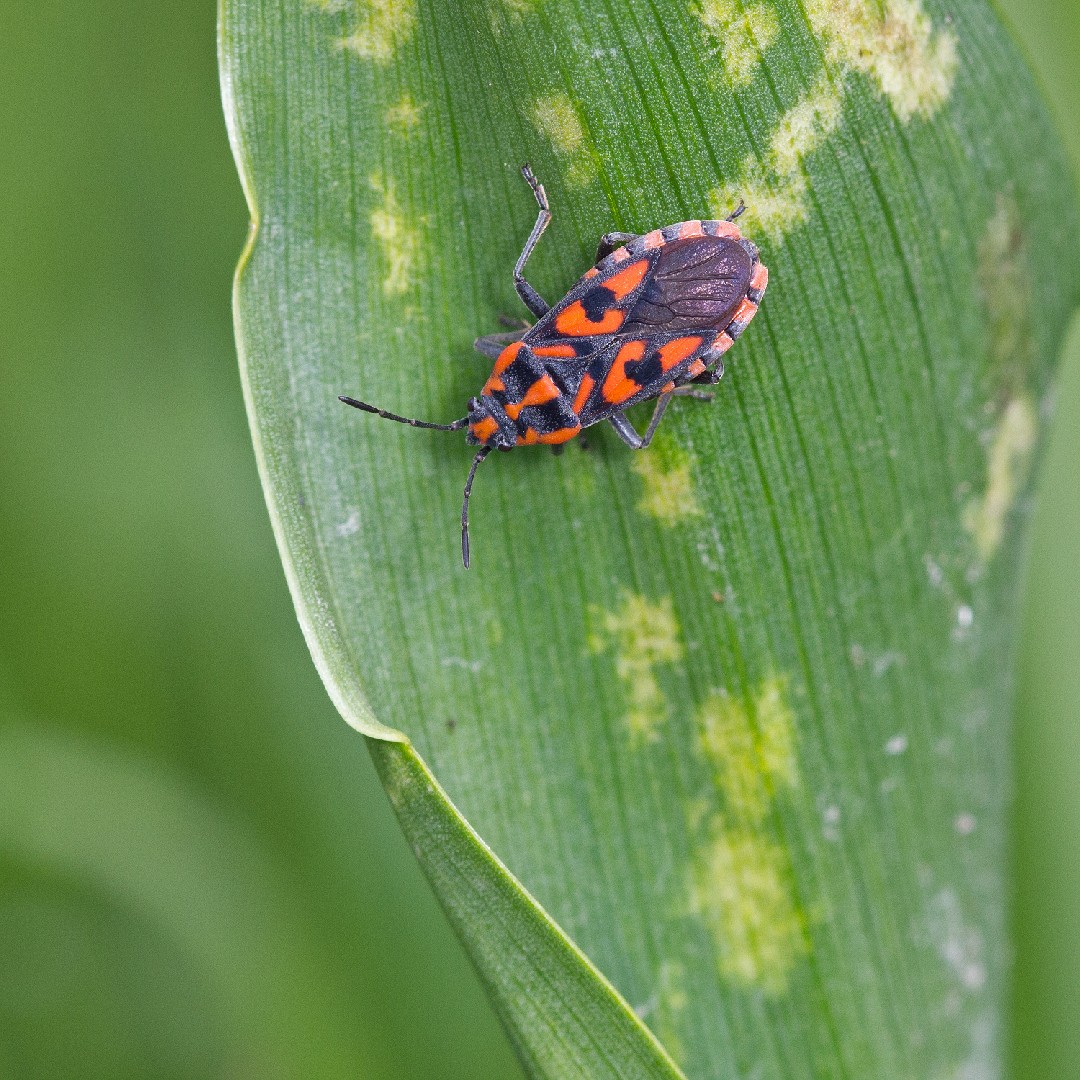
6. Spilostethus saxatilis
Spilostethus saxatilis can reach a length of 0.33–0.49 in. Bodies of these bugs are characterized by black and red markings of different shapes. Pronotum is red, with two broad, irregularly shaped longitudinal black stripes. The hemilytra have black and red markings, while the membrane is black, without white spot. The outer edge of the corium is black. The connexivum is alternately red and black colored. Antennae and legs are black.
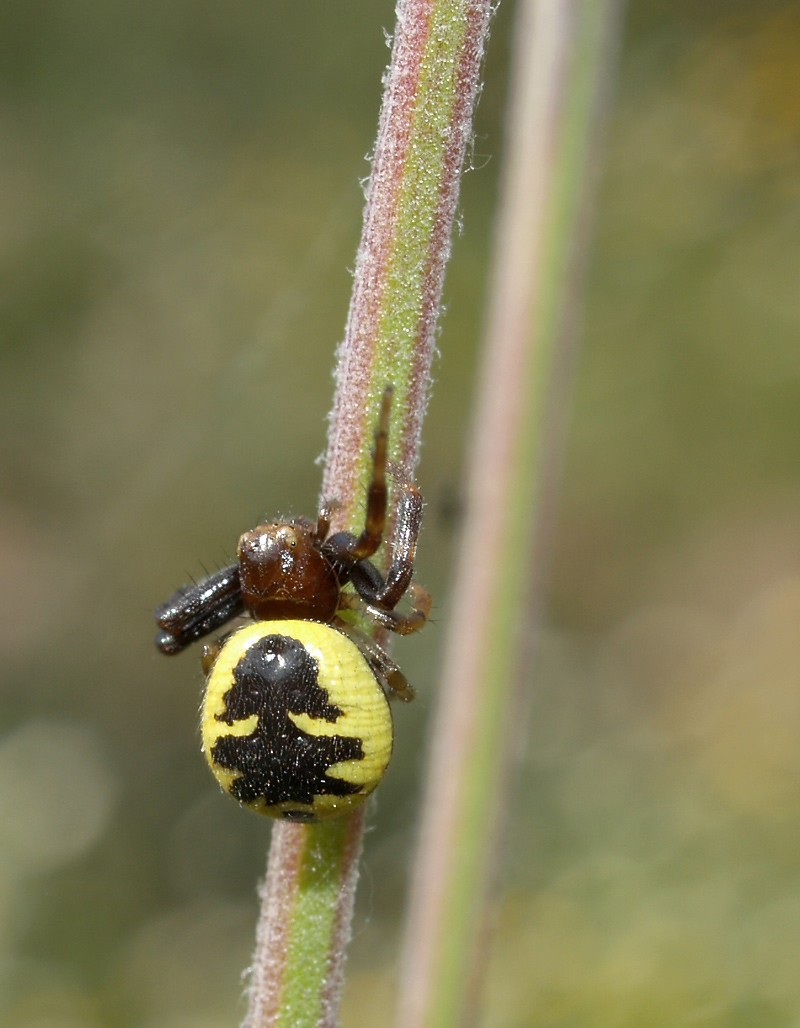
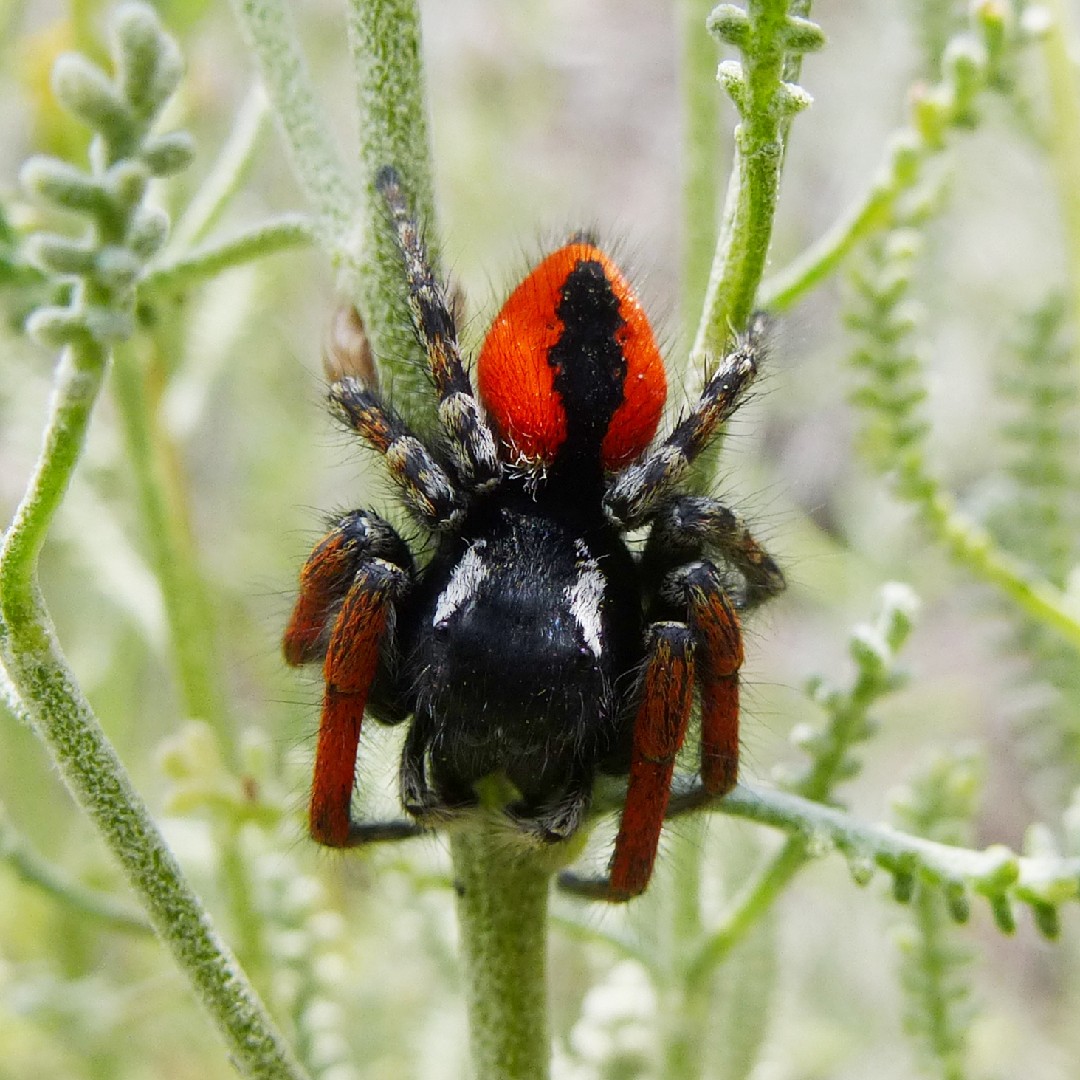
7. Napoleon spider
The adult males reach 2 - 4 mm in length, while females are 7 - 8 mm long. The two pairs of the front legs, used for hunting the flower-feeding insects, are more developed than the rear ones, which have a predominant motor function. Mature males have a black abdomen with two white marks. In mature females, the background colour of the abdomen can be red, yellow or white, with a black pattern which has been noted for a certain resemblance to the silhouette of Napoleon. Prosoma and legs are black or dark brown.
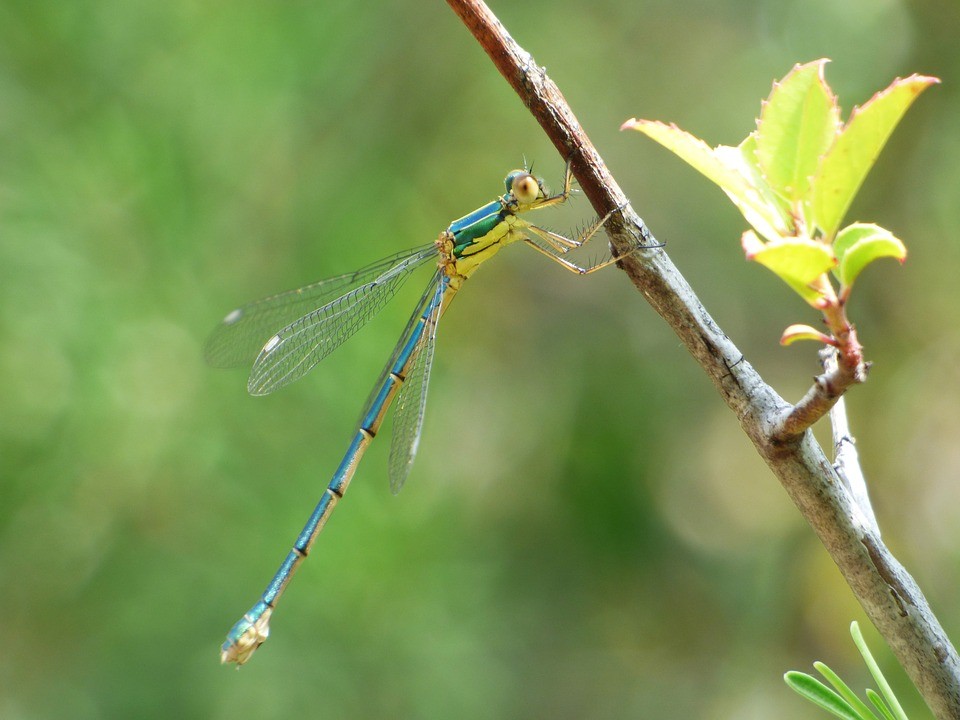
8. Western willow spreadwing
Chalcolestes viridis, formerly Lestes viridis, is a damselfly of the family Lestidae. It has a metallic green body and at rest it holds its wings away from its body. Its common name is the willow emerald damselfly or the western willow spreadwing.
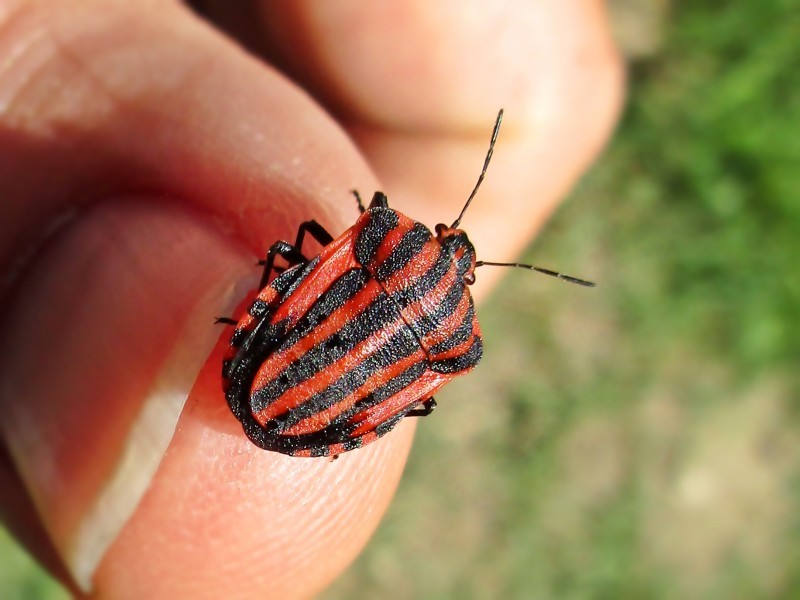
9. North african and sicilian striped shield bug
G. lineatum can reach a length of 8–12 mm (0.31–0.47 in). The body is almost round, with a large shield. The basic color of the upperside of the body is orange yellow, with wide black longitudinal stripes. The pronotum has six black bands. The antennae are black. Also the sides of the abdominal segments (connexivum) are yellow with many small black spots. The legs are mostly orange, which distinguishes it from its relative, G. italicum.
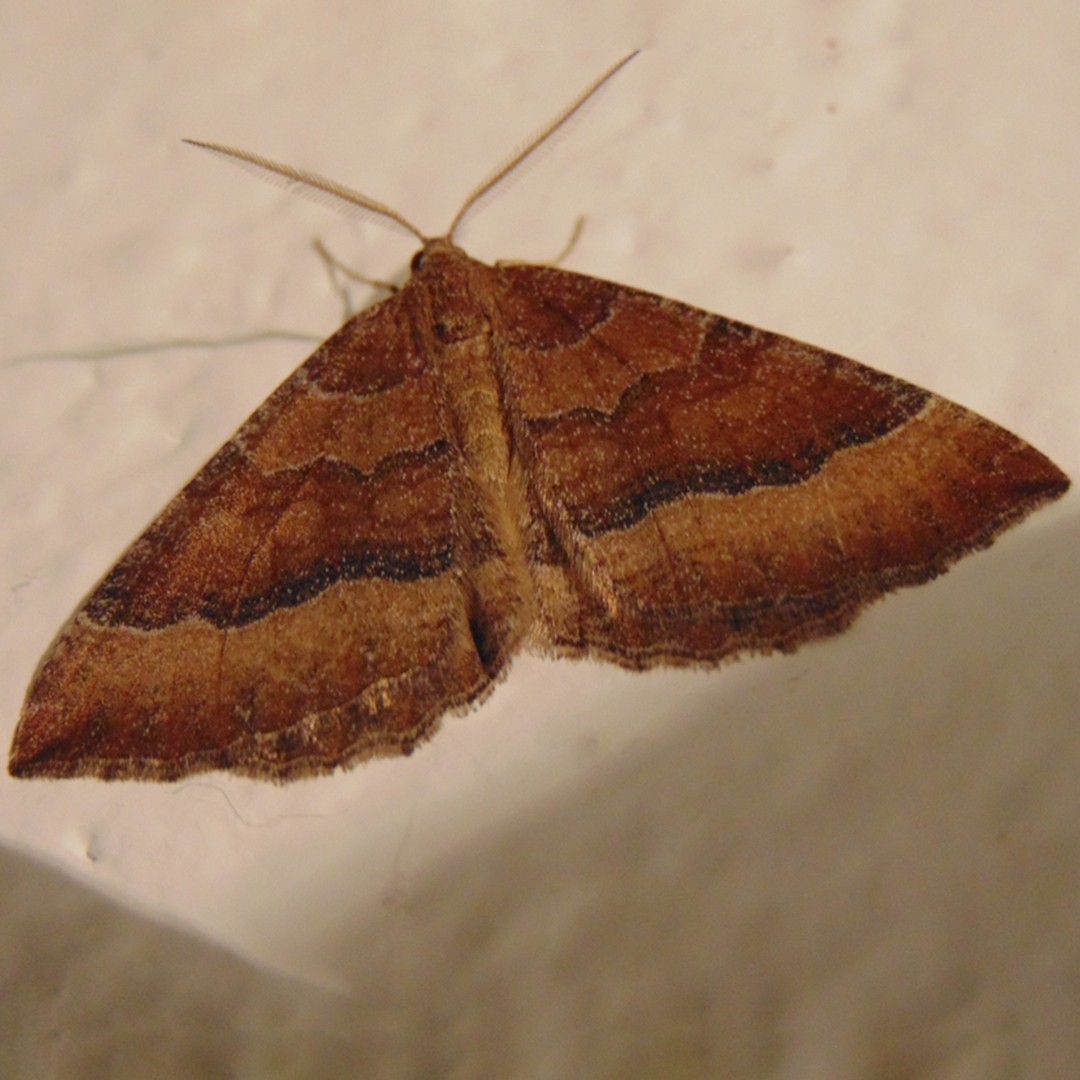
10. Mallow
Larentia clavaria, the mallow, is a moth of the family Geometridae. The species was first described by Adrian Hardy Haworth in 1809. It is found from Siberia (Altai Mountains) in the east to the Iberian Peninsula, North Africa, and the British Isles in the west. In the north it ranges to the Caucasus, Tajikistan and Fennoscandia. In the south it is found the western Mediterranean islands, Italy, the Balkans and Asia Minor. It occurs only locally and is almost always rare. In the Alps, it rises up to 1200 m above sea level. The wingspan is 36–40 mm. Forewings are fawn colour with a browner basal patch, median band and distal shade, all finely and delicately white-edged distally, the median band also accompanied by a fine white line proximally, sharply indented on the submedian fold and more shallowly in the cell. Hindwing pale, becoming browner at the distal margin. The moth flies from August to November depending on the location. The larvae feed on Althaea officinalis and Malva species.
More







