




Top 14 Most Common Insects in Uganda
Immerse in the fascinating world of insects, boasting remarkable diversity and fulfilling crucial roles in diverse ecosystems across Uganda. Varied geographies shape distinct insect populations, each intricately interwoven with their specific habitats. From beneficial pollinators to pesky invaders, let's explore the 14 most common insects that call Uganda home, unraveling their mysteries and underscoring their ecological value.

Most Common Insects
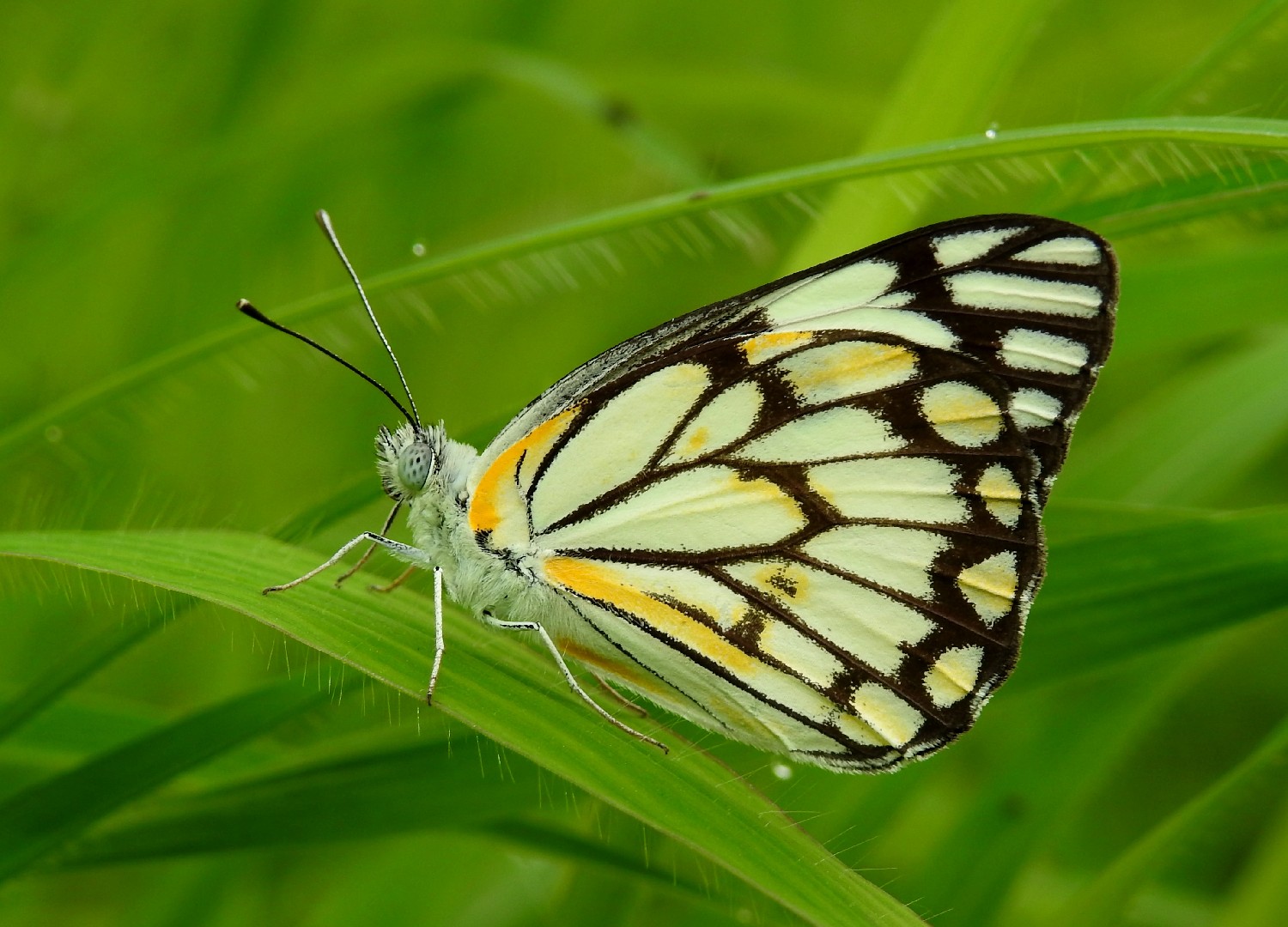
1. Pioneer white
Wet-season form. The upperside of males is white with the forewing having the costa from base to base of vein 11 dusky black and then jet black continuing into a widened and curving short streak along the discocellulars to the lower apex of the cell; apical area diagonally with the termen black, the former with six elongate outwardly pointed spots of the ground colour enclosed one in each of the interspaces 3, 4, 5, 6, 8, and 9. Hindwing: uniform, the black along the venation on the underside seen through by transparency; termen between veins 2 and 6 somewhat broadly black, with a series of four round spots of the ground colour in the interspaces; below vein 2 and above vein 6 the termen is very narrowly black. Underside: forewing white, markings similar, more clearly defined, the white spots within the black apical area larger. Hindwing: yellowish white, all the reins very broadly bordered with black; interspaces 1, 2, 6, and 7 with crossbars of black, beyond which there is a subterminal, somewhat broad, transverse band of black between veins 2 and 6. Cilia of both forewings and hindwings white alternated with black. The ground colour on both upper and undersides variable, often cream coloured above; beneath: in some specimens, the base of cell and the elongate spots in apical area of forewing, and the whole surface of the hindwing varies to rich chrome yellow. Female similar; the black markings on both upper and undersides broader, the white spots on black apical area of forewing often sub-obsolete above. Antennae in both sexes black, sparsely sprinkled with white dots; head, thorax and abdomen above and below white: thorax above often bluish grey. Dry-season form. The dry-season form is similar to the wet-season form but on the upperside the black markings are narrower, the white markings on the black apical area of forewing broader and longer, and on the hindwing the narrow inner margining to the black on the termen very narrow, somewhat obsolescent; therefore, the white subterminal spots have the appearance of opening inwards. Underside: ground colour almost pure white; on the hindwing slightly tinged with yellow. Antennae, head, thorax, and abdomen as in the wet-season form. Wingspan of 4.5 - 6 cm. 
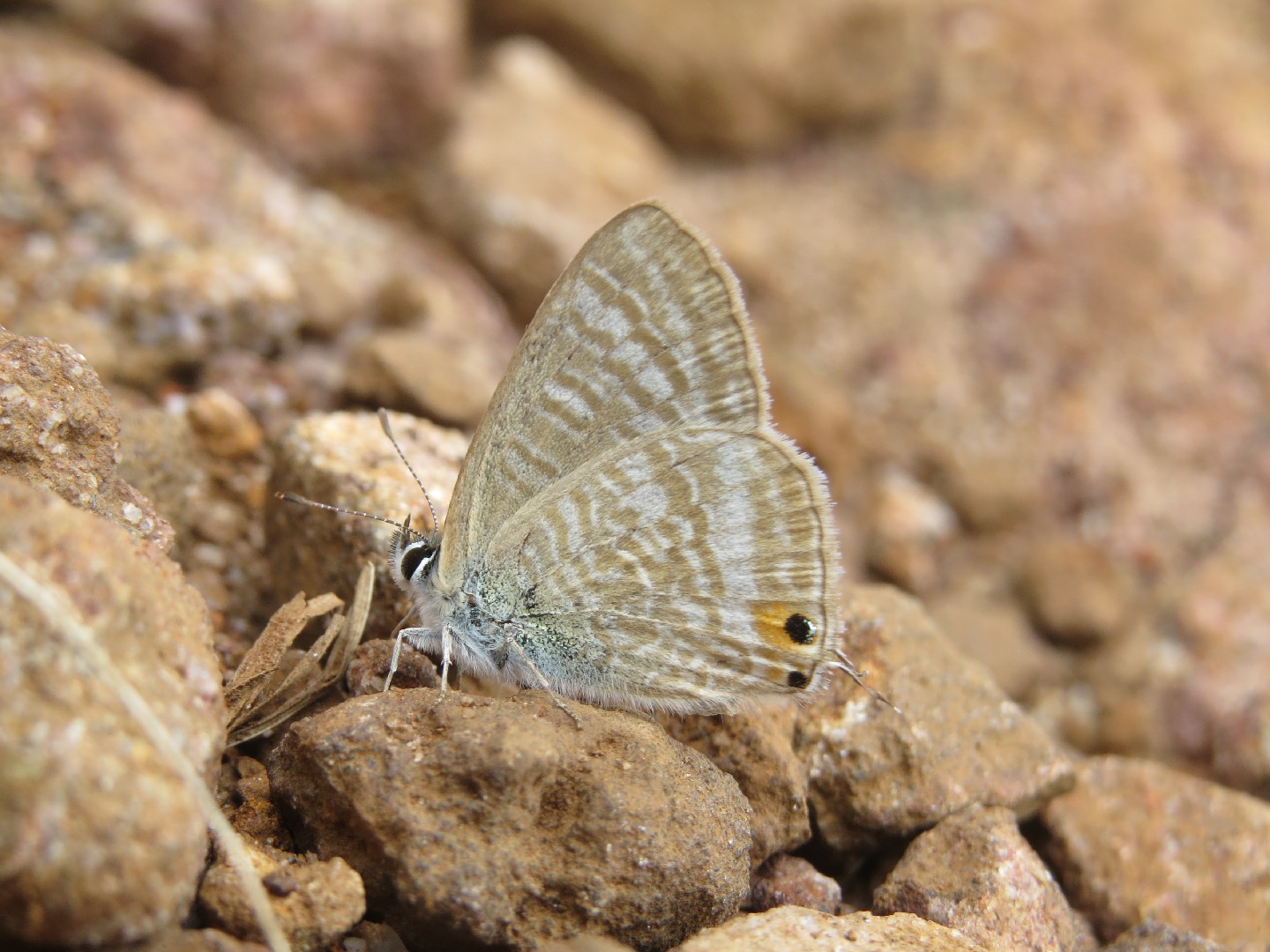
2. Pea blue
The wingspan is 24–32 mm for males and 24–34 mm for females. In these small butterflies the males have a mainly blue violet upper face of the wings with the brown edges, while the females have only a small amount of blue colour in the centre of the wings (sexual dimorphism). Both sexes have a thin, long tail in the hindwings and two black spots in the anal angle. The underface of the wings is ocher and adorned with white markings and with a larger white submarginal streak. The underface of each hindwing shows a pair of small black eye-spots beside each tail, with an orange marginal spots at the anal angle.
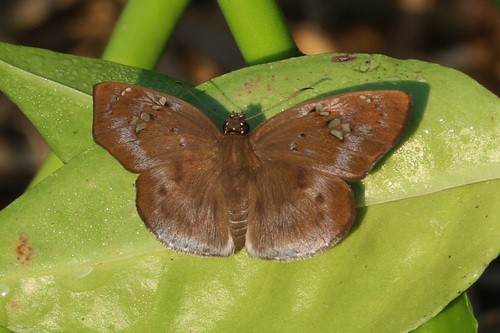
3. Clouded flat
The wingspan is 3.5 - 4.5 cm for males and 4.5 - 5 cm for females. The upper surface of the wings is brownish with translucent spots near the apex of the forewings. These spots are larger in the female than in the male. The undersurface of the hindwings is white with a semicircle of irregular black spots. The winter form is lighter in colour than the summer form.

4. Citrus swallowtail
Papilio demodocus , also known under the English name Citrus Swallowtail ("Citrus Swallowtail"), is a butterfly from the family of the knight butterflies (Papilionidae).
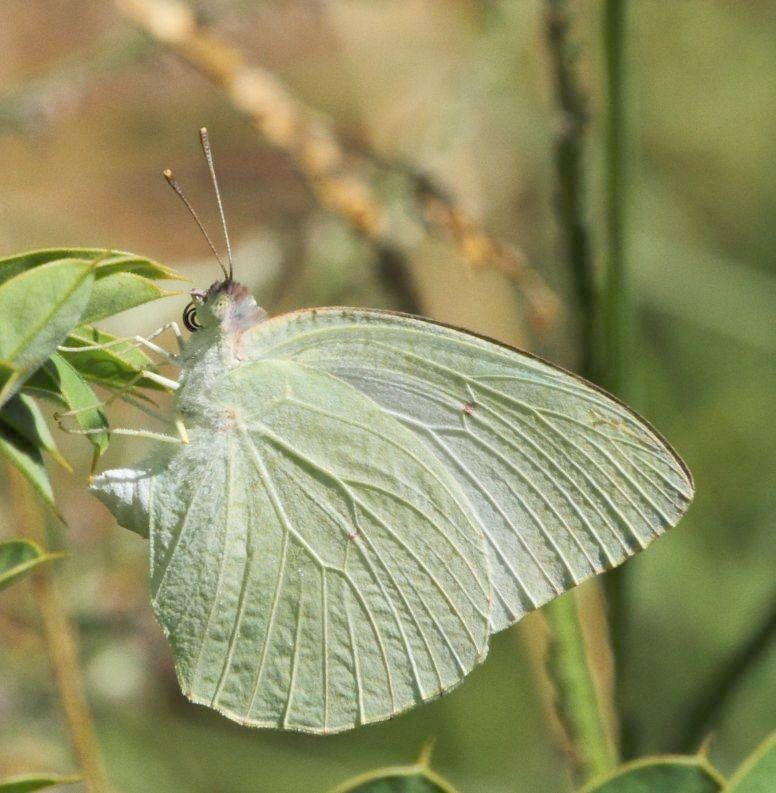
5. African emigrant
The wingspan is 5 - 6 cm for males and 6 - 7 cm for females.
6. Plain tiger butterfly
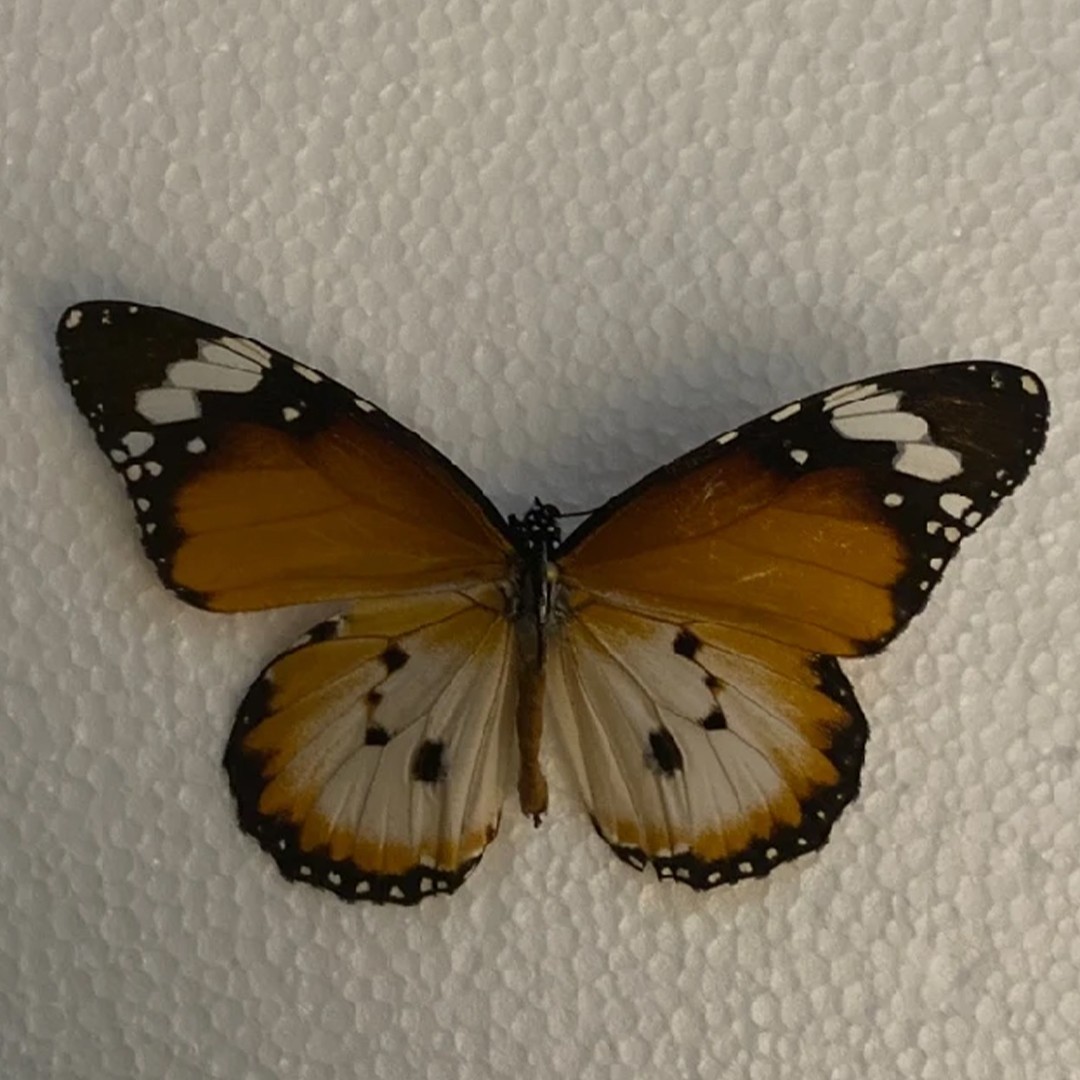
D. chrysippus is a medium-sized butterfly with a wingspan of about 7–8 cm (2.8–3.1 in). The body is black with many white spots. The wings are orange, the upperside brighter and richer than the underside. The apical half of the forewing is black with a white band. The hindwing has three black spots in the center. The wings are bordered in black and outlined with semicircular white spots. This species exhibits slight sexual dimorphism, as the Male has large scent glands on his hindwings, which the female lacks. They appear as a large black spot with a white centre if viewed from the underside D. chrysippus is a polymorphic species, so the exact coloring and patterning vary within and between populations. It is similar in appearance to the Indian fritillary (Argynnis hyperbius), which may coexist with it.
7. African common white
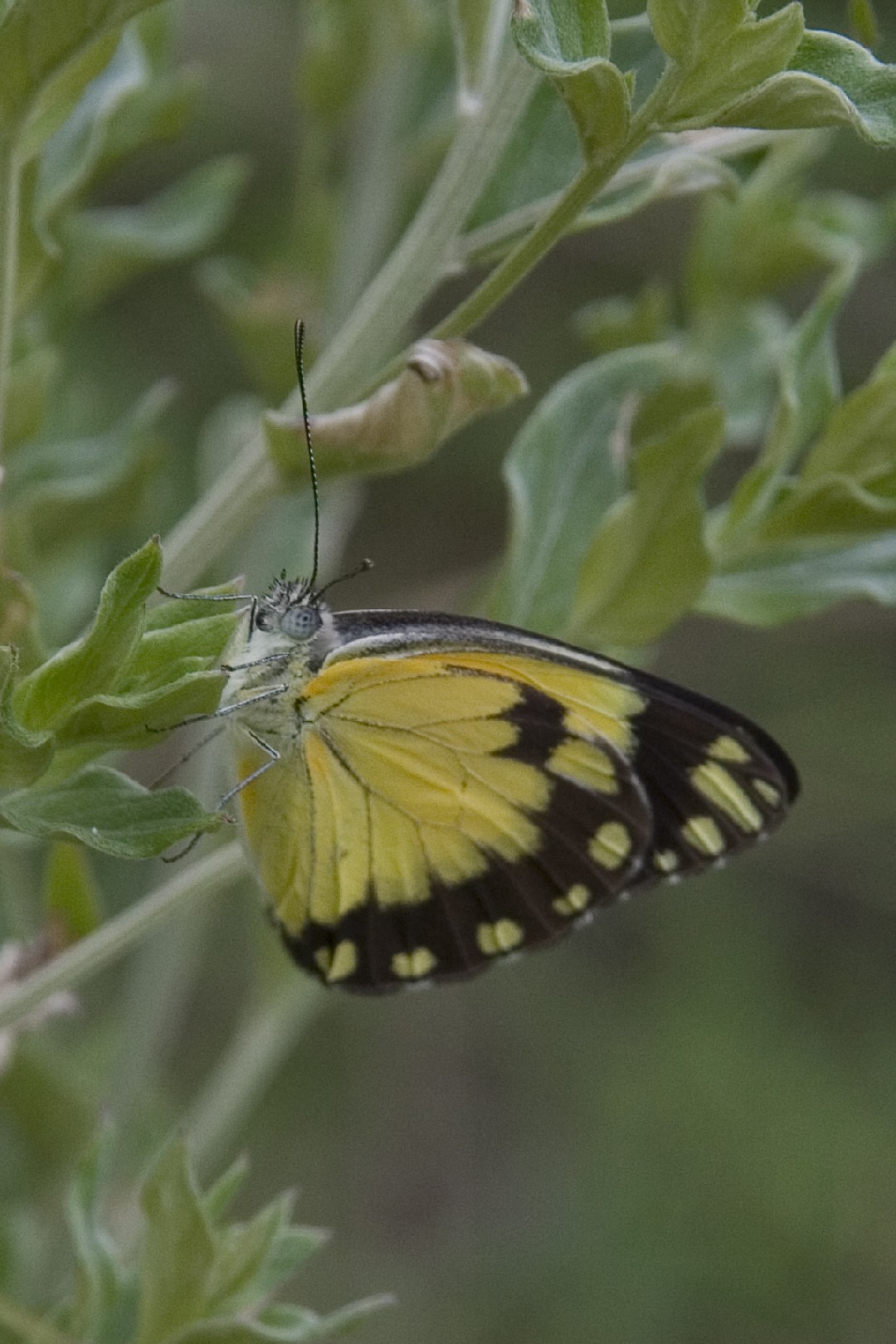
The wingspan is 4 - 4.5 cm. The sexes are dimorphic. For males, the uppersides are white with black or brown marginal borders and veins in forewing apex. A black spot exists in the upperside cell instead of a bar as in the brown-veined white (B. aurota).Females have broader dark upperside borders on both wings. Underwings are yellow during the wet season.

8. Blue pansy
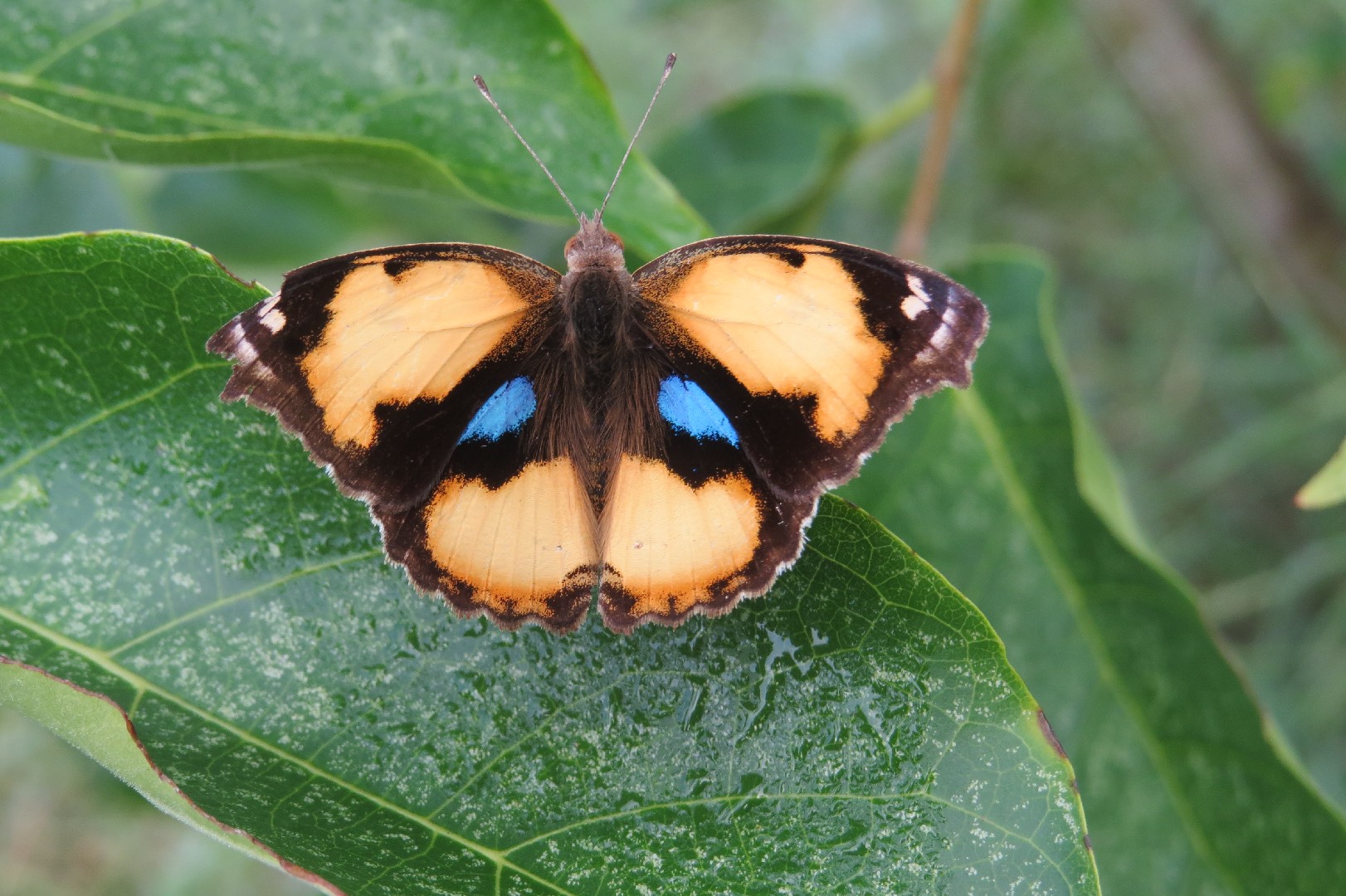
The wingspan is 4 - 5 cm. The upper surface of the forewings is black with white markings towards the apex. The upper surface of the hindwings is black with white markings on the outer edge, and a characteristic large metallic-blue spot. This blue spot is smaller and more a dull purple in females. The underside of the forewings is brown with white markings corresponding to those on the upper surface. The under surface of the hindwings is almost uniform brown.
9. Gaudy commodore
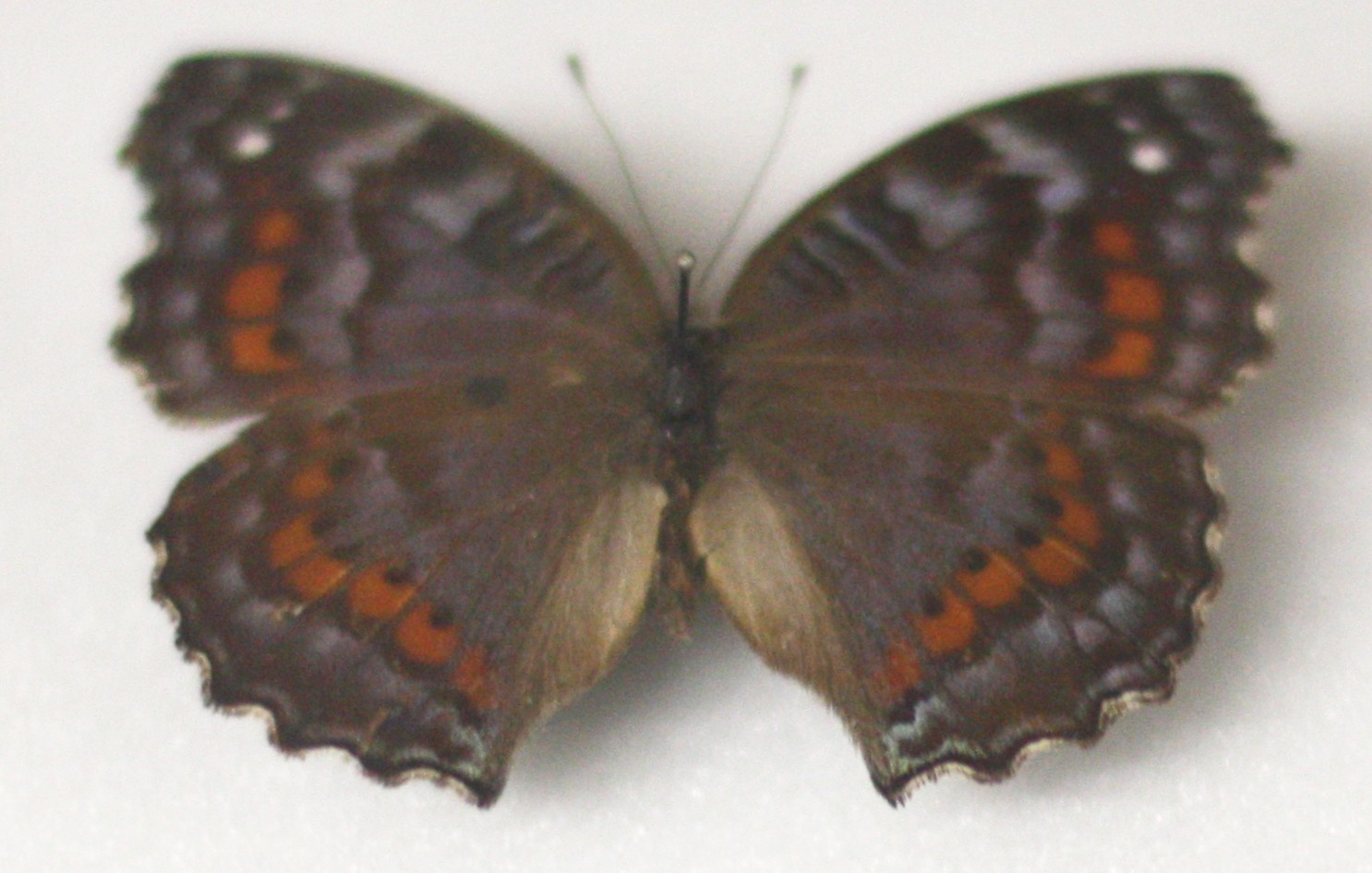
It has a wet season form, which is orange with a pinkish flush and black markings on the upperside, and a dry season form which is shining blue with a vivid red band on the hindwing.

10. Danaid eggfly
The danaid eggfly (Hypolimnas misippus) is a unique butterfly where females tend to have a strong advantage. Males are identified by being blackish with white spots. Females exhibit polymorphism, or the ability to have multiple forms. This means that they can resemble males in some cases, but also resemble toxic butterflies like the Monarch butterfly.
More







