




Top 20 Most Common Insects in Batna
Insects, with their diverse forms and habitats, cohabit Batna in droves. The varying landscapes influencing their distribution and biodiversity, each unique insect playing a key role within the ecosystem. Be it as harmful pests or beneficial pollinators, these tiny creatures sculpt the face of Batna's environment. Stay tuned as we uncover the intriguing world of our 'Top 20 most common insects in Batna'.

Most Common Insects
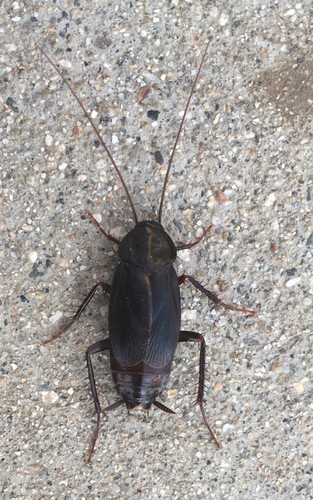
1. Oriental cockroach
The Blatta orientalis is a relatively large species that prefers dark, moist areas. They are most likely to be found in sewers, mulch piles, drains, and other places that are both moist and have decaying matter. Because of their feeding habits, they can be vectors of bacteria and viruses to humans when they come into contact with countertops, dishes, and food.
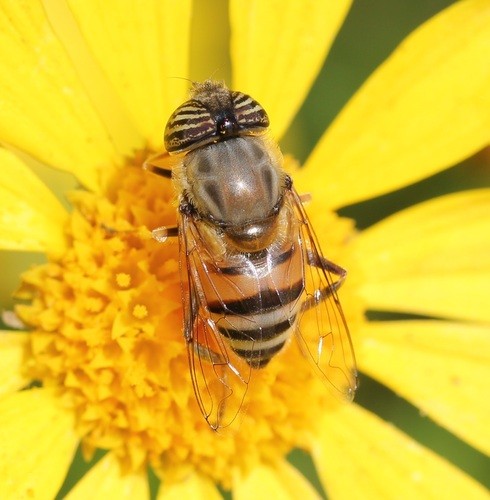
2. Band-eyed drone fly
Eristalinus taeniops can reach a length of 1.09 - 1.4 cm. These hoverflies exhibit a bee-like yellow-black drawing. The thorax has a metallic yellow-brown color and it is densely yellow hairy. Also the scutellum are yellow-brown colored. The abdomen is reddish-yellow, with transversal black bands. The compound eyes have five distinct, vertical, dark stripes. The wings are transparent, usually yellowish-brown at the base, while the halteres are brightly pale yellow colored. 
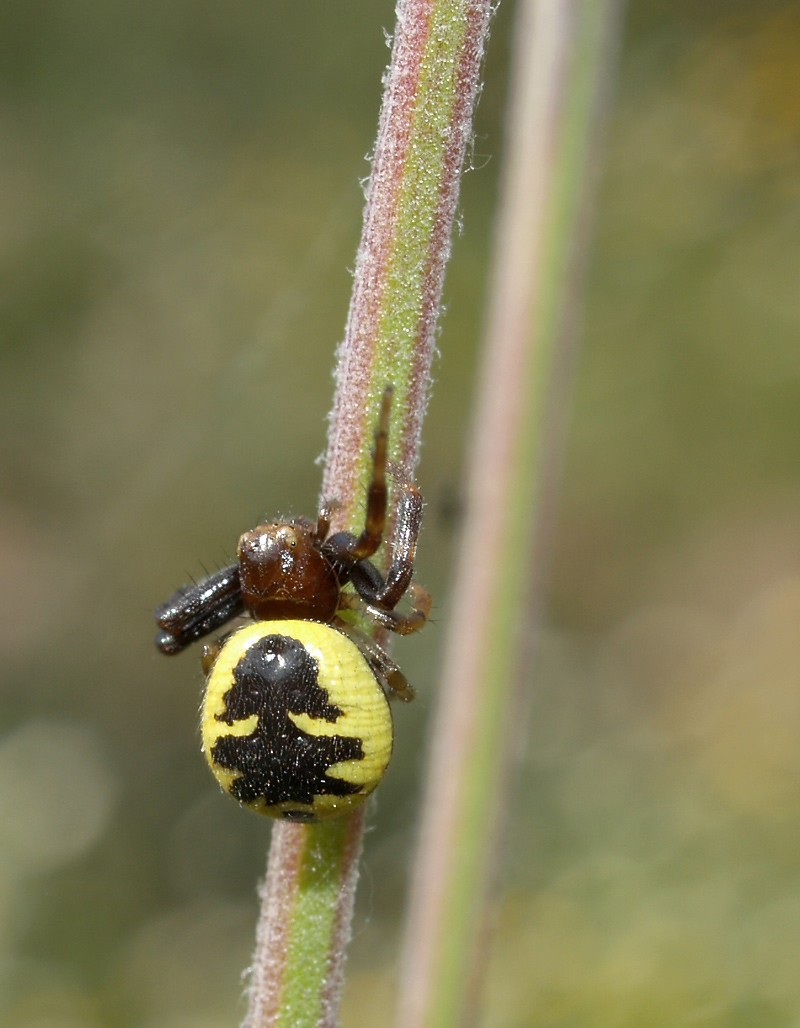
3. Napoleon spider
The adult males reach 2 - 4 mm in length, while females are 7 - 8 mm long. The two pairs of the front legs, used for hunting the flower-feeding insects, are more developed than the rear ones, which have a predominant motor function. Mature males have a black abdomen with two white marks. In mature females, the background colour of the abdomen can be red, yellow or white, with a black pattern which has been noted for a certain resemblance to the silhouette of Napoleon. Prosoma and legs are black or dark brown.
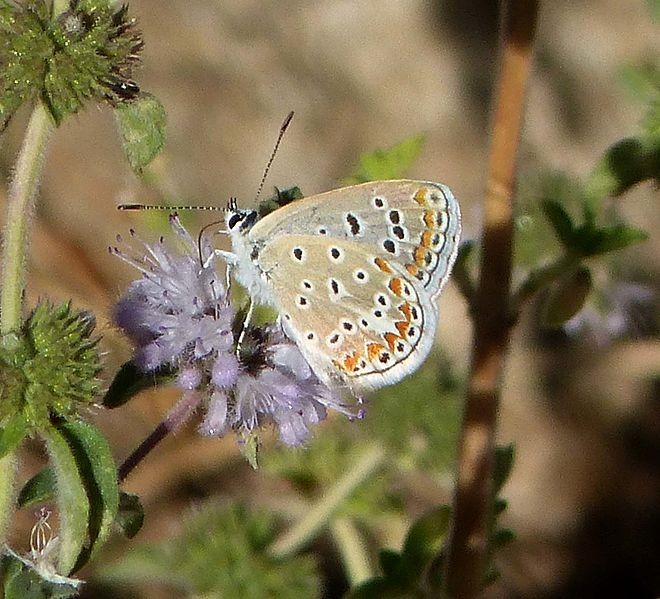
4. Polyommatus celina
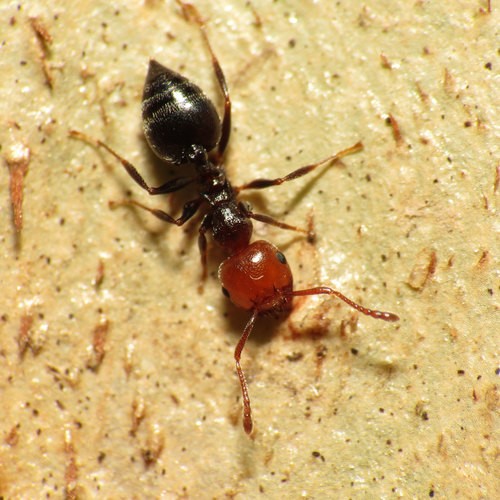
5. Crematogaster scutellaris
The Crematogaster scutellaris is a type of ant that is a reddish-grey coloring. It commonly builds its nest in the stumps of trees. Its nest is made with a combination of chewed wood and humus. Humus is decomposed organic material in the dirt, not the food kind. When it comes to queens, there can be multiple in one nest, but they are far apart from one another due to their aggression.
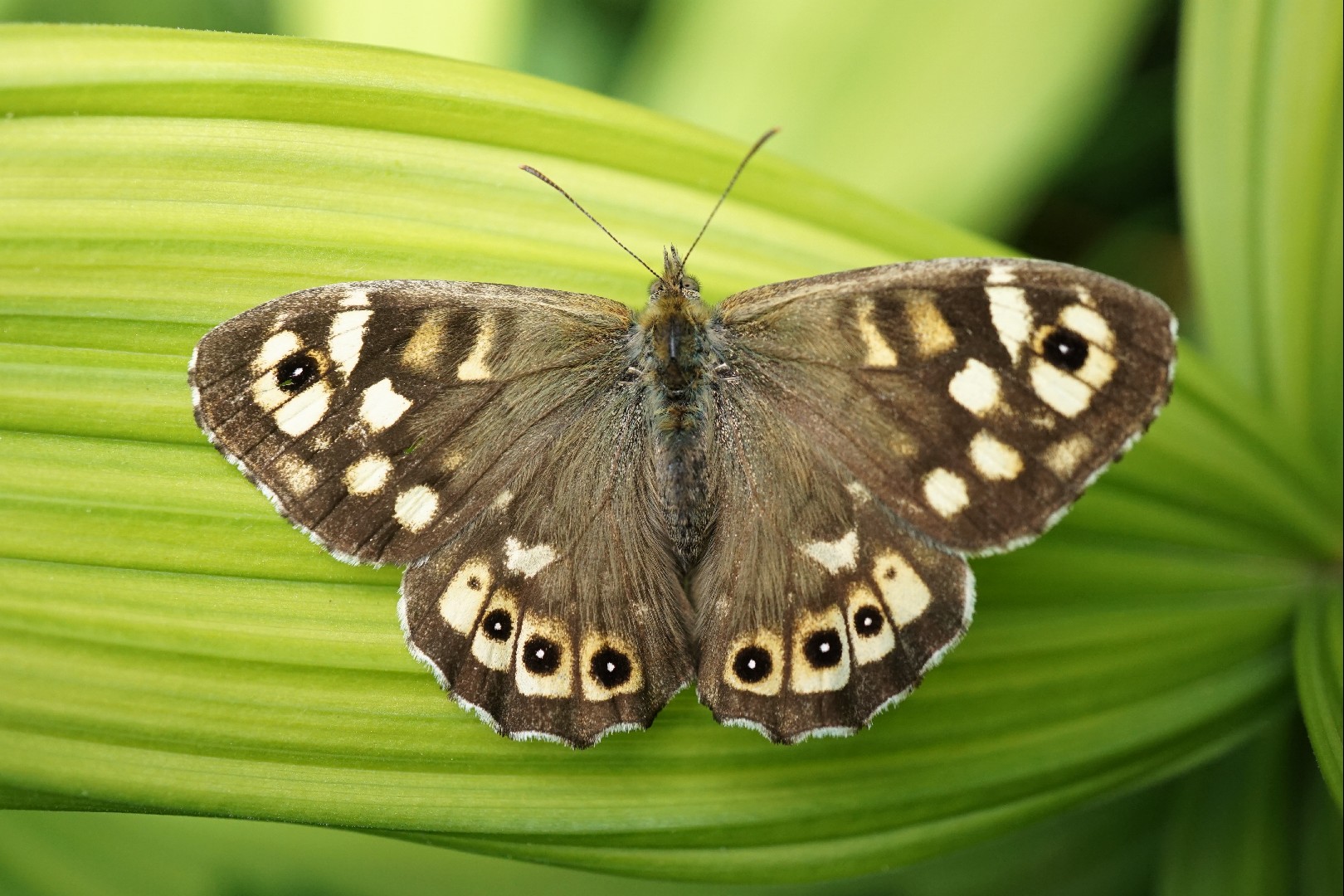
6. Speckled wood
The speckled wood (Pararge aegeria) prefers to live in damp, dark woodlands. Unlike other butterflies, it's more active in shadier habitats rather than sunny ones. Males often fight over a perch, spiraling up to the treetops until they determine a winner. These perches are where the males find passing females.
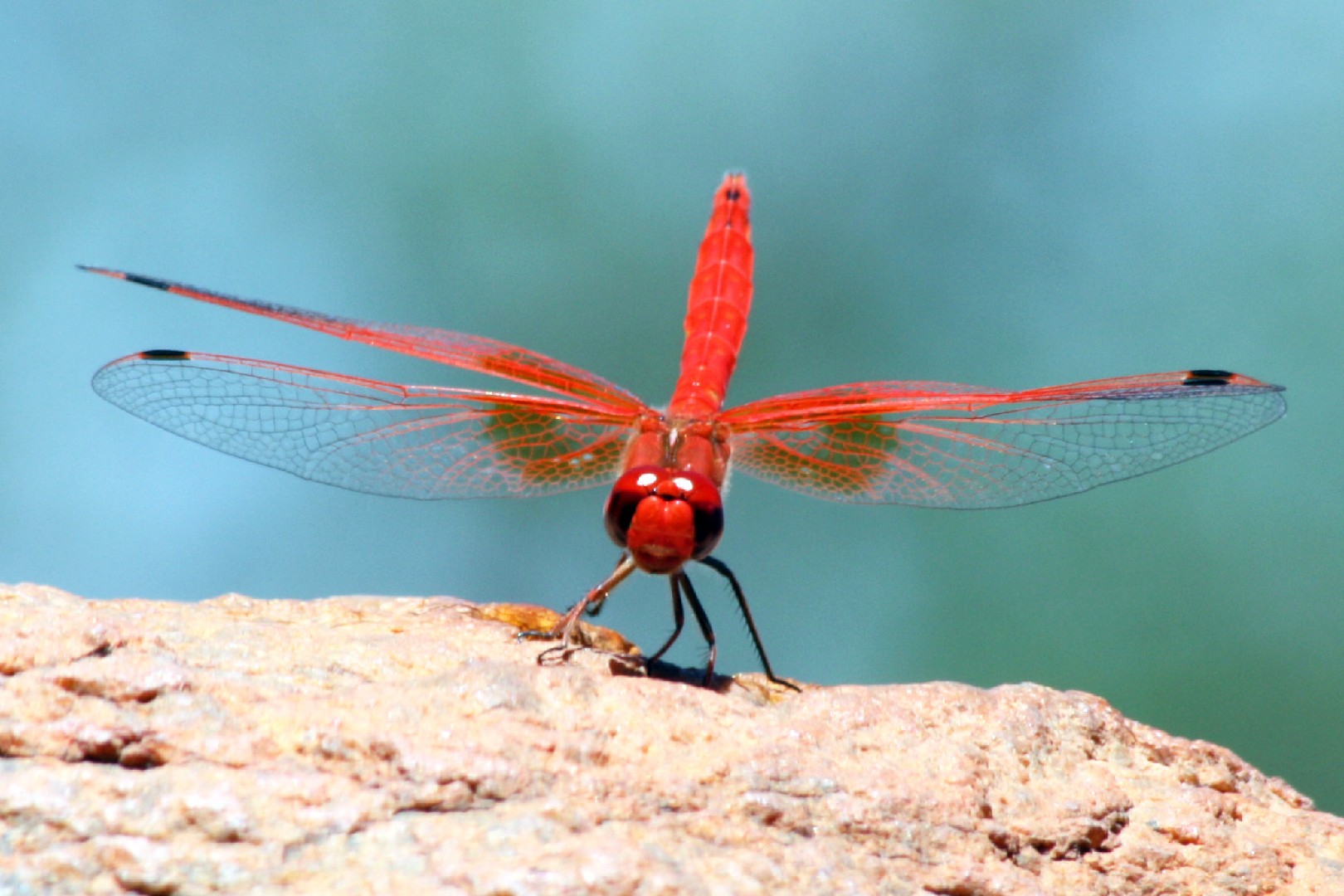
7. Kirby's dropwing
The spotted sun pointer (Trithemis kirbyi) is a dragonfly species from the family of the dragonflies (Libellulidae). Two subspecies are described. The nominate subspecies occurs in India and Sri Lanka, while the insufficiently defined taxon Trithemis kirbyi ardens occurs in the rest of the distribution area, which mainly includes Africa.
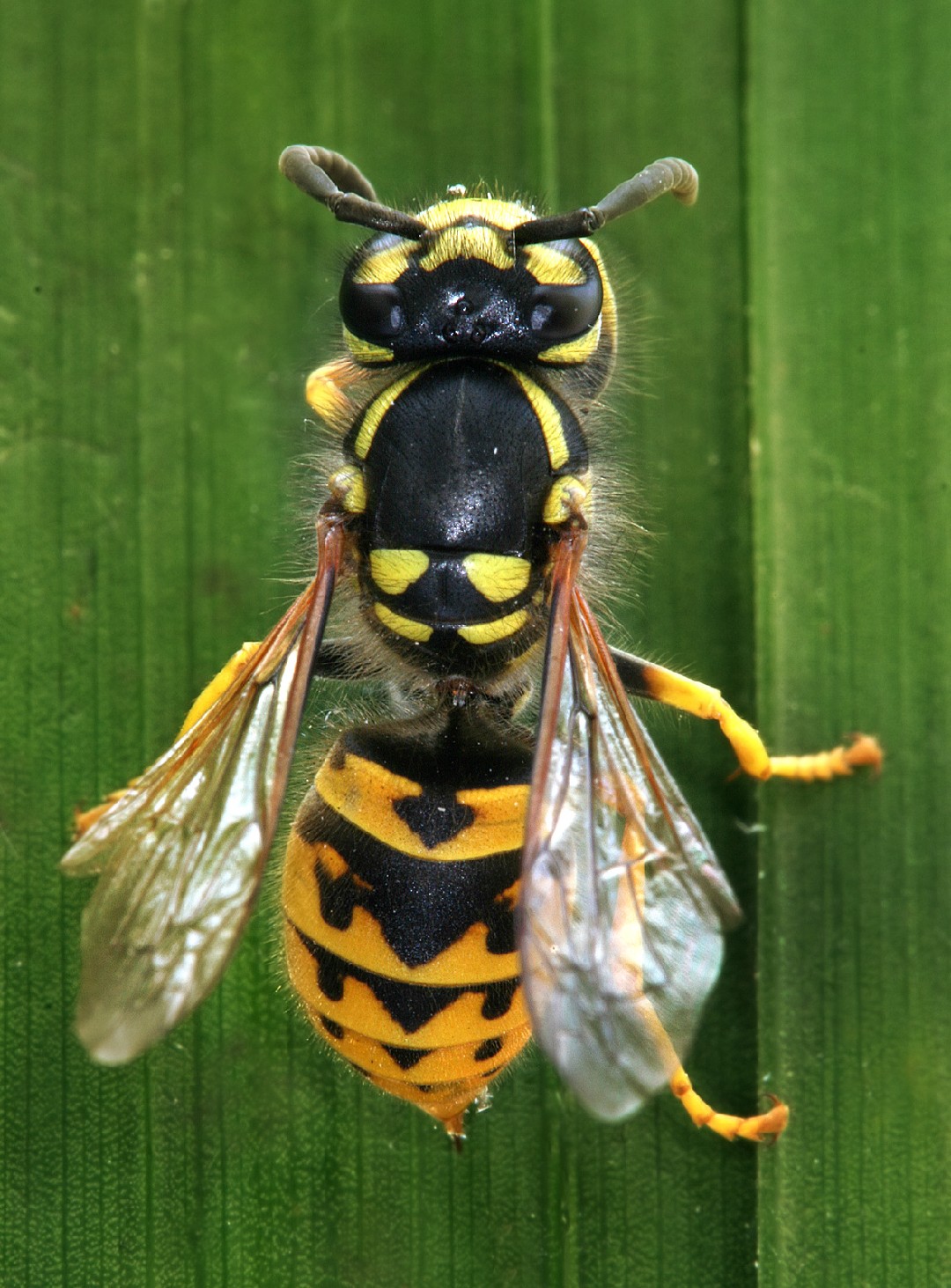
8. German yellowjacket
The german yellowjacket hives have a system of dividing up work that involves focusing on one task at a time and eventually specializing in a different task. These wasps have the cognitive ability to remember certain feeding spots even after there is no food remaining. They also practice "worker policing" where the queen will eat eggs laid by other wasps to ensure her offspring are dominant.
9. Red-bellied jumping spider
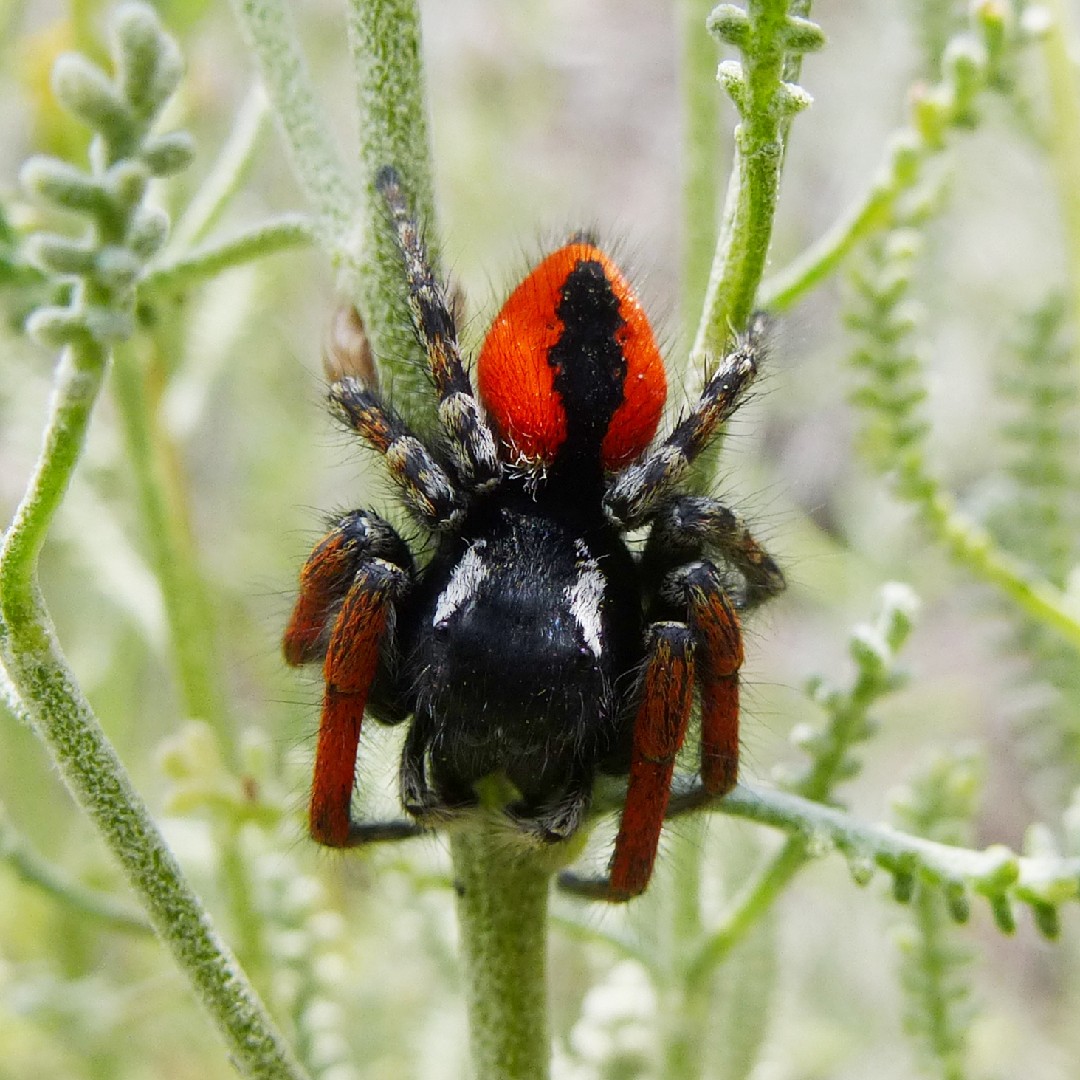
Normal body length is 7 - 12 mm, but 5 mm small males do occur. Unusual for spiders, the males are often bigger. The sexes differ extremely Sexual dimorphism: males are very colorful with a glaringly red opisthosoma (chrysops means "golden eye" in Greek). The males have a dark brown or blackish cephalothorax, usually with two broad longitudinal white stripes behind the rear eyes. The abdomen is bright orange-red on the back and the sides, with a longitudinal black stripe in the center and black shoulders. The long, slender legs are dark with the patellae and most of the tibiae of the first two pairs bright orange-red. The cephalothorax of the female is similar to the male, but with much smaller white stripes. The back of her abdomen is largely covered with a very broad rather irregular brown band with two longitudinal whitish stripes and a few whitish marks near the sides. The remainder of the abdomen and the sides may be orange-brown or pale brown, the legs light brown with dark brown rings.
10. Small copper
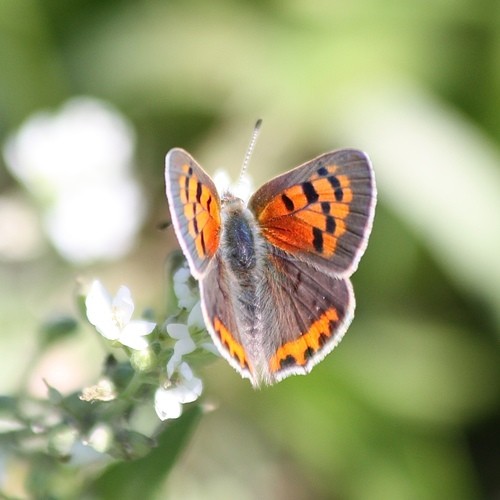
The upperside forewings are a bright orange with a dark outside edge border and with eight or nine black spots. The hindwings are dark with an orange border. Some females also have a row of blue spots inside the orange border and are known as form caeruleopunctata. The undersides are patterned in a similar way but are paler. The black spots on the forewings are outlined in yellow and the dark colouring is replaced by a pale brownish grey. The hindwings are the same brown/grey colour with small black dots and a narrow orange border. The caterpillars (larvae) are usually green, but some have a purple stripe down the middle of the back and along each side.
More







