




Top 20 Most Common Insects in Split
Insects, ubiquitous creatures with varied features, remarkably populate every niche in Split. Their diversity is shaped by unique geographical features, causes both benefits and detriments in the region's ecosystem. Our compilation of '20 most common insects' underscores the intrinsic tie between environmental factors and insect species, highlighting both pests and beneficial insects in Split. Dive into our exciting expose to learn more.

Most Common Insects
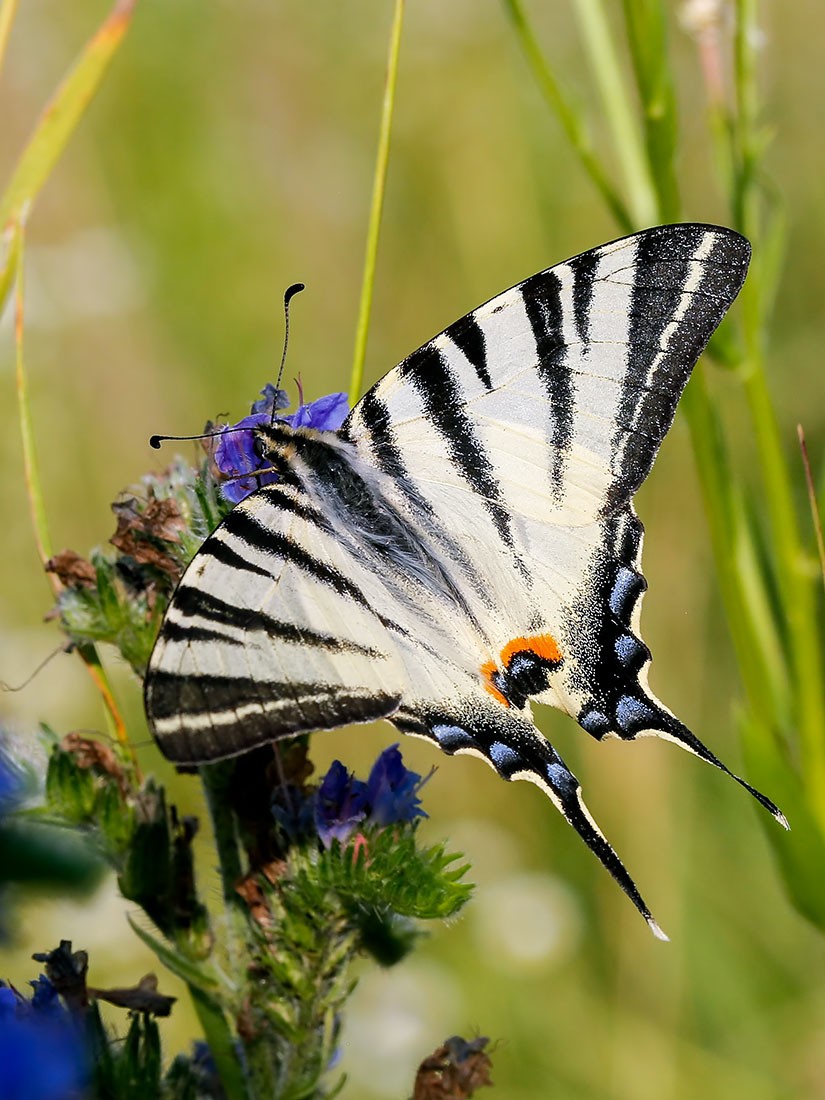
1. Scarce swallowtail
Its slow and floating flight pattern makes it easy to identify the scarce swallowtail as it soars over gardens, orchards, and scrublands. The butterfly has a large presence across Europe, the Middle East, and Asia. The adult lifespan is brief, only two or three weeks. Planting flowers like blackthorn can encourage the butterfly to visit a garden.
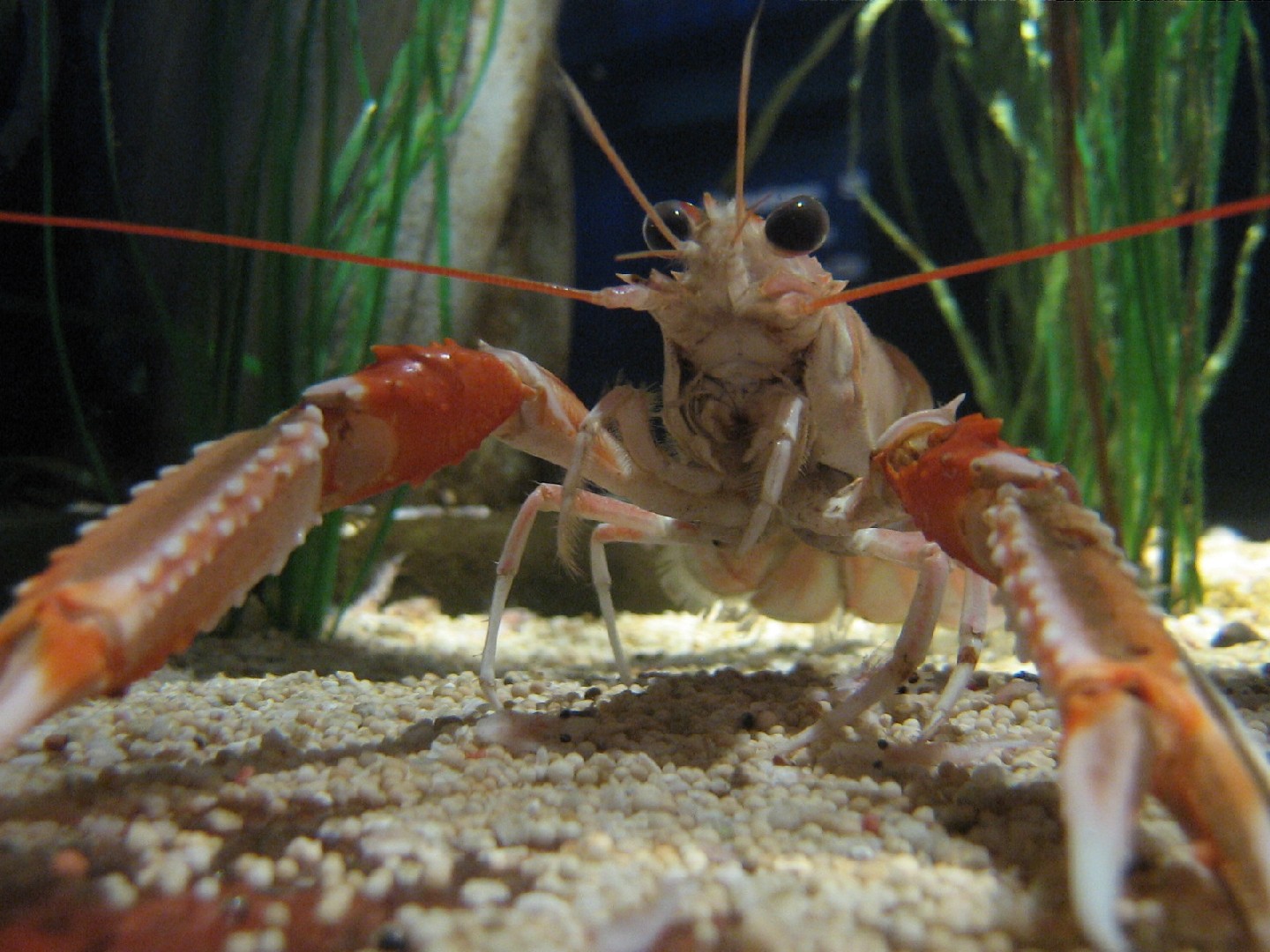
2. Dublin bay prawn
Nephrops norvegicus has the typical body shape of a lobster, albeit narrower than the large genus Homarus. It is pale orange in colour, and grows to a typical length of 18–20 centimetres (7–8 in), or exceptionally 25 cm (10 in) long, including the tail and claws. A carapace covers the animal's cephalothorax, while the abdomen is long and segmented, ending in a broad tail fan. The first three pairs of legs bear claws, of which the first are greatly elongated and bear ridges of spines. Of the two pairs of antennae, the second is the longer and thinner. There is a long, spinous rostrum, and the compound eyes are kidney-shaped, providing the name of the genus, from the Greek roots νεφρός (nephros, "kidney") and ops ("eye"). 

3. Italian locust
The italian locust (Calliptamus italicus) has the potential of starting a locust plague. In fact, they are known for causing one in Khazikstan from 1998 to 2001. It feeds on a variety of plants but has a strong preference for legumes. They can be a variety of colors that vary from grey to reddish-brown color. Females also tend to be much larger than males.

4. Tree grayling
Hipparchia statilinus has a wingspan of 6 - 7 cm. These butterflies are rather variable, especially in the shades of brown present on the wings and in the intensity of the white bands. Usually the basic color of the upperside of the wings is dull brown in the male, lighter or ocher in the female, with a fringe on the edges. Two blind or very discreetly pupillated black eyespots are present on the forewings, while the hindwings show a very small eyespot. The underside is marbled with ocher and dusty white bands. On the underside of each forewing there are two black eyespots ringed in yellow, the upper one with a white central spot. Between the two black eyespots there are two white spots. On the underside of the hindwings there may be a black spot near the posterior and anal margin.The caterpillars are greenish-beige with green-brownish longitudinal stripes.
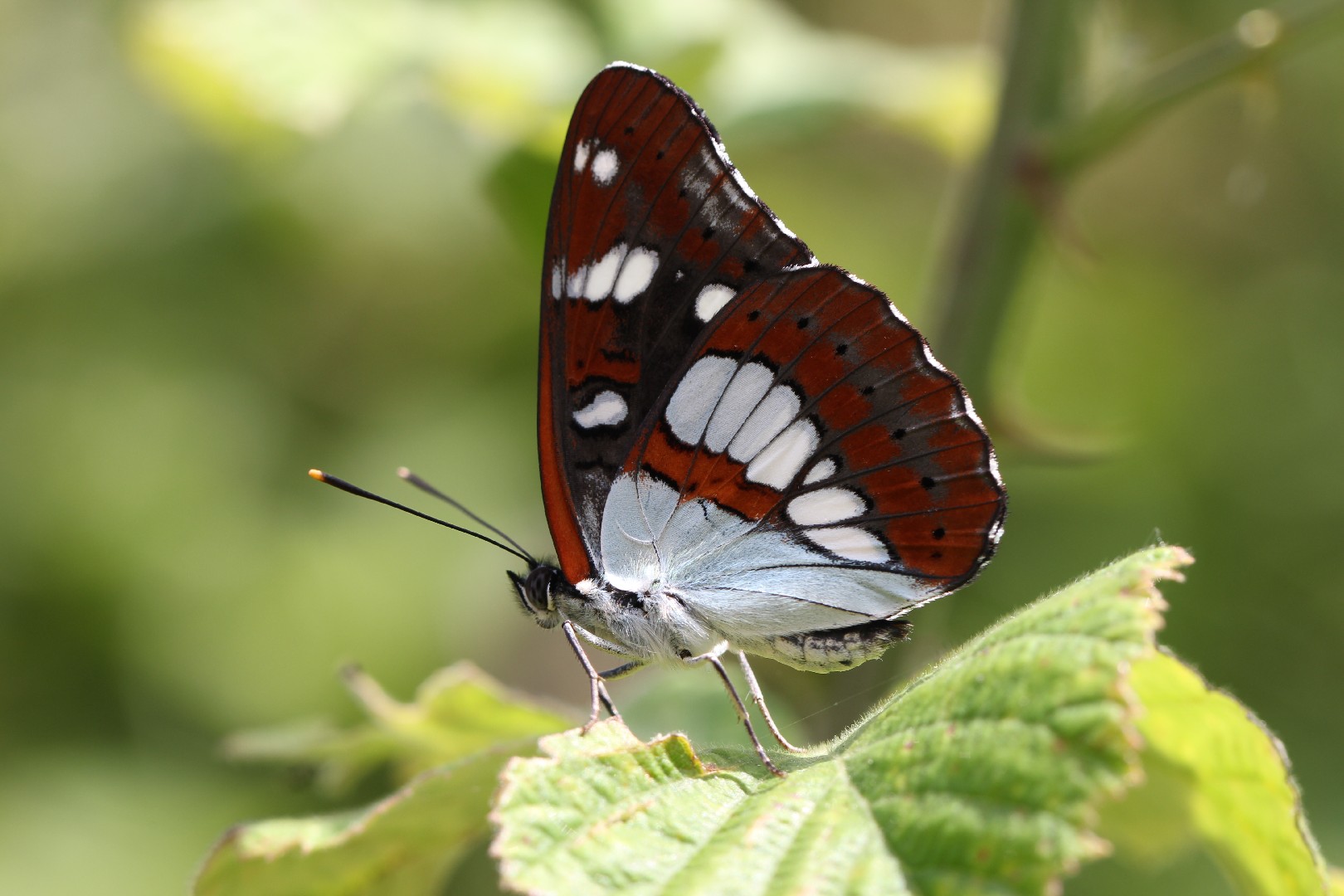
5. Southern white admiral
Limenitis reducta has a wingspan of 46–54 mm. The upperside of the wings is brown black with metallic blue shine, large transversal band of white markings and a submarginal line of small blue dots. The blue sheen varies with the angle of light. The ground colour of underside of the hindwings is red, with a silvery basal area, a row of white markings and a row of black spots. A few white cell spots are also present on the underside of the forewings. The caterpillars can reach a length of 1.1 in. They are light green to dull green on the back, red brown on the underside. On the back there are numerous brown thorns.
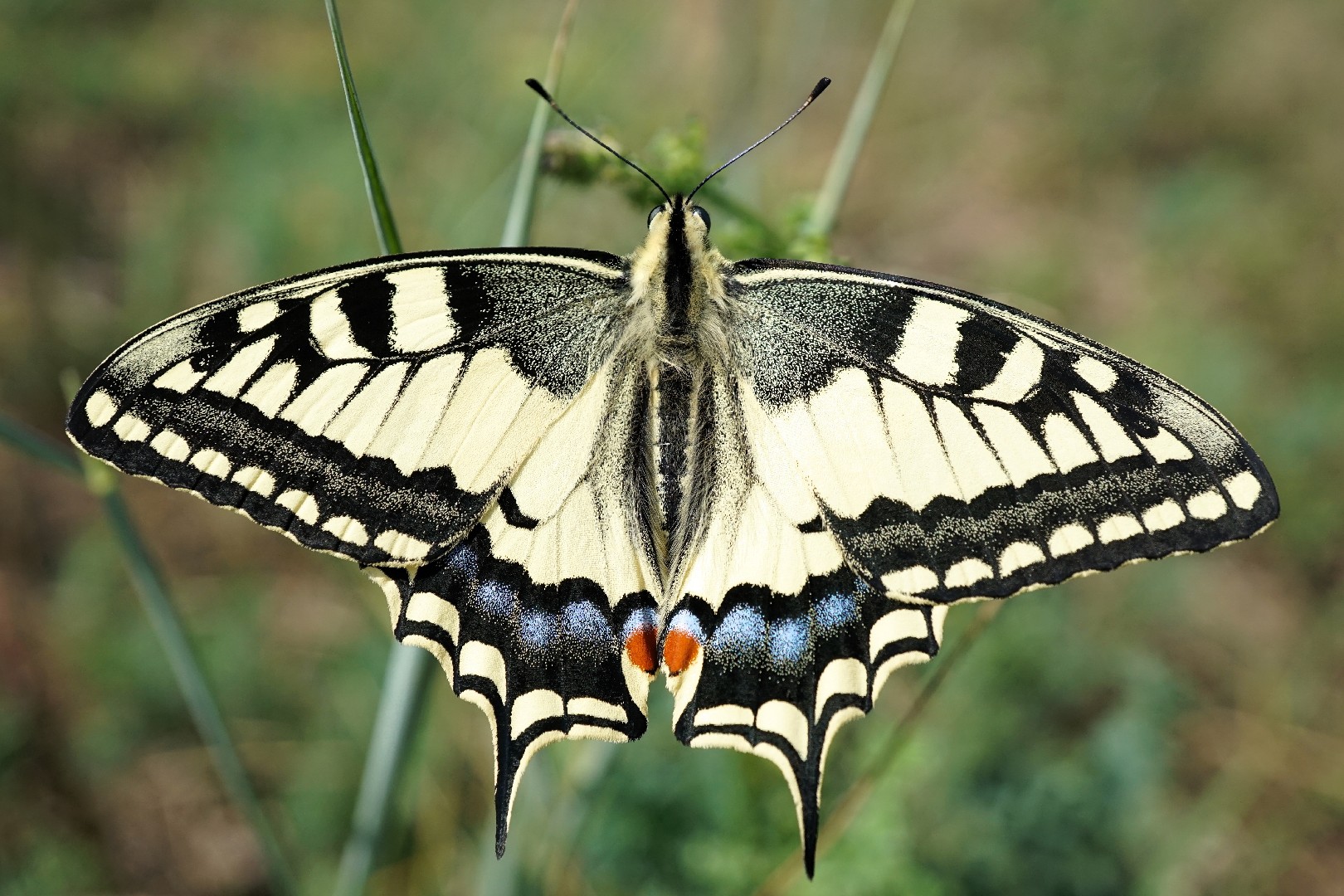
6. Old World swallowtail
The old World swallowtail (Papilio machaon) is commonly just called the "swallowtail," giving it the added title of "old world" to distinguish it and remind us that it comes from the "old world" (Asia, Africa, Europe). The upper side of them is a beautiful combination of pure white with black striping, the underside being a brownish version of the same thing. There is blue and two red dots on its back side.
7. Wall brown
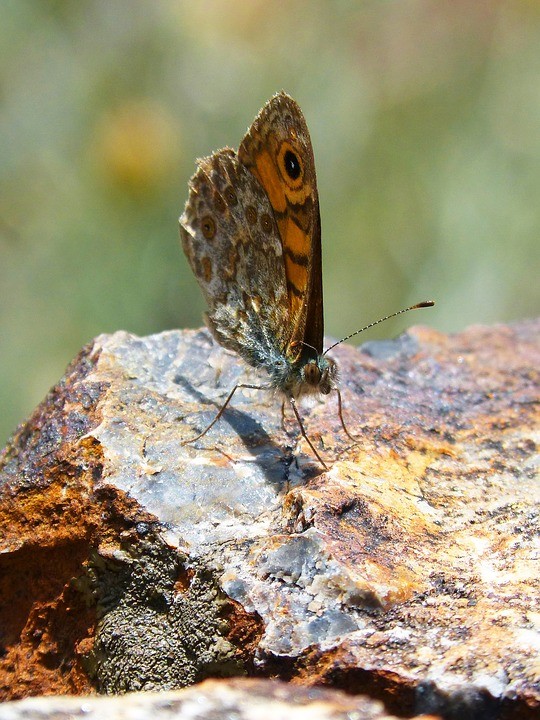
P. megera L. [— xiphie Boisd. pt (45d). Above reddish yellow, with a black mark which traverses the distal band from the cell of the forewing to the abdominal margin of the hindwing, short black stripes crossing the disc and the cell of the forewing.
8. Egyptian locust
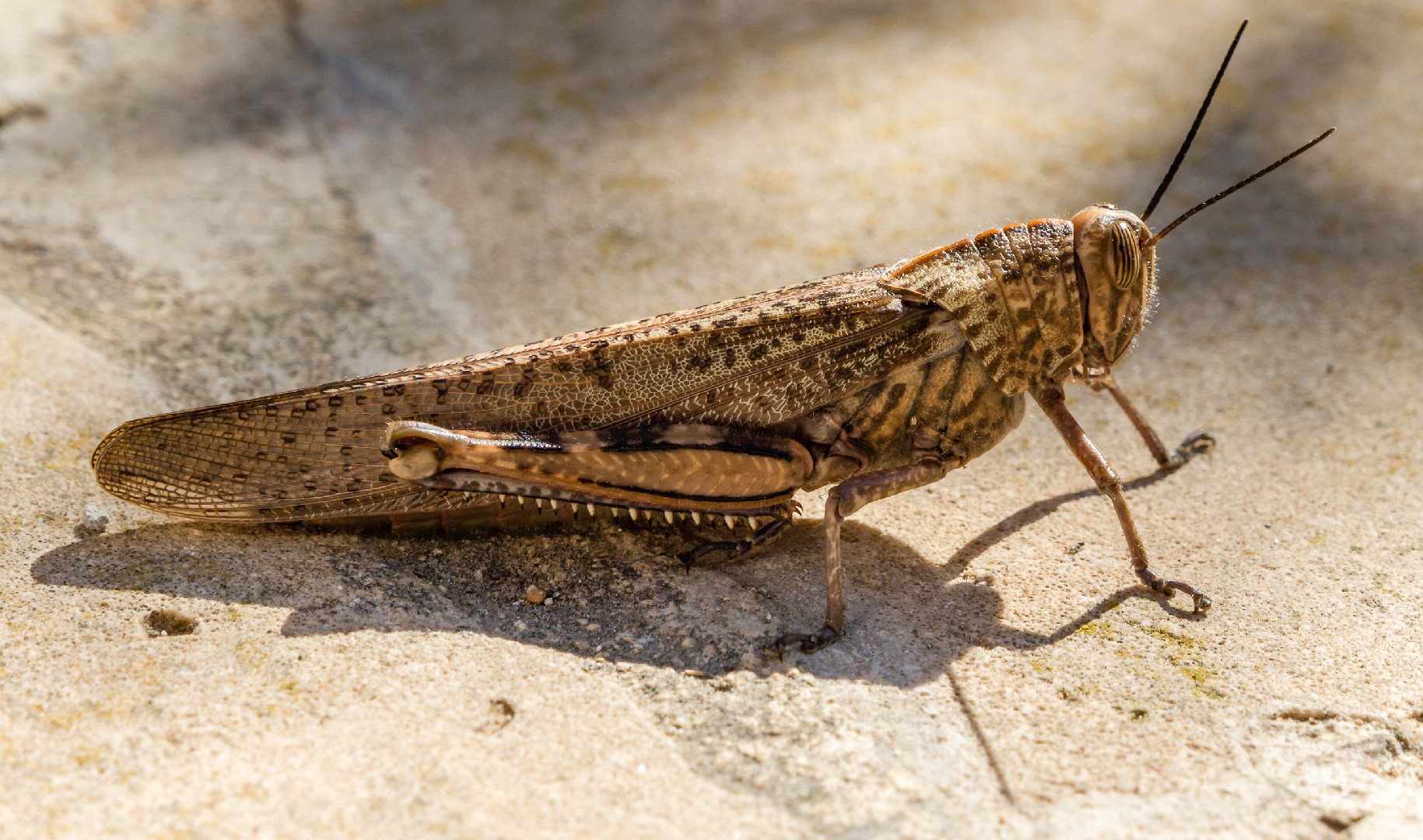
The egyptian locust( Anacridium aegyptium) is usually gray, brown, or olive in color has a mid-sized body with a pair of short and robust antennae on the head. It is generally regarded as a kind of minor pest as it essentially feeds on the leaves of various fruit trees in the orchards but does not cause serious harm to crops.
9. European mantis
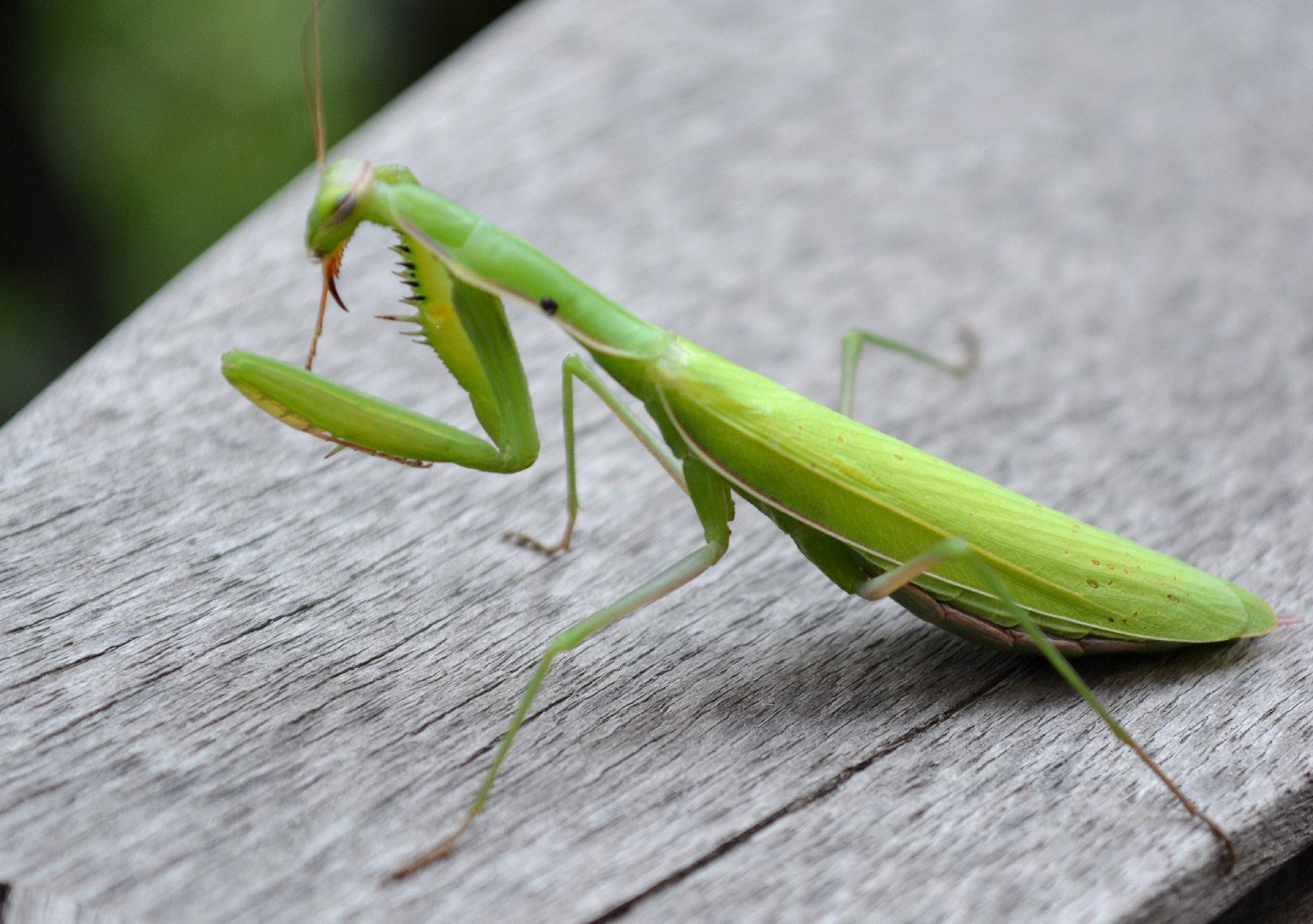
The european mantis (Mantis religiosa) is a bright green mantis that can be distinguished by the two black spots with single white spots inside on its front legs. These spots resemble the eyes of a predator. If it's threatened, it will raise its wings and show off these intimidating "eyes". Also, it's a fierce species that will chase down its prey to catch it.
10. Red admiral
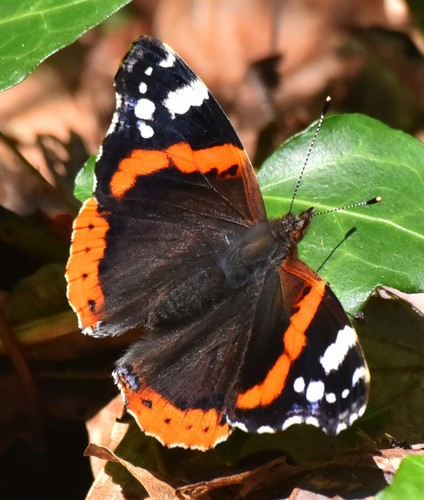
Red admiral (Vanessa atalanta) is a visually striking species of butterfly. Unusually territorial, males will compete for choice areas, and females will only mate with males that maintain their own territories. This butterfly is known for being particularly patient with human interactions, even to the point of perching on clothing or flesh.



More







