




Top 20 Most Common Insects in Akureyri
Insects, with their distinguishing features and diverse habitats, play vital roles within our ecosystem. The unique geographical terrains within Akureyri provide a variety of habitats conducive to varying insect species. This key relationship between the environment, including its pests and beneficial insects, influences the diversity of insects, making it possible for us to catalogue our Top 20 most common insects in Akureyri to help promote understanding and awareness.

Most Common Insects
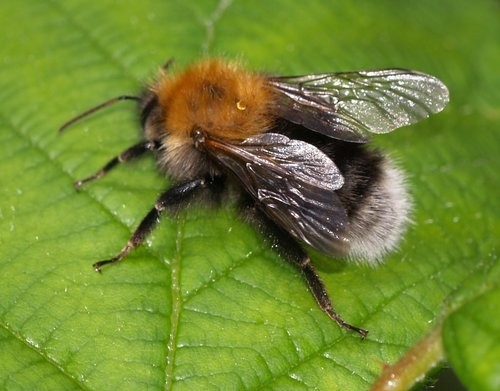
1. Tree bumble bee
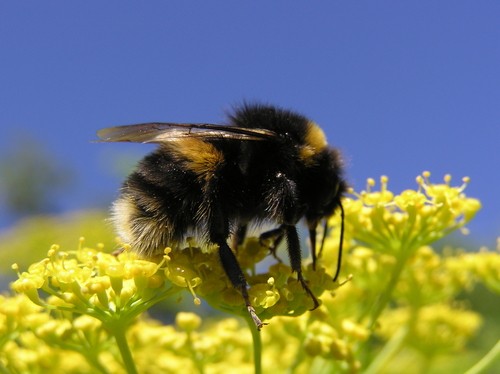
The tree bumble bee (Bombus hypnorum) is otherwise known as the new garden bumblebee due to its ability to survive in uncommon environments. They like living near humans, often overtaking birdhouses for their own uses. When they aren't evicting birds from their houses they do work for the good of the colony.
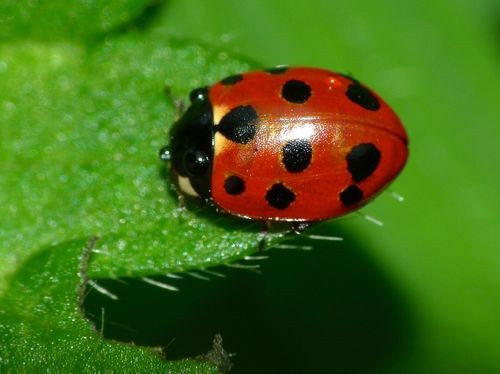
2. Eleven-spot ladybird
The Elfpunkt ladybird (Coccinella undecimpunctata) is a beetle from the family of ladybirds (Coccinellidae).
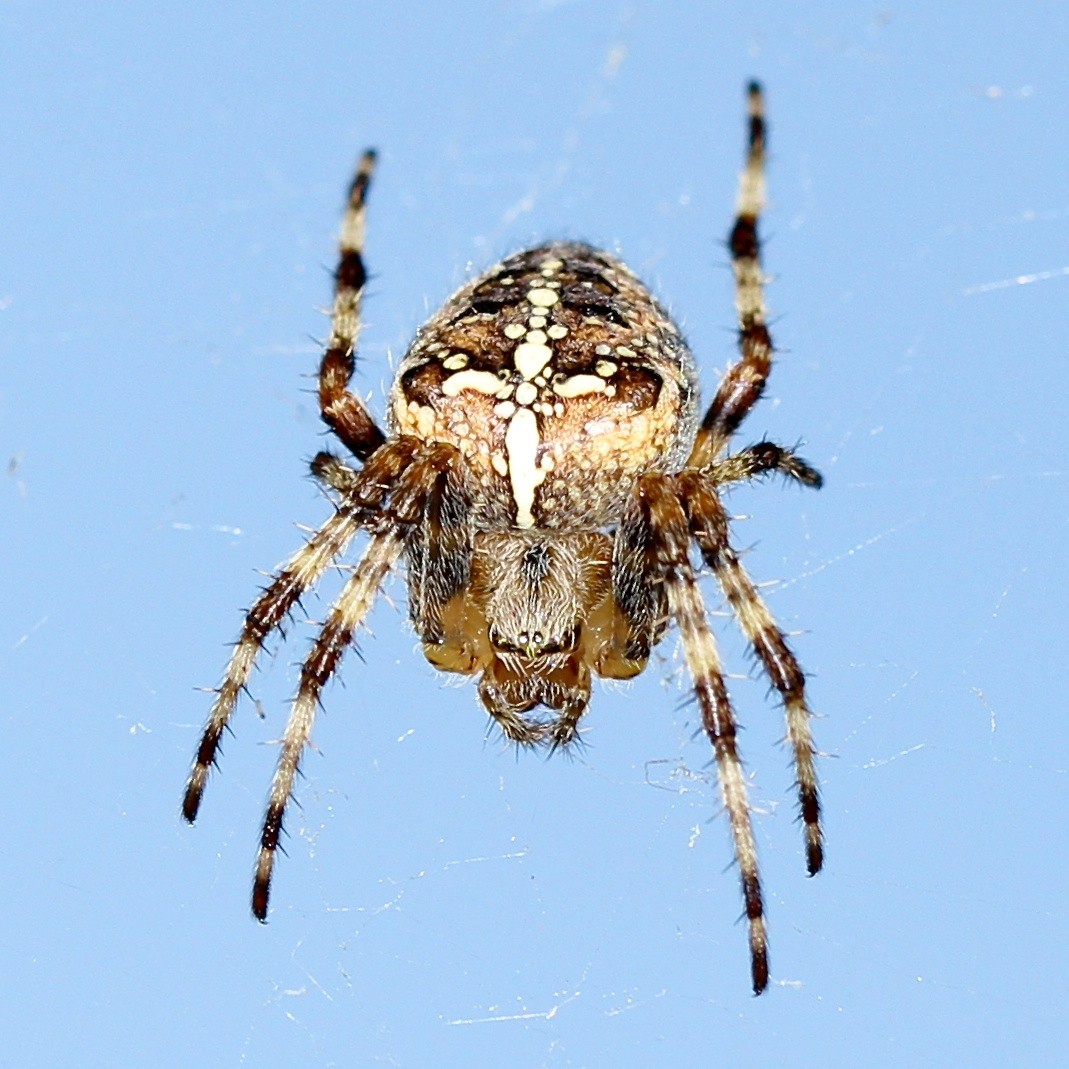
3. Crowned orbweaver
A common species of orb-weaver, crowned orbweaver (Araneus diadematus) builds large and noticeable webs. Only the females build webs, and they may prey upon their mates before, during or after engaging in sexual intercourse. Crowned orbweaver is reluctant to bite humans and will not do so unless scared or provoked. It avoids danger by vibrating in its web until it becomes a blur, confusing predators.
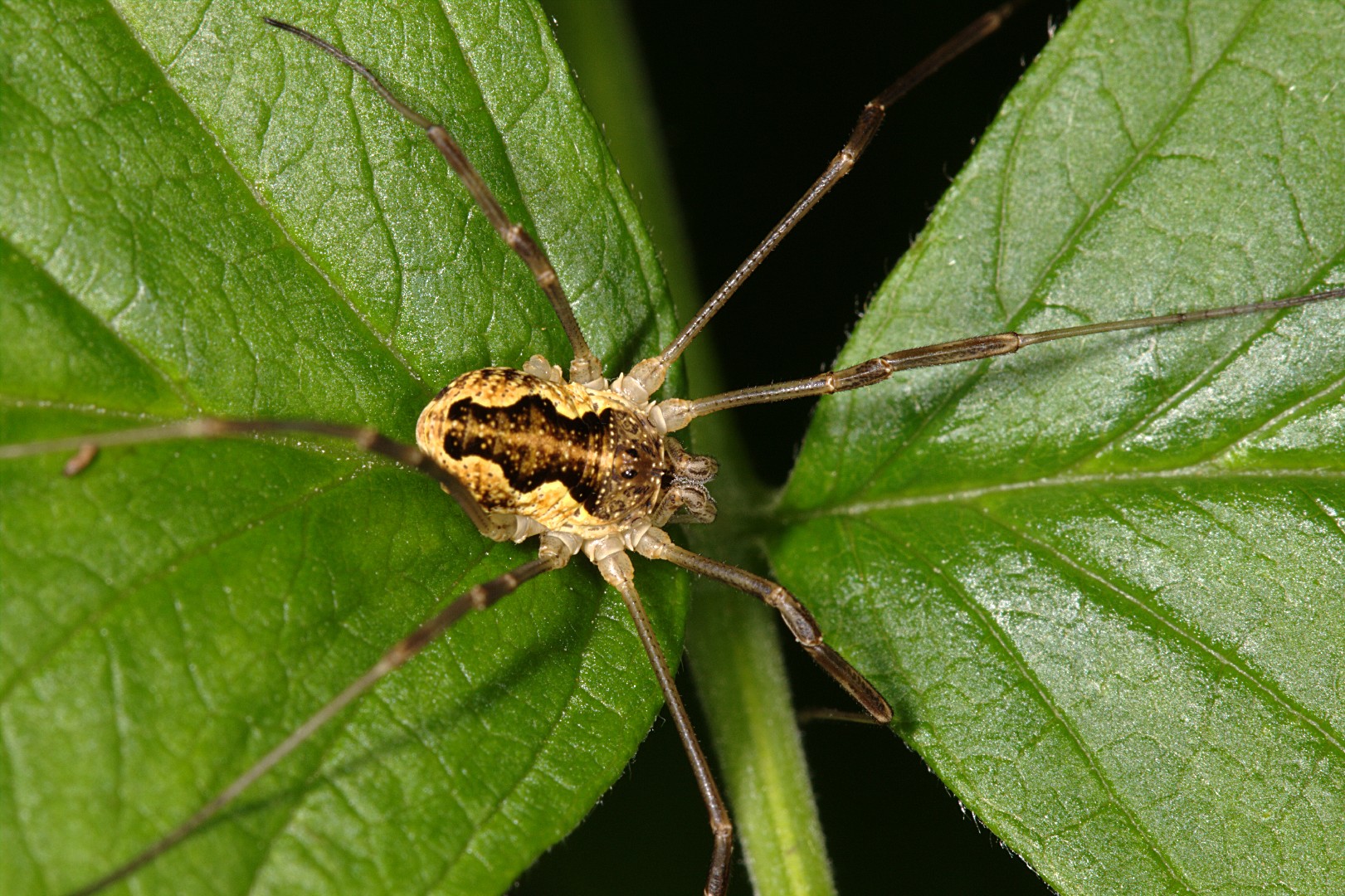
4. Saddleback harvestman
Mitopus morio can reach a body length of about 4 - 6 mm in males, of about 4 - 8 mm in females. However the body size is quite variable. The body is ovate, slightly narrower in the male. The head shows various timy bumps. The eyes are small and narrow, longer than wider, with a varying number of small spikes around the eyebrow. Also color is rather variable, but males are usually brown-colored, where as females are darker. A dark irregular saddle-like area is always present on the back, sometimes with narrow white edges and a longitudinal pinkish stripe in the centre. The legs varies from yellowish-brown to dark brown and are thin and long. The length of the longest of the second pair of legs is 3 - 4 cm. Males have sharp, forward-pointing tooth under first segment of chelicera. 
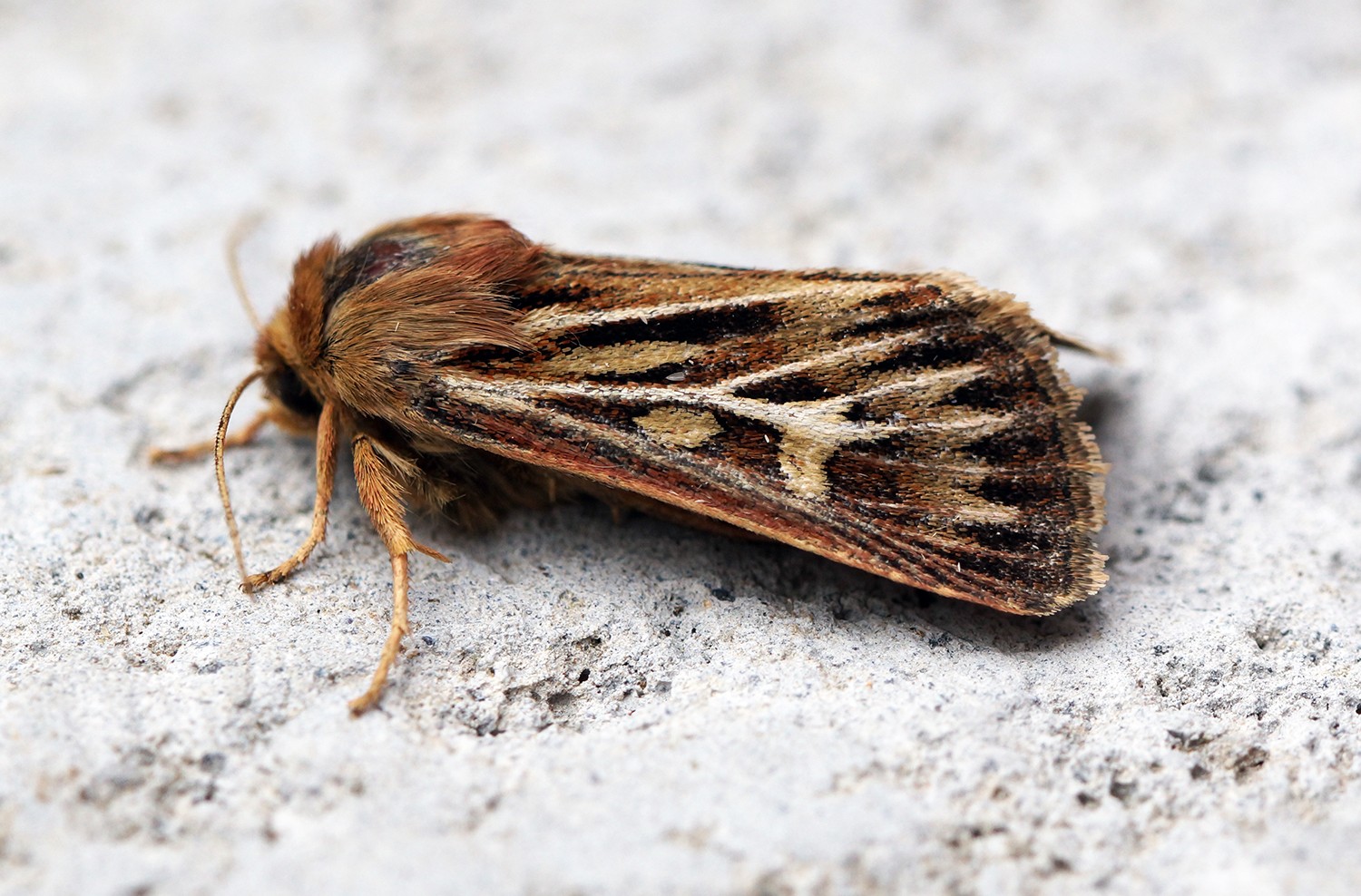
5. Antler moth
This species is unusual for a noctuid in that there is marked sexual dimorphism. The male has a wingspan of 27–32 mm but the female is much larger with a wingspan of 35–39 mm. The forewings are brown, speckled with black and marked with a bold white branched basal streak which gives the species its common name. The hindwings are dark brown with a white fringe.
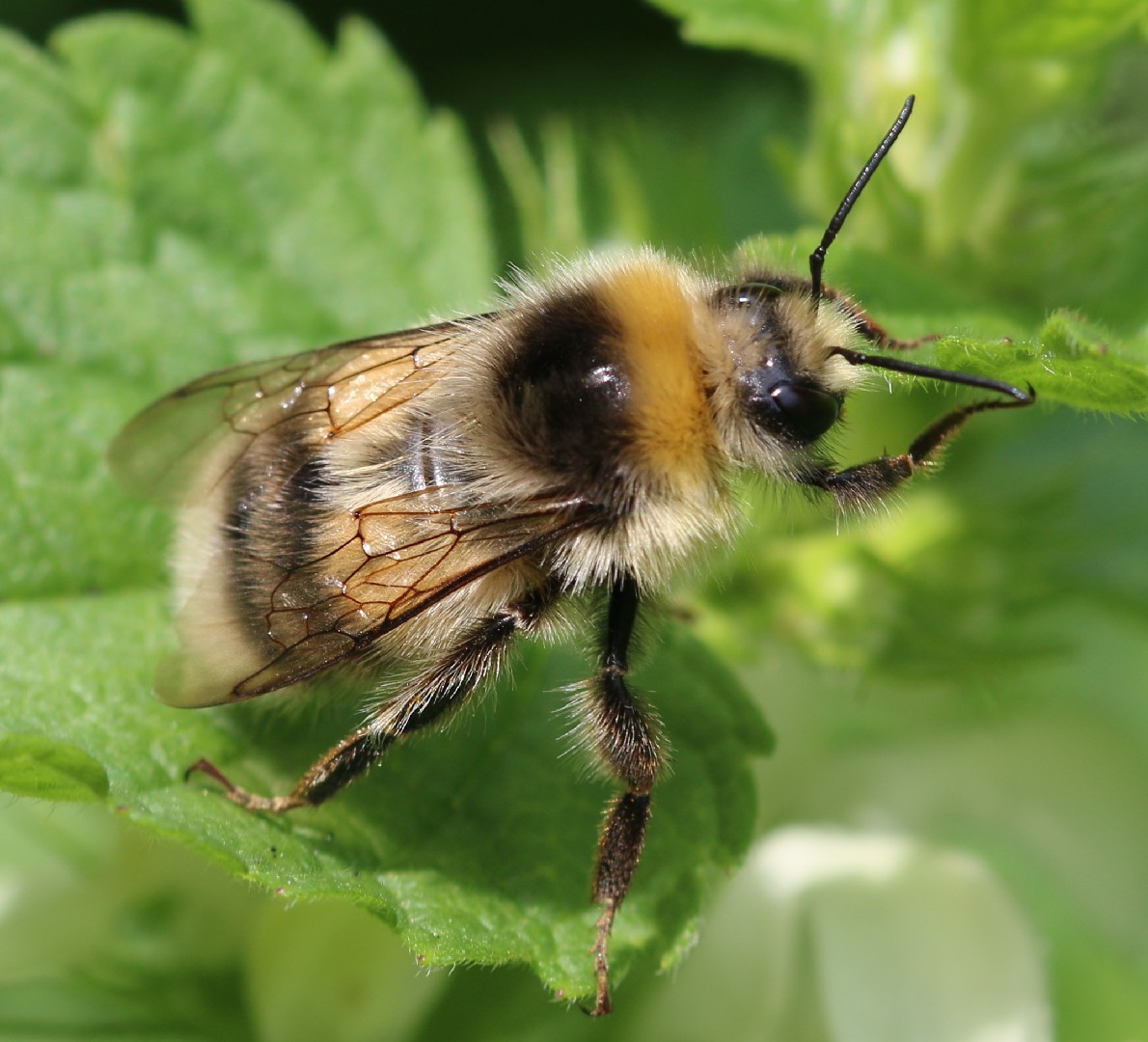
6. White-tailed bumble bee
The pale yellow bumblebee or bumblebee (Bombus lucorum) is a bumblebee living near the ground, which is widespread in Germany in open spots with few shadows. It has its ecological significance above all as a pollinating insect of many plants, many of which depend on the earth bumblebees as pollinators.
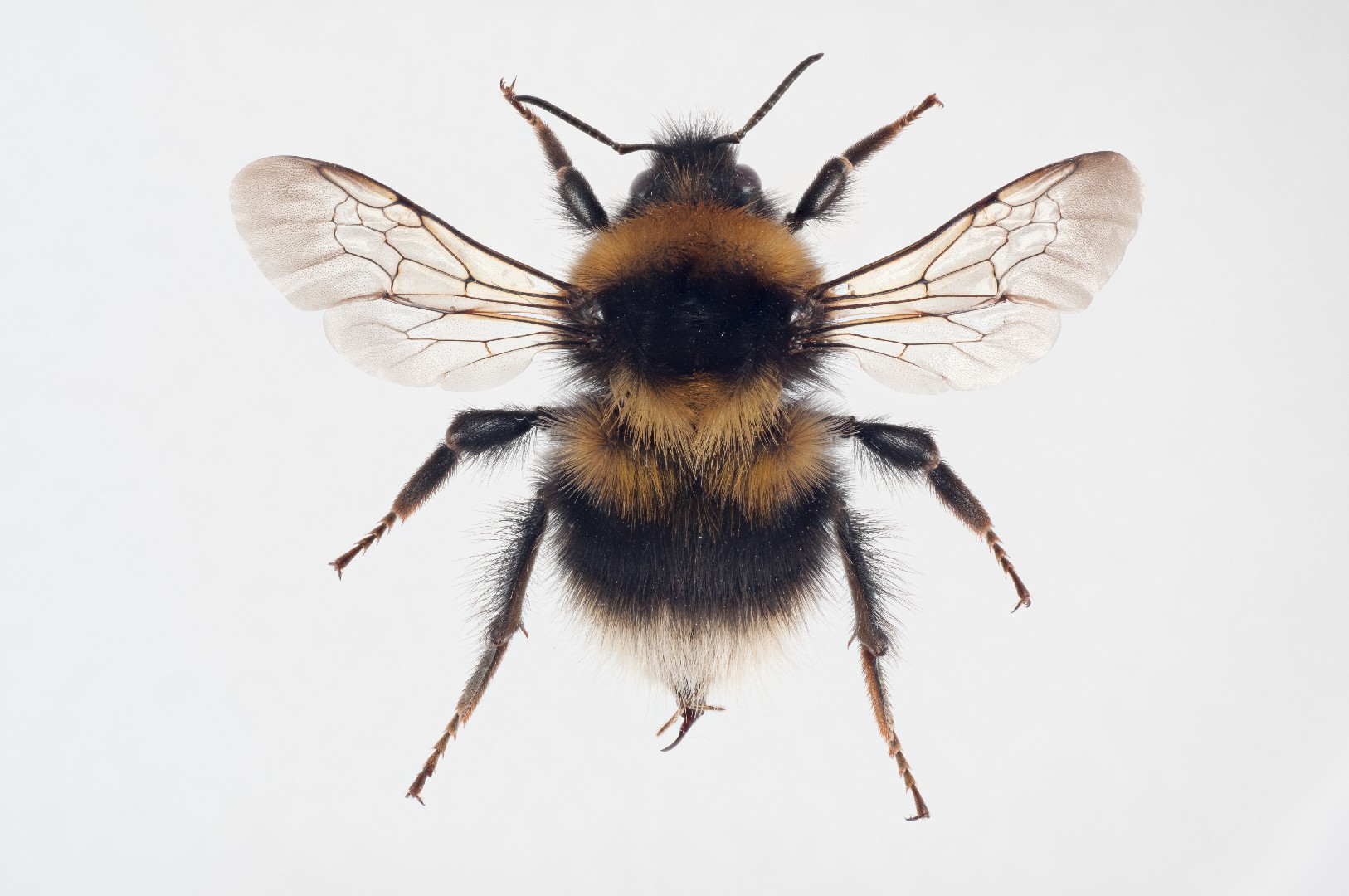
7. Heath bumble bee
A fairly small bumblebee, it has body lengths around 16 mm (0.63 in) (queen) and 12 mm (0.47 in) (worker and male). The queen has an average wingspan of 29 mm (1.1 in). The face and proboscis are short. Females (queens and workers) have a predominantly black abdomen with a yellow collar, the first and sometimes second terga yellow, and a white tail. The face is black, occasionally with a patch of yellow fur on the top. Males are similar, but with more yellow; the yellow collar continues on the ventral side, the two first terga are always yellow, and much more yellow fur is found on the face. However, darker forms of the females are seen, as well as forms (sometimes considered subspecies) that differ in the amount of yellow in the fur, and with brownish hairs on the white tail. Among these are B. j. hebridensis (which is endemic to the Hebridean islands of Scotland), B. j. monapiae, and B. j. vogtii. On the Orkney and the Hebrides, a form exists where the males have red tails instead of white.

8. Blue-eyed hawker
The Southern Mosaic Maiden (Aeshna affinis) is a species of dragonfly from the noble dragonflies (Aeshnidae) family. It is a species of the Mediterranean area, which currently seems to extend its area to the north due to the climate and can also reach northern Germany.
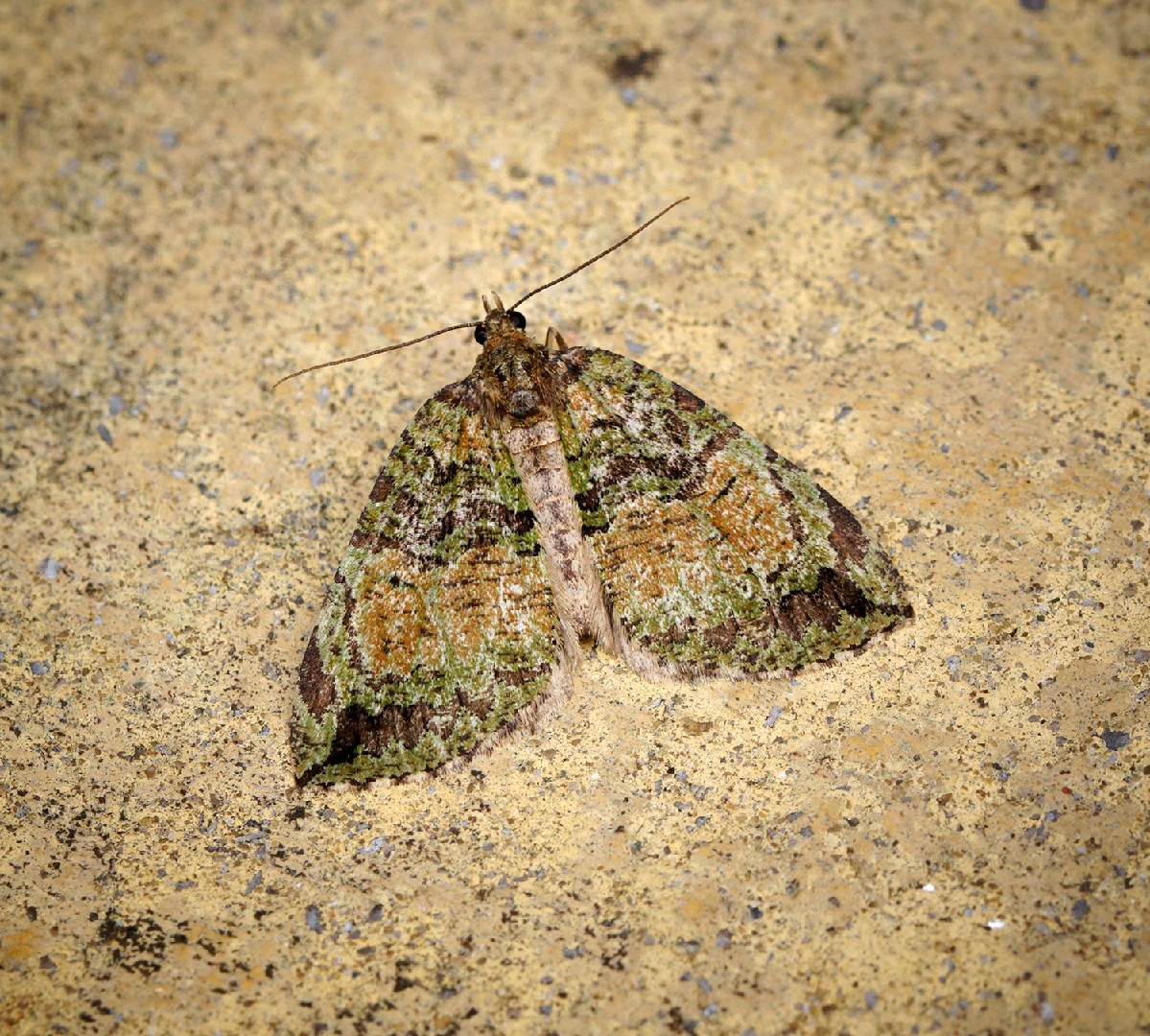
9. July highflyer
The wingspan is 23–30 mm. The ground colour ranges from green through to brown. The dark cross bands vary in intensity and pattern. There is anapical streak on the forewings. The hindwings are pale brown. It "differs from the other European species of Hydriomena in the shorter palpus, the more angled or irregular markings between the subbasal line and the median space, dark subterminal band, nearly always interrupted by a white or pale spot in the middle, absence of black vein-streaks near the apex".
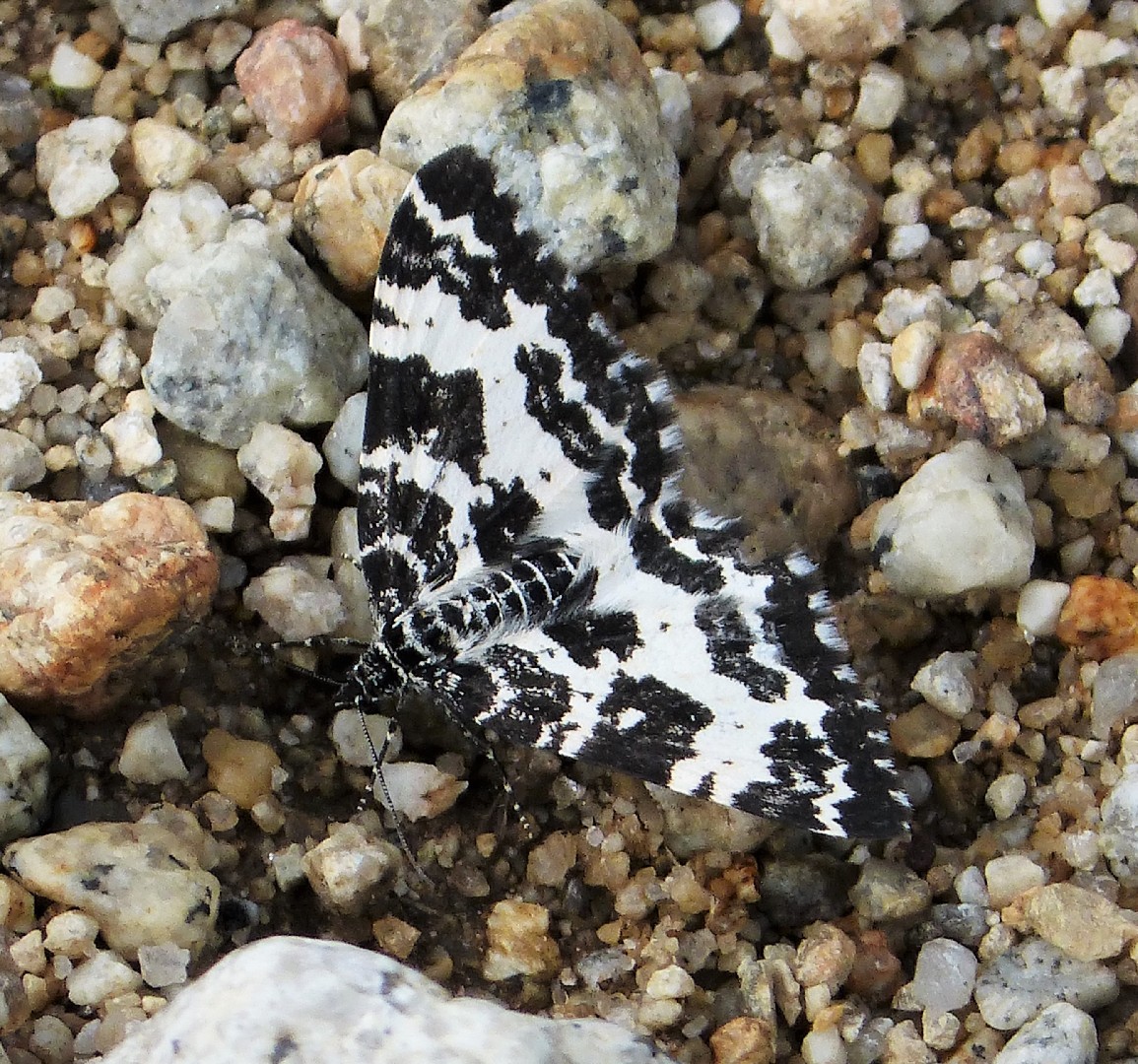
10. Argent and sable moth
The wings have a black ground color with variable white pattern elements. A wider inner cross and a narrow basal cross line are typical. The dark midfield is traversed by white patches, which may be continuous. The outer cross line forms a wide white band, which usually has a row of black dots. In the black area of the margin is a wavy line broken into white stains, which forms an arrow- or spearhead-shaped element (Rheumaptera hastata is Latin for spear shaped). The fringes are black and white patched. The pattern of the hindwing is similar to the forewing. In some forms the black tone is reduced on a few black stains.
More







