




Top 16 Most Common Insects in Sikkim
Welcome, arthropod admirers! In the verdant landscape of Sikkim, insects are as diverse as the terrain itself. Elements such as elevation and climate provide a plethora of habitats for these creatures, ensuring a vibrant insect fauna. Insects, both beneficial and pestiferous, hold immense ecological relevance in Sikkim. They pollinate flowers, decompose organic matter, and form part of the food chain. So, let's delve into the top 16 most commonplace insects found in Sikkim.

Most Common Insects
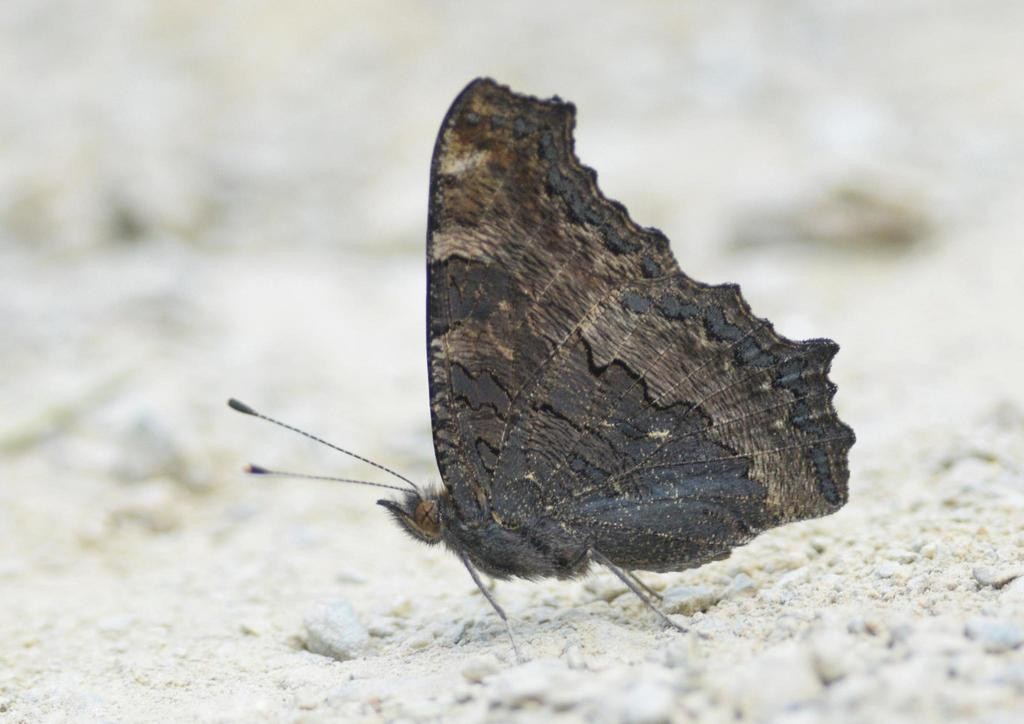
1. Indian Tortoiseshell
Upperside of forewings with the basal half of costa and termen pale brown, the former flecked with pale yellow, the latter bordered inwardly by a narrow darker brown band bearing a series of black lunules; outwardly traversed by sinuous slender subterminal and more slender terminal black lines: base of wing and the greater part of interspace 1a and of 1 posteriorly brown, irrorated with golden scales, the rest of the wing anteriorly yellow, posteriorly and at base of cell red, with the following black markings: a broad band across the cell, another broader short band beyond, touching the discocellulars, not extending below vein 4, and a third not extending below vein 5, with a white patch beyond before apex, all three short bands rounded posteriorly; on the disc there is a large oval black spot, followed by a yellow patch in interspace 1, and above it smaller black spots in interspaces 2 and 3. Hindwing has the basal half dusky brown, covered posteriorly with long brown hairs; anteriorly beyond the bases of veins 5, 6 and 7 black, followed by a broad red band anteriorly turning to yellow; a broad terminal brown band, traversed by a series of black-bordered blue lunules, and beyond them by very slender inner and outer black sinuous lines. Underside brown, with closely set transverse short black striae; basal half of wings clouded with dark purplish brown, the outer margin of the dark portion defined by a highly sinuous jet-black transverse line, most distinct on the hindwing, and also crossed, nearer the base of the wings, by two or three similar, much interrupted lines; terminal half of the wings paler, with two dark irregular patches below costa of forewing; finally a sinuous transverse subterminal narrow dark blue band across both forewings and hindwings, bordered on both sides by slender black lines, widening into spots on the veins of the forewing. This band is more distinct in the female than in the male. Antennae dark brown, minutely ringed with white; head, thorax and abdomen dark brown above and below. Has a wingspan of 52–63 mm. 

2. Legume pod borer
The species is found in Europe.
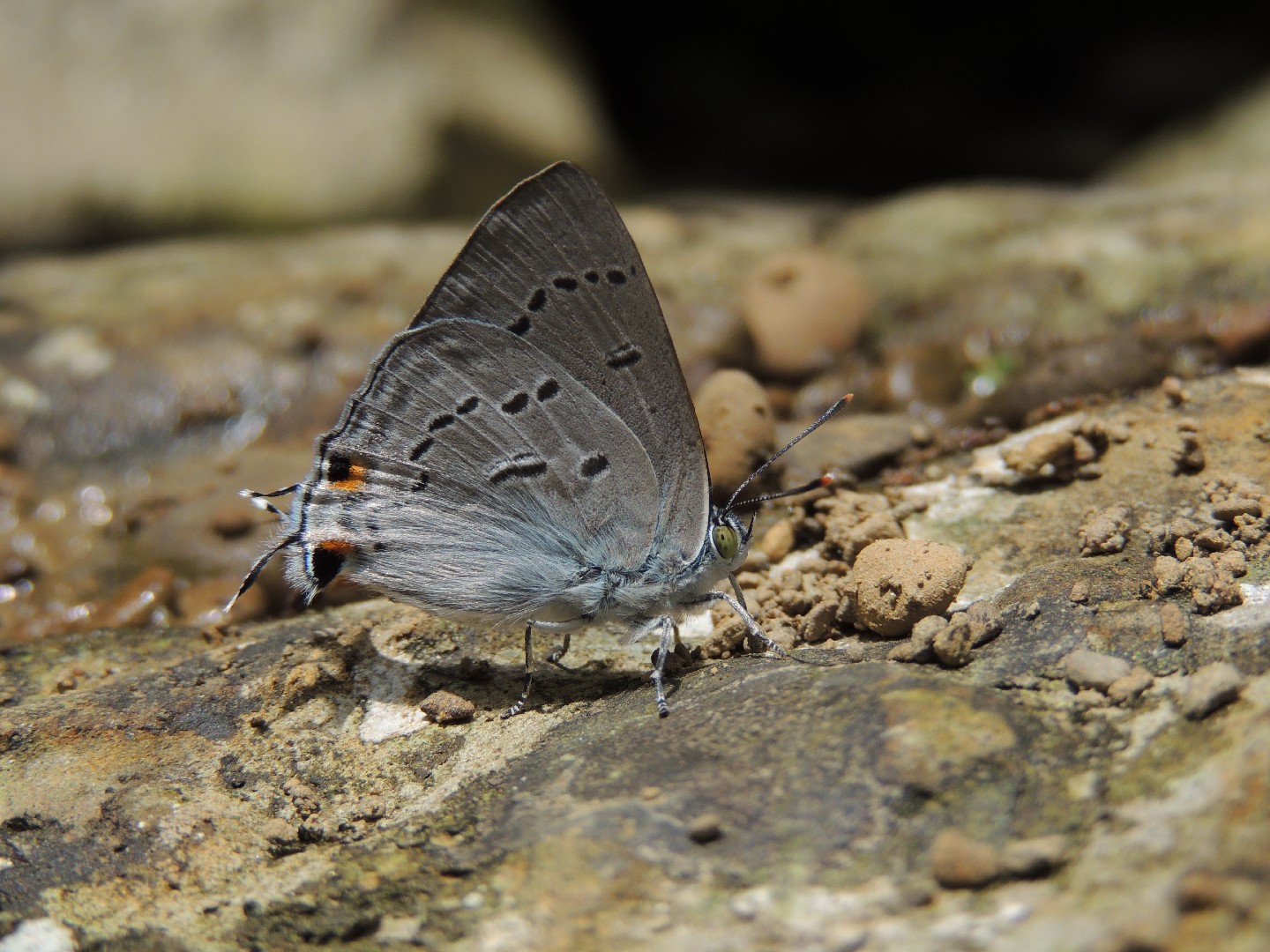
3. Bi-spot royal
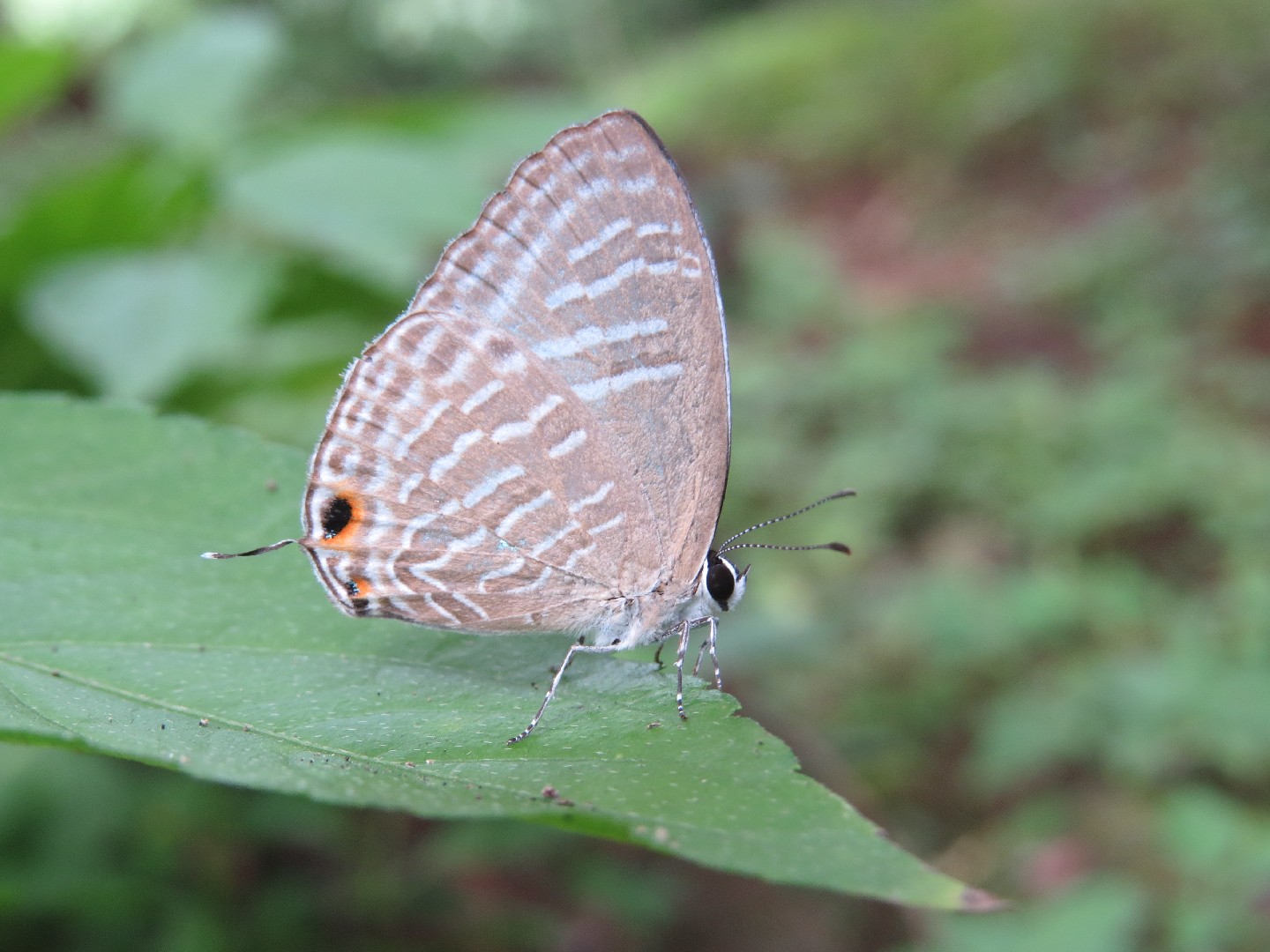
Ancema ctesia, the bi-spot royal, is a species of blue butterfly (Lycaenidae) found in Pakistan and India. The larvae feed on Viscum articulatum.
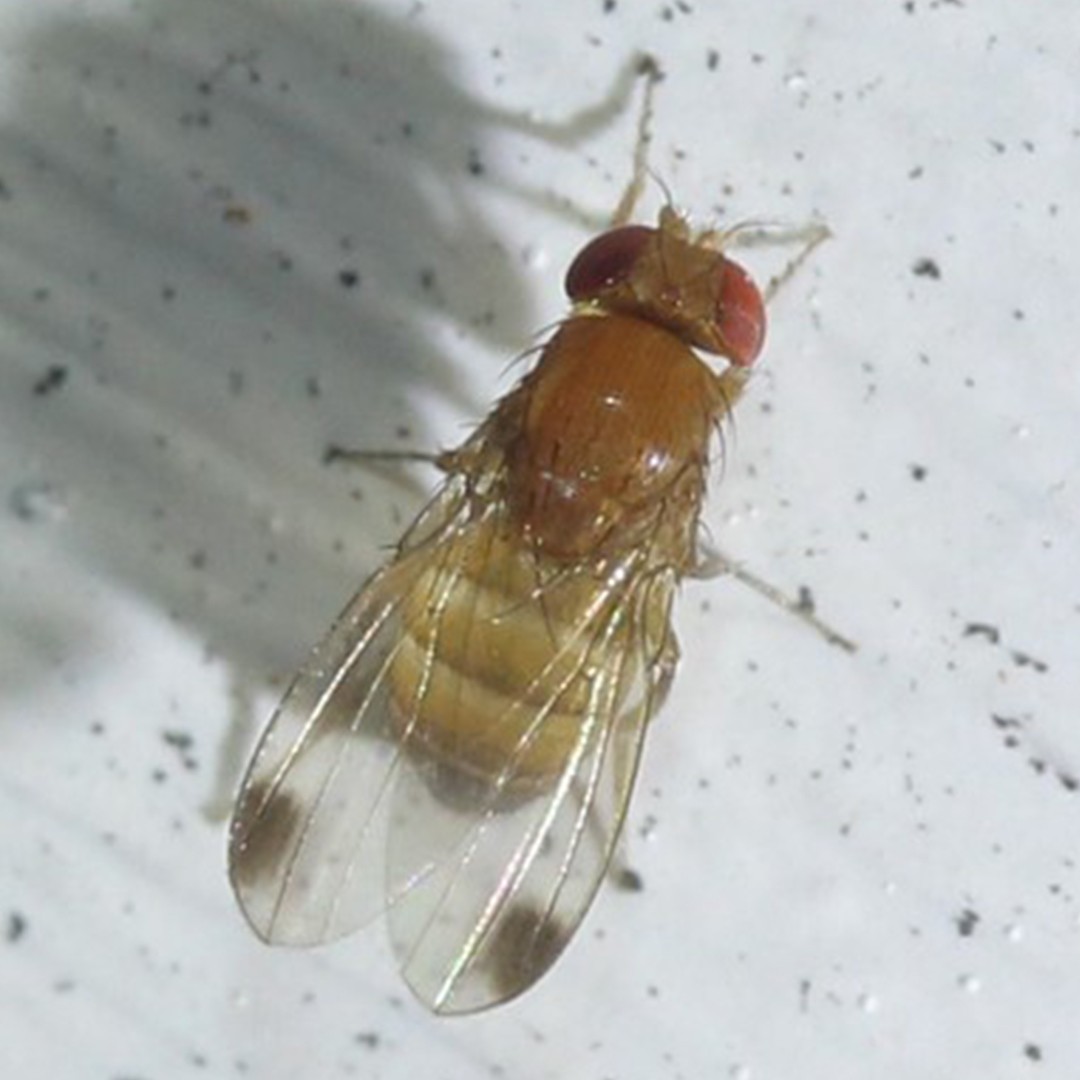
4. Spotted-wing drosophila
Spotted-wing drosophila is a pest insect that causes significant damage to fruit crops like grapes, strawberries, and cherries (hence the common name). It lays eggs in the fruit, contaminating them and introducing bacteria. This fast-breeding, short-lived pest can produce three generations during a single fruit season.
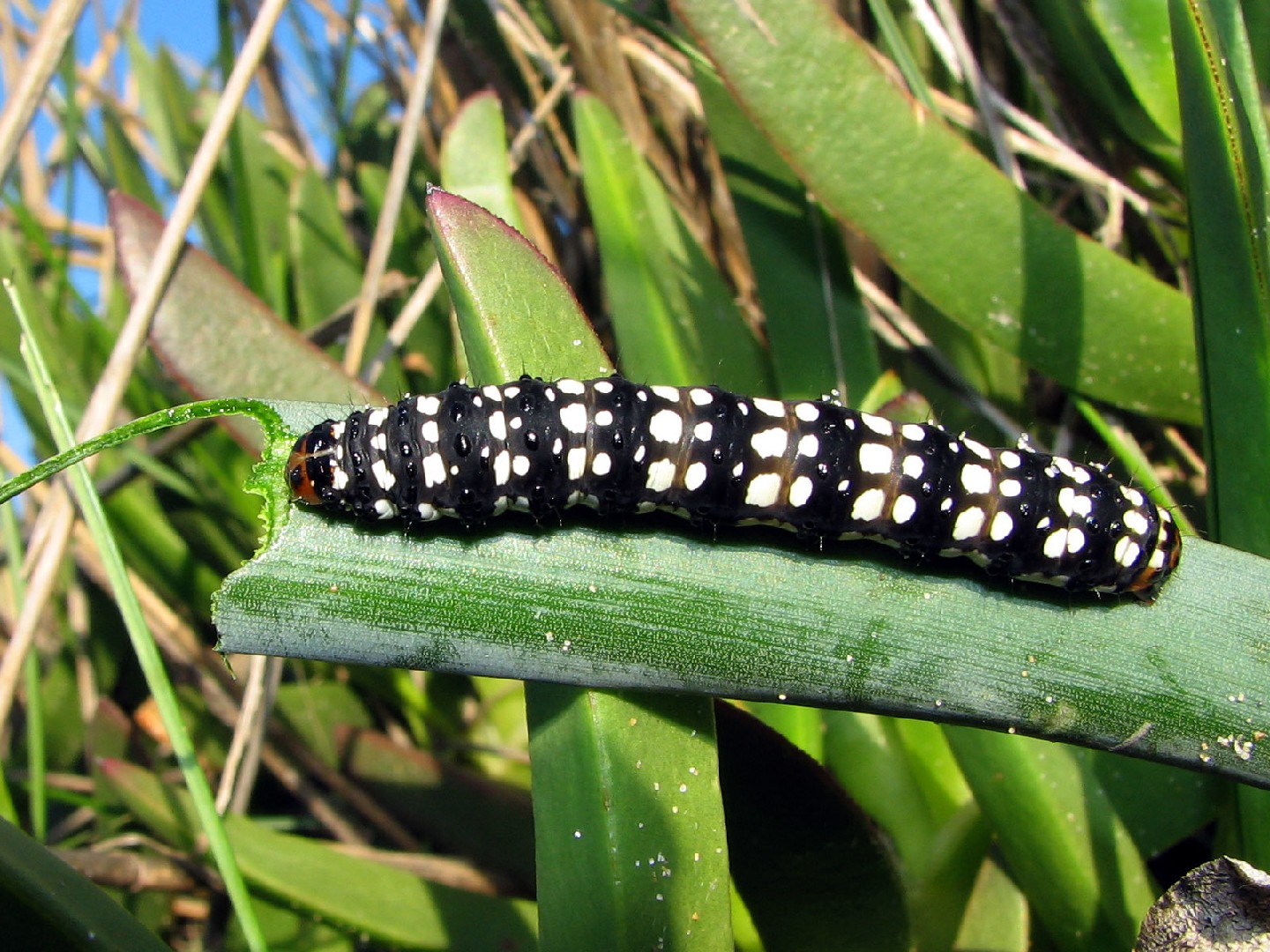
5. Lily borer
The wingspan of the moth is about 4 cm. Its head, thorax and forewings are very dark brown, but paler toward the wingtips. Sub-basal, median and postmedial indistinct waved lines are black. A curved submarginal ochreous line with ferrous colored lunuled found on each side of it. There is a marginal black lunule series. The hindwings are practically white. Tarsi bear black and white stripes.
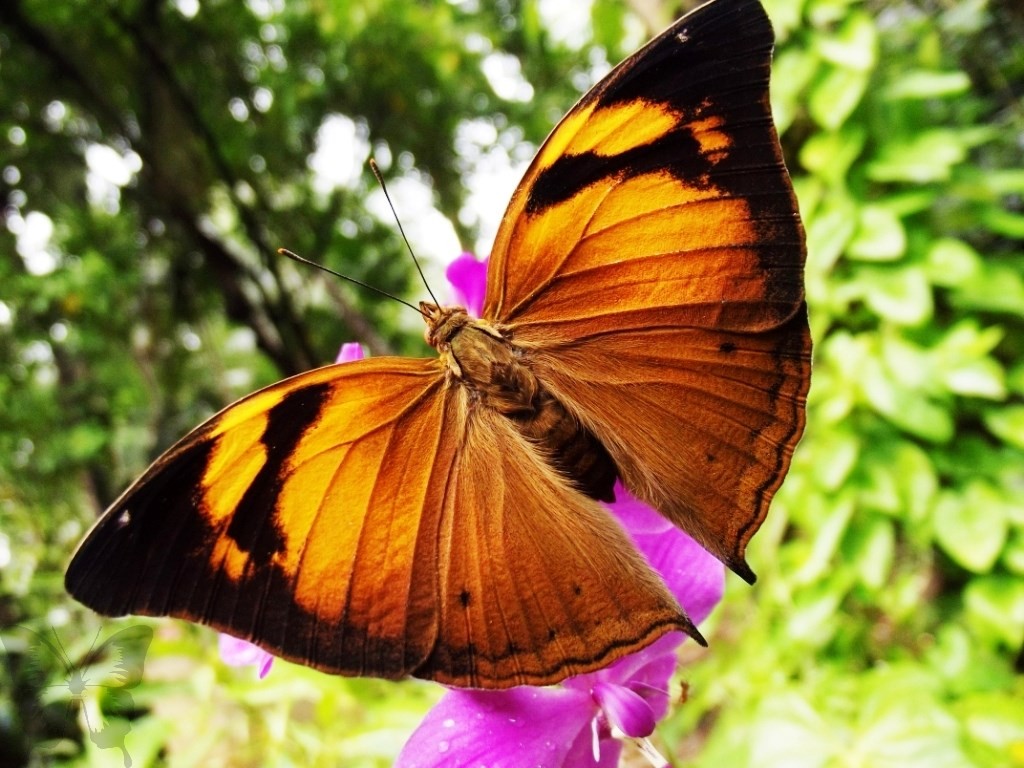
6. Autumn leaf
The larvae are black, with two rows of dorsal white spots. Head with a pair of branched spines; rest of the segments with a dorsal and a lateral row of blue branched spines on each side. The pupae are yellowish with numerous black spots; constricted in the middle; head produced into two points. Male's and female's underside yellowish brown, paling anteriorly to rich golden yellow on the forewing, shading anteriorly into dusky brown on the hindwing. Forewing: the apical half black, following a line from vein 12 opposite the discocellulars, passing through apex of cell, obliquely across middle of interspace 3 and curving down to tornus; a black spot near apex of cell coalescing with the inner margin of 1he black colour; a short, very oblique, broad golden-yellow band, broader in the female than in the male, from middle of costal margin to interspace 5; a spot beyond in line with it in interspace 4; two, sometimes three, minute, preapical white specks; the cilia fulvous (tawny), touched with white, anteriorly. Hindwing uniform; the costal margin broadly as noted above, a subterminal narrow band and narrower terminal line posteriorly, dusky black; a postdiscal black spot in interspaces 2 and 5 respectively; the cilia fulvous. The ground colour varies from reddish to dark greenish brown with irrorations (speckles) of greyish and black scales; apex of the forewing and the terminal margin posteriorly of the hindwing more or less lilacine; forewings and hindwings crossed by a dark narrow discal fascia, generally bordered on the inner side by a greyish line; this fascia bent inwards at right angles above vein 6 of the forewing and in most specimens, bordered internally by a diffuse pale patch and externally by an oblique whitish mark, beyond which is a subcostal white spot, followed by a transverse sinuous postdiscal series of obscure ocelli crossing both wings, each ocellus centred by a minute dot, white on the fore, black on the hindwing. In the male there are generally, but not invariably, a number of whitish spots on the basal areas of both wings. Antennae blackish brown, ochraceous at apex; head, thorax and abdomen dark fulvous brown; beneath, the palpi white, the thorax and abdomen pale brown. Wingspan is about 8 - 9 cm.
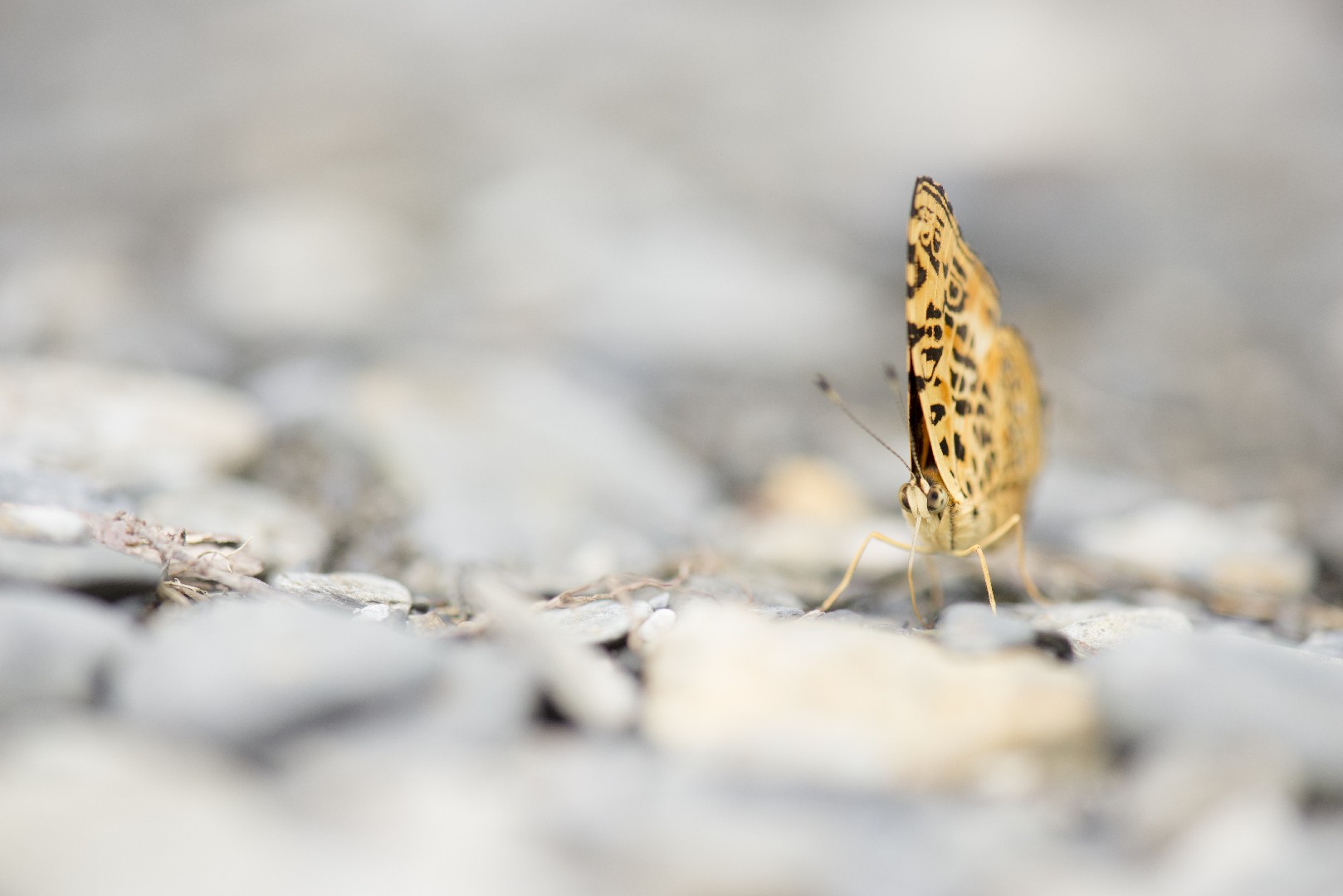
7. Himalayan jester
Symbrenthia hypselis, the Himalayan jester, is a species of nymphalid butterfly found in South Asia, and some islands in South East Asia (Sumatra, Java)
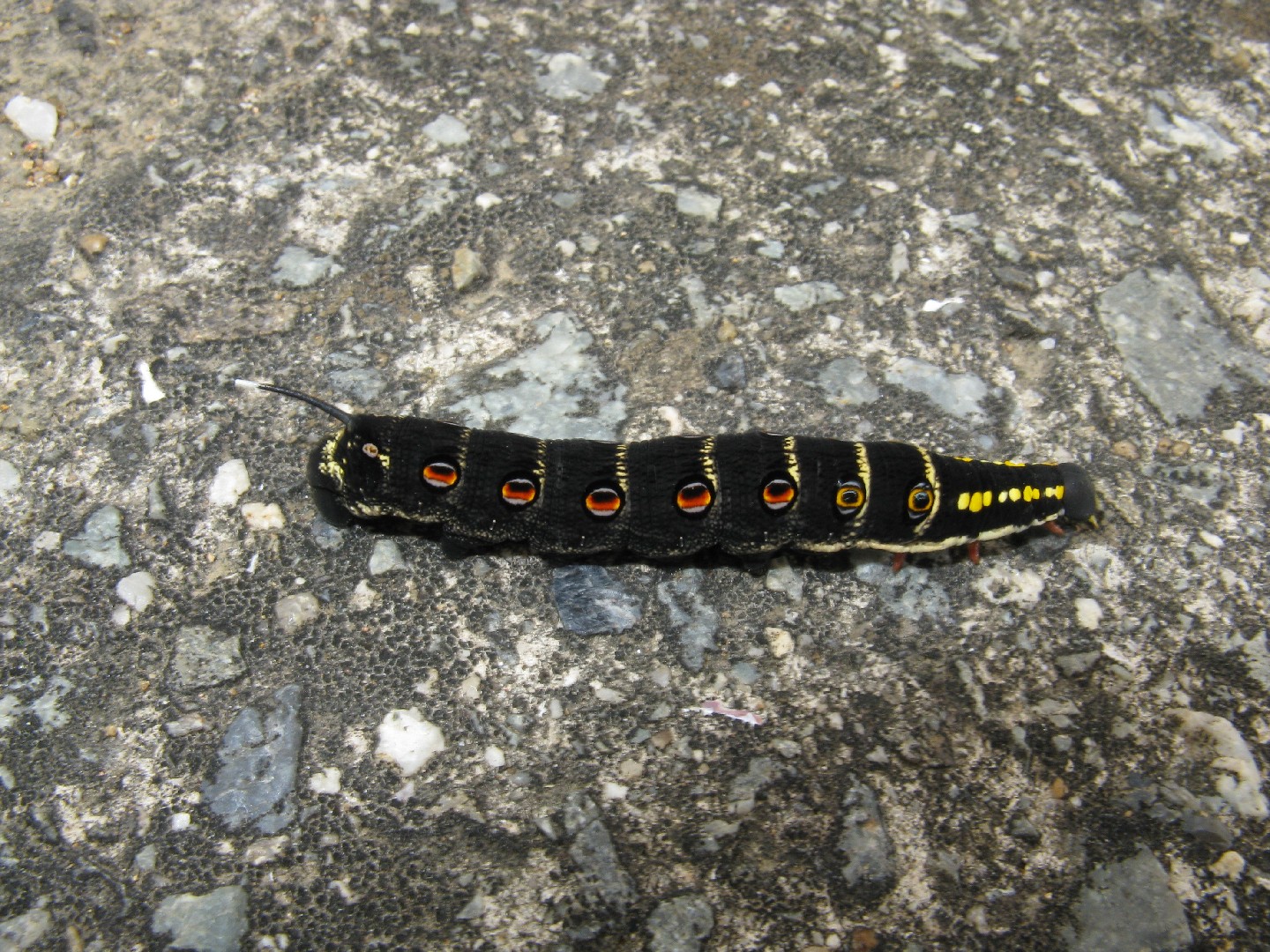
8. Impatiens hawk moth
The impatiens hawk moth can be considered a pest among commercial and residential gardeners. Both the moth and caterpillar feed on several flowering plants, including fuchsias and the Australian native violet. Adult females lay their eggs on the plant’s foliage, ensuring the hatching larvae have a ready food source.
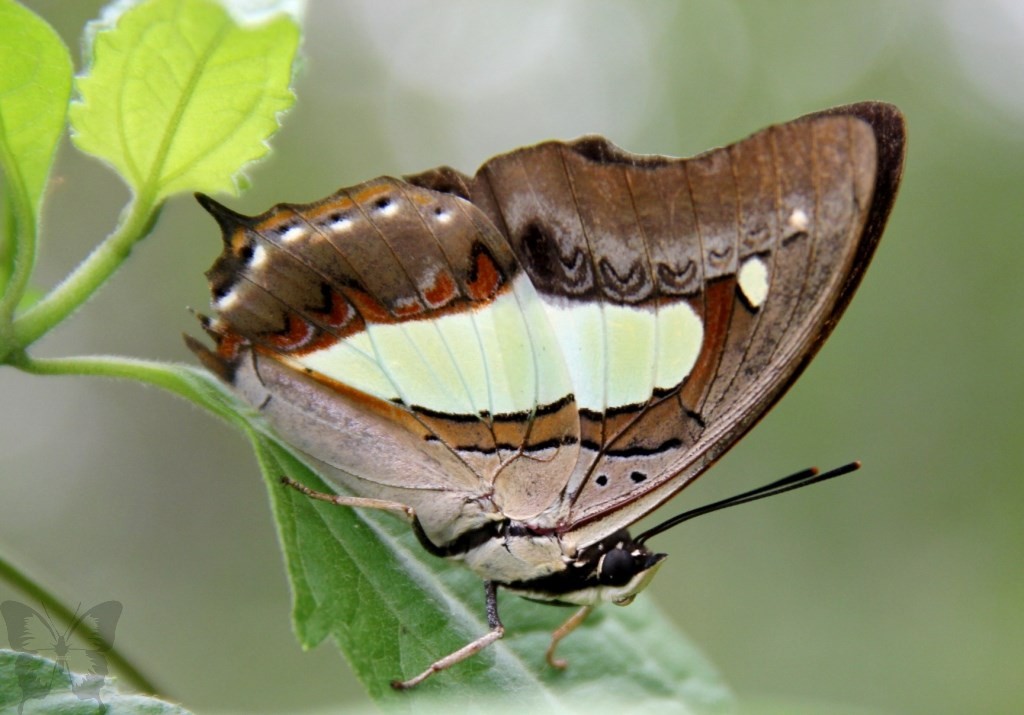
9. Common nawab
Upperside of male and female is black. Forewings and hindwings with a discal broad transverse area from below vein 4 in forewing to vein 2 on hindwing, a moderately large spot in interspace 5, a minute preapical dot beyond in interspace 6 on forewing, and a subterminal row of spots with two or three spots beyond them on the tornal angle of the hindwing, pale yellow, sometimes with an ochraceous, sometimes with a greenish tinge. The discal area on the forewing nearly as broad in interspace 3 as on the dorsum, on the hindwing narrowing to an acute point on vein 2 at two-thirds of its length from base of wing. Tails touched with bluish grey. Underside with the discal transverse area and spot in interspace 5 as on the upperside; base and costal margin of the forewing to apex, and base and dorsal margin of the hindwing broadly lilacine brown, on forewing with two small black spots near base. Bordering the transverse discal area on the inner side, where it is margined with black lines, and above, is a broad chocolate carved band, continued more narrowly along the outer side of the discal area; beyond this on the forewing is a concave series of dusky black lunules, on the hindwing the band itself is traversed by a line of obscure pale lunules; finally on the hindwing there is a subterminal series of internally white-bordered black spots followed by an obscure ochraceous terminal line, and above the tornal angle a slender transverse black line from vein 1 to the dorsal margin. Wingspan 6 - 9 cm. Caterpillar is elongated, slug-shaped, dark green; head large, wide and surmounted by four divergent curved fleshy spinous processes; anal segment with two short naked terminal points; the segments with an oblique yellowish-white lateral stripe, most prominent on the 7th, 9th and 11th segments, and beneath these a lower series of small white spots. Pupa is thick, cylindrically oval; green streaked with white; dorsum and thorax convex; head broad, truncated, obtusely pointed in front.
10. Greenish Silk-Moth
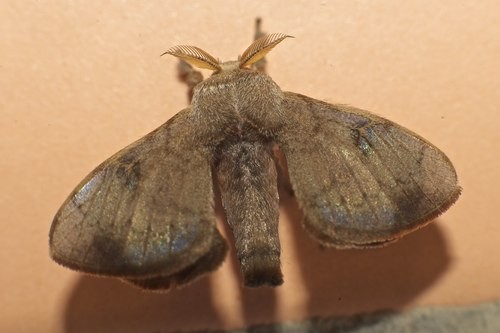
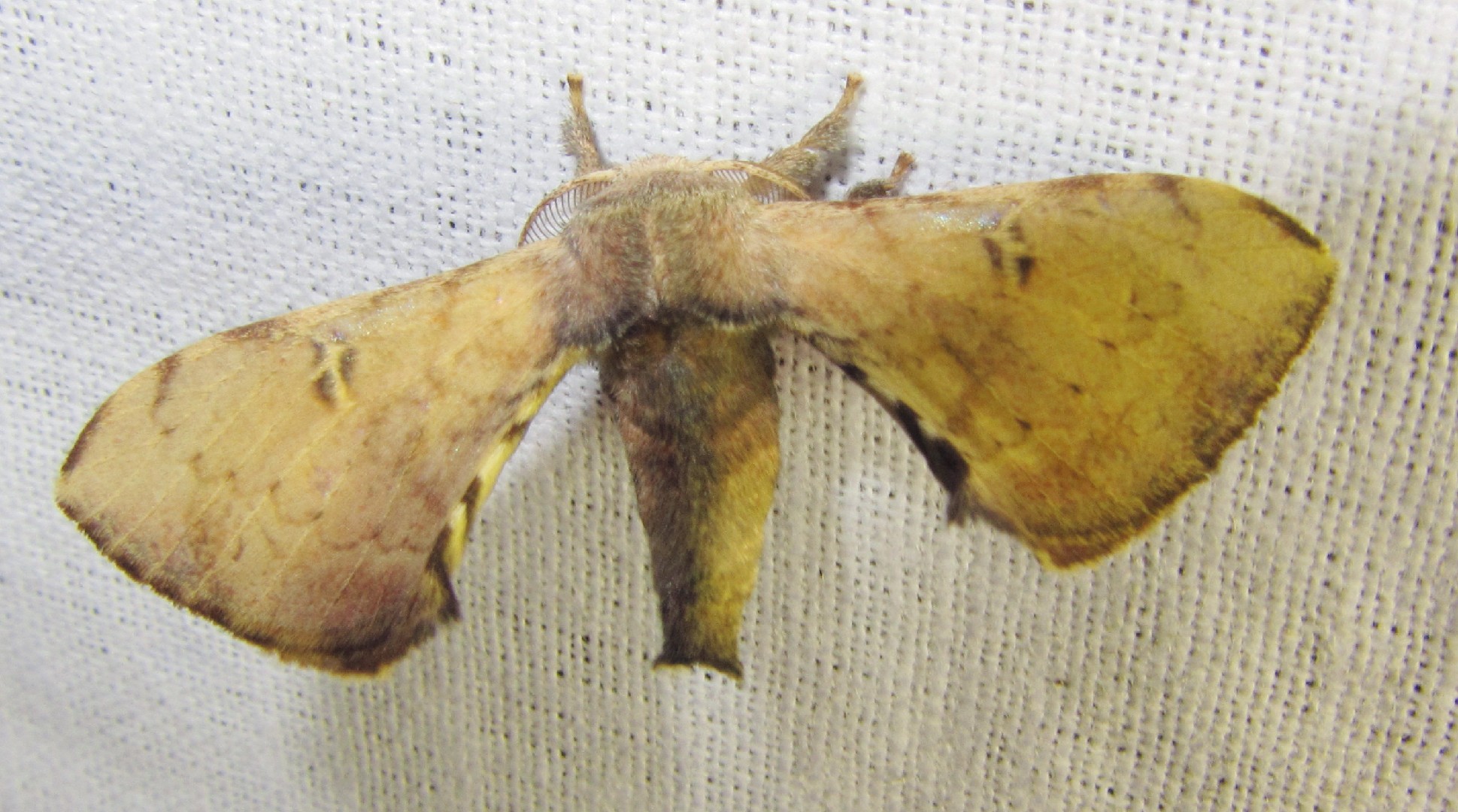
The Trilocha varians is an insect that spends a lot of time in the oriental region. Their color varieties can be anywhere from dark brown to dark red. You may see them feasting on a ficus, which is one of the larva's favorite meals.

More







