




Top 20 Most Common Insects in Xonobod
Insects, the tiny creatures renowned for their resilience and varieties, are truly a marvel in nature. In unique regions like Xonobod, geographic variations create a kaleidoscope of insect diversity. They play pivotal roles in our ecosystem – from pesky trouble-makers to beneficial pollinators. Our list of 20 most common insects in Xonobod illustrates how local environments teem with life - celebrating the remarkable versatility of these remarkable critters.

Most Common Insects
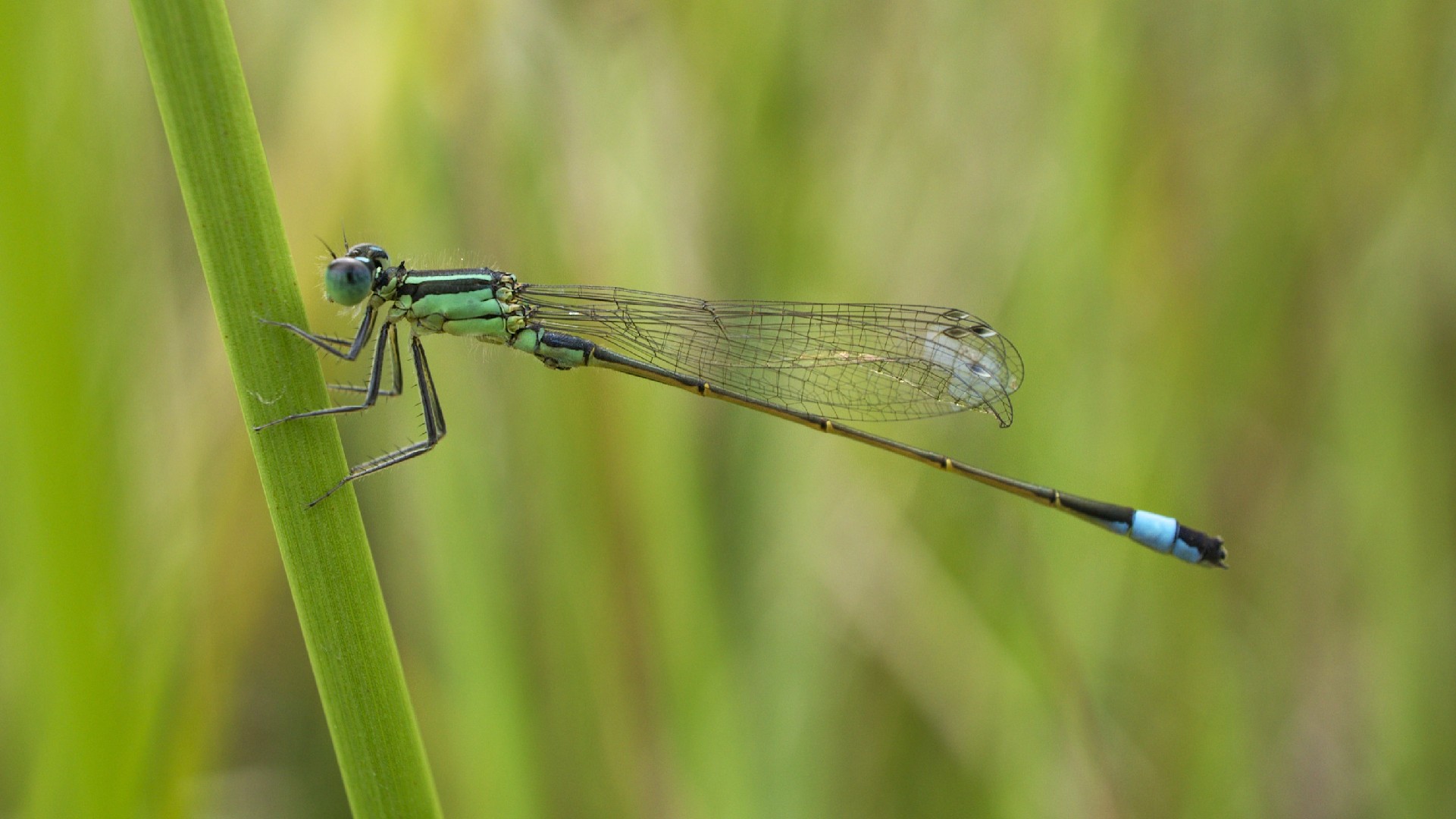
1. Blue-tailed damselfly
Ischnura elegans can reach a body length of 2.5 - 3.5 cm and a wingspan of about 3.5 cm. Hindwings reach alength of 1.4 - 2 cm. Adult male blue-tailed damselflies have a head and thorax patterned with blue and black. There is a bi-coloured pterostigma on the front wings. Eyes are blue. They have a largely black abdomen with very narrow pale markings where each segment joins the next. Segment eight, however, is entirely pale blue. At rest, the wings of most damselfly species are held back together, unlike dragonflies, which rest with their wings out flat. The thorax of juvenile males has a green tinge. Female blue-tailed Damselflies come in a variety of colour forms.Juveniles may be salmon pink, form rufescens; violet, form violacea and a pale green form. The colour darkens as the damselfly ages. Mature females may be blue like the male, form typica; olive green thorax and brown spot, form infuscans or pale brown thorax and brown spot, form infusca-obseleta. 

2. Blue-winged grasshopper
The Blue-winged Creeper (Oedipoda caerulescens) is a species of wastelands fright (Oedipodinae) within the Short-tempered Fright (Caelifera). The name is given to the blue wing drawings of the animals and their preference for dry and low-vegetation habitats.
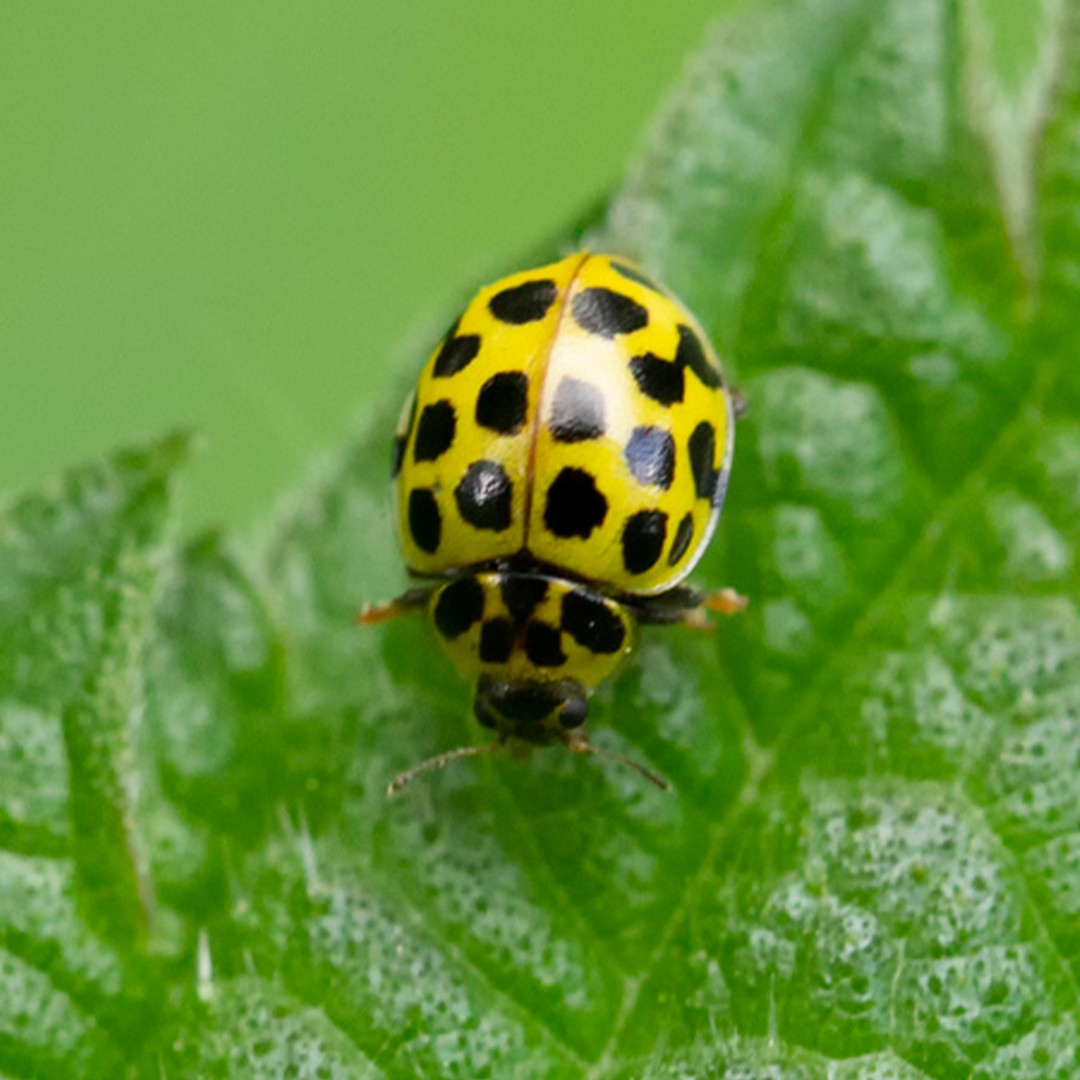
3. Twenty-two-spot ladybird
Psyllobora vigintiduopunctata (often abbreviated to Psyllobora 22-punctata), the 22-spot ladybird, (earlier known as Thea vigintiduopunctata) is a 3–5 mm long ladybird commonly found in Europe . The elytra are yellow in colour with 22 black spots. The pronotum is yellow or white with 5 black spots. This ladybird species has been reported in other areas of the province of Kerman, Mazandaran, South eastern province of Khorasan, Chahar Mahal and Bakhtiari, in Mashhad, Gilan, Lorestan province, Khorasan. Unlike most other ladybirds which feed on aphids, P. 22-punctata eats mildew — especially from umbellifers and low-growing shrubs . The 22-spot ladybird is best looked for amongst low vegetation.

4. Scarlet skimmer
The species is on the IUCN Red List as not endangered, year of assessment 2009.
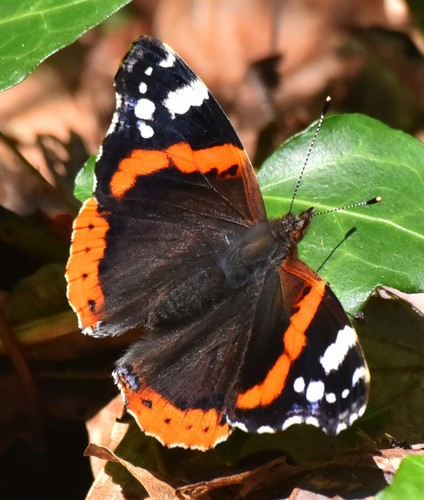
5. Red admiral
Red admiral (Vanessa atalanta) is a visually striking species of butterfly. Unusually territorial, males will compete for choice areas, and females will only mate with males that maintain their own territories. This butterfly is known for being particularly patient with human interactions, even to the point of perching on clothing or flesh.
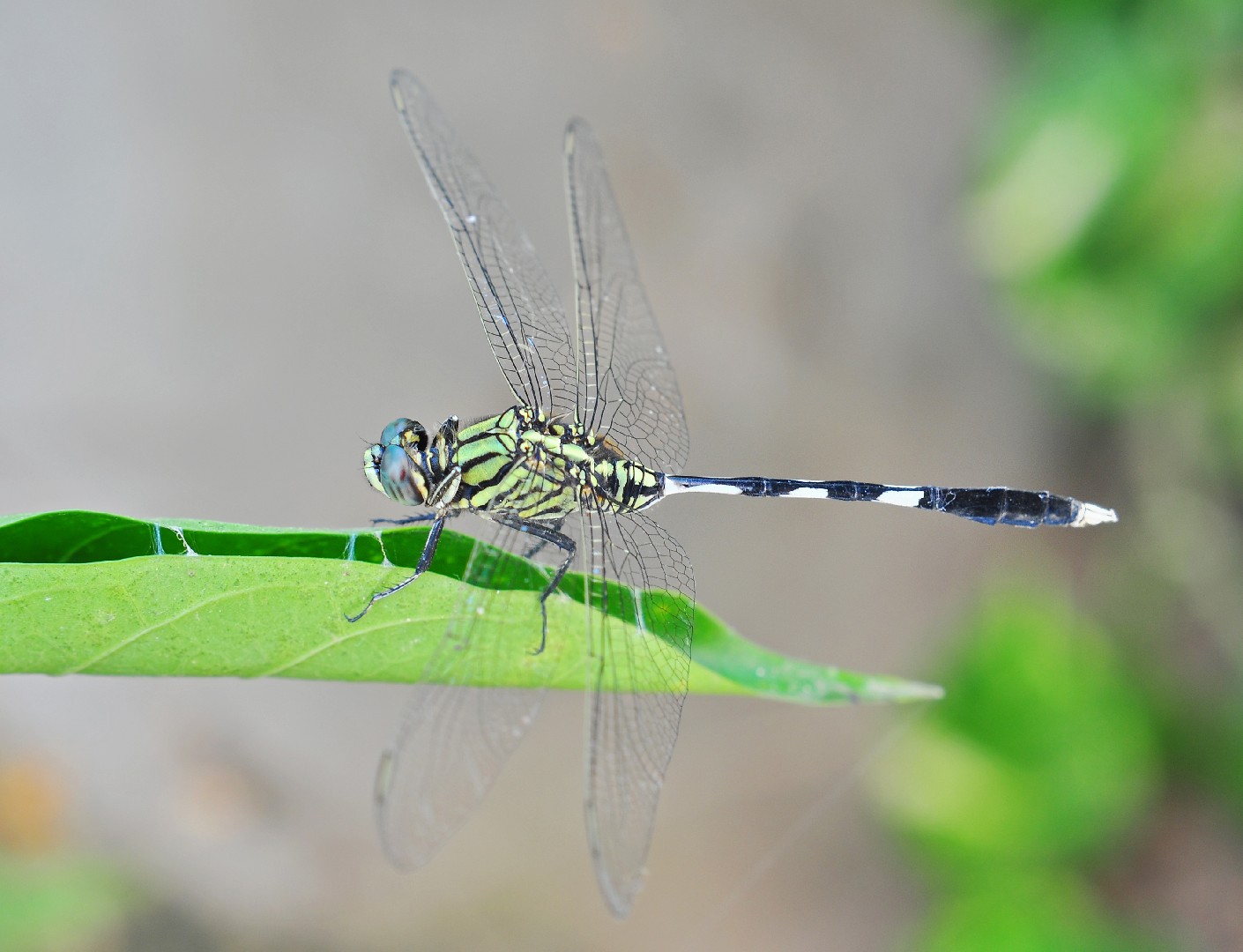
6. Slender skimmer
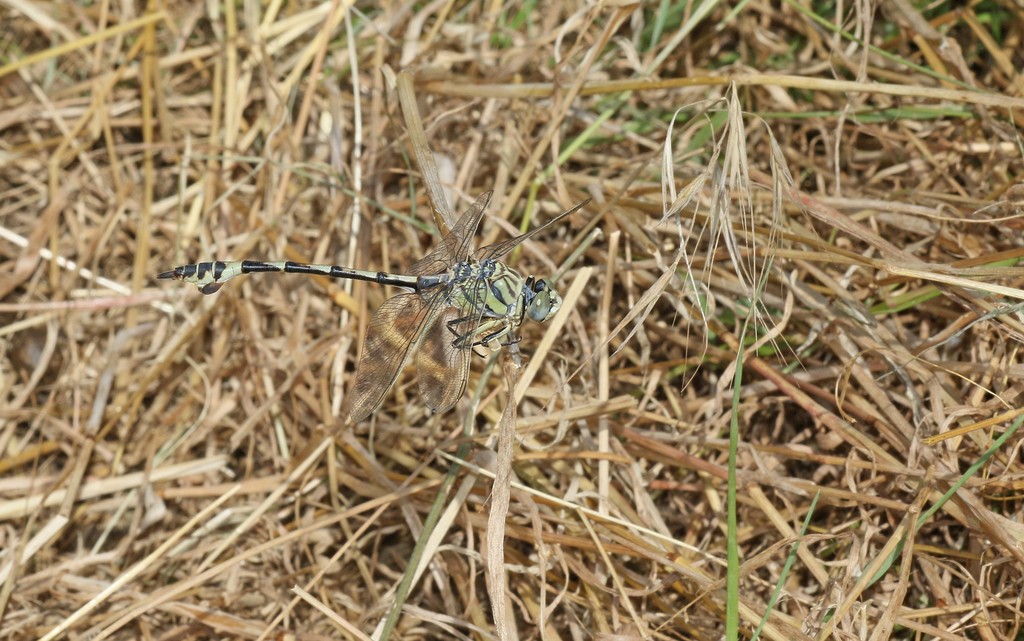
The species is on the IUCN Red List as not endangered, year of assessment 2009. The slender bank dragonfly occurs from Southeastern Europe and North Africa to Japan and Australia

7. Banded demoiselle
This is a large damselfly with a total length of up to 1.9 in and a hindwing length of up to 1.4 in. Male and female are variable in color and pattern. The male has translucent wings which each have a broad, dark iridescent blue-black spot (or band) across the outer part. On immature dragonflies the spot is dark brown. The body can be a metallic blue or bluish green or a combination of both colours, depending on the time of year and location. The dark wing patch of the male starts at the nodus (the slight dip midway down the upper edge of the wing) but can reach up to the wing-tip in southern races.
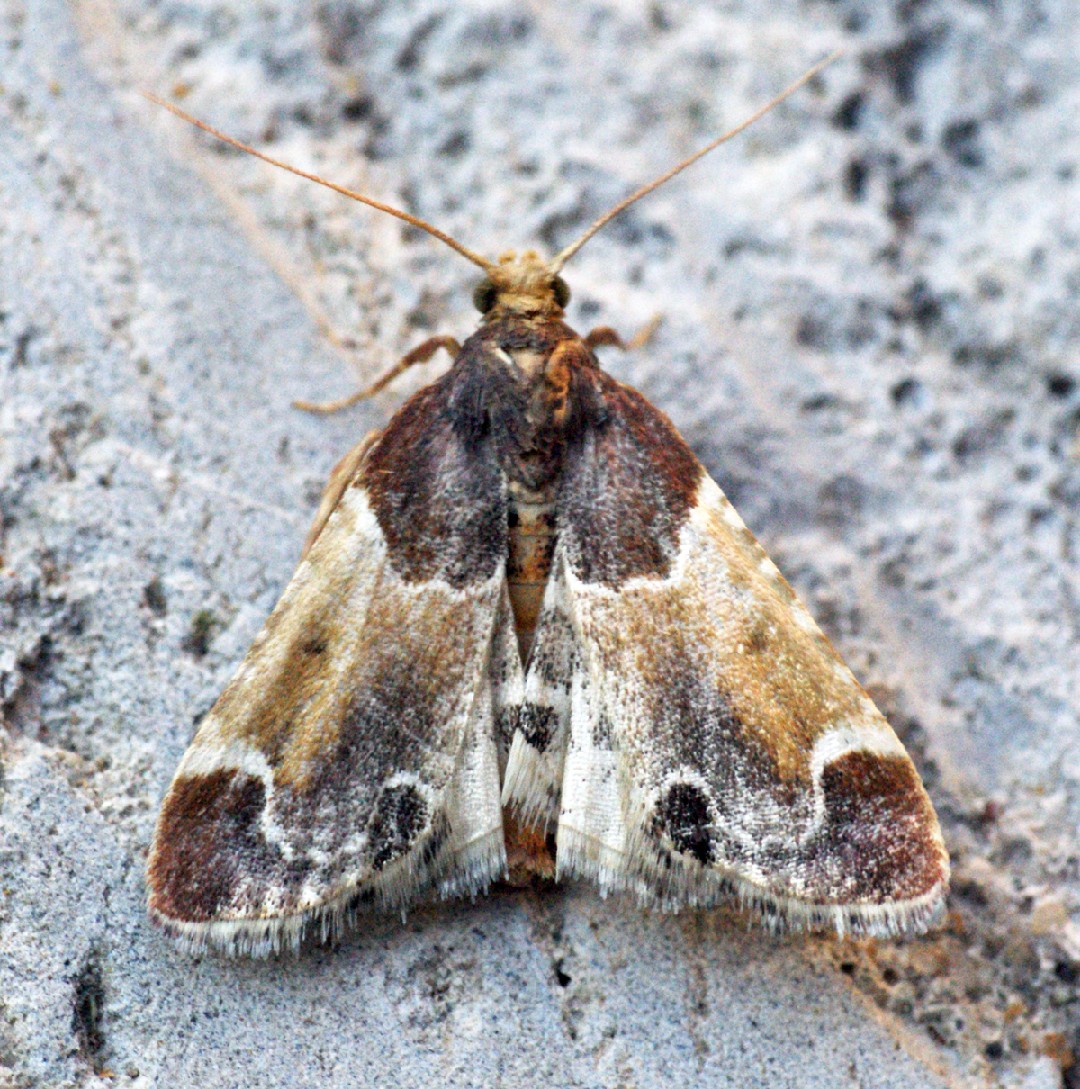
8. Meal moth
The meal moth's Latin name farinalis means "of the flour" since this moth loves to feed on stored grains. In China, it is a popular ingredient for insect tea, and there is research underway to commercialize the moths for this culinary use. The meal moth can be particularly pesky where food is stored because they can produce four new generations per year.
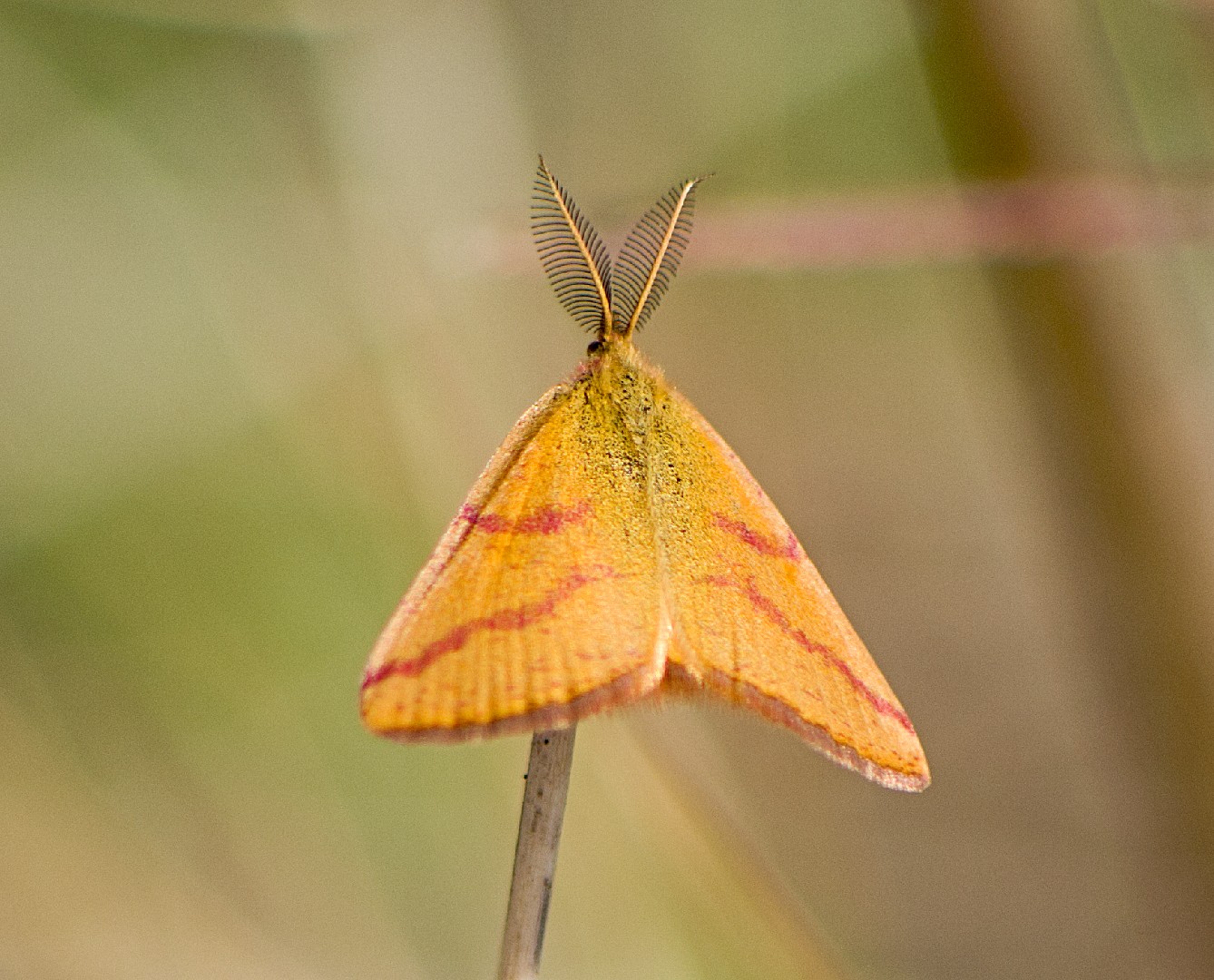
9. Purple-barred yellow
Lythria purpuraria generally have two red-purple transverse lines in their green-yellow forewings.
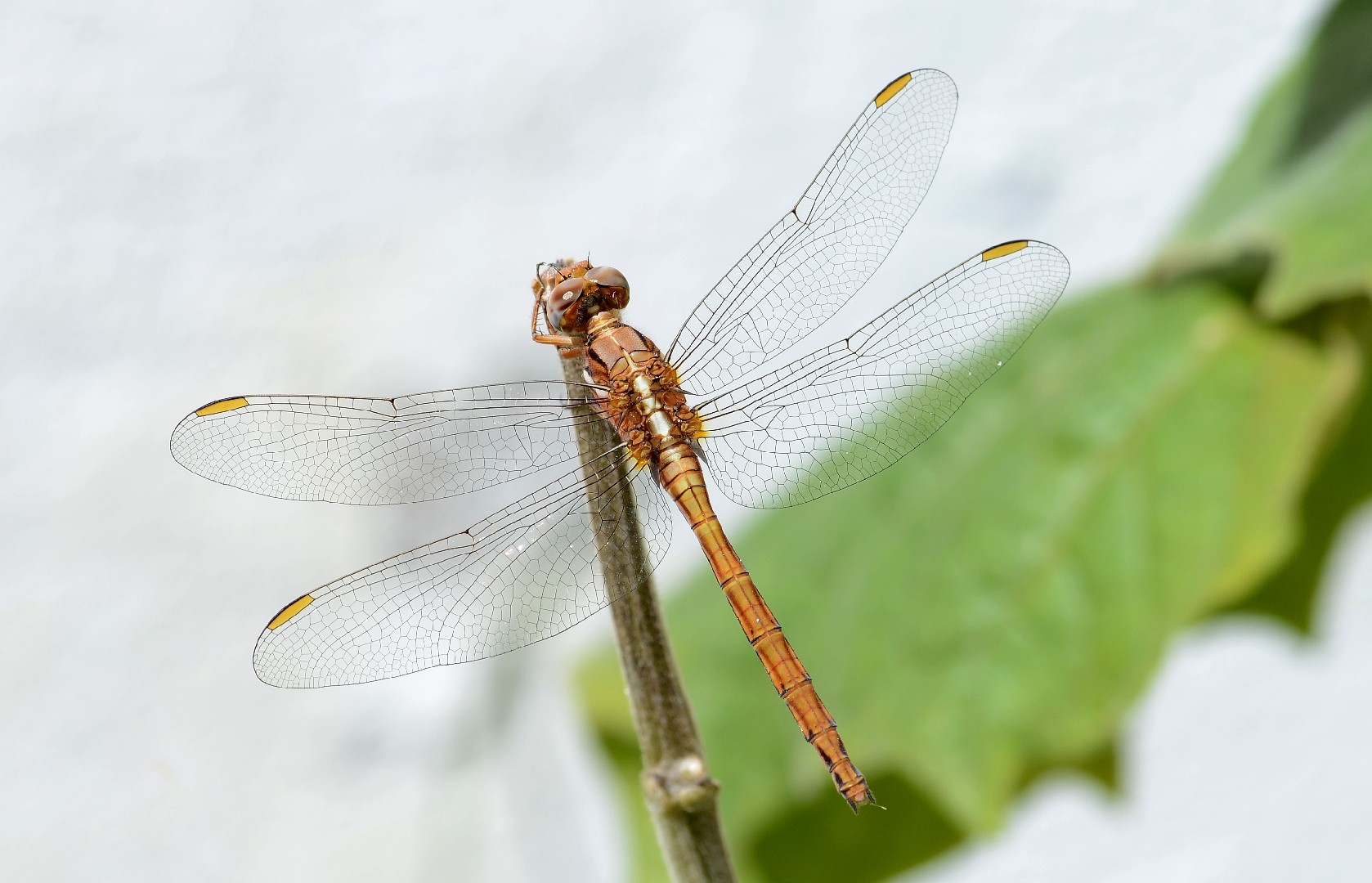
10. Keeled skimmer
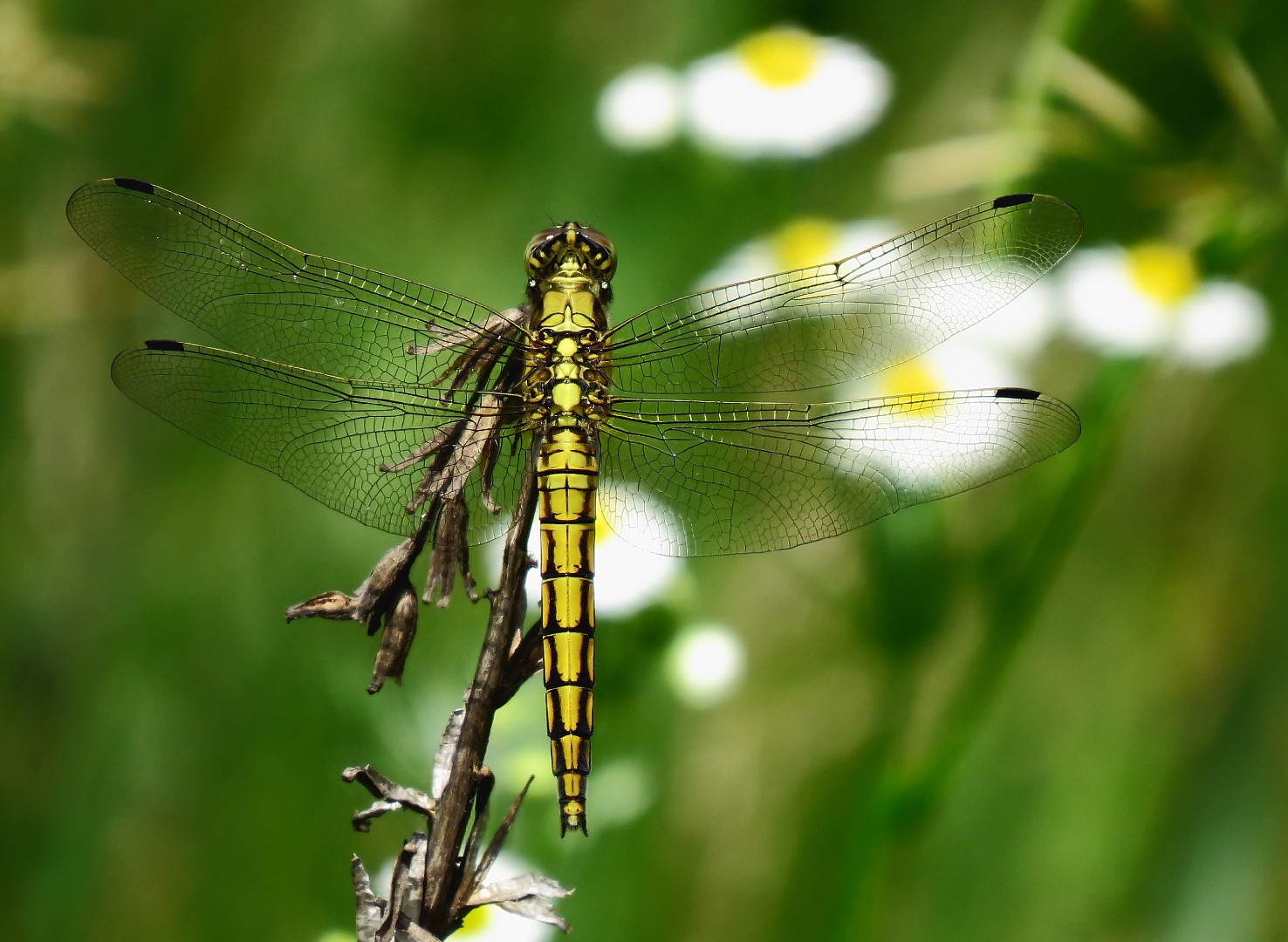
Orthetrum coerulescens can reach a body length of 4 - 4.5 cm. These dragonflies have a thorax with pale yellow ante-humeral stripes. In the males the color of these stripes fades with age. The abdomen is rather slim and shows an evident dorsal keel. Males have blue-grey eyes and a blue pruinescence on the abdomen, developed with age. Young males are yellow-brown. On the contrary some (androchrome) females at the end of the reproductive cycle assume the bluish color of the male. In the female the abdomen is yellowish-brown, with a thin median black line and small transverse lines to the connections of the various segments. The hyaline wings have yellow costa and a long yellow-brown pterostigma (about 4 mm). This species resembles the black-tailed skimmer but is smaller and slimmer and the male has no black tip. Females and immature males lack the black abdominal pattern.

More







